
Opinion & Analysis
What’s going on with the decline in putting on the PGA Tour?

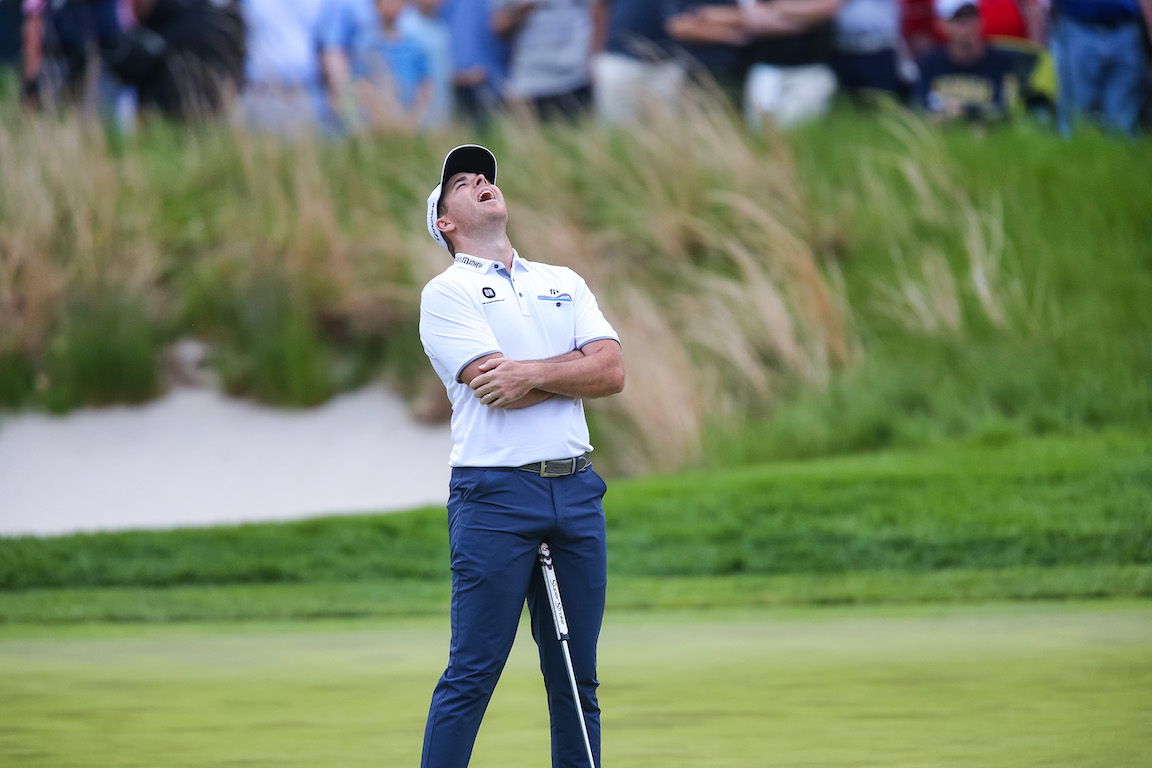
Watching the PGA Tour recently, I was struck by Frank Nobilo commenting on how professionals and their instructors work down to the smallest detail, a reflection on the intense competition on the PGA Tour and the fact that to be successful you cannot ignore anything. He made this comment with his thumb and forefinger barely not touching for emphasis.
That being the case, the numbers below should cause major introspection by every player and their coach. They are self-explanatory and have been verified by a third party expert who deals in putting data.
All figures are Shotlink data from the PGA Tour. To preclude undue influence by an anomaly years 2003-5 are averaged as are 2016-18
Average make percentage from 5 distances, 2003-2005 combined
- 6 FEET: 71.98 percent
- 8 FEET: 55.01 percent
- 10 FEET: 43.26 percent
- 15-20 FEET: 19.37 percent
- 25 FEET AND BEYOND: 5.96 percent
Average make percentage from the same 5 distances, 2015-2018
- 6 FEET: 70.43 percent
- 8 FEET: 53.54 percent
- 10 FEET: 41.39 percent
- 15-20 FEET: 18.80 percent
- 25 FEET AND BEYOND: 5.33 percent
Percent decrease
- 6 FEET: 1.55 percent
- 8 FEET: 1.67 percent
- 10 FEET: 1.87 percent
- 15-20 FEET: .57 percent
- 25 FEET AND BEYOND: .83 percent
One comment, green conditions have been vetted to the point where they are not considered a culprit. Faster, yes, but pristine surfaces, and very consistent week to week. There are some outliers like the U.S. Open greens but they are included in the data shown and caused no significant spike for that week.
Further, on the subject of greens, today’s professional has booklets showing green patterns, high MOI putter heads, instruction from putting specialists, and caddies, expert green readers in their own right. Bottom line: if anything the greens help not hurt.
So your turn. Look at the data. Appoint yourself all-powerful guru to improve putting data. What would your plan, be? Oh and this little tidbit so you can earn a huge consulting fee: We took six players, three on either side of the halfway point, your solution resulted in a one-shot per TOURNAMENT improvement. Average INCREASE in earnings for the season: a smidge over $500K!




This past Monday, I played in the U.S. Amateur local qualifier at Rock Creek Country Club in Portland, Oregon. A full tee sheet from 7:30 a.m. to 1:55 p.m., the top 11 scores would make it to the U.S. Amateur final qualifying.
I teed off at 10:48 a.m.. With the 7:30 am tee time, you can get a feel for the leaders’ pace, and they were off and running on the challenging setup at Rock Creek.
View this post on Instagram
Getting to the highlight of the round on the par five 17th, a drive up the left side and 212 yards left to the front hole location. I took out a 5-iron with plans of middle of the green. The ball ended up 8 feet left of the hole, pin high. A slight downhill putt dropped in for an eagle 3 on the 17th. With the cut line looking to be anywhere from -2 to even par. This was the boost I had been waiting for all day.
With making par from the trees on 18, it was time to wait for a potential playoff with a posted score of one under par 71.
Three hours later, it was playoff time. 8 players for 6 spots. I made par on the playoff hole, which was good enough to advance to the U.S. Amateur final qualifying in July. USGA qualifiers sure deliver on all of the emotions in golf!
Club Junkie
Building my 2026 gamer WITB: Ranking the contenders and new putter projects – Club Junkie Podcast

The annual What’s In The Bag build is underway, and on this episode of Club Junkie, Brian breaks down the clubs currently leading the race for a spot in his 2026 gamer setup. From drivers and fairway woods to irons, wedges, and shafts, he ranks the equipment that’s performing best and explains what’s separating the front runners from the rest of the field.
Brian also heads into the workshop to discuss several putter projects currently on the bench. From head options and shaft choices to build ideas and testing plans, he shares what he’s working on and which putters could become serious contenders for the bag this season.
If you’re a gear junkie who loves equipment testing, club building, and the never-ending pursuit of the perfect setup, this episode is for you.
Follow Club Junkie:
Instagram: @clubjunkiepod
TikTok: @clubjunkiepod
Threads: @clubjunkiepod
X: @ClubJunkiePod
Club Junkie
Tour Edge Exotics mini driver review + TaylorMade Spider ZT Max first look – Club Junkie

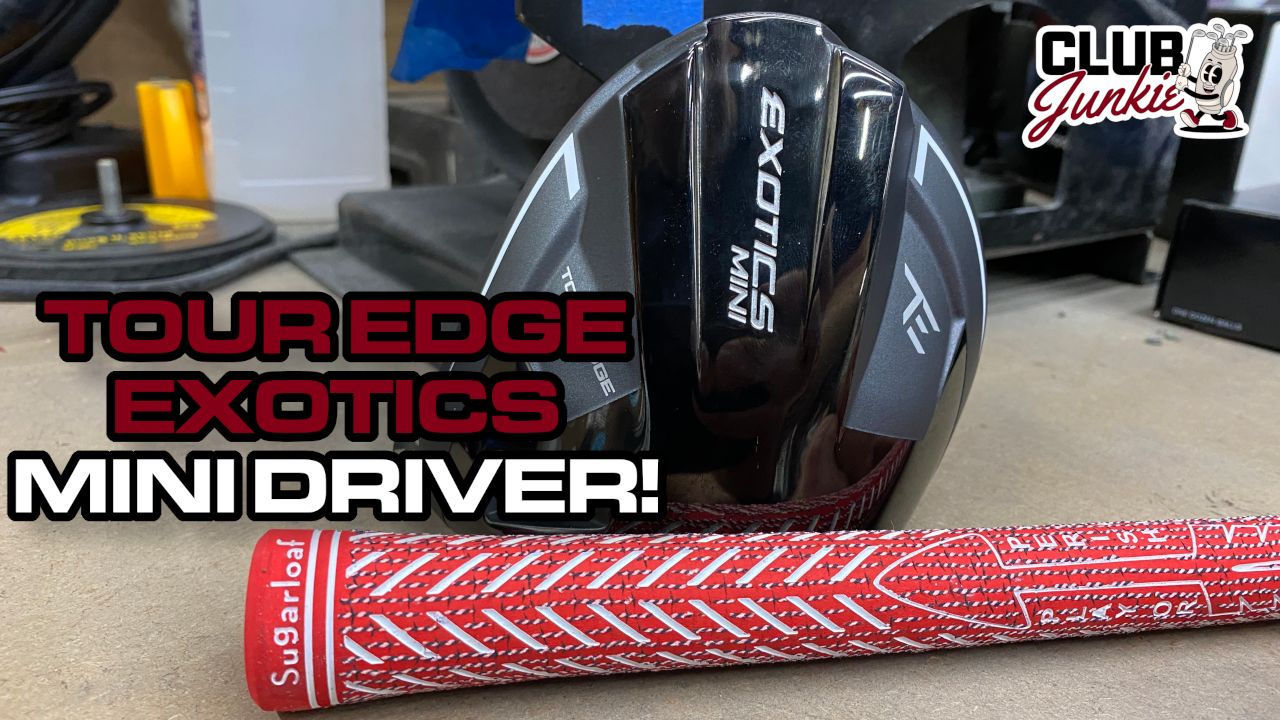
On this episode of Club Junkie, I put the new Tour Edge Exotics Mini Driver to the test and break down the performance, forgiveness, distance, and where it fits compared to a traditional driver or strong fairway wood. If you have been curious about adding a mini driver to the bag, this one is worth a look.
I also dive into the new TaylorMade Spider ZT Max putter that was recently spotted and discuss the growing zero torque putter trend. Plus, there is a closer look at the new Project X Titan Yellow shaft showing up on the PGA Tour and what makes it different from other profiles currently out there.

Justin Rose WITB 2026 (April): Full WITB breakdown with new McLaren irons

What’s the story behind Webb Simpson’s custom-stamped irons?

Memorial Tournament Tour Report: Rory McIlroy, Cameron Young switch up drivers, and more

Cadillac Championship Tour Report: Spieth’s sizable changes, McLaren Golf launches, and more

Russell Henley’s winning WITB: 2026 Charles Schwab Challenge

Kristoffer Reitan’s winning WITB: 2026 Truist Championship

Best irons 2026: Best irons overall, most forgiving irons, and more

J.T. Poston’s winning WITB: 2026 Memorial Tournament

Aaron Rai’s winning WITB: 2026 PGA Championship

Cameron Young’s winning WITB: 2026 Cadillac Championship


Bud Cauley WITB 2026 (June)
Bud Cauley had >14 clubs in his bag when photographed prior to the Memorial Tournament. Driver: Titleist GTS2 (8 degrees) Shaft: Fujikura...


Hannah Green WITB 2026 (June)
Driver: Titleist GTS3 (10 degrees, D4 SureFit setting) Shaft: Mitsubishi Chemical Diamana RB 53 S 3-wood: Titleist GT3 (15 degrees,...


Asterisk Talley WITB 2026 (June)
Driver: TaylorMade Qi4D (9 degrees) Shaft: Fujikura Ventus Blue 6 S 3-wood: TaylorMade Qi4D (16.5 degrees) Shaft: Fujikura Ventus Blue...
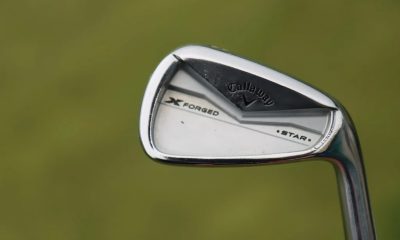

Brianna Do WITB 2026 (June)
Driver: Callaway Quantum Triple Diamond (9 degrees) Shaft: KBS PGW 3-wood: Callaway Elyte Titanium (15 degrees) Shaft: KBS PGW 5-wood:...
-
 Equipment6 days ago
Memorial Tournament Tour Report: Rory McIlroy, Cameron Young switch up drivers, and more
-
 News2 weeks ago
Russell Henley’s winning WITB: 2026 Charles Schwab Challenge
-
 Equipment3 days ago
Best irons 2026: Best irons overall, most forgiving irons, and more
-
 Whats in the Bag4 days ago
J.T. Poston’s winning WITB: 2026 Memorial Tournament
-

 Equipment1 week ago
Details on Jason Day’s latest prototype Avoda iron setup
-
 Equipment3 weeks ago
CJ Cup Byron Nelson Tour Report: Koepka and Kim’s newest putters finally get hot
-

 News2 weeks ago
Charles Schwab Challenge Tour Report: MacIntyre, Åberg and Spaun all switch putters, TaylorMade launches new Spider
-
 Equipment2 weeks ago
Details on J.J. Spaun’s surprise putter switch


ChipNRun
Jul 1, 2019 at 3:02 pm
Two factors to look at:
* The Ban on anchor putting started in 2016. Segment out the players who anchored in 2015, and see if they had statistically significant difference in miss rates over the pre-rule non anchors. And, see if they made up lost ground in 2017 and 2018 seasons as they learned non-anchor putting.
* Dave Pelz suggests that great ballstrikers are more likely to have putting problems than average ballstrikers. The reason: the right (or trailing arm) forearm rotation is stronger in great ballstrikers, and this can creep into the putting stroke and disrupt the pendulum motion. With the large number of players who regularly hit their drives 300+ yards, is it possible the we’re getting more great ballstrikers per top 250 than in earlier years? If so, do these players tend to miss more putts because of episodic forearm antics?
ChipNRun
Jul 2, 2019 at 6:04 pm
FOLLOWUP:
Another article this week talks about “too much information” in greens books for various courses. Any chance that some info relating to the greens themselves might be flawed? After all, Bryson DeChambeau caused a stir by “remeasuring” some of the greens he faced each week. Did he discover upon pockets of flawed information?
Tom
Jun 25, 2019 at 5:41 am
The issue isn’t within putting it’s outside putting. The element of putting isn’t as important in effecting the outcome as other elements-ie bombing the driver 350-375
James
Jun 25, 2019 at 2:49 am
Surely this decrease relates to about one putt missed in every thousand or so (given how many players there are). So, surely nothing to really make a fuss about?
Geeber
Jun 25, 2019 at 7:40 am
Ummm. An average of 1% wouldn’t that be 10 putts per 1000?
Howard Clark
Jun 24, 2019 at 8:23 pm
If they had “green reading books” back then, they couldn’t have putted either. Plus, mammoth grips; you can’t putt with a baseball bat handle.
Born
Jun 25, 2019 at 10:20 am
Bingoooo
JP
Jun 24, 2019 at 7:39 pm
It’s not just length that goes into how difficult a putt is, break is a significant factor. Given a straight 6 ft. putt vs. a 6 footer with 6 inches of break, a much higher percentage of the straight putts will be made. I suspect that the tour greens are slightly faster now than in 2003, which makes putts with the same slope break more, thus they are more difficult. In addition, it’s possible that the tour pin positions have gotten slightly more difficult (both for approach shots and for putts) than they were from 2003-2005.
DanQ
Jun 24, 2019 at 5:32 pm
Pga rule change. Green reading books level of detail changed 1/1/19. Correct?
Jaxon
Jun 24, 2019 at 5:55 pm
Maybe because guys hit it further and better. You had to putt fifteen years ago if you were a shortish hitter or medium hitter. Now bombs away and putting is not as comparable or relative from then to now.
TheWeekendHackGolf
Jun 24, 2019 at 4:00 pm
Two things
1) Anchoring ban went effective Jan 2016…really need to control for that.
2) Very possible that putting just isn’t as important / rewarded as much anymore on the PGA. Game has gone the way of favoring the Brooks and DJ’s of the world, not Steve Stricker and Zach Johnson and Jordan Speith.
~IG @theweekendhackgolf
TheWeekendHackGolf
Jun 24, 2019 at 4:02 pm
*Spieth (sorry Jordan…)
Matt J
Jun 24, 2019 at 9:58 am
I feel like a lot has to do with putting style. Purely observational, but it seems that players are trying to die it in the hole more often. The ball will naturally break harder as it starts to lose speed just before reaching the cup. You still see guys like Tiger and Koepka staying agreesive and running it by 3-4 feet when they miss, but they seem to be the outliers.
Ted Noel
Jun 25, 2019 at 8:36 am
Dave Pelz has done studies on pristine greens with his True Roller gadget. Using 100 balls, he got valid numbers. The best results came with a putt speed to die the putt 17″ past the hole. “Dead speed” is a real problem. How often are we seeing putts die barely short of the hole? 17″ past would give a tap-in on the miss, and putts left short rarely fall.
Stedman
Jun 24, 2019 at 8:10 am
Is have an observation: drivers, woods and irons are all regulated and are all very similar in weight size and shape across all manufacturer brands. Yet putters come in all shapes and sizes. You have trouble telling which irons a player uses unless you get close. But look at the difference in putters used by Jason day, Adam Scott, and Jordan Spieth. Maybe they should all use the same putter, then we’ll see who can really putt. And get rid of those stupid books. If I can’t get one why should they. They’re pros right?
liam
Jun 24, 2019 at 9:22 am
so if we make every 100m dash runner wear a size 10 shoe we’d find out who’s the fastest runner? no…i’d guess the fastest would be the runner who happens to fit that shoe.
same for putting. which style of putter are you going to determine to be used by all. weight, alignment, length, color, feel….these are personal and you can’t simply take one putter and force all players in to it. you wouldn’t find the best putter, you’d find the player that best fits that putter.
Geoffrey Holland
Jun 24, 2019 at 3:42 am
Players are so caught up in reading a book instead of reading the green that they’re bound to miss more putts. The book is usually someone else’s interpretation of how the green breaks and it’s not always correct. Players have to learn to read the greens themselves without the stupid books and they will get better.
Jack
Jun 24, 2019 at 12:22 am
paralysis by analysis. Just read it, step up to it, and hit it. Players seize up less and deliver a better more confident stroke. Constant second guessing on an inexact art doesn’t make things better. Makes it worse.
Rybo
Jun 23, 2019 at 10:27 pm
It’s the ball. Dr. Paul Hurrion has known this for awhile.
Go to 14:30.
https://m.youtube.com/watch?v=Qodg2Oe0LP4
JP
Jun 24, 2019 at 7:30 pm
Tiger won at Pebble with a solid ball (a Nike made by Bridgestone) in 2000. By 2003 everyone was playing ProV1’s or something similar. I don’t think there was a balata wound ball to be found on the PGA Tour by 2003.
Scratchscorer
Jun 23, 2019 at 9:49 pm
Because it’s compiled of a different generation of golfers. The younger players that took the place of the older players they replaced shoot lower scores overall, primarily because they hit it much further. They may not putt as well as the guys from yesteryear, but they hit it so much longer and end up with easier approach shots; they’re able to putt less efficiently and still shoot lower scores overall.
Aaron Fisher
Jun 23, 2019 at 7:25 pm
Too much money. Players are playing in less events and that dilutes the field every week for your average tour event. Slightly weaker fields make for slightly weaker performance results.
liam
Jun 24, 2019 at 9:26 am
i think an argument can be made that strength of field is much harder today than a decade ago. today’s number 70 player is much much better than 2001 number 70 player.
Greg
Jun 23, 2019 at 6:02 pm
Is it because putter heads have gotten heavier causing too much flex in the putter shaft and that is enough to cause more misses? Maybe if there was some sort of solution that made a stiffer, better putter shaft which could handle those heavier putter head weights? Hmmmmmm…..
Russ
Jun 24, 2019 at 6:00 pm
You are correct that putter heads are heavier and causing performance issues due to 50+ year old putter shaft technology. In fact, Barney is not out of the golf industry and has started a new company, BreakthroughGolfTechnology. He has designed a after-market shaft that reduces shaft torque from 1.9 to .9 which is a major improvement and allows the player to start the ball on line on a significantly greater percentage due to reduced face twisting. The shaft is called the Stability Shaft. The MSRP seems a little high until you realize you use a putter 24 – 36 times per round and provides the greatest numerical opportunities for total score improvement.
To provide full transparency, after having Club Champion install the Stability Shaft on my two putters and testing them on both the course (Shot Scope) and SAM PuttLab system to confirm the improved results, I contacted BGT and now install them as part of my club repair business.
Gary McCormick
Jun 25, 2019 at 10:37 am
I see what you did there. Unfortunately, it’s nonsense. While the Stability Shaft may work well for some players based on feel and balance, there is no “flex problem” in modern putters dues to heavier heads being too much for a standard shaft to handle.
The data that is presented on the Breakthrough Golf website that purports to depict displacement of the putter head about the vertical axis is, in fact, depicting vibration that does not affect the direction or speed of the ball coming off of the club face.
I tested the Stability Shaft last year, having one swapped in to replace the standard counter-weighted shaft in my Odyssey Tank Cruiser Anser-style blade putter.
https://willotheglenongolf.blogspot.com/2018/06/the-stability-shaft-how-good-for-your.html
The balance and weight distribution – which is the major (or only, really…) performance contribution of the Stability Shaft – were quite different with the new shaft, and it was not until I installed a 50-gram SuperStroke counterweight in the grip that the modified putter felt right again (or better, at least.)
A couple of weeks ago I removed the Stability Shaft and replaced it with a bog-standard, off the shelf, $10 steel putter shaft with a standard-size Odyssey pistol grip and the aforementioned 50-gram counterweight. This re-mod was a revelation, and transformed that putter’s performance in my hands. The improved weight distribution resulted in a higher head to grip MOI and a more consistent swing, which led to better distance control.
Note that I am not saying that the Stability Shaft isn’t going to help some players. Putting is very much about feel and balance, and this shaft may work for some people; what I am saying, though, is that their claims about their shaft addressing some supposed shortcoming in standard steel shafts because new-style putter heads are so heavy that they cause a standard putter shaft to flex, is ridiculous.
Sahil
Jun 23, 2019 at 5:50 pm
Because all players want to bomb it 350m and then chip ‘n putt. they focus way too much on driving.
Every single tour pro can hit the green in regulation. Its putting and the short game that makes the difference
Tal
Jun 24, 2019 at 11:32 pm
This isn’t the case. The difference between the best strikers on tour and the rest is far greater than the best putters and the rest. This is clearly shown when you look at who the best iron players are vs who the best putters are. There’s a huge difference between just hitting a green and hitting a green in the right spot and only the best ball strikers can hit the right spot the majority of the time. Chipping and putting is secondary to driving and approach play.
gunmetal
Jun 23, 2019 at 3:27 pm
Combination of much of what has been said.
1) Game is way more data driven with analytics and stats for everything (IE Aim point, green books, etc) and much less about feel.
2) Spieth is a good example of the above. He didn’t used to be afraid to be unconventional (going left hand low before the masses) but now he won’t make any meaningful changes like arm lock, conventional, claw, etc. Why? I believe he’s stuck looking at stats.
3) More 14 club deals from Callaway and maybe even TM which puts a lot of pressure on players to swap one putter for the latest and greatest. This could be a stretch and maybe I’m off, but there’s something to be said for keeping the flat stick constant. I think BK agrees.
JMO
Shallowface
Jun 23, 2019 at 2:14 pm
Perhaps they have moved away (very very slightly) from the USGA recommendation of placing the hole in an area where it is as flat as possible three feet around the cup. Most of us never see that adhered to at the places we play, and many of our three footers are what I call “McDonald’s Putts” because the track of them looks like an arch. You rarely see a pro have to play any break on a three footer.
Underachiever
Jun 23, 2019 at 11:53 am
Decreased cup size. ????
Geoffrey Holland
Jun 24, 2019 at 3:53 pm
Obviously not!
Luis Nlazario
Jun 23, 2019 at 10:59 am
It’s all about the dam new spikes and shoe soles!
Old spike marks didn’t damaged surface, and helped!
Yes there were a lot of players who didn’t know how to walk with them and damaged the greens. Yes because of them we’re suffering the consequences
Shallowface
Jun 23, 2019 at 2:19 pm
The ONLY reason for the advent of plastic spikes was to sell more replacement spikes. It was determined very quickly that they weren’t viable on shoes like the old leather soled FootJoy Classics, and then we started seeing what we have today. I can remember a time when “turf shoes” were specifically banned on courses in our area, but not anymore. Everyone was told that the greens would be so much better and the marks ate it up. You have no one to blame but yourselves.
Stump
Jun 24, 2019 at 8:52 am
The Chicken Little Syndrome…one person panics and everyone else follows along. It happened with coconut oil and popcorn, paper grocery bags,etc. It’s also happening with the distance debate. A few people with public pulpits are decrying the increase in driving distance and how it will ruin the game. Soon, they are going to roll back the ball and we will all suffer. One of two things will happen: One, we’ll all play the new ball and will be lucky to hit it 230 or 2. We bifurcate and we keep playing the current ball and the pros play the short ball then the advertising money will dry up because the ball companies won’t put money towards players that play balls that the consumer doesn’t.
Gareth Jones
Jun 23, 2019 at 10:38 am
Too much information maybe.
Bill Rctor
Jun 23, 2019 at 10:13 am
You need to learn the difference between “points” and “percentage”. We something you are measuring goes from 2% to 1%, it has not dropped 1%, it has dropped 1 point and 50%.
HappydayJ
Jun 23, 2019 at 10:02 am
Paralysis of Analysis, as Gary Player likes to say.
Danny Bonin
Jun 23, 2019 at 9:55 am
Players are paying more attention to driving and approach shots, they don’t need to putt as well to win today. Times have changed.
Paul
Jun 23, 2019 at 9:40 am
Better measurement technology?
Christopher Barnes
Jun 23, 2019 at 9:09 am
Super stroke grips