
Opinion & Analysis
A merciful new local rule

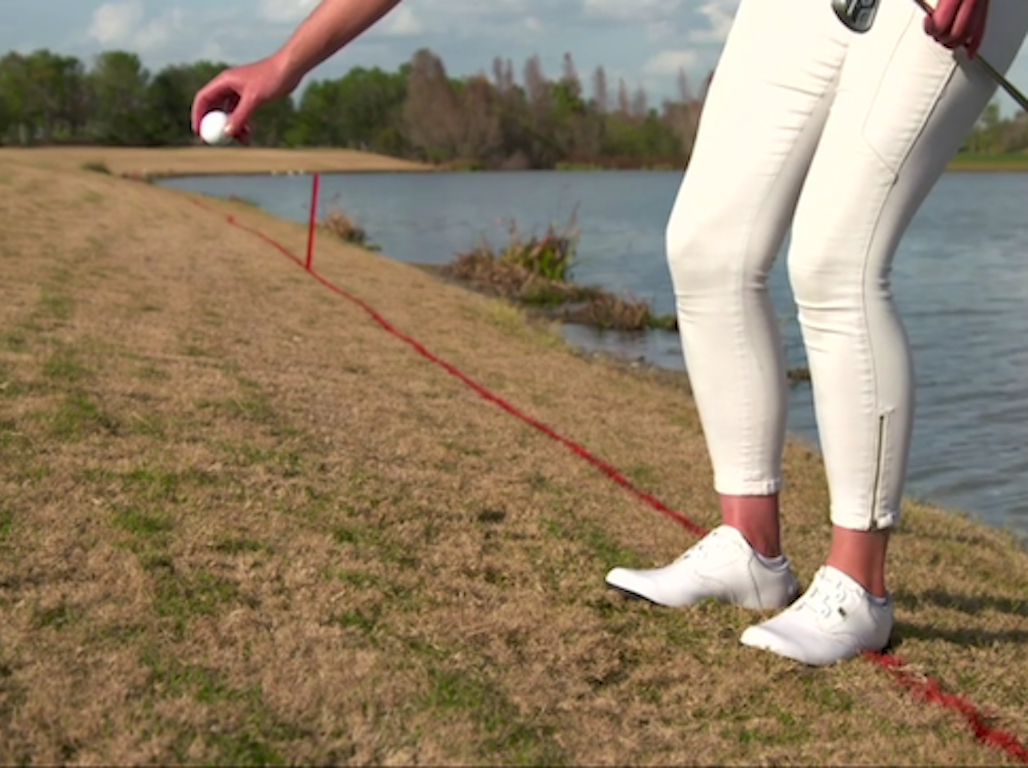
This April, within a list of 2019 Rules Clarifications, the USGA and R&A quietly authorized a new Local Rule that you can expect to see enacted everywhere from the U.S. Open Championship to, if you’re lucky, your own club championship.
New Local Rule E-12 provides some protection from an unintended consequence of Rule 14.3c, which requires that your ball come to rest in the relief area for the drop you’re taking. When I first read about this option, I confess that I was a bit skeptical. But now that I’ve experienced the Local Rule in action, its value has become very clear.
My initial skepticism came from the fact that I like it that every time, we drop we now must drop in a relief area. I also like the simplicity of requiring the ball to come to rest in that relief area — no more awkward need to figure out if your ball stayed within two club lengths of the point where your drop first struck the course, as used to be the case. So right from the start, I was very comfortable with the new rules in this regard. But in some cases, particularly for those who haven’t carefully studied the revised rules, this simple approach has caused problems.
The freedom this new Local Rule provides applies exclusively to back-on-the-line relief drops, such as you might make from penalty areas or for unplayable balls. It’s a bit complicated, but let me take you through how it helps. We’ll use yellow-staked penalty areas as an example. Last year, for back-on-the-line drops such as these, you’d identify the point where your ball last crossed the margin of the water hazard and draw an imaginary line from the flagstick through that point, select a nice place to drop anywhere you chose back along that line, and then let it drop. If you picked a point sufficiently back, and your ball didn’t hit anything prohibited, and it didn’t stop more than two club lengths from where you dropped it, you were good to go.
This year, instead of dropping on that imaginary line, you drop in a relief area that surrounds that imaginary line. Just like before, you identify the edge of the penalty area where your ball last crossed, go back as far as you wish along an imaginary line from the flagstick through that point — but now you should identify a relief area around your selected drop location. To do so, you pick a point on the line, then define a relief area one club length from that point no closer to the hole. So you typically have a semicircle two club lengths in diameter in which to drop. If you drop a foot or two back from the front edge of the semicircle, there’s almost always no problem with the ball coming to rest outside the releif area and you’ll be ready to play. But if you drop right on the front edge of your defined relief area, or if you didn’t bother to identify a point/relief area along the imaginary line before you dropped, and your ball bounces and comes to rest even the slightest bit forward — it’s now outside the relief area and subject to a two-stroke or loss of hole penalty for playing from the wrong place if you end up hitting the ball before correcting your mistake.
That might seem kind of harsh — you take a back-on-the-line drop like you did last year, it bounces and stops an inch forward, you hit it — and you get severely penalized. If you had simply established the relief area an inch or two forward, things would have been perfectly legal! The 2019 rules, in their effort to simplify and make consistent the drop/relief procedure, created an unintended potential trap for players that weren’t careful enough managing their business. This seemed like it was going to be a big enough problem that the USGA and R&A decided to graciously do something about it: Introduce Model Local Rule E-12.
When this Local Rule is adopted, a player is given some additional freedom. If he or she applies the relief area/drop principles correctly, there is, of course, still no problem. But if he or she ends up with the ball somewhat outside the relief area, there still might be no penalty. As long as the ball originally struck the course within where the relief area should be, and as long as it didn’t come to rest more than one club length from where it first hit the course when dropped, you can still play it penalty-free (as long as it’s not nearer the hole than where the ball originally lay in the case of an unplayable ball drop, or nearer the hole than the edge of the penalty area where the ball last crossed for a penalty area drop).
While all that’s a bit complicated sounding, in practice it’s intuitive. And as an added bonus, it probably doesn’t matter if you don’t understand it or even know it’s in force — there are simply more occasions when you can blissfully, even ignorantly, play on penalty-free.
This new Local Rule provides another advantage as well. When it’s in effect, an opponent or ref (or a TV viewer) won’t have to concern themselves with whether or not the player making the drop actually followed the recommendation of first defining a relief area before making a back-on-the-line drop. If you’re at a distance, and you see a player taking a drop which bounces slightly forward, you can relax. You don’t have to wonder whether or not you should rush up and confirm that the ball didn’t squeak out of the player’s intended relief area in an effort to prevent the player from incurring a penalty. One way or another, everything is more than likely just fine.
With all that in mind, maybe you’d like to see the specific wording of E-12:
“When taking Back-On-the-Line relief, there is no additional penalty if a player plays a ball that was dropped in the relief area required by the relevant Rule (Rule 16.1c(2), 17.1d(2), 19.2b or 19.3b) but came to rest outside the relief area, so long as the ball, when played, is within one club-length of where it first touched the ground when dropped.
“This exemption from penalty applies even if the ball is played from nearer the hole than the reference point (but not if played from nearer the hole than the spot of the original ball or the estimated point where the ball last crossed the edge of the penalty area).
“This Local Rule does not change the procedure for taking Back-On-the-Line relief under a relevant Rule. This means that the reference point and relief area are not changed by this Local Rule and that Rule 14.3c(2) can be applied by a player who drops a ball in the right way and it comes to rest outside the relief area, whether this occurs on the first or second drop.”





This past Monday, I played in the U.S. Amateur local qualifier at Rock Creek Country Club in Portland, Oregon. A full tee sheet from 7:30 a.m. to 1:55 p.m., the top 11 scores would make it to the U.S. Amateur final qualifying.
I teed off at 10:48 a.m.. With the 7:30 am tee time, you can get a feel for the leaders’ pace, and they were off and running on the challenging setup at Rock Creek.
View this post on Instagram
Getting to the highlight of the round on the par five 17th, a drive up the left side and 212 yards left to the front hole location. I took out a 5-iron with plans of middle of the green. The ball ended up 8 feet left of the hole, pin high. A slight downhill putt dropped in for an eagle 3 on the 17th. With the cut line looking to be anywhere from -2 to even par. This was the boost I had been waiting for all day.
With making par from the trees on 18, it was time to wait for a potential playoff with a posted score of one under par 71.
Three hours later, it was playoff time. 8 players for 6 spots. I made par on the playoff hole, which was good enough to advance to the U.S. Amateur final qualifying in July. USGA qualifiers sure deliver on all of the emotions in golf!
Club Junkie
Building my 2026 gamer WITB: Ranking the contenders and new putter projects – Club Junkie Podcast

The annual What’s In The Bag build is underway, and on this episode of Club Junkie, Brian breaks down the clubs currently leading the race for a spot in his 2026 gamer setup. From drivers and fairway woods to irons, wedges, and shafts, he ranks the equipment that’s performing best and explains what’s separating the front runners from the rest of the field.
Brian also heads into the workshop to discuss several putter projects currently on the bench. From head options and shaft choices to build ideas and testing plans, he shares what he’s working on and which putters could become serious contenders for the bag this season.
If you’re a gear junkie who loves equipment testing, club building, and the never-ending pursuit of the perfect setup, this episode is for you.
Follow Club Junkie:
Instagram: @clubjunkiepod
TikTok: @clubjunkiepod
Threads: @clubjunkiepod
X: @ClubJunkiePod
Club Junkie
Tour Edge Exotics mini driver review + TaylorMade Spider ZT Max first look – Club Junkie

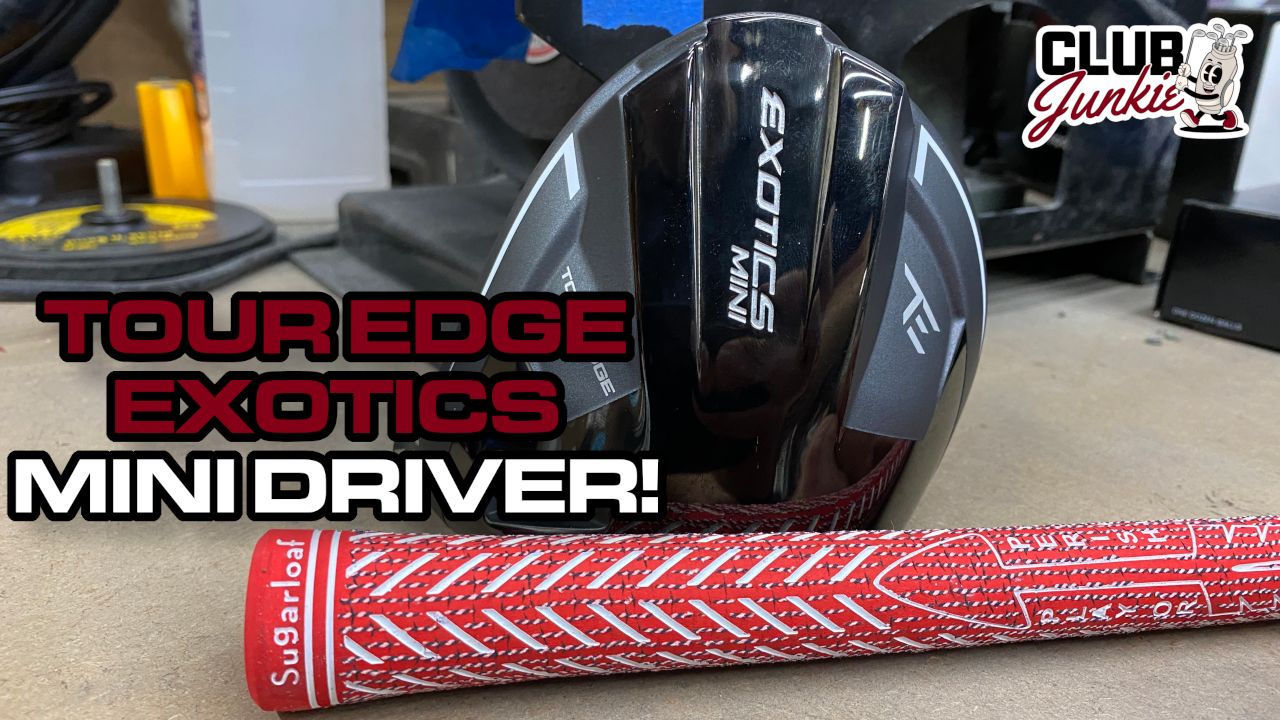
On this episode of Club Junkie, I put the new Tour Edge Exotics Mini Driver to the test and break down the performance, forgiveness, distance, and where it fits compared to a traditional driver or strong fairway wood. If you have been curious about adding a mini driver to the bag, this one is worth a look.
I also dive into the new TaylorMade Spider ZT Max putter that was recently spotted and discuss the growing zero torque putter trend. Plus, there is a closer look at the new Project X Titan Yellow shaft showing up on the PGA Tour and what makes it different from other profiles currently out there.

What’s the story behind Webb Simpson’s custom-stamped irons?

Memorial Tournament Tour Report: Rory McIlroy, Cameron Young switch up drivers, and more

Cadillac Championship Tour Report: Spieth’s sizable changes, McLaren Golf launches, and more

Russell Henley’s winning WITB: 2026 Charles Schwab Challenge

Kristoffer Reitan’s winning WITB: 2026 Truist Championship

Best irons 2026: Best irons overall, most forgiving irons, and more

J.T. Poston’s winning WITB: 2026 Memorial Tournament

Aaron Rai’s winning WITB: 2026 PGA Championship

Cameron Young’s winning WITB: 2026 Cadillac Championship

Details on Jason Day’s latest prototype Avoda iron setup


Ryan Palmer WITB 2026 (June)
Driver: Callaway Quantum Triple Diamond (9 degrees) Shaft: Project X HZRDUS Smoke Blue RDX 60 TX 3-wood: TaylorMade Qi10 (15 degrees) Shaft:...


Bud Cauley WITB 2026 (June)
Bud Cauley had >14 clubs in his bag when photographed prior to the Memorial Tournament. Driver: Titleist GTS2 (8 degrees) Shaft: Fujikura...


Hannah Green WITB 2026 (June)
Driver: Titleist GTS3 (10 degrees, D4 SureFit setting) Shaft: Mitsubishi Chemical Diamana RB 53 S 3-wood: Titleist GT3 (15 degrees,...


Asterisk Talley WITB 2026 (June)
Driver: TaylorMade Qi4D (9 degrees) Shaft: Fujikura Ventus Blue 6 S 3-wood: TaylorMade Qi4D (16.5 degrees) Shaft: Fujikura Ventus Blue...
-
 Equipment6 days ago
Memorial Tournament Tour Report: Rory McIlroy, Cameron Young switch up drivers, and more
-
 News2 weeks ago
Russell Henley’s winning WITB: 2026 Charles Schwab Challenge
-
 Equipment3 days ago
Best irons 2026: Best irons overall, most forgiving irons, and more
-
 Whats in the Bag4 days ago
J.T. Poston’s winning WITB: 2026 Memorial Tournament
-
 Equipment1 week ago
Details on Jason Day’s latest prototype Avoda iron setup
-
 Equipment3 weeks ago
CJ Cup Byron Nelson Tour Report: Koepka and Kim’s newest putters finally get hot
-

 News2 weeks ago
Charles Schwab Challenge Tour Report: MacIntyre, Åberg and Spaun all switch putters, TaylorMade launches new Spider
-
 Equipment2 weeks ago
Details on J.J. Spaun’s surprise putter switch


Mad-Mex
Jun 23, 2019 at 5:31 pm
How about just PLACING the ball ? Would also speed up play!
logan
Jun 22, 2019 at 1:53 am
zero chance those are mens pants
TobyFark McGeezax
Jun 21, 2019 at 9:41 pm
Horribly boring article. No wonder golf is dying.
CrashTestDummy
Jun 21, 2019 at 1:37 pm
Can’t stand the new drop rule. They should amend it to where you can’t drop the ball lower than your knee, but allow you to drop it from any height above that legally. There is no advantage from dropping it higher. The penalties on players dropping it the old way was ridiculous.
15th Club
Jun 22, 2019 at 8:11 am
You clearly don’t understand why the Rule was changed. The height of a drop was mandatorily lowered, so that dropped balls are less likely to bounce out of the relief area upon hitting the ground. Or to plug, when dropped in a bunker.
And the USGA took the time to explain this Rule to Dummy’s like you, HERE:
https://www.usga.org/content/usga/home-page/rules-hub/rules-modernization/major-changes/new-procedure-for-dropping-a-ball.html
Tiger Noods
Jun 24, 2019 at 5:30 am
That’s completely bogus, because as you likely recall, the USGA was originally going to be ok with “dropping” from 1 inch.
Either the drop should be able to finish its drop within the defined relief area, or the rule should be that the ball may be PLACED instead of dropped.
The 12″ arbitrary limit / knee height was borne of people saying that a one inch drop amounted to placing. Well, it’s one or another. I’m happy that you could place after a penalty, but it’s just flatly dumb to penalizing a ball dropped from higher than the required amount. And there’s no “dummy” explanation; they backtracked and still got it wrong.
Placing, or a drop from a MINIMUM height. Dropping from a height above a maximum of knee height will go away as soon as the USGA has enough time to wipe the egg off their faces.