
Opinion & Analysis
Do you know how to drop in 2019? Are you sure?

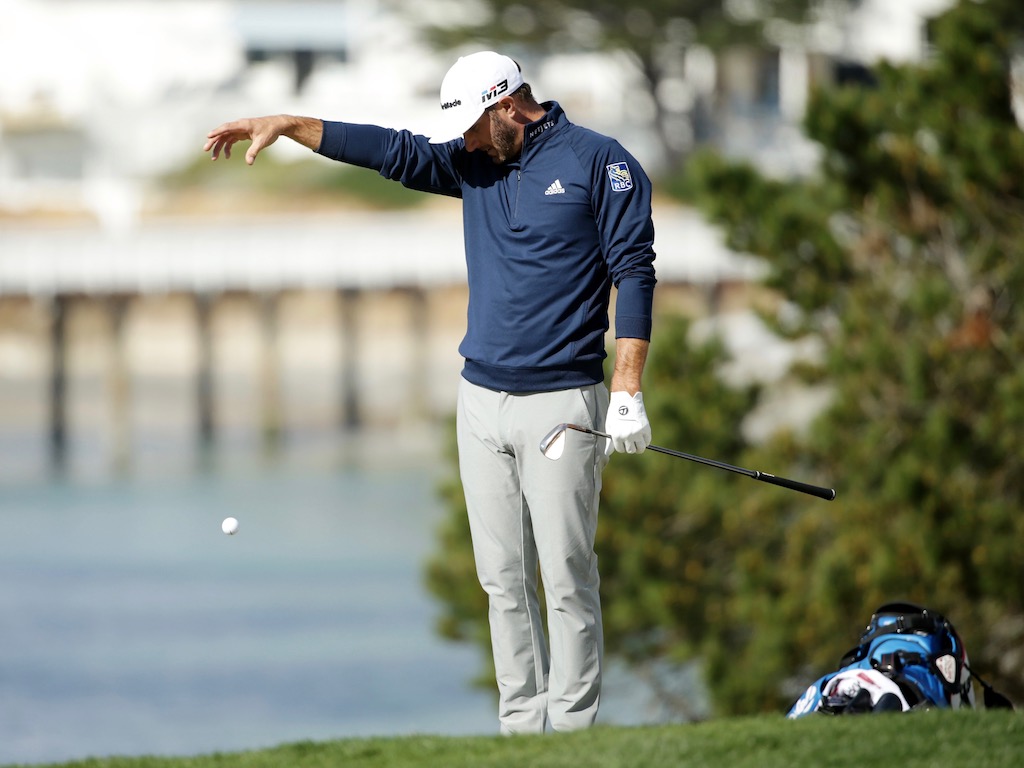
Starting January 1, 2019, golfers will have to get used to the new Rules of Golf. Many changes were made to create the new rules, but one of the most important changes without any doubt are the dropping rules. You might say: “Come on, it’s easy! We just have to drop from knee height, right?” Well, it’s not that simple. There are quite a few other things you need to know, which I will clarify below.
Q1. What is “knee height” exactly?
“Knee height” means the height from the ground to your knee when in a standing position.
Q2. So I cannot just kneel and thereby place the ball instead of dropping?
Good thinking… but no 🙂
Q3. What part of the knee do I have to drop from?
It’s not (at the moment) clarified which part of the knee is “the knee,” but there cannot be any doubt that you can drop from the whole knee.
—-o0o—-
FACTS: “CORRECT WAY TO DROP”
The 2019 Rules of Golf state that you are dropping the ball correctly if all these requirements are fulfilled:
- The player himself must drop the ball
- It must be dropped from knee height
- The player must not give it any spin, etc.
- Before the ball hits the ground, it must not touch any part of the player or the player’s equipment (e.g. his bag)
- It must be dropped in the relief area (the relief area is defined in the rule you are taking relief under), i.e. it must first touch the ground inside the relief area when dropped.
If just one of these requirements is not fulfilled, you are not considered to have dropped in a correct way. You must re-drop until you have dropped in a correct way (without any limit as to the number of re-drops).
If you play a ball not dropped in a correct way, you incur a one-stroke penalty — unless you played from outside the relief area, in which case you incur a two-stroke penalty in stroke play or lost hole in match play (see FACTS 2).
—-o0o—-
Q4. What is the penalty for not dropping from knee height?
You can and should correct your error before playing the ball. If you re-drop in a correct way, correcting your error, there is no penalty. If you don’t and make a stroke at the ball, you incur a one-stroke penalty (since you did not drop in a correct way). See “FACTS 1”.
Q5. What if I drop almost from knee height.
Well, as a starting point you have to drop from knee height. If you dont’t, you will have to correct your error by re-dropping correctly (see “FACTS 1″).
There is a “I-did-my-best-so-please-don’t-penalize-me-rule” saying that when finding a “location,” you are not penalized for finding a wrong location if you made a reasonable judgment. It is for now not certain if this rule also encompasses a situation in which you don’t drop exactly from knee height simply because you cannot see that spot with certainty when looking down.
On one hand, you could argue that this interpretation would be in accordance with the spirit of this rule (don’t penalize a player doing his best). On the other hand, it seems that the knee cannot be that hard to find (!) and that a “location” probably must be interpreted as “a location on the golf course.” My conclusion would be that there is no excuse for not to being able to drop exactly from knee height, and thus this rule did not apply in this situation.
There is also a “naked-eye rule” saying that if the fact (here: the ball was not dropped from knee height) could not reasonable have been seen with the naked eye, the player is not penalized even though video evidence shows something different (i.e. that it in fact was not dropped exactly from knee height). In my opinion, this naked-eye rules is not applicable here, since a player will be said to be able to find the knee with a reasonable effort.
So… in my opinion there is no excuse not to drop from knee height!
—-o0o—-
FACTS 2: RELIEF AREA.
A relief area is the area in which you have to drop (see “FACTS 1”) and in which your ball must end after a drop.
Example: If you deem your ball in the rough unplayable, you can for example choose with a one-stroke penalty to drop a ball within two club lengths from — and not nearer the hole than — the spot where the ball lay. This area is called the “relief area.”
If your ball ends outside the relief area in your drop, your required action depends on whether or not you dropped in a correct way (see “FACTS 1”).
- If you did not drop in a correct way: You must re-drop again (without penalty) without any limitations as to the number of re-drops until you have dropped in a correct way.
- If you did drop in a correct way: The player must re-drop (in a correct way!) a ball one time (without penalty). If the ball still ends outside the relief area, the player must then (without penalty) place a ball on the spot where the dropped ball first touched the ground in the re-drop. If he player does that, no penalty is incurred. If he does not but plays a ball from outside the relief area, he plays from a wrong place thereby incurring a two-stroke penalty in stroke play or a loss of hole in match play.
—-o0o—-
Q7. Who should drop the ball?
Only the player can drop the ball. Not the caddie, not other players, not anyone else! See “FACTS 1”.
Q8. What is the penalty if your ball strikes your bag or yourself in the drop?
The answer depends on when it happens (i.e. when it strikes you or your equipment):
- If it happens before the ball strikes the ground: There is no penalty presupposing that you re-drop before you play the ball. You have to re-drop no matter how many drops it takes for you not to strike your bag or yourself. If you don’t re-drop and play the ball, you incur a one-stroke penalty.
- If it happens after the ball has struck the ground: There is no penalty, and you shall not re-drop.
Q9. Where must I drop?
You must drop in the “relief area,” which is defined in the rule you are dropping under. If you declare your ball unplayable, for example, then one of the options is to drop within two club length – not nearer the hole – than where the ball lay. This area is the “relief area” in which:
- Your ball must land in the drop (see “FACTS 1”) and
- Must end (See “FACTS 2”)
Q10. What if I drop from shoulder height?
That probably will happen quite a few times in the beginning of 2019. In this case, you are not dropping in a correct way, and you must re-drop without penalty before you make the stroke. See “FACTS 1.”
Q11. When do I have to re-drop?
The re-dropping rules are simplified. Under the current rules, there are a lot of situations where you are required to re-drop, e.g. when the ball rolls closer to the hole than the nearest point of relief, when the ball rolls into a bunker (and stays there), when the ball rolls more than two club lengths from where it first struck the course, etc. These rules are quite difficult.
In 2019, it gets easier. You have to drop in a “relief area,” and the balls needs to end it that area. If you drop outside this area or if the ball rolls and stays outside this area, you are required to re-drop. See “FACTS 1” and “FACTS 2.”
Q12. Do I have to re-drop (as it is today) if the ball rolls more than two club lengths away from the spot that the ball first struck the course in the drop?
First of all, in 2019 there is not such a “two-club-length rule.” The re-dropping rules are explained in “FACTS 1” and in “FACTS 2” above.
- If you take relief (e.g. from a path) and must drop within one club length (of the nearest point of point of complete relief), you will always have to re-drop if it rolls more than 2 club lengths (since the relief area is exactly two club-lengths long measured from the two points farthest from each other).
- If you drop after a rule requiring you to drop within two club lengths, sometimes you must re-drop if the ball rolls more than two club lenths and sometimes not. The only thing that matters is that the ball must be dropped in the relief area (see “FACTS 1”) and must end in the relief area (see “FACTS 2”). Otherwise, it must be re-dropped.
Q13. I have a bad back and therefore I cannot take my arm down far enough to be able to drop from knee height. What do I do?
I don’t know. My guess would be this: A player who cannot drop from knee-height due to back-problems most likely cannot play golf at all. In other words, a player able to play golf will almost always be able to drop the ball from knee height.
In the extremely rare situations where a player cannot drop from knee height but can play a round of golf, there is a “do-what-is-fair-rule” stating that in situations not covered by the Rules of Golf, you should do what is fair. Maybe that would lead to the conclusion that it was OK for a player to drop from a place higher than knee height (e.g. just from the position the arm is when it is stretched and relaxed alongside the leg).
Q14. Is a taller player going to drop the ball from a higher place than a lower player?
Yes!
Q15. Isn’t that unreasonable?!
Well, that’s for you to decide 🙂 Who said that the 2019-Rules of Golf where easy to understand?
Rules Mentioned in Article
- 14-3: Dropping the ball
- 20-2c: “Naked-eye-rule”
- 1.3b(2): “Reasonable-judgment-rule”
- 20.3: “Do-what-is-fair-rule (when the situation is not covered by the rules).


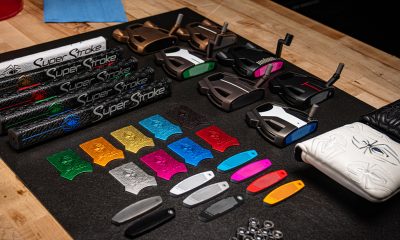



This past Monday, I played in the U.S. Amateur local qualifier at Rock Creek Country Club in Portland, Oregon. A full tee sheet from 7:30 a.m. to 1:55 p.m., the top 11 scores would make it to the U.S. Amateur final qualifying.
I teed off at 10:48 a.m.. With the 7:30 am tee time, you can get a feel for the leaders’ pace, and they were off and running on the challenging setup at Rock Creek.
View this post on Instagram
Getting to the highlight of the round on the par five 17th, a drive up the left side and 212 yards left to the front hole location. I took out a 5-iron with plans of middle of the green. The ball ended up 8 feet left of the hole, pin high. A slight downhill putt dropped in for an eagle 3 on the 17th. With the cut line looking to be anywhere from -2 to even par. This was the boost I had been waiting for all day.
With making par from the trees on 18, it was time to wait for a potential playoff with a posted score of one under par 71.
Three hours later, it was playoff time. 8 players for 6 spots. I made par on the playoff hole, which was good enough to advance to the U.S. Amateur final qualifying in July. USGA qualifiers sure deliver on all of the emotions in golf!
Club Junkie
Building my 2026 gamer WITB: Ranking the contenders and new putter projects – Club Junkie Podcast

The annual What’s In The Bag build is underway, and on this episode of Club Junkie, Brian breaks down the clubs currently leading the race for a spot in his 2026 gamer setup. From drivers and fairway woods to irons, wedges, and shafts, he ranks the equipment that’s performing best and explains what’s separating the front runners from the rest of the field.
Brian also heads into the workshop to discuss several putter projects currently on the bench. From head options and shaft choices to build ideas and testing plans, he shares what he’s working on and which putters could become serious contenders for the bag this season.
If you’re a gear junkie who loves equipment testing, club building, and the never-ending pursuit of the perfect setup, this episode is for you.
Follow Club Junkie:
Instagram: @clubjunkiepod
TikTok: @clubjunkiepod
Threads: @clubjunkiepod
X: @ClubJunkiePod
Club Junkie
Tour Edge Exotics mini driver review + TaylorMade Spider ZT Max first look – Club Junkie

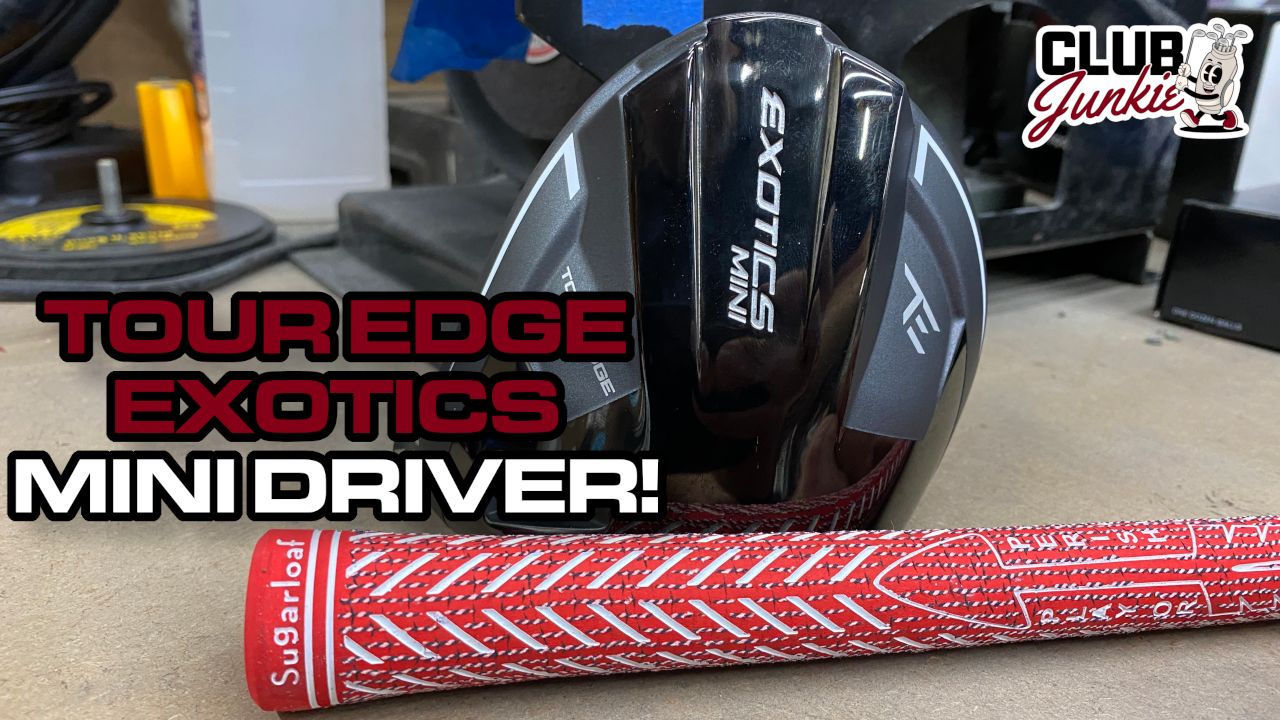
On this episode of Club Junkie, I put the new Tour Edge Exotics Mini Driver to the test and break down the performance, forgiveness, distance, and where it fits compared to a traditional driver or strong fairway wood. If you have been curious about adding a mini driver to the bag, this one is worth a look.
I also dive into the new TaylorMade Spider ZT Max putter that was recently spotted and discuss the growing zero torque putter trend. Plus, there is a closer look at the new Project X Titan Yellow shaft showing up on the PGA Tour and what makes it different from other profiles currently out there.

What’s the story behind Webb Simpson’s custom-stamped irons?

Memorial Tournament Tour Report: Rory McIlroy, Cameron Young switch up drivers, and more

Cadillac Championship Tour Report: Spieth’s sizable changes, McLaren Golf launches, and more

Russell Henley’s winning WITB: 2026 Charles Schwab Challenge

Kristoffer Reitan’s winning WITB: 2026 Truist Championship

Best irons 2026: Best irons overall, most forgiving irons, and more

J.T. Poston’s winning WITB: 2026 Memorial Tournament

Aaron Rai’s winning WITB: 2026 PGA Championship

Cameron Young’s winning WITB: 2026 Cadillac Championship

Details on Jason Day’s latest prototype Avoda iron setup


Christiaan Maas WITB 2026 (June)
Driver: TaylorMade Qi4D LS (8 degrees) Shaft: Fujikura Ventus TR Blue 6 X 3-wood: TaylorMade Qi10 (15 degrees) Shaft: Fujikura Ventus Black...


Ryan Palmer WITB 2026 (June)
Driver: Callaway Quantum Triple Diamond (9 degrees) Shaft: Project X HZRDUS Smoke Blue RDX 60 TX 3-wood: TaylorMade Qi10 (15 degrees) Shaft:...


Bud Cauley WITB 2026 (June)
Bud Cauley had >14 clubs in his bag when photographed prior to the Memorial Tournament. Driver: Titleist GTS2 (8 degrees) Shaft: Fujikura...


Hannah Green WITB 2026 (June)
Driver: Titleist GTS3 (10 degrees, D4 SureFit setting) Shaft: Mitsubishi Chemical Diamana RB 53 S 3-wood: Titleist GT3 (15 degrees,...
-
 Equipment7 days ago
Memorial Tournament Tour Report: Rory McIlroy, Cameron Young switch up drivers, and more
-
 News2 weeks ago
Russell Henley’s winning WITB: 2026 Charles Schwab Challenge
-
 Equipment4 days ago
Best irons 2026: Best irons overall, most forgiving irons, and more
-
 Whats in the Bag4 days ago
J.T. Poston’s winning WITB: 2026 Memorial Tournament
-
 Equipment1 week ago
Details on Jason Day’s latest prototype Avoda iron setup
-
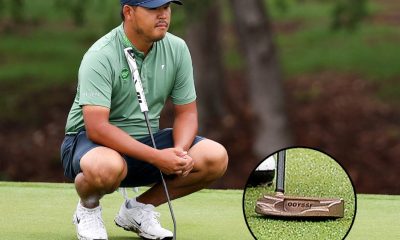
 Equipment3 weeks ago
CJ Cup Byron Nelson Tour Report: Koepka and Kim’s newest putters finally get hot
-

 News2 weeks ago
Charles Schwab Challenge Tour Report: MacIntyre, Åberg and Spaun all switch putters, TaylorMade launches new Spider
-
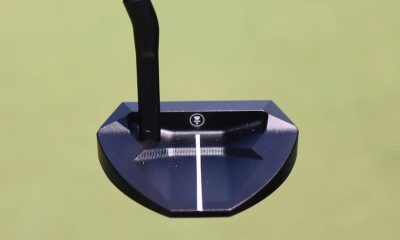
 Equipment2 weeks ago
Details on J.J. Spaun’s surprise putter switch


Bird
Aug 22, 2018 at 12:51 am
I’m gonna drop it like a bird
Solzhenitsen
Aug 21, 2018 at 10:52 pm
If you watch the USGA video on the new rule there are clearly examples where the players are bending their knees to varying degrees, begging the question, how much is too much?
Jack
Aug 21, 2018 at 10:36 pm
Was it always two club lengths from unplayable spot? I always thought it was line extended to/from hole and basically infinite. If that’s the case they might as well call it the Spieth rule.
Brandon
Aug 21, 2018 at 7:47 pm
If your playing partners care about this rule you need new playing partners.
Nack Jicklaus
Aug 21, 2018 at 3:47 pm
Yep it doesn’t really change anything by dropping it at knee height. It is pointless. If they would have let us place the ball or drop from any height at all, that would have been different.
Speedy
Aug 21, 2018 at 1:28 pm
One of several rule changes that didn’t need to happen.