
Opinion & Analysis
The View from the Ref’s Side of the Fairway: Refs Get Pushy

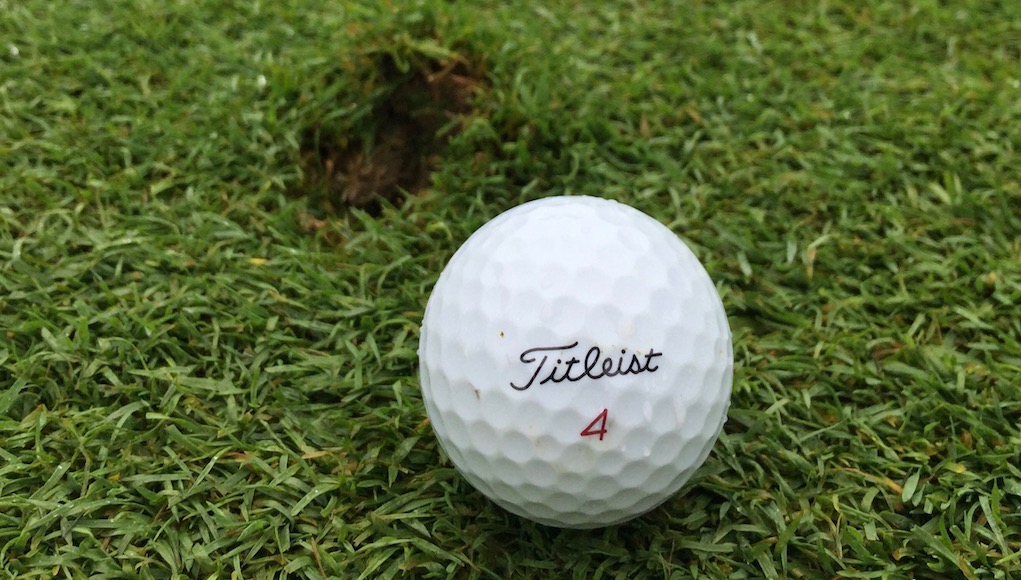
We refs sometimes monitor landing zones that are soggy, hoping to help players find and take free drops for balls that become embedded in the fairway. A ref friend of mine told me the following rather quirky tale about his approaching a player who had just pulled his ball out of the muck in a stroke-play tournament.
The player cleaned his ball and was preparing to drop. My buddy, suddenly and without a word, pushed the player hard on the shoulder. The shocked player regained his balance and gasped, “What the hell are you doing?”
My friend responded, “Saving you two strokes.”
Right before the player was going to drop, he raised his foot to stomp down on the irregularity of surface caused by his removal of the embedded ball. He apparently didn’t know that doing that is a violation of Rule 13-2: Improving Lie, Area of Intended Stance or Swing, or Line of Play. (Decision 13-2/10 describes this exact case, and note that it’s also a violation of Rule 13-2 if you repair the area after your drop if doing so improves your situation.)
Fortunately, the surprise shove prevented the player from leveling the surface and from getting the resulting 2-stroke penalty. (My quick-witted friend, with virtually no time to think and even less to reason with the player, deftly transformed this otherwise rude act into one of kindness.)
Here are a couple of other things to keep in mind when dealing with an embedded ball. (The details can be found in Rule 20-1, Rule 20-2c, Rule 25-2, and Rule 25-2’s related Decisions.)
- You are not obligated to mark your embedded ball before lifting it, though you have that option. (Anytime you’re going to have to “replace” a ball you must mark it, so it does remain a good habit to get into. And at times, marking can help you determine if the ball needs to be re-dropped as well — but it’s not technically necessary to mark a ball when it is later going to be dropped.)
- You may clean your ball after lifting it.
- You must drop your ball “as near as possible to the spot where it lay” (but no closer to the hole) even though the disturbed ground there may end up causing interference for your next shot.
- If your appropriately dropped ball rolls back into the hole from which you lifted it, you must drop again and place on the valid spot it last hit the course if it rolls back in a second time. (Same thing if it stops closer to the hole than the point it embedded.)
- If your ball embeds in a new place when you drop it, you are again entitled to relief. If it embeds yet again after the next drop, place the ball as near as possible to the place it last embedded, but again, no closer to the hole.
- By the base Rule, you get free relief for embedded balls only when they are in a “closely-mown area through the green.” But there is a Local Rule that might be in force that extends the free relief to most other areas through the green — not just those that are closely-mown. (The PGA Tour regularly employs this Local Rule. See Appendix I of the Rules for more details and note that the relief does not apply if you are embedded in sand that is not in a closely-mown area.)
- Any doubt as to whether a ball is actually embedded “should be resolved against the player.”
- You may (really, should) fix the surface when you and your group are past the problem area so it doesn’t impact players in following groups.
One last thing, while you may not repair the irregularity of surface you create when you remove your ball from its embedded position, there’s nothing in the Rules which says that you can’t be extra careful when extracting it. Try to keep the surface as undisturbed as you can. It might end up helping you with your next shot.
Related










This past Monday, I played in the U.S. Amateur local qualifier at Rock Creek Country Club in Portland, Oregon. A full tee sheet from 7:30 a.m. to 1:55 p.m., the top 11 scores would make it to the U.S. Amateur final qualifying.
I teed off at 10:48 a.m.. With the 7:30 am tee time, you can get a feel for the leaders’ pace, and they were off and running on the challenging setup at Rock Creek.
View this post on Instagram
Getting to the highlight of the round on the par five 17th, a drive up the left side and 212 yards left to the front hole location. I took out a 5-iron with plans of middle of the green. The ball ended up 8 feet left of the hole, pin high. A slight downhill putt dropped in for an eagle 3 on the 17th. With the cut line looking to be anywhere from -2 to even par. This was the boost I had been waiting for all day.
With making par from the trees on 18, it was time to wait for a potential playoff with a posted score of one under par 71.
Three hours later, it was playoff time. 8 players for 6 spots. I made par on the playoff hole, which was good enough to advance to the U.S. Amateur final qualifying in July. USGA qualifiers sure deliver on all of the emotions in golf!
Club Junkie
Building my 2026 gamer WITB: Ranking the contenders and new putter projects – Club Junkie Podcast

The annual What’s In The Bag build is underway, and on this episode of Club Junkie, Brian breaks down the clubs currently leading the race for a spot in his 2026 gamer setup. From drivers and fairway woods to irons, wedges, and shafts, he ranks the equipment that’s performing best and explains what’s separating the front runners from the rest of the field.
Brian also heads into the workshop to discuss several putter projects currently on the bench. From head options and shaft choices to build ideas and testing plans, he shares what he’s working on and which putters could become serious contenders for the bag this season.
If you’re a gear junkie who loves equipment testing, club building, and the never-ending pursuit of the perfect setup, this episode is for you.
Follow Club Junkie:
Instagram: @clubjunkiepod
TikTok: @clubjunkiepod
Threads: @clubjunkiepod
X: @ClubJunkiePod
Club Junkie
Tour Edge Exotics mini driver review + TaylorMade Spider ZT Max first look – Club Junkie

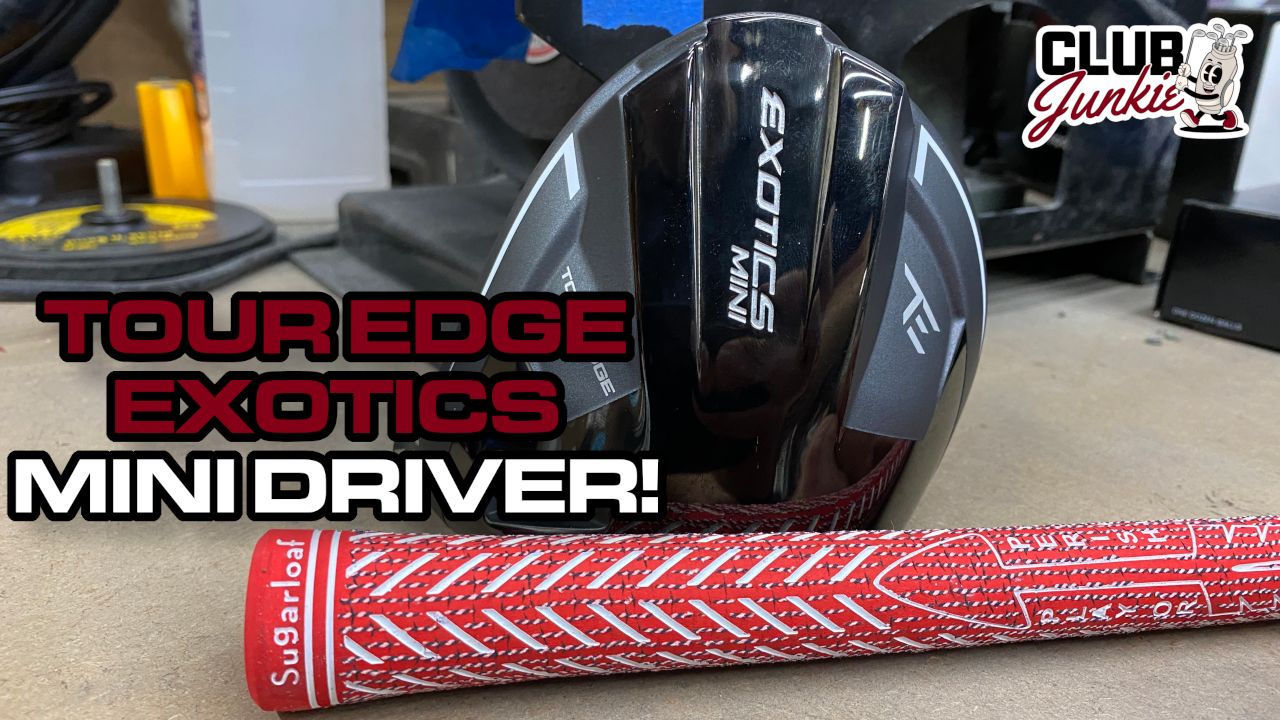
On this episode of Club Junkie, I put the new Tour Edge Exotics Mini Driver to the test and break down the performance, forgiveness, distance, and where it fits compared to a traditional driver or strong fairway wood. If you have been curious about adding a mini driver to the bag, this one is worth a look.
I also dive into the new TaylorMade Spider ZT Max putter that was recently spotted and discuss the growing zero torque putter trend. Plus, there is a closer look at the new Project X Titan Yellow shaft showing up on the PGA Tour and what makes it different from other profiles currently out there.

Justin Rose WITB 2026 (April): Full WITB breakdown with new McLaren irons

What’s the story behind Webb Simpson’s custom-stamped irons?

Memorial Tournament Tour Report: Rory McIlroy, Cameron Young switch up drivers, and more

Cadillac Championship Tour Report: Spieth’s sizable changes, McLaren Golf launches, and more

Russell Henley’s winning WITB: 2026 Charles Schwab Challenge

Kristoffer Reitan’s winning WITB: 2026 Truist Championship

Aaron Rai’s winning WITB: 2026 PGA Championship

J.T. Poston’s winning WITB: 2026 Memorial Tournament

Best irons 2026: Best irons overall, most forgiving irons, and more

Cameron Young’s winning WITB: 2026 Cadillac Championship


Bud Cauley WITB 2026 (June)
Bud Cauley had >14 clubs in his bag when photographed prior to the Memorial Tournament. Driver: Titleist GTS2 (8 degrees) Shaft: Fujikura...


Hannah Green WITB 2026 (June)
Driver: Titleist GTS3 (10 degrees, D4 SureFit setting) Shaft: Mitsubishi Chemical Diamana RB 53 S 3-wood: Titleist GT3 (15 degrees,...


Asterisk Talley WITB 2026 (June)
Driver: TaylorMade Qi4D (9 degrees) Shaft: Fujikura Ventus Blue 6 S 3-wood: TaylorMade Qi4D (16.5 degrees) Shaft: Fujikura Ventus Blue...

Brianna Do WITB 2026 (June)
Driver: Callaway Quantum Triple Diamond (9 degrees) Shaft: KBS PGW 3-wood: Callaway Elyte Titanium (15 degrees) Shaft: KBS PGW 5-wood:...
-
 Equipment6 days ago
Memorial Tournament Tour Report: Rory McIlroy, Cameron Young switch up drivers, and more
-
 News1 week ago
Russell Henley’s winning WITB: 2026 Charles Schwab Challenge
-
 Whats in the Bag3 days ago
J.T. Poston’s winning WITB: 2026 Memorial Tournament
-
 Equipment3 days ago
Best irons 2026: Best irons overall, most forgiving irons, and more
-

 Equipment1 week ago
Details on Jason Day’s latest prototype Avoda iron setup
-

 Equipment3 weeks ago
CJ Cup Byron Nelson Tour Report: Koepka and Kim’s newest putters finally get hot
-

 News2 weeks ago
Charles Schwab Challenge Tour Report: MacIntyre, Åberg and Spaun all switch putters, TaylorMade launches new Spider
-

 Equipment2 weeks ago
Details on J.J. Spaun’s surprise putter switch


Bert
Nov 7, 2017 at 6:19 pm
Even though his actions sound good, a golf referee, should never physically touch a player. I understand what occurred and the outcome was beneficial to the player, but what if …….
Ryan
Nov 7, 2017 at 2:04 pm
This could be a good event to watch. Most recreational golfers, whether they admit it or not, will pick up there ball at a certain, when they feel they’ve endured enough for that hole. I sometimes play in a group that plays skins, and only birdies or better can win, so everyone picks up after missing for par. No point past that, and we’ll have 3 foursomes done in 3 hours.