
Opinion & Analysis
Small Changes Can Bring Big Results


Now, that October 2017 has come to a close, many golfers — both amateur and professional — have seen their seasons come to an end. Others (college golfers, PGA Tour players, and southern hemisphere residents) are entering a new season. Still others, namely 850 PGA Tour Q-School hopefuls, have seen their seasons start and end with the completion of First Stage. Another 400 Web.com Tour hopefuls will be without playing status at the end of the Q-School process.
So what do most of these millions of golfers have in common? They want, for many different reasons, to improve their games. And what will they do? Probably what they’ve done in the past. Namely, reflection, play, lessons, and practice. Same old, same old.
I think, especially if I had dropped a large chunk of change on Q-School entry fees and other tournament expenses and came away with nothing tangible to show for it, that I just might be open to a different approach to preparation and game improvement. I suggest that serious golfers take a page from other sports, military training, and successful businesses and apply a different philosophy to improving performance. In recent times, a philosophy of continuous improvement through the aggregation of marginal gains has been adopted and implemented with great success. I suggest that you go to the Harvard Business Review and read the article for background.
Now, this theory requires an analytical approach in order to identify the “critical factors” that are present and necessary for success, and then implementing a “process of continuous improvement” for each factor. The idea being that continuous improvement of as little as 1 percent to each factor will have an aggregate effect on the activity as a whole. So, what are critical factors? In the simplest definition they are the key variables, or “little things” that when taken together determine success.
“I will prepare and someday my chance will come.”
— Abraham Lincoln
To bring some clarity to this idea, I want to draw a parallel between PGA Tour Q-School and Navy Seal training. How is this appropriate? Both programs are designed to “weed out” those not able to succeed at the next level, and they had roughly the same wash-out rates of more than 90 percent. That is, until the Navy made some significant changes in order to increase pass rates without lowering standards.
So what did the Navy do?
First, the Navy created and implemented preliminary and introductory programs that developed, improved, strengthened, and tested all necessary and desirable skill levels. These programs are now conducted over the 11 weeks just prior to the start of formal training.
Second, the Navy developed one-on-one mentoring and coaching programs while encouraging candidates to pair off as training partners to increase support and accountability.
Third, the Navy realized the importance of taking a long-term approach to training while focusing on achieving consistent gradual progress over several months, rather than trying to achieve extraordinary results immediately.
So how does what the Navy did apply to golfers?
First, you must understand that Q-School is not really an opportunity. It’s a process that eliminates about 70 percent of participants at each venue at every stage until the finals, where all 150-plus finalists will receive at least some status on the Web.com Tour for the coming year. The first real professional opportunity comes at the finals, where the top-45 will receive enough priority to ensure a good number of tournament starts and additionally, for the first time, there is a prize “purse” available for distribution. So what does as much as $15,000 in entry fees do? Try entry into a process that weeds out more than 95 percent of all those who sign up.
Second, Q-School is still just playing golf, and it is basically the same golf that’s played by millions of golfers every day on courses worldwide.
Third, “Under pressure,” according to SEAL lore, “You don’t rise to the occasion. You sink to the level of your training. That’s why we train so hard.” Bottom line, whenever a golfer plays for, or in, anything meaningful there will be pressure. Pressure to win, to succeed, not to lose or fail.
Fourth, all golfers can adopt the Navy model implementing a philosophy of “continuous improvement.”
So how can golfers implement a philosophy of “continuous improvement?”
First, identify those things that are crucial. In this system, you must marginally improve everything. For example, I have identified four major components, 12 critical factors, and 36 sub factors that apply to everyone’s game. For example, as I see it, there are four major on-course components to all golf games:
- Putting
- Scoring Shots
- Recovery Shots
- Stock Shots.
Putting is composed of three vital factors:
- All putts must be read correctly.
- All putts must start on the intended line.
- All putts must go the intended distance.
In my system, each of these factors has three sub factors. I will provide a list of these factors to all those who request it. Just email me at [email protected].
Second, assign or design specific drills with measurable standards for each factor or sub-factor. I use a system known as “Deliberate Practice,” which is purposeful and systematic.
Third, keep track of goals, objectives, and progress.
“Most people miss Opportunity because it is dressed in overalls and looks like work.”
— Thomas Edison
Now for the flip side: you must be aware that the “aggregation of marginal losses” is just as powerful a phenomenon. A 1-percent decline in various skills can offset marginal gains. So no matter how hard you work, the net effect may produce less than satisfying results.
So, if you want 2018 to be different than 2017, I suggest you start improving your game sooner rather than later.



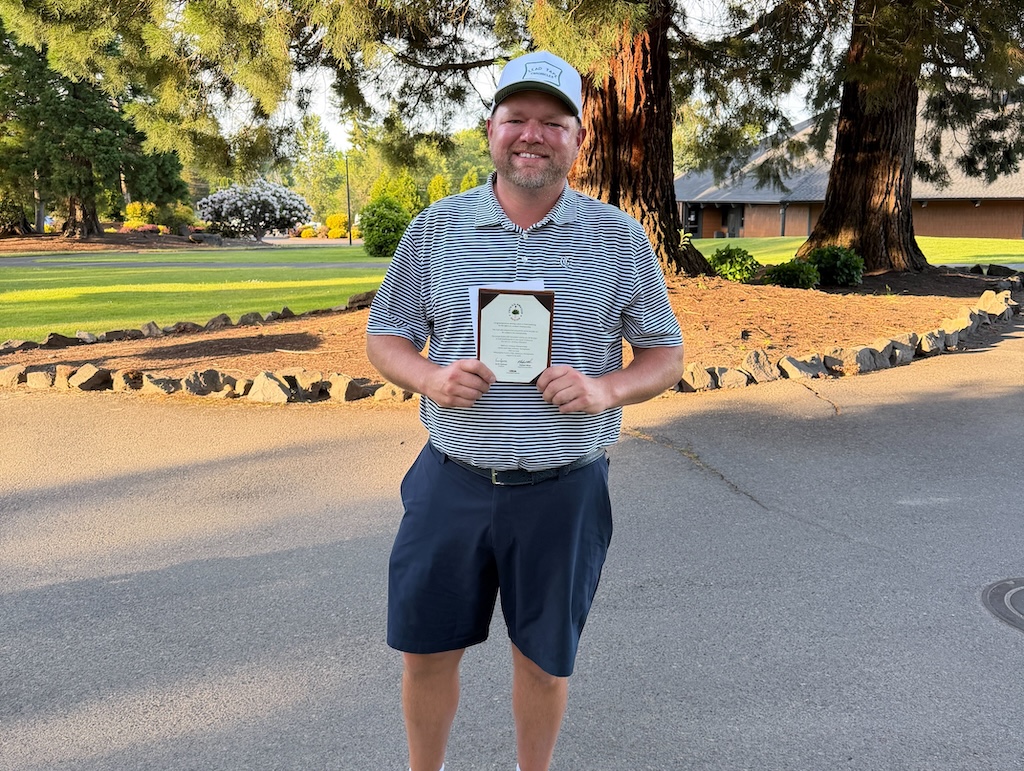
This past Monday, I played in the U.S. Amateur local qualifier at Rock Creek Country Club in Portland, Oregon. A full tee sheet from 7:30 a.m. to 1:55 p.m., the top 11 scores would make it to the U.S. Amateur final qualifying.
I teed off at 10:48 a.m.. With the 7:30 am tee time, you can get a feel for the leaders’ pace, and they were off and running on the challenging setup at Rock Creek.
View this post on Instagram
Getting to the highlight of the round on the par five 17th, a drive up the left side and 212 yards left to the front hole location. I took out a 5-iron with plans of middle of the green. The ball ended up 8 feet left of the hole, pin high. A slight downhill putt dropped in for an eagle 3 on the 17th. With the cut line looking to be anywhere from -2 to even par. This was the boost I had been waiting for all day.
With making par from the trees on 18, it was time to wait for a potential playoff with a posted score of one under par 71.
Three hours later, it was playoff time. 8 players for 6 spots. I made par on the playoff hole, which was good enough to advance to the U.S. Amateur final qualifying in July. USGA qualifiers sure deliver on all of the emotions in golf!
Club Junkie
Building my 2026 gamer WITB: Ranking the contenders and new putter projects – Club Junkie Podcast

The annual What’s In The Bag build is underway, and on this episode of Club Junkie, Brian breaks down the clubs currently leading the race for a spot in his 2026 gamer setup. From drivers and fairway woods to irons, wedges, and shafts, he ranks the equipment that’s performing best and explains what’s separating the front runners from the rest of the field.
Brian also heads into the workshop to discuss several putter projects currently on the bench. From head options and shaft choices to build ideas and testing plans, he shares what he’s working on and which putters could become serious contenders for the bag this season.
If you’re a gear junkie who loves equipment testing, club building, and the never-ending pursuit of the perfect setup, this episode is for you.
Follow Club Junkie:
Instagram: @clubjunkiepod
TikTok: @clubjunkiepod
Threads: @clubjunkiepod
X: @ClubJunkiePod
Club Junkie
Tour Edge Exotics mini driver review + TaylorMade Spider ZT Max first look – Club Junkie

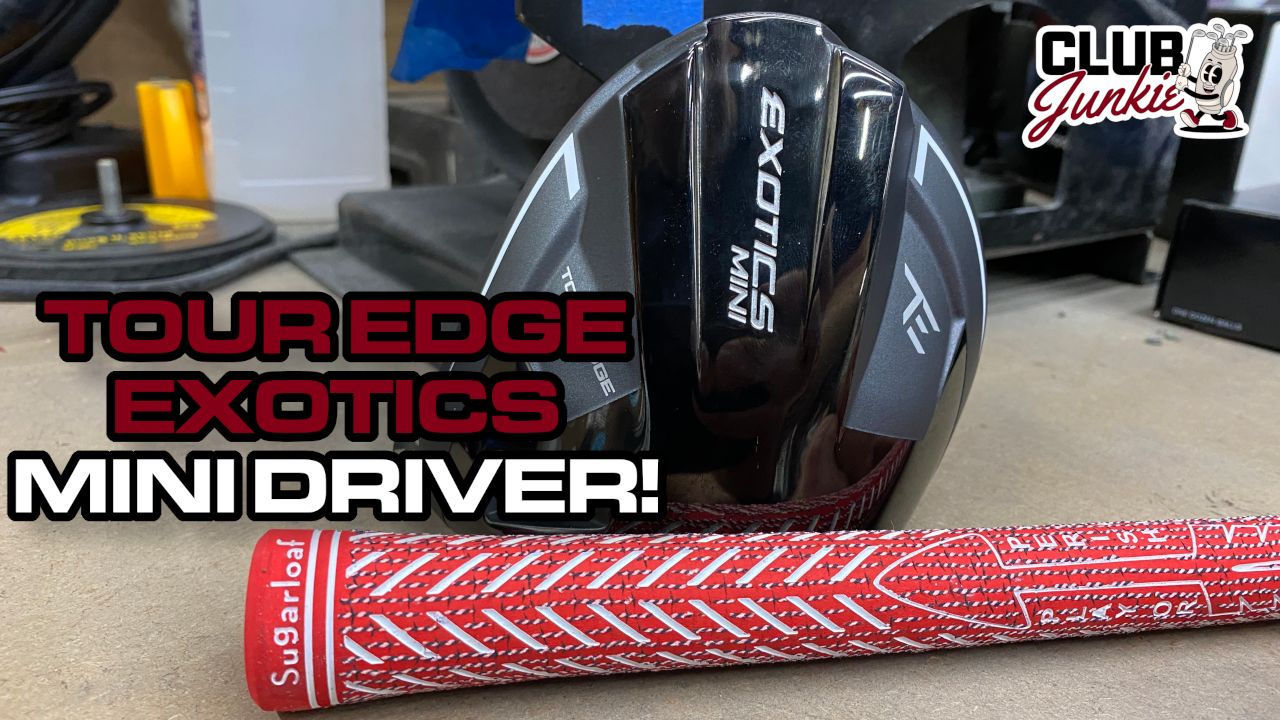
On this episode of Club Junkie, I put the new Tour Edge Exotics Mini Driver to the test and break down the performance, forgiveness, distance, and where it fits compared to a traditional driver or strong fairway wood. If you have been curious about adding a mini driver to the bag, this one is worth a look.
I also dive into the new TaylorMade Spider ZT Max putter that was recently spotted and discuss the growing zero torque putter trend. Plus, there is a closer look at the new Project X Titan Yellow shaft showing up on the PGA Tour and what makes it different from other profiles currently out there.

Justin Rose WITB 2026 (April): Full WITB breakdown with new McLaren irons

What’s the story behind Webb Simpson’s custom-stamped irons?

Memorial Tournament Tour Report: Rory McIlroy, Cameron Young switch up drivers, and more

Cadillac Championship Tour Report: Spieth’s sizable changes, McLaren Golf launches, and more

Russell Henley’s winning WITB: 2026 Charles Schwab Challenge

Kristoffer Reitan’s winning WITB: 2026 Truist Championship

Best irons 2026: Best irons overall, most forgiving irons, and more

J.T. Poston’s winning WITB: 2026 Memorial Tournament

Aaron Rai’s winning WITB: 2026 PGA Championship

Cameron Young’s winning WITB: 2026 Cadillac Championship


Bud Cauley WITB 2026 (June)
Bud Cauley had >14 clubs in his bag when photographed prior to the Memorial Tournament. Driver: Titleist GTS2 (8 degrees) Shaft: Fujikura...


Hannah Green WITB 2026 (June)
Driver: Titleist GTS3 (10 degrees, D4 SureFit setting) Shaft: Mitsubishi Chemical Diamana RB 53 S 3-wood: Titleist GT3 (15 degrees,...


Asterisk Talley WITB 2026 (June)
Driver: TaylorMade Qi4D (9 degrees) Shaft: Fujikura Ventus Blue 6 S 3-wood: TaylorMade Qi4D (16.5 degrees) Shaft: Fujikura Ventus Blue...


Brianna Do WITB 2026 (June)
Driver: Callaway Quantum Triple Diamond (9 degrees) Shaft: KBS PGW 3-wood: Callaway Elyte Titanium (15 degrees) Shaft: KBS PGW 5-wood:...
-
 Equipment6 days ago
Memorial Tournament Tour Report: Rory McIlroy, Cameron Young switch up drivers, and more
-
 News2 weeks ago
Russell Henley’s winning WITB: 2026 Charles Schwab Challenge
-
 Equipment3 days ago
Best irons 2026: Best irons overall, most forgiving irons, and more
-
 Whats in the Bag4 days ago
J.T. Poston’s winning WITB: 2026 Memorial Tournament
-

 Equipment1 week ago
Details on Jason Day’s latest prototype Avoda iron setup
-
 Equipment3 weeks ago
CJ Cup Byron Nelson Tour Report: Koepka and Kim’s newest putters finally get hot
-

 News2 weeks ago
Charles Schwab Challenge Tour Report: MacIntyre, Åberg and Spaun all switch putters, TaylorMade launches new Spider
-

 Equipment2 weeks ago
Details on J.J. Spaun’s surprise putter switch


Ed Mellick
Nov 6, 2017 at 11:44 am
Excellent article from a different approach with accountability.
If you look at the minuscule scoring average differences from all the Tours, you can see what even minuscule improvements can make in
rankings and dollars earned.
Gilles
Nov 5, 2017 at 11:50 am
Same advice on gripping for the last 50 years and if hasn’t sunk in by now give it up.
etc.
Nov 4, 2017 at 4:24 pm
Putting is composed of three vital factors:
1. All putts must be read correctly.
2. All putts must start on the intended line.
3. All putts must go the intended distance.
—————
Forget it because if you buy new model Scotty or Bettinardi, or even a Kramski putter with diamonds or sapphires embedded in the back, your $$$$$$ putter will do all that for you.