
Opinion & Analysis
Do you know your golf blind spots?


I was inspired to write this article by a quote I come across from a friend of mine, Melinda Harrison, a former Olympic swimmer who specializes in helping athletes transition from the world of sport to their next great venture.
“If you do not see the wave coming, it can smack you down and pull you under leaving you feeling tossed around, upside down, gasping for breath and picking out sand from areas you never knew existed,” she wrote.
I knew this feeling well in my golf game. I was tossed around often. In fact, these waves were blind spots that eventually derailed a golf career that had promise. I found myself metaphorically picking sand from areas I never knew existed (far too many times), and I wasn’t understanding how it was happened.
What are the blind spots in your game? Those waves you don’t see coming that leave you tossed around and falling short of your capabilities.
Right now is a great time of the year to roll up your sleeves and reflect on what happened during the year — and what you might do in 2017 to get more enjoyment and make some positive strides in your game. How was your golf year? Happy with it? Wanting more?
In a reflection exercise, I highly recommend you consider your own blind spots, and what might be unconsciously holding you back from moving forward and getting more out of your game.
Blind spots damage performance
Working with world-class performers every day, I can assure you that understanding blind spots is important in performance. Almost every performer I have worked with has them, and I expect you do, too. Part of my job is to help these world-class performers identify their blind spots, making sure they have a clear view of what’s beneath their awareness and might therefore be holding them back.
Let’s highlight the idea of blind spots by using my own professional golf career as an example. This may help you start thinking about your own blind spots and get the wheels turning. I had a few tendencies that were constantly beneath my awareness that kept me on the treadmill and not striding forward on a steady, consistent career path.
A few examples:
- Spending far too much practice time trying to perfect driving when I was a solid, consistent driver of the ball.
- Focusing too much time on the long game, obsessing about it and not allocating more effort to the game from 100 yards and in from the green. I neglected to keep the object of the game in mind (shooting the lowest score possible!).
- Failing to develop my self-awareness. I had limited awareness how my emotions were knocking me around and creating a blurry focus, especially under the pressures of professional golf.
- Not fully understanding the critical impact of expectations on my day-to-day performance.
- No clear path forward. I did not have a well-defined vision or detailed steps in place to guide day-to-day progress and development.
You can imagine how these blind spots could make sustainable progress in the game difficult. Each of the areas above needed attention in order to have a better opportunity to reach new levels.
What are your blind spots?
What is holding you back that may be beneath your awareness? This offseason, I encourage you to think about your own blind spots, and also consider some help from others who may know your game. Chances are an honest assessment of your blind spots, and some outside feedback, will shed some light on the factors that are limiting you.
To help you further, here are a few common golf blind spots that I have seen in players I work with at a variety of levels. Could any of these apply to you?
- Spending a large percentage of your time on the long game (constantly “fine-tuning” your motion) and a small percentage of your time on the scoring areas, when that ratio should be reversed.
- Getting far too caught up in the science of the game and neglecting the art component.
- Having trouble taking your game from the practice tee to the first tee and not understanding why.
- Your practice is not functional, meaning your practice has no real relationship to creating a score on the course.
- Losing focus over poor shots and not being able to get it back on track the rest of the round.
- Scores on your nines are often wide apart, i.e. you play great on the front nine and stumble on the back nine (or vice versa) and you don’t know why.
- Not enjoying the game as much as you should and not knowing why.
These ideas should help you get started on your own assessment. Take some time to think about it in the off-season. Reflection is an important characteristic in high performers and a key to improvement. Identifying your blind spots is a great first step in understanding what may be holding you back in your game.



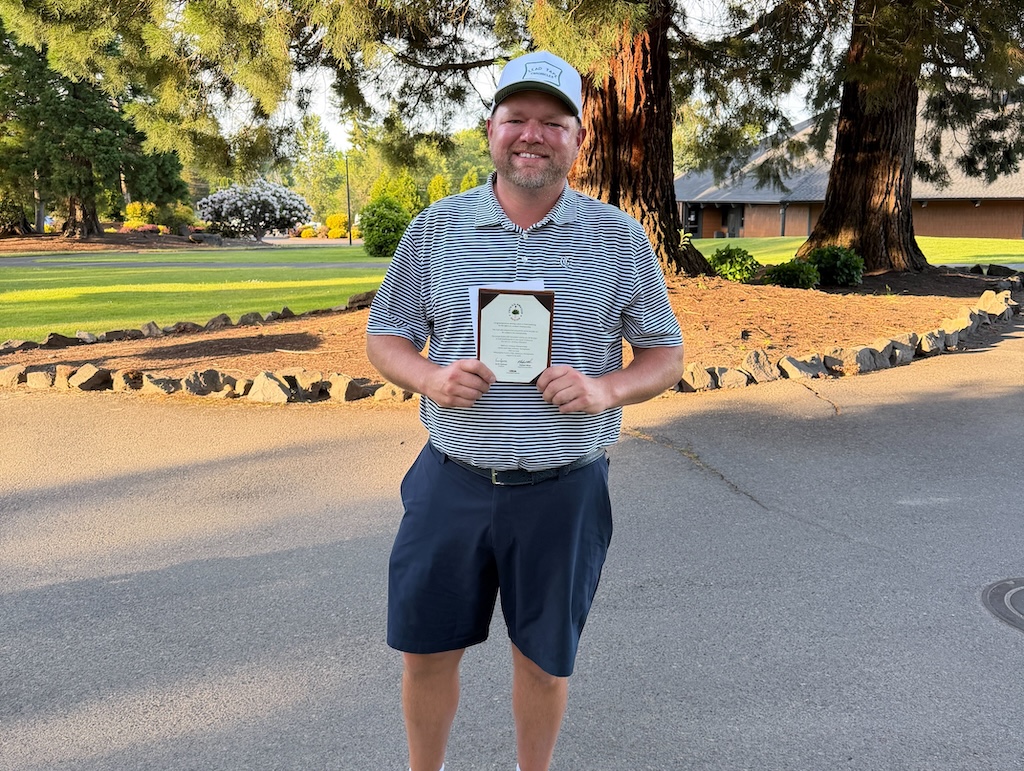
This past Monday, I played in the U.S. Amateur local qualifier at Rock Creek Country Club in Portland, Oregon. A full tee sheet from 7:30 a.m. to 1:55 p.m., the top 11 scores would make it to the U.S. Amateur final qualifying.
I teed off at 10:48 a.m.. With the 7:30 am tee time, you can get a feel for the leaders’ pace, and they were off and running on the challenging setup at Rock Creek.
View this post on Instagram
Getting to the highlight of the round on the par five 17th, a drive up the left side and 212 yards left to the front hole location. I took out a 5-iron with plans of middle of the green. The ball ended up 8 feet left of the hole, pin high. A slight downhill putt dropped in for an eagle 3 on the 17th. With the cut line looking to be anywhere from -2 to even par. This was the boost I had been waiting for all day.
With making par from the trees on 18, it was time to wait for a potential playoff with a posted score of one under par 71.
Three hours later, it was playoff time. 8 players for 6 spots. I made par on the playoff hole, which was good enough to advance to the U.S. Amateur final qualifying in July. USGA qualifiers sure deliver on all of the emotions in golf!
Club Junkie
Building my 2026 gamer WITB: Ranking the contenders and new putter projects – Club Junkie Podcast

The annual What’s In The Bag build is underway, and on this episode of Club Junkie, Brian breaks down the clubs currently leading the race for a spot in his 2026 gamer setup. From drivers and fairway woods to irons, wedges, and shafts, he ranks the equipment that’s performing best and explains what’s separating the front runners from the rest of the field.
Brian also heads into the workshop to discuss several putter projects currently on the bench. From head options and shaft choices to build ideas and testing plans, he shares what he’s working on and which putters could become serious contenders for the bag this season.
If you’re a gear junkie who loves equipment testing, club building, and the never-ending pursuit of the perfect setup, this episode is for you.
Follow Club Junkie:
Instagram: @clubjunkiepod
TikTok: @clubjunkiepod
Threads: @clubjunkiepod
X: @ClubJunkiePod
Club Junkie
Tour Edge Exotics mini driver review + TaylorMade Spider ZT Max first look – Club Junkie

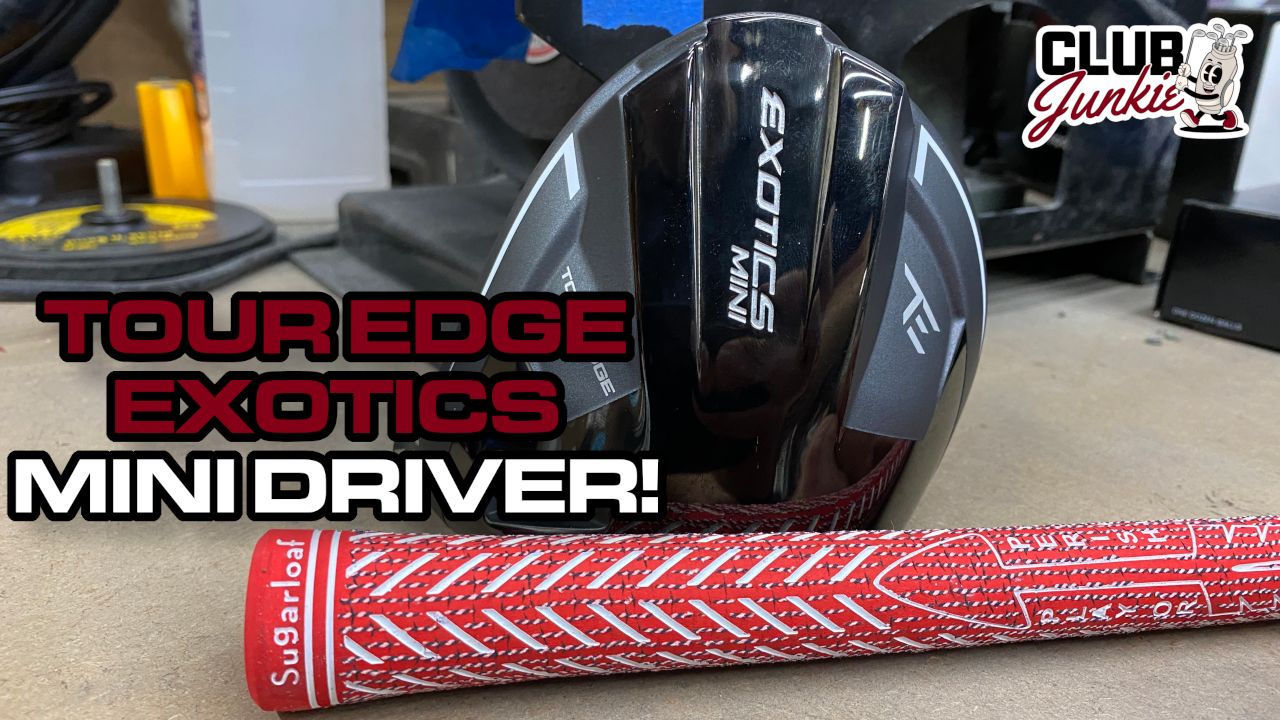
On this episode of Club Junkie, I put the new Tour Edge Exotics Mini Driver to the test and break down the performance, forgiveness, distance, and where it fits compared to a traditional driver or strong fairway wood. If you have been curious about adding a mini driver to the bag, this one is worth a look.
I also dive into the new TaylorMade Spider ZT Max putter that was recently spotted and discuss the growing zero torque putter trend. Plus, there is a closer look at the new Project X Titan Yellow shaft showing up on the PGA Tour and what makes it different from other profiles currently out there.

Justin Rose WITB 2026 (April): Full WITB breakdown with new McLaren irons

What’s the story behind Webb Simpson’s custom-stamped irons?

Memorial Tournament Tour Report: Rory McIlroy, Cameron Young switch up drivers, and more

Cadillac Championship Tour Report: Spieth’s sizable changes, McLaren Golf launches, and more

Russell Henley’s winning WITB: 2026 Charles Schwab Challenge

Kristoffer Reitan’s winning WITB: 2026 Truist Championship

J.T. Poston’s winning WITB: 2026 Memorial Tournament

Aaron Rai’s winning WITB: 2026 PGA Championship

Best irons 2026: Best irons overall, most forgiving irons, and more

Cameron Young’s winning WITB: 2026 Cadillac Championship


Bud Cauley WITB 2026 (June)
Bud Cauley had >14 clubs in his bag when photographed prior to the Memorial Tournament. Driver: Titleist GTS2 (8 degrees) Shaft: Fujikura...


Hannah Green WITB 2026 (June)
Driver: Titleist GTS3 (10 degrees, D4 SureFit setting) Shaft: Mitsubishi Chemical Diamana RB 53 S 3-wood: Titleist GT3 (15 degrees,...


Asterisk Talley WITB 2026 (June)
Driver: TaylorMade Qi4D (9 degrees) Shaft: Fujikura Ventus Blue 6 S 3-wood: TaylorMade Qi4D (16.5 degrees) Shaft: Fujikura Ventus Blue...


Brianna Do WITB 2026 (June)
Driver: Callaway Quantum Triple Diamond (9 degrees) Shaft: KBS PGW 3-wood: Callaway Elyte Titanium (15 degrees) Shaft: KBS PGW 5-wood:...
-
 Equipment6 days ago
Memorial Tournament Tour Report: Rory McIlroy, Cameron Young switch up drivers, and more
-
 News1 week ago
Russell Henley’s winning WITB: 2026 Charles Schwab Challenge
-
 Whats in the Bag3 days ago
J.T. Poston’s winning WITB: 2026 Memorial Tournament
-
 Equipment3 days ago
Best irons 2026: Best irons overall, most forgiving irons, and more
-

 Equipment1 week ago
Details on Jason Day’s latest prototype Avoda iron setup
-
 Equipment3 weeks ago
CJ Cup Byron Nelson Tour Report: Koepka and Kim’s newest putters finally get hot
-

 News2 weeks ago
Charles Schwab Challenge Tour Report: MacIntyre, Åberg and Spaun all switch putters, TaylorMade launches new Spider
-
 Equipment2 weeks ago
Details on J.J. Spaun’s surprise putter switch


Dave R
Nov 28, 2016 at 12:29 pm
My blind spot is when I miss a putt I only see red and then I go blind only for a second.
Jordan Speeth
Nov 27, 2016 at 2:29 pm
Where does one start when you’re dead-shanking 30% of your shots, including chips and pitches. All you can do is hit full shots until you can conquer it and get some sort of confidence back. It’s good that my memory is fading…maybe it’ll be easier to forget this phase when/if it’s over. I’m trying everything, without much success. Cheers to all…Happy Holidays!
M.
Nov 27, 2016 at 9:55 pm
monte scheinblum…
Your welcome:)
Bert
Nov 27, 2016 at 8:33 am
Well thought out topic, thanks I appreciate the read. I will evaluate my declining game, this past year, and see where I need to get back on track. I’m not a super player, mostly around a 7 handicap, but this year up to an 11. I’ve noticed my normal felling for short shots surrounding the green after a miss are really lacking confidence. In the past I always felt I could “get it close”, but now not so much.
John Haime
Nov 28, 2016 at 10:59 am
thank-you Bert.
Carefully evaluate why the short game might be eroding – is it related to problems in the long game and putting more pressure on the short game to maintain the 7 handicap? How much are you working on the short shots? “Knowing” you can do it is developed through practice, repetition. Work on technique and test changes in practice and then take it to the course. Check out little ebook on confidence I wrote with PGA Tour coach Steve Bann – http://www.golfconfidencetraining.com.
R
Nov 26, 2016 at 3:54 pm
“metaphorically”
is why you FAIL. Your mind is not equipped to think in the NOW, in the moment, to feel and stare at the reality of the situation at hand. That’s just how it is for some people, just as it is that some people won’t have the foggiest (metaphorically speaking, haha) what you’re talking about.
M Smizzle
Nov 26, 2016 at 5:22 pm
Similes are much easier to understand
Double Mocha Man
Nov 26, 2016 at 1:46 pm
The most difficult thing to do during a round is rebound from some bad, totally puzzling shots. But you must. Continue to swing your swing, almost robotically. Put your emotions on the back burner and move forward. When you finish with an acceptable 77 go to the parking lot and smash your windshield. I made a career of beating better players in college golf because I would only “give up” after I heard the rattle of my ball in the cup on the 18th hole.
RogDog
Nov 27, 2016 at 2:26 am
Yeah and look where that got you lol
M Smizzle
Nov 26, 2016 at 12:49 pm
Rory Or Danny McBride?