
Opinion & Analysis
The birth of golf, and how the term “links” came about

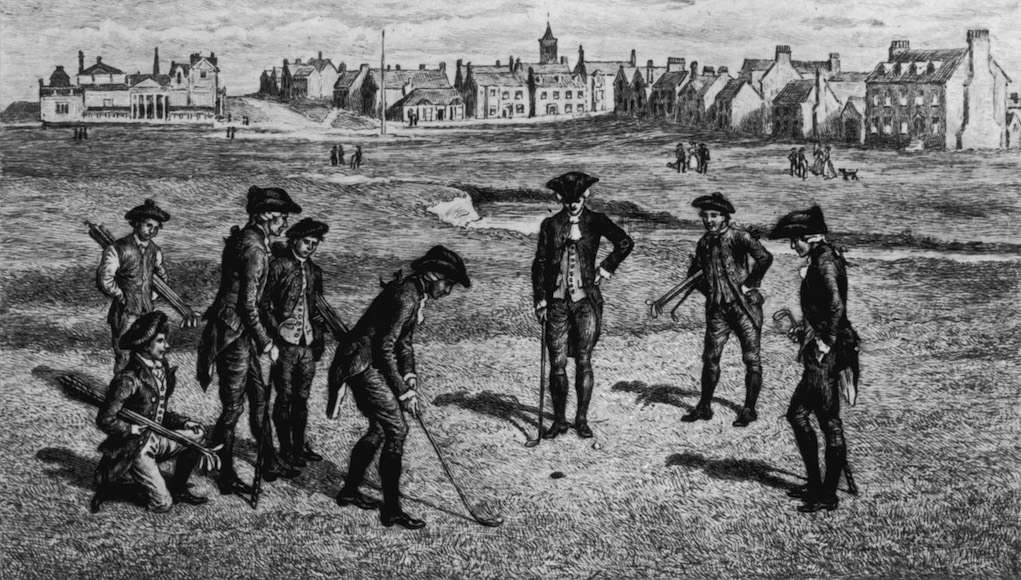
Back in the dark ages, before the iPhone, before the steam engine and even before golf, the only thing in Scotland that had real value was land. Land produced food crops, it harbored fish and game. Land was life sustaining and therefore valuable.
Of course, there was some land that wasn’t valuable: the sand dunes parallel to the beaches, for instance. That land was useless. Couldn’t grow anything on it and nobody had thought of building condos yet.
A few sheep might wander in for a chew of spring grass, but other than that, the land was like a large neighborhood vacant lot. The locals used it as a commons area: a place to stroll, walk the dog, take a little afternoon sun — if there was any — and catch up on the local gossip: “Did you see what she wore!?”
Maybe it was inevitable that somebody would devise an activity that transformed it into something useful. Like… pick out a rabbit hole, take a stick and try to hit the rock into the hole. By George, I like that! Let’s do it again.
Soon the rocks became “featheries,” little leather balls stuffed with feathers, the sticks became clubs with wooden heads, and the rabbit holes became … well, actually the rabbit holes became pot bunkers, but I’m getting ahead of myself.
All of a sudden, that useless tract of land, land called “links” by the old Scots who whacked away at those featheries, gave birth to the greatest game: “gawf.” And the term “links” became synonymous with the game.
It was on this common links land that the “gawfers” elbowed the other townies out of the way long enough for the game to slowly evolve and codify its form, rules and decorum. Of course, once enough folks were bitten by the game, and once the benefits — economic and otherwise — were understood, everyone agreed that the use of the commons for golf was a good thing and the courses took their final form.
They sprouted from the natural terrain: no Caterpillar dozers or John Deere mowers. Everything was done by hand. Old Tom Morris would be out there directing a small work gang. Cut here. Plant there. Dig deeper.
In between the dunes, the burns, the rabbit holes, the gorse bushes and heathers, patches of fescue were cut down so one could find the feathery, putting surfaces were laid out so one could put it in the hole, and tee boxes were identified so the hole had a starting point.
In the early summer, when the local herds had munched the spring grasses way down, play began. And it continued through the winter while nothing grew. There was no water, of course. If it rained, good, the grass would green up a bit. If it didn’t rain, OK, the ground baked hard as adobe.
And 170 years later, that’s pretty much what a links course is today: sand dunes and wind complementing the bumpy brown turf and fescue. Hard to tell the fairways from the rough. Hard to tell the greens from the fairways. Sometimes you’ll even see a double green, one that services two different holes (easier to make and cheaper to maintain).
In some places, like the Old Course at St. Andrews, it’s still a commons area. And as you play down the first, or up the 18th, it’s not unusual to see people out for a stroll with kids and dogs wandering across the course. Sometimes a child will run out to your ball and pick it up like he’s found an Easter Egg. “Look, Mommy!”
Oh, and no trees. That nutrient-poor links soil can’t support trees. This exacerbates the wind problem. With nothing to discourage the force, it becomes a constant opponent. All shots have to be played under it, through it or with it. This leads to a low-running golf game. And when the ball runs, there’s really no telling where it’s going to wind up. The “fairways” are wildly uneven and hard as a cast iron frying pan. Your ball will hop around like a Mexican jumping bean on a hot griddle.
Now the typical American golfer is used to playing a high-plopping kind of game. Throw it up and let it settle. This definitely won’t do on a links course. The ball will be blown hither and yon. Mostly yon. So one has to adapt. But once that bridge is crossed, it’s great fun and great golf.
This treeless, windblown, bumpy, lumpy, dry, brown, hippity-hop course next to the beach is what we are describing when we say, “links golf.” In Scotland and the U.K. it’s the opposite of a “parkland course,” one that is inland and that has trees and lots of mown grass.
Links golf has that authentic feel to it. It’s different. It’s a challenge. Golfers all over the world want a taste of it. The “links look” has been copied everywhere. Probably right in your backyard, too. Whack those trees down. Mound up the dirt to make lots of whoop-ti-dos. Let it dry out some. Plant fescue. Dump sand all over the place… and pray for wind.
The Open Championships are played on links courses. Carnoustie, Troon and St. Andrews are among the hallowed. But Prestwick, Cruden Bay and Royal Dornoch are even better. All are in Scotland. All on that old useless land.
Pete Dye has created links courses in the U.S., with the Ocean Course at Kiawah being arguably the best, although his Whistling Straits and Irish Course at Kohler are close behind (on the Irish, they even have a small herd of sheep that tidy up the rough, just like back in the old days).
From now on, when you hear “links course,” think of Old Tom Morris out there, sleeves rolled up, scythe in hand. His mantra had to be, “Let’s keep it simple, lads. I have to do all the maintenance myself!”



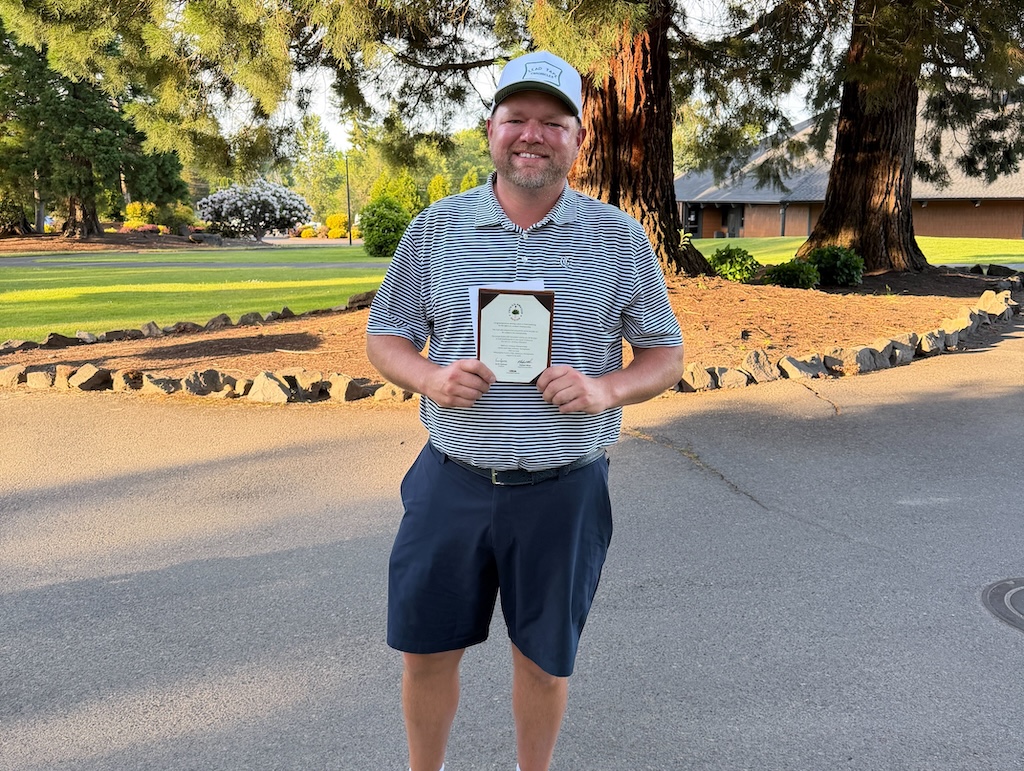
This past Monday, I played in the U.S. Amateur local qualifier at Rock Creek Country Club in Portland, Oregon. A full tee sheet from 7:30 a.m. to 1:55 p.m., the top 11 scores would make it to the U.S. Amateur final qualifying.
I teed off at 10:48 a.m.. With the 7:30 am tee time, you can get a feel for the leaders’ pace, and they were off and running on the challenging setup at Rock Creek.
View this post on Instagram
Getting to the highlight of the round on the par five 17th, a drive up the left side and 212 yards left to the front hole location. I took out a 5-iron with plans of middle of the green. The ball ended up 8 feet left of the hole, pin high. A slight downhill putt dropped in for an eagle 3 on the 17th. With the cut line looking to be anywhere from -2 to even par. This was the boost I had been waiting for all day.
With making par from the trees on 18, it was time to wait for a potential playoff with a posted score of one under par 71.
Three hours later, it was playoff time. 8 players for 6 spots. I made par on the playoff hole, which was good enough to advance to the U.S. Amateur final qualifying in July. USGA qualifiers sure deliver on all of the emotions in golf!
Club Junkie
Building my 2026 gamer WITB: Ranking the contenders and new putter projects – Club Junkie Podcast

The annual What’s In The Bag build is underway, and on this episode of Club Junkie, Brian breaks down the clubs currently leading the race for a spot in his 2026 gamer setup. From drivers and fairway woods to irons, wedges, and shafts, he ranks the equipment that’s performing best and explains what’s separating the front runners from the rest of the field.
Brian also heads into the workshop to discuss several putter projects currently on the bench. From head options and shaft choices to build ideas and testing plans, he shares what he’s working on and which putters could become serious contenders for the bag this season.
If you’re a gear junkie who loves equipment testing, club building, and the never-ending pursuit of the perfect setup, this episode is for you.
Follow Club Junkie:
Instagram: @clubjunkiepod
TikTok: @clubjunkiepod
Threads: @clubjunkiepod
X: @ClubJunkiePod
Club Junkie
Tour Edge Exotics mini driver review + TaylorMade Spider ZT Max first look – Club Junkie

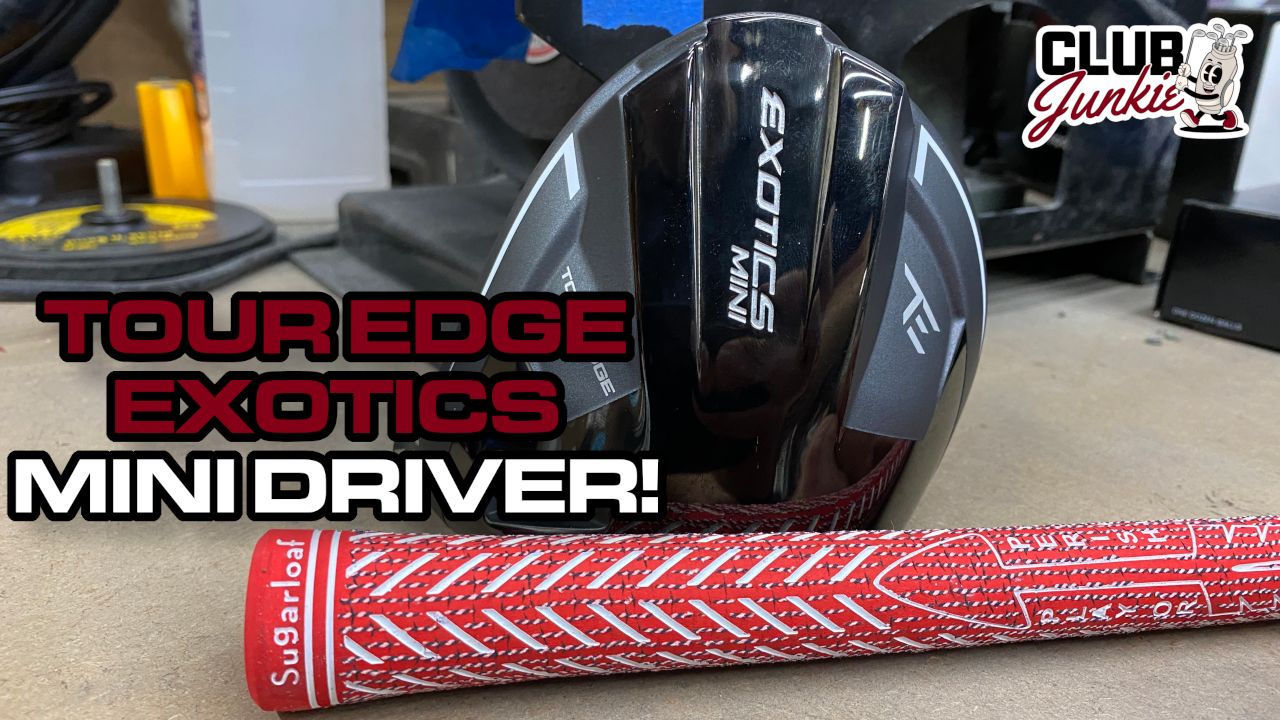
On this episode of Club Junkie, I put the new Tour Edge Exotics Mini Driver to the test and break down the performance, forgiveness, distance, and where it fits compared to a traditional driver or strong fairway wood. If you have been curious about adding a mini driver to the bag, this one is worth a look.
I also dive into the new TaylorMade Spider ZT Max putter that was recently spotted and discuss the growing zero torque putter trend. Plus, there is a closer look at the new Project X Titan Yellow shaft showing up on the PGA Tour and what makes it different from other profiles currently out there.

What’s the story behind Webb Simpson’s custom-stamped irons?

Memorial Tournament Tour Report: Rory McIlroy, Cameron Young switch up drivers, and more

Cadillac Championship Tour Report: Spieth’s sizable changes, McLaren Golf launches, and more

Russell Henley’s winning WITB: 2026 Charles Schwab Challenge

Kristoffer Reitan’s winning WITB: 2026 Truist Championship

Best irons 2026: Best irons overall, most forgiving irons, and more

J.T. Poston’s winning WITB: 2026 Memorial Tournament

Aaron Rai’s winning WITB: 2026 PGA Championship

Cameron Young’s winning WITB: 2026 Cadillac Championship

Details on Jason Day’s latest prototype Avoda iron setup


Christiaan Maas WITB 2026 (June)
Driver: TaylorMade Qi4D LS (8 degrees) Shaft: Fujikura Ventus TR Blue 6 X 3-wood: TaylorMade Qi10 (15 degrees) Shaft: Fujikura Ventus Black...


Ryan Palmer WITB 2026 (June)
Driver: Callaway Quantum Triple Diamond (9 degrees) Shaft: Project X HZRDUS Smoke Blue RDX 60 TX 3-wood: TaylorMade Qi10 (15 degrees) Shaft:...


Bud Cauley WITB 2026 (June)
Bud Cauley had >14 clubs in his bag when photographed prior to the Memorial Tournament. Driver: Titleist GTS2 (8 degrees) Shaft: Fujikura...


Hannah Green WITB 2026 (June)
Driver: Titleist GTS3 (10 degrees, D4 SureFit setting) Shaft: Mitsubishi Chemical Diamana RB 53 S 3-wood: Titleist GT3 (15 degrees,...
-
 Equipment6 days ago
Memorial Tournament Tour Report: Rory McIlroy, Cameron Young switch up drivers, and more
-
 News2 weeks ago
Russell Henley’s winning WITB: 2026 Charles Schwab Challenge
-
 Equipment3 days ago
Best irons 2026: Best irons overall, most forgiving irons, and more
-
 Whats in the Bag4 days ago
J.T. Poston’s winning WITB: 2026 Memorial Tournament
-
 Equipment1 week ago
Details on Jason Day’s latest prototype Avoda iron setup
-
 Equipment3 weeks ago
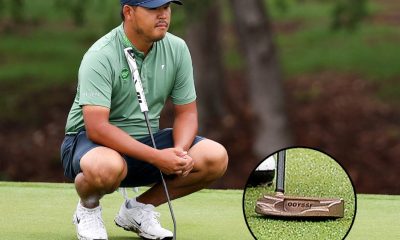
CJ Cup Byron Nelson Tour Report: Koepka and Kim’s newest putters finally get hot
-

 News2 weeks ago
Charles Schwab Challenge Tour Report: MacIntyre, Åberg and Spaun all switch putters, TaylorMade launches new Spider
-

 Equipment2 weeks ago
Details on J.J. Spaun’s surprise putter switch


Spackler
Nov 28, 2016 at 7:11 pm
Ummm not very informative. The name golf was actually derived from the word Kolf which is Dutch.
Matto
Nov 28, 2016 at 12:53 am
Wait… The title states; How the term “Links” came about…..but then you don’t explain how the term “Links” came about?
Interesting writing.
It’s the land that links the useful/farm land to the beach.
RichEwen
Nov 27, 2016 at 12:14 pm
What he said.
Minge
Nov 27, 2016 at 11:44 am
Yeh.
When
With Whom
How
Where
did this game come about?
I thought this was going to an article with a history lesson in it, not some blazé skimmed overview opinion. A wasted 2 minutes it what it is
Double Mocha Man
Nov 30, 2016 at 10:41 am
You’re a faster reader than I am.
Bill Mac
Dec 5, 2016 at 4:01 pm
Yeh, and I just waisted 15 seconds.
SV
Nov 27, 2016 at 11:13 am
The is nothing more fun than playing Carnoustie and the Old Course. If you can score within 5 to even 10 of your handicap you have played a good round. It is a whole different world, but one you need to experience.