
Opinion & Analysis
My 18 favorite quotes from Arnold Palmer’s first golf book


This week St. Martin’s Press issues Arnold Palmer’s final book: A Life Well Played: My Stories. I’m looking forward to reading it.
Meantime, in the days since his passing, I’ve been tearily commemorating that well-played life by spending time with several of the King’s other books. Two of them—The Arnold Palmer Method (1968) and Situation Golf (1970)—are old friends of mine; they were basically my instructional library, in my earliest years of playing. But it seemed fitting, with the last at hand, to give special attention to the first: Arnold Palmer’s Golf Book: “Hit It Hard!” It was written, with the help of Bob Drum, at the end of 1960, which was unarguably Palmer’s greatest year.
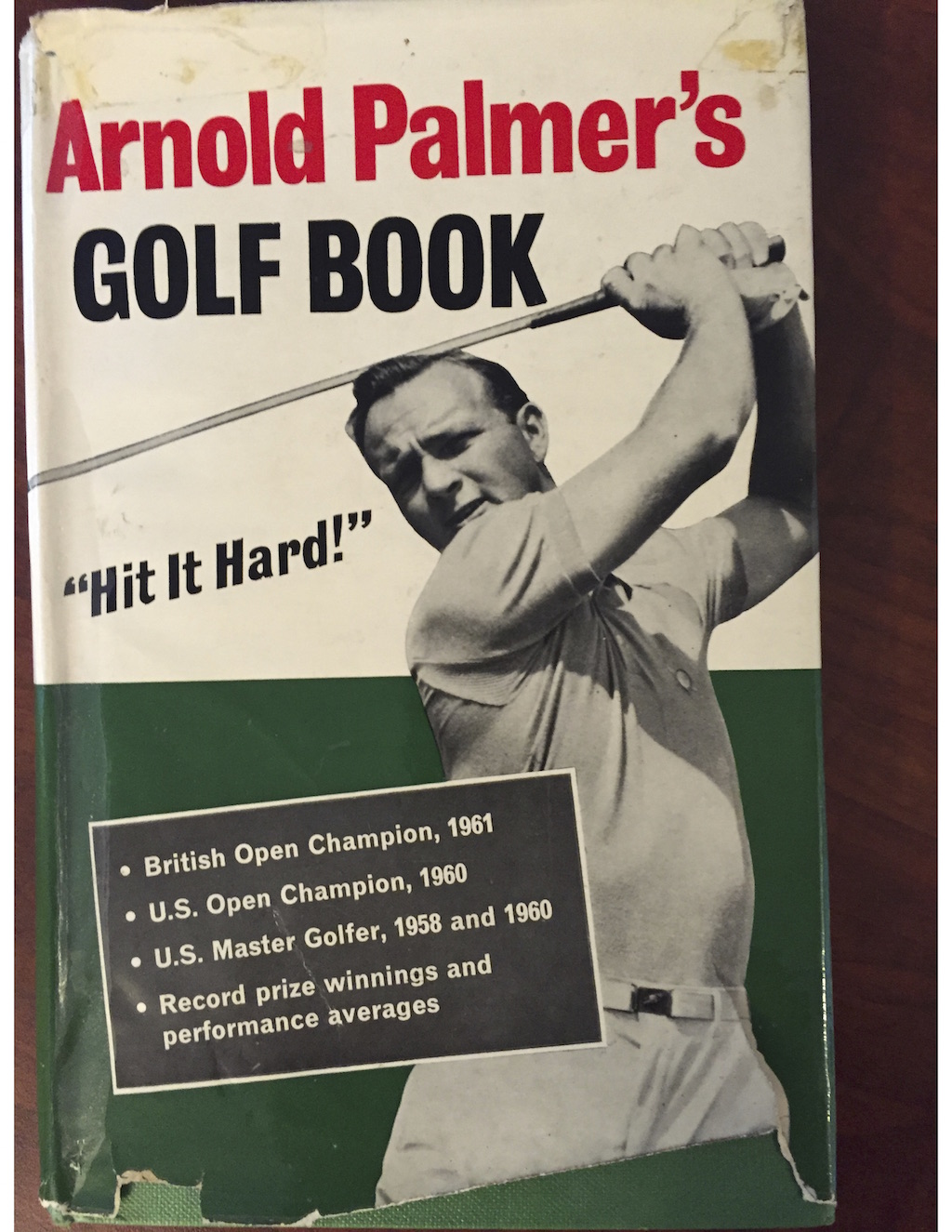
Under the circumstances, the personal reminiscences, as well as the black-and-white swing-sequence photos of the 31-year-old then-reigning Masters and U.S. Open champ, tug at the heartstrings. But Palmer’s playing tips and advice on mechanics are also still worth pondering, since they reflect his life-long focus on the fundamentals and on keeping the game as uncomplicated as possible.
In heartfelt memory, then: a round of 18 quotes (lightly edited, in a couple of cases) from the pages of Hit It Hard!
1. I have read only one book on golf — the story of Bobby Jones, for it has been my ambition to try to be as good as he was — but I have friends who read every golf book that comes out. And they get something from each book: a tip on the stance or a new way to get at a shot. One fellow I know showed me a book that guaranteed to take 10 shots off your game. He read it three times, explaining, “I need to take 30 shots off my game.” I guarantee no such thing from the following pages. But I do think there is help in them for every golfer.
2. I’ve been swinging a golf club since I was three years old—just fooling around at first, then hitting balls around the house. Pretty soon I played from the yard outside the house (right at Latrobe Country Club) to the third green. Then I tried the fourth hole, and so on. By the time I was seven, I had some idea what the game was about, tried nine holes and also broke 55 for the first time. Next I went after 50, then 45, and finally, when I was 12 years old I broke 40. One of my first big thrills was shooting a 71 in my first high school match at age 14.
3. To me, the three most important things are the grip, the slow backswing to set up the hitting position, and the determination to hit the ball hard without trying to overpower it. I have found that proper execution of these three fundamentals helps the rest of the game fall in line.
4. Nobody should attempt to play the game without getting some instruction from a qualified PGA professional. Taking advice from your friends, who are usually trying to help, is like looking for a hat in a grocery store. You may find one there, but the food is better.
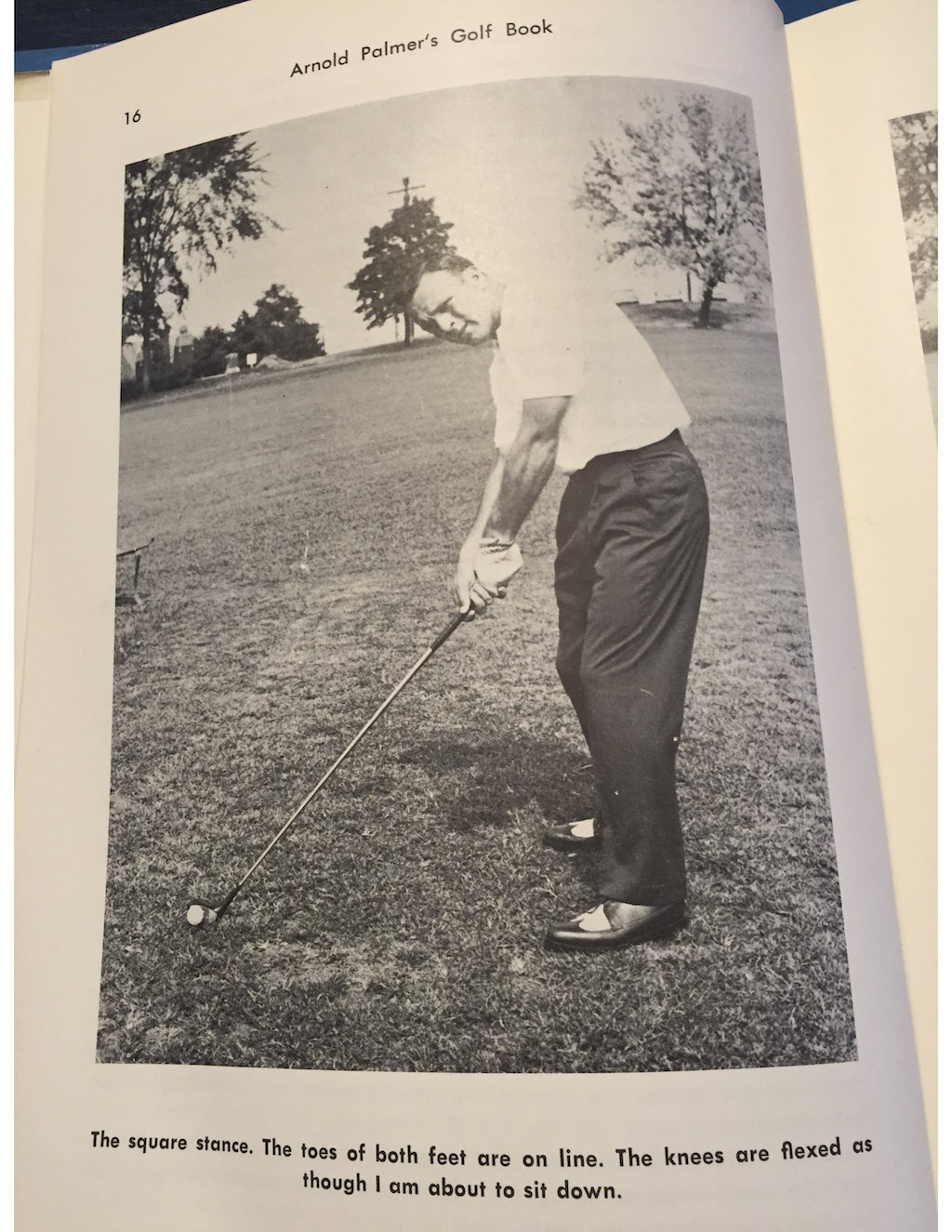
5. Pretend you are about to sit down in a chair. The first movement you make before actually sitting down is the same as the stance used in addressing a golf ball. The knees are flexed, the weight moves from the balls of the feet toward the back, and the body relaxes—just what you are striving for in the stance. I have the feeling when I’m taking my stance that someone has just pulled a chair from behind me and I’m waiting for him to put it back.
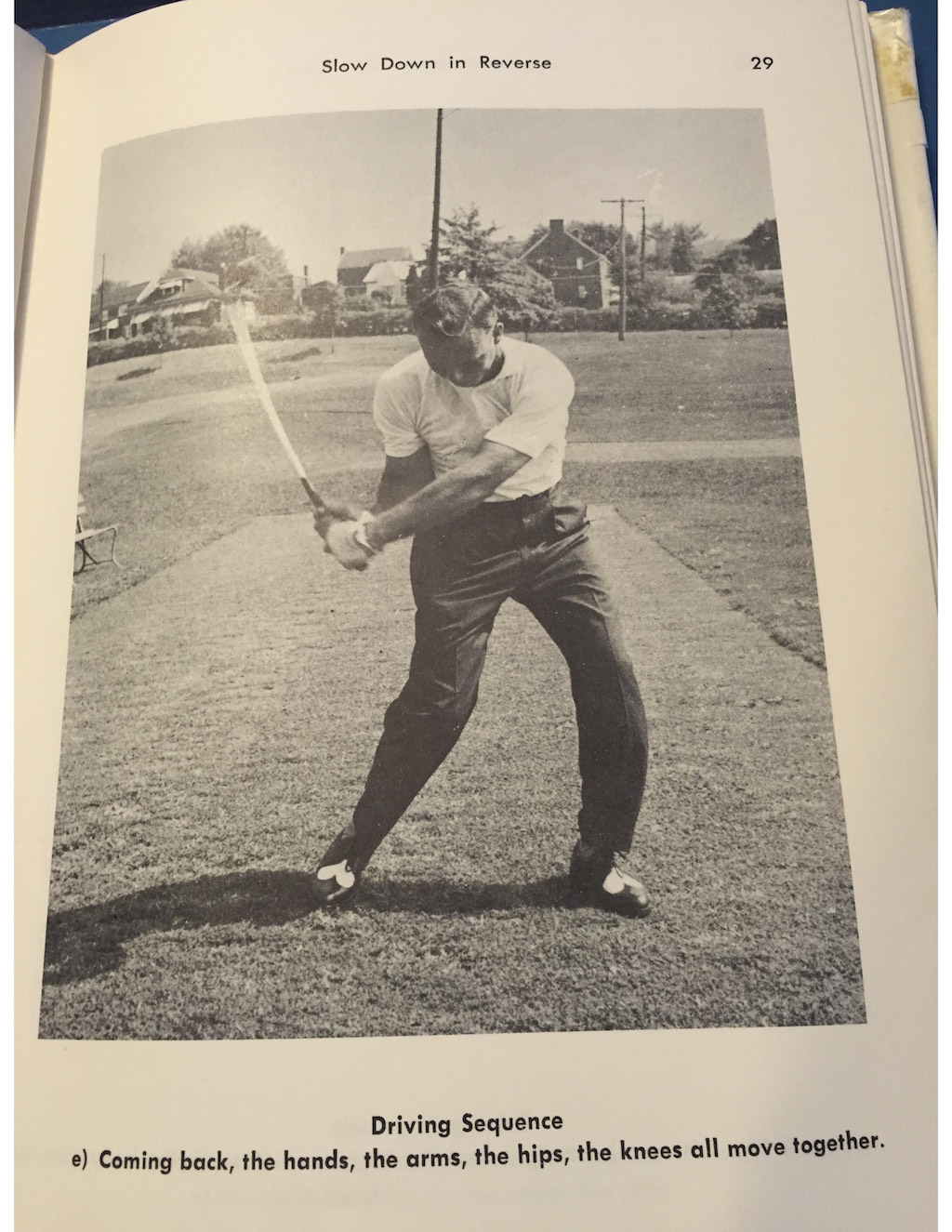
6. On my drives I concentrate on moving the left shoulder under my chin with a slow, deliberate action until I reach the top of my backswing. Now is the time to turn on the power. I have the feeling that my left hand is pulling the club down. You should be able to feel the weight leaving the right side before you start thinking about hitting the ball. This prevents a quick uncorking of the wrists at the top of the swing and the resultant loss of all power. It also helps avert a slice, which takes all the distance from the hit. When the swing has started through and the hands are moving down, let the clubhead fly, making certain the effort seems late to insure the last-second break of the wrists.
7. Nothing robs you of power more than hitting from the top. The wrists are uncocked high on the backswing, and all that is left at contact is a stiff-armed motion that wouldn’t knock a glass off a slippery table.
8. A lot of players I know are constantly complaining about not getting distance off the tee. From the five-iron to the wedge, they hit perfect shots. But the rest of the time, the ball doesn’t move. I have noticed that all these players unconsciously strive for distance with the big clubs and accuracy with the shorter ones. On the shorter shots, when they are not intent on power, their backswing is a slow thing of beauty and their timing is excellent. Off the tee or with a long iron, they all start fast, trying to slug the ball.
If you have been having trouble with your tee shots—and the rest of your game is adequate—take a tip and try for accuracy instead of for distance. That way you might get both, since you’ll go back slow automatically.
9. Slow down that backswing and stay out of trouble. Either that or bring an adding machine along in the bag.
10. There is no way you can stop at contact with the ball and not follow through, unless you started putting on the brakes before the hit. That’s why there must be a follow-through—to insure that you move the club forcefully throughout the downswing. The natural momentum continues the club up and toward the line of flight.
11. Don’t let the long irons scare you. The biggest mistake most golfers make is hitting these clubs harder than the others. Let me repeat—let the club do the work. The longer irons have little loft and provide distance. If you hit a seven-iron and four-iron with the same swing, the four-iron will go 30 or 40 yards farther. Let the manufacturers of clubs worry about the distance. You worry about keeping your swing the same.
12. The most common mistake made by the high-handicap golfer is that he babies these short-iron shots. The poor guy has been swinging from his heels, trying to get distance all day. Then, when faced with a short shot, he feels he must ease it to the pin.
Hit it crisply. Let the club get the ball the right distance.
13. The object of the game is to try to hit the ball straight; that will put you in the least amount of trouble. Trying to “fade” the ball on medium-iron shots or to “punch” it into the green are shots for experts who have developed special techniques. Some of these, I might add, don’t always produce the best results. And if these men, who do nothing but play and practice golf, have trouble making the ball behave, what chance does a sometimes golfer have?
14. Make every shot a full one and you won’t timidly let up on your downswing. You may hit over a few greens, but even this has its good points. It builds up your ego when you overshoot the putting surfaces and still chip back for occasional pars. You feel a lot better than approaching the hole a foot at a time.
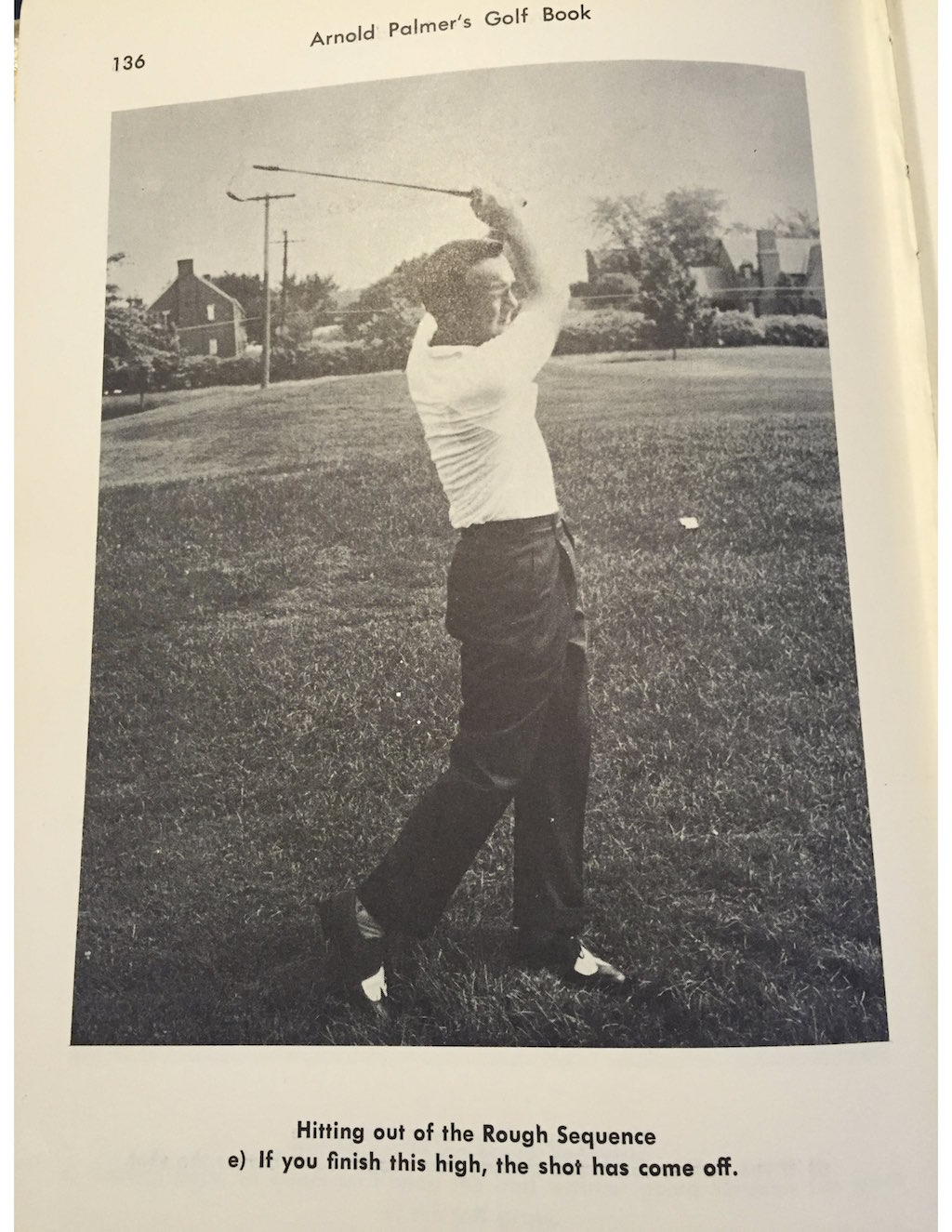
Slow down on the backswing and pull to the ball with the left hand. Then finish high and watch it fly. It’s a good feeling.
15. The ability to get in trouble is inherent with every golfer. The ability to get out of it without taking too many strokes and then to be able to forget it is the mark of a good player, to my way of thinking.
16. At one time or another I have putted every possible way, I think, except standing on my head. Some of them worked, some of the time. Some never worked. When I first went on tour, I travelled by car. They joked about the trunk of my car, but it was no gag. When I opened it I had to be alert because there were 25 putters jammed in the back and they might come tumbling out.
17. The rules and courtesies of the golf course are more essential to the game than a slow backswing or a new set of clubs. The backbone of golf is to play the game as a sport in the right way so as not to bother your fellow competitors or cheat them, intentionally or not.
18. That’s another thing to remember about golf. After you have done the best you can on a shot, you walk up to the ball again and face similar problems all over again.
It does you no good to remember the last shot, good or bad. The next one is the most important one now.



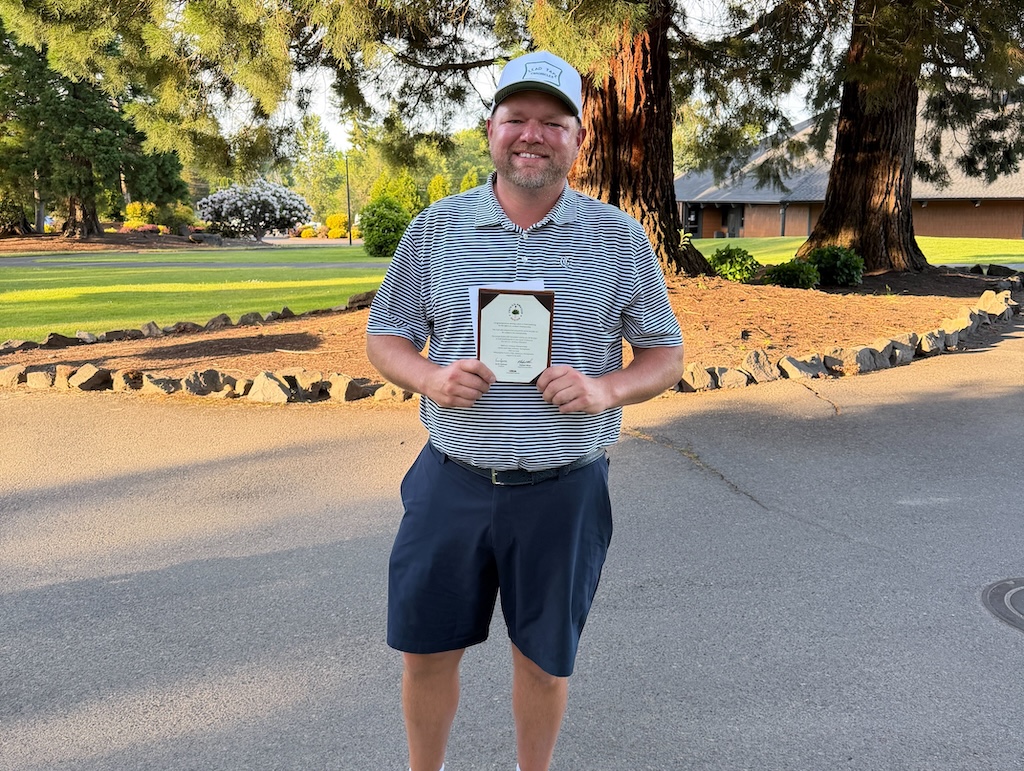
This past Monday, I played in the U.S. Amateur local qualifier at Rock Creek Country Club in Portland, Oregon. A full tee sheet from 7:30 a.m. to 1:55 p.m., the top 11 scores would make it to the U.S. Amateur final qualifying.
I teed off at 10:48 a.m.. With the 7:30 am tee time, you can get a feel for the leaders’ pace, and they were off and running on the challenging setup at Rock Creek.
View this post on Instagram
Getting to the highlight of the round on the par five 17th, a drive up the left side and 212 yards left to the front hole location. I took out a 5-iron with plans of middle of the green. The ball ended up 8 feet left of the hole, pin high. A slight downhill putt dropped in for an eagle 3 on the 17th. With the cut line looking to be anywhere from -2 to even par. This was the boost I had been waiting for all day.
With making par from the trees on 18, it was time to wait for a potential playoff with a posted score of one under par 71.
Three hours later, it was playoff time. 8 players for 6 spots. I made par on the playoff hole, which was good enough to advance to the U.S. Amateur final qualifying in July. USGA qualifiers sure deliver on all of the emotions in golf!
Club Junkie
Building my 2026 gamer WITB: Ranking the contenders and new putter projects – Club Junkie Podcast

The annual What’s In The Bag build is underway, and on this episode of Club Junkie, Brian breaks down the clubs currently leading the race for a spot in his 2026 gamer setup. From drivers and fairway woods to irons, wedges, and shafts, he ranks the equipment that’s performing best and explains what’s separating the front runners from the rest of the field.
Brian also heads into the workshop to discuss several putter projects currently on the bench. From head options and shaft choices to build ideas and testing plans, he shares what he’s working on and which putters could become serious contenders for the bag this season.
If you’re a gear junkie who loves equipment testing, club building, and the never-ending pursuit of the perfect setup, this episode is for you.
Follow Club Junkie:
Instagram: @clubjunkiepod
TikTok: @clubjunkiepod
Threads: @clubjunkiepod
X: @ClubJunkiePod
Club Junkie
Tour Edge Exotics mini driver review + TaylorMade Spider ZT Max first look – Club Junkie

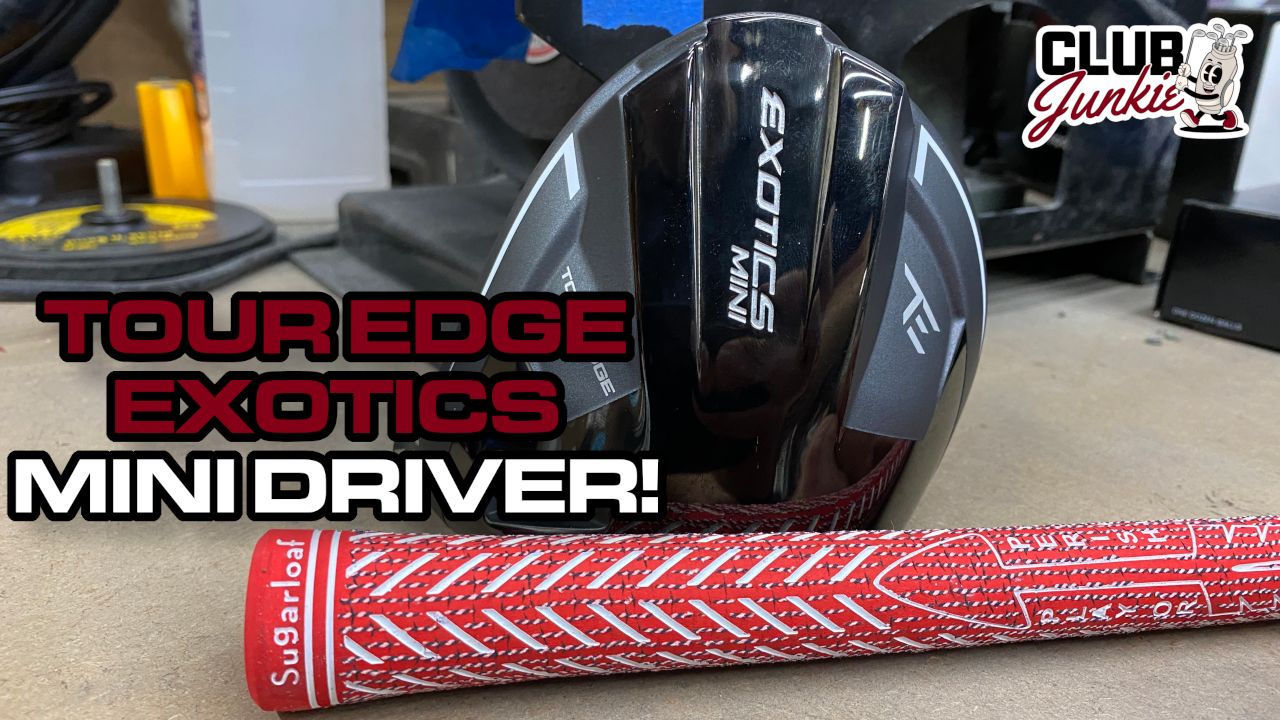
On this episode of Club Junkie, I put the new Tour Edge Exotics Mini Driver to the test and break down the performance, forgiveness, distance, and where it fits compared to a traditional driver or strong fairway wood. If you have been curious about adding a mini driver to the bag, this one is worth a look.
I also dive into the new TaylorMade Spider ZT Max putter that was recently spotted and discuss the growing zero torque putter trend. Plus, there is a closer look at the new Project X Titan Yellow shaft showing up on the PGA Tour and what makes it different from other profiles currently out there.

Justin Rose WITB 2026 (April): Full WITB breakdown with new McLaren irons

What’s the story behind Webb Simpson’s custom-stamped irons?

Memorial Tournament Tour Report: Rory McIlroy, Cameron Young switch up drivers, and more

Cadillac Championship Tour Report: Spieth’s sizable changes, McLaren Golf launches, and more

Russell Henley’s winning WITB: 2026 Charles Schwab Challenge

Kristoffer Reitan’s winning WITB: 2026 Truist Championship

Aaron Rai’s winning WITB: 2026 PGA Championship

J.T. Poston’s winning WITB: 2026 Memorial Tournament

Best irons 2026: Best irons overall, most forgiving irons, and more

Cameron Young’s winning WITB: 2026 Cadillac Championship


Bud Cauley WITB 2026 (June)
Bud Cauley had >14 clubs in his bag when photographed prior to the Memorial Tournament. Driver: Titleist GTS2 (8 degrees) Shaft: Fujikura...


Hannah Green WITB 2026 (June)
Driver: Titleist GTS3 (10 degrees, D4 SureFit setting) Shaft: Mitsubishi Chemical Diamana RB 53 S 3-wood: Titleist GT3 (15 degrees,...


Asterisk Talley WITB 2026 (June)
Driver: TaylorMade Qi4D (9 degrees) Shaft: Fujikura Ventus Blue 6 S 3-wood: TaylorMade Qi4D (16.5 degrees) Shaft: Fujikura Ventus Blue...


Brianna Do WITB 2026 (June)
Driver: Callaway Quantum Triple Diamond (9 degrees) Shaft: KBS PGW 3-wood: Callaway Elyte Titanium (15 degrees) Shaft: KBS PGW 5-wood:...
-
 Equipment6 days ago
Memorial Tournament Tour Report: Rory McIlroy, Cameron Young switch up drivers, and more
-
 News1 week ago
Russell Henley’s winning WITB: 2026 Charles Schwab Challenge
-
 Whats in the Bag3 days ago
J.T. Poston’s winning WITB: 2026 Memorial Tournament
-
 Equipment3 days ago
Best irons 2026: Best irons overall, most forgiving irons, and more
-

 Equipment1 week ago
Details on Jason Day’s latest prototype Avoda iron setup
-
 Equipment3 weeks ago
CJ Cup Byron Nelson Tour Report: Koepka and Kim’s newest putters finally get hot
-

 News2 weeks ago
Charles Schwab Challenge Tour Report: MacIntyre, Åberg and Spaun all switch putters, TaylorMade launches new Spider
-
 Equipment2 weeks ago
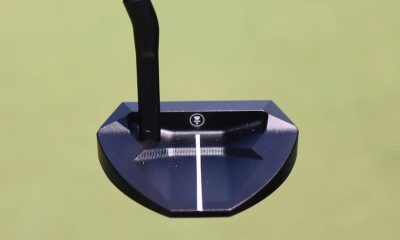
Details on J.J. Spaun’s surprise putter switch


Ben
Dec 24, 2021 at 2:33 am
Well, if your “light editing” was for grammar, I can assure you that Arnie had it right the first time. Jeez, college educated and you still conflate ensure with insure. I get that standards for writing applicants has hit the bottom of the rock bottom, but even in GOLF too? You’re supposed to be posh and over-educated. Tighten up those chip shot articles, bud.
Mike
Oct 28, 2016 at 2:50 am
Can you imagine Arnie or Jack spitting on greens? What is it with these guys. I get it that Danial Berger is not the sharpest pencil in the box, but Rickie. Would you like if I spat on your greens and you had to putt across them. Just swallow boys
Weekend Duffer
Oct 10, 2016 at 1:47 pm
So much wisdom. RIP.