
Opinion & Analysis
Matt Killen: A prodigy for the prodigies

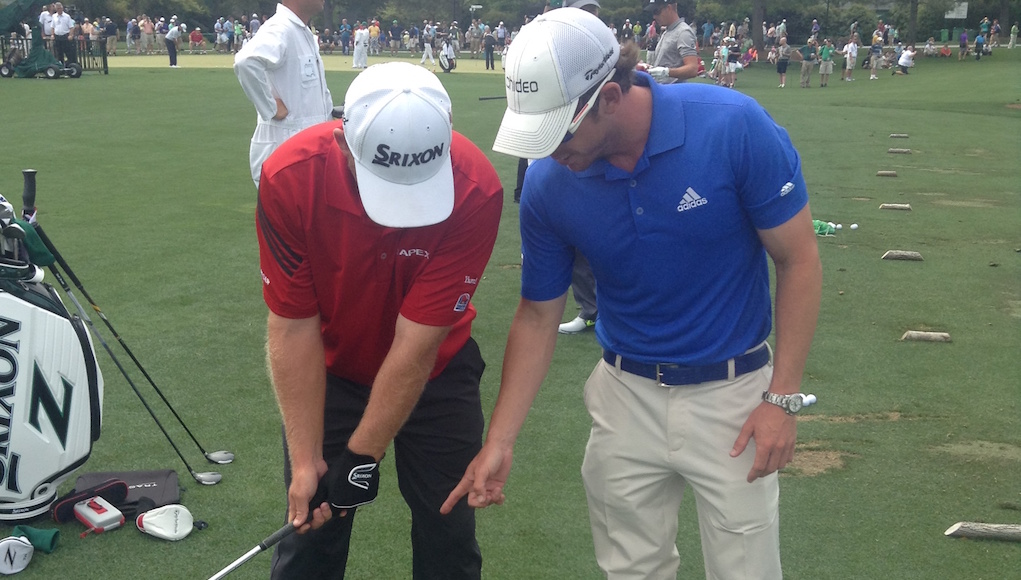
This week, the golfing world will descend upon Hazeltine National Golf Club in Chaska, Minnesota, for the 41st playing of the Ryder Cup. The media will keep busy in deep analysis on who will win, the role of the captain’s picks and other speculation. What’s rarely discussed, however, are the people who work behind the scenes to get the world’s best golfers firing on all cylinders to represent their countries: the swing coaches.
In the Ryder Cup’s storied past, the names of those who roamed the ranges read like a who’s who of golf tutelage: Butch Harmon, David Leadbetter, Pete Cowen and Phil Rodgers, to name a few. If you tune into the coverage this week, you might see a new “kid” on the block roaming the range, but the truth is he’s been on the scene for almost 10 years. And this upcoming Ryder Cup is not his first go around.
Matt Killen is on his second tour of duty, and the previous time he was at the Ryder Cup the U.S. won. Killen’s current stable includes young guns Justin Thomas, Patrick Rodgers, Bud Cauley and 2016 Ryder Cup captain’s pick J.B. Holmes, who Killen has worked with for more than 10 years. That’s almost as long as the void in U.S. victories in the Ryder Cup (sorry to bring that up). The interesting part is Killen, whose home base is The Concession Golf Club in Bradenton, Florida, turned 31 years old on Monday (let the math settle in). Yes, he’s been working with some of the best players in the world since before he could legally drink a beer.
During the 2008 Ryder Cup — a victorious endeavor for the U.S. — Killen was a busy man, as he had three different players in the event: fellow Kentucky natives J.B. Holmes and Kenny Perry, as well as Chad Campbell. Killen was also working with team captain Paul Azinger at the time — and Killen was only 22 years old! Most teachers and swing coaches don’t begin working with Tour players until well into their 30s, and many times much later. How does this happen, and what makes Killen the guy (read: kid) who Tour players trust with their careers?
On my way home from Toronto during the Canadian Open, I ran into Killen, whose story is every bit as compelling as the players he coaches. It was a random encounter at the Toronto airport, but I was compelled to introduce myself being hugely interested in his story. He’s a soft-spoken, Southern native with an overwhelming sense of confidence when he discusses golf mechanics. After a bit of small talk we dug into his swing philosophies. I found myself dumbfounded with the ease in which he was able to explain body mechanics and club face dynamics. That’s what the great teachers seemingly all have in common; their knowledge of the swing is ridiculously rich, but their ability to deliver the message simply and tailor it to the learning styles of each student is what breeds success.
Although the attention on our golfing prodigies always seems to focus on the players, being a swing coach to those players at such a young age is far more unlikely than winning on the PGA Tour. Young teachers are at a disadvantage based on experience and time. So how can a strong, trusting relationship be built with someone so young? After all, information in regards to the golf swing, especially at that level, always just seems a bit more reliable coming from the mouth of say a 40- or 50-year-old guy who has made the rounds in golf academies, and/or was a successful player in his own right.
Killen was just a skinny teenager who had the courage to speak up when his best friend’s father, Kenny Perry, was looking for something or someone to light the fire. With the burning passion of youth, Matt was the kid for the job. Most teenagers would have shied away from an intimidating situation like that. The saying, “Luck is what happens when preparation meets opportunity” never seemed more appropriate.
What’s Killen’s first point of focus when working with a top player?
“What’s gonna make them the most money?” Killen said.
A pretty honest answer if you ask me, especially for a 31 year old. Killen first determines what a golfer is physically capable of doing and then establishes what’s possible, but the science and analysis behind Killen’s philosophy is anything but simple. He is well versed in body mechanics and the physics of impact, particularly gear effect, which he said is one of the main things his top players need to understand to remedy their misses.
“Most of these guys not only own their golf swings, but also have a path and club face relationship that creates a predictable pattern with the ball flight they want,” Killen said. “With modern equipment, especially the driver, understanding how gear effect can confuse certain misses is vital to a player’s working knowledge.”
I dug a little deeper with Killen. What I found was that he’s not trying to construct analytical golfing machines. Like his pursuit for the truth behind what makes a golf ball fly a certain way, he asks that his players take on the responsibility of knowing exactly who they are as players, and accepting what they can and can’t do. Once that awareness and trust is built, the success can follow.
“You always want all your players to have the comfort level to play any shot that is required, and most of the guys out there can under all conditions,” Killen said. “What I work on with my guys is to take ownership of their swing and to understand shot for shot how and why the ball is flying a certain way so they can address it quickly and focus on shooting the scores they need to win.”
I was curious; does J.B. Holmes’ plan differ this week at the Ryder Cup than it would at a typical PGA Tour event? Not really, Killen said.
“Working with J.B. this week, I will be focusing on establishing a predictable pattern,” he said. “After we walk the course and look at all the shots required, we will focus on on any particular shot he isn’t 100 percent comfortable with. Our preparation will be process focused and when he tees it up his focus will be the shot at hand and staying athletic. J.B. is a pure feel player, but he is also a student that searches for understanding of his golf swing and is able to discern the information quickly while being able to react as an athlete once he’s between the ropes.”
Under Ryder Cup pressure, especially the past few years, the players who have thrived were the those who fell back on their natural instincts and played the shots that felt right to them. At the end of the day, that’s all Killen is trying to get his players to understand and execute. At the top level, it’s often the golfer who is most comfortable in his own skin that will prevail, and the only pathway to that is to take full ownership of your motion.
What I also found compelling about Killen and his staff is that each of his Tour players, regardless of physical stature, is within the top 30 in driving distance. That includes Bud Cauley, who is currently averaging 300.1 yards off the tee while standing at only 5-feet, 7-inches and 155 pounds.
Looking at the big picture, Killen is only one teacher working with one of the 24 players this week. But for me, and maybe for many of you after reading this article, it really runs deeper than that. Golf has become a sport that has attracted some of the most unique young talents in the sports world. And prodigies of the educational variety, although not as flashy as a 345-yard drives or green jackets, are just as impressive. Matt Killen will be on PGA Tour ranges for a long time — not because he has a new swing philosophy or the flashiest stable of players. It’s because like the men he teaches, it’s all he’s cared about his entire life. It’s a selfless pursuit, and not exactly the most glamorous path. Most young golfers wanted to play like Tiger when they were 12, but Killen just wanted to know how he played like he did.
Here’s to a great Ryder Cup, and when you see great shots made down the stretch, remember there’s a swing coach watching who had something to do them.



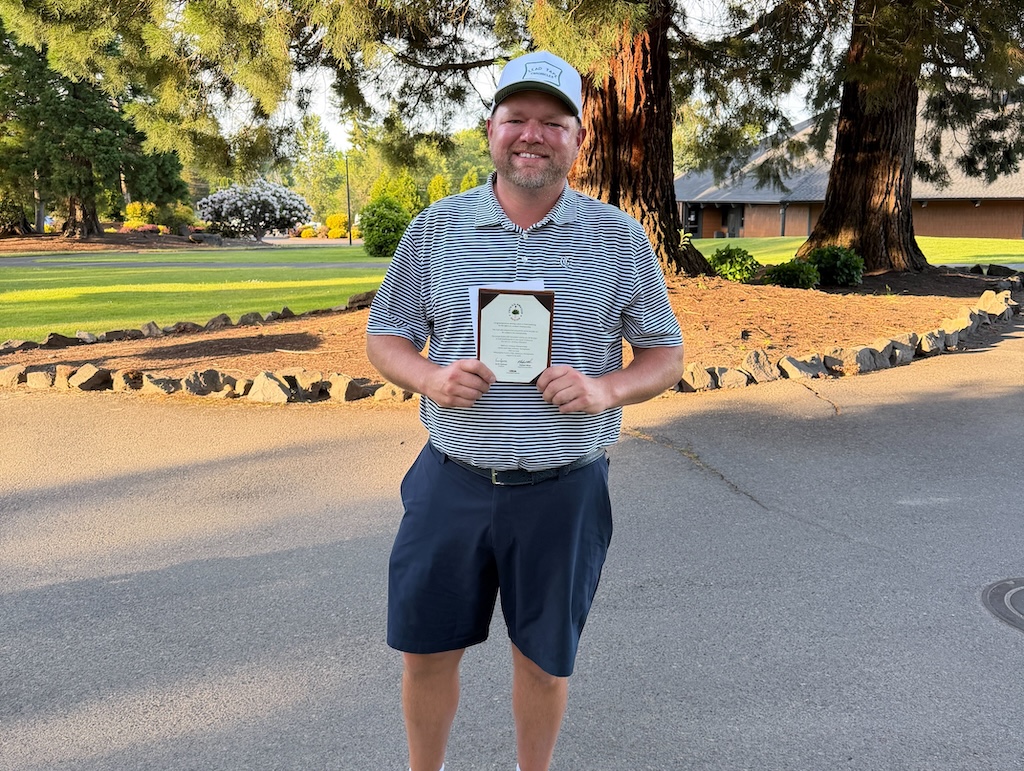
This past Monday, I played in the U.S. Amateur local qualifier at Rock Creek Country Club in Portland, Oregon. A full tee sheet from 7:30 a.m. to 1:55 p.m., the top 11 scores would make it to the U.S. Amateur final qualifying.
I teed off at 10:48 a.m.. With the 7:30 am tee time, you can get a feel for the leaders’ pace, and they were off and running on the challenging setup at Rock Creek.
View this post on Instagram
Getting to the highlight of the round on the par five 17th, a drive up the left side and 212 yards left to the front hole location. I took out a 5-iron with plans of middle of the green. The ball ended up 8 feet left of the hole, pin high. A slight downhill putt dropped in for an eagle 3 on the 17th. With the cut line looking to be anywhere from -2 to even par. This was the boost I had been waiting for all day.
With making par from the trees on 18, it was time to wait for a potential playoff with a posted score of one under par 71.
Three hours later, it was playoff time. 8 players for 6 spots. I made par on the playoff hole, which was good enough to advance to the U.S. Amateur final qualifying in July. USGA qualifiers sure deliver on all of the emotions in golf!
Club Junkie
Building my 2026 gamer WITB: Ranking the contenders and new putter projects – Club Junkie Podcast

The annual What’s In The Bag build is underway, and on this episode of Club Junkie, Brian breaks down the clubs currently leading the race for a spot in his 2026 gamer setup. From drivers and fairway woods to irons, wedges, and shafts, he ranks the equipment that’s performing best and explains what’s separating the front runners from the rest of the field.
Brian also heads into the workshop to discuss several putter projects currently on the bench. From head options and shaft choices to build ideas and testing plans, he shares what he’s working on and which putters could become serious contenders for the bag this season.
If you’re a gear junkie who loves equipment testing, club building, and the never-ending pursuit of the perfect setup, this episode is for you.
Follow Club Junkie:
Instagram: @clubjunkiepod
TikTok: @clubjunkiepod
Threads: @clubjunkiepod
X: @ClubJunkiePod
Club Junkie
Tour Edge Exotics mini driver review + TaylorMade Spider ZT Max first look – Club Junkie

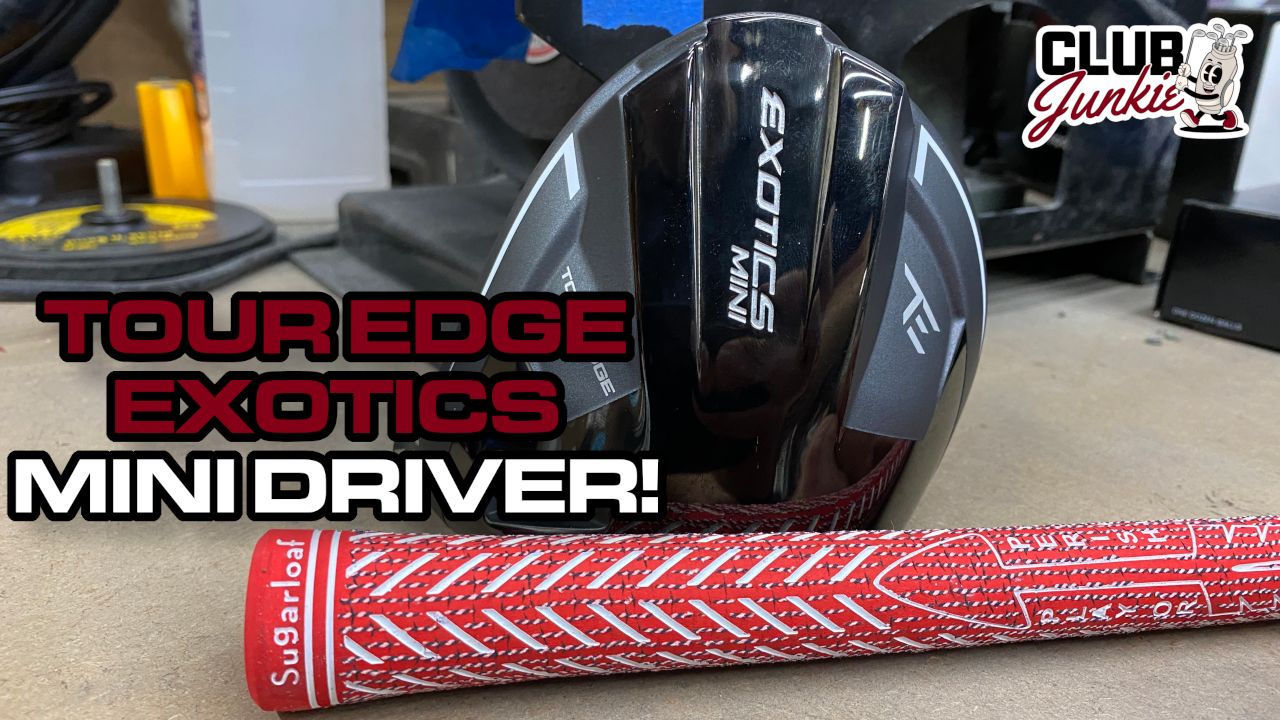
On this episode of Club Junkie, I put the new Tour Edge Exotics Mini Driver to the test and break down the performance, forgiveness, distance, and where it fits compared to a traditional driver or strong fairway wood. If you have been curious about adding a mini driver to the bag, this one is worth a look.
I also dive into the new TaylorMade Spider ZT Max putter that was recently spotted and discuss the growing zero torque putter trend. Plus, there is a closer look at the new Project X Titan Yellow shaft showing up on the PGA Tour and what makes it different from other profiles currently out there.

Justin Rose WITB 2026 (April): Full WITB breakdown with new McLaren irons

What’s the story behind Webb Simpson’s custom-stamped irons?

Memorial Tournament Tour Report: Rory McIlroy, Cameron Young switch up drivers, and more

Cadillac Championship Tour Report: Spieth’s sizable changes, McLaren Golf launches, and more

Russell Henley’s winning WITB: 2026 Charles Schwab Challenge

Kristoffer Reitan’s winning WITB: 2026 Truist Championship

Aaron Rai’s winning WITB: 2026 PGA Championship

J.T. Poston’s winning WITB: 2026 Memorial Tournament

Cameron Young’s winning WITB: 2026 Cadillac Championship

Best irons 2026: Best irons overall, most forgiving irons, and more


Bud Cauley WITB 2026 (June)
Bud Cauley had >14 clubs in his bag when photographed prior to the Memorial Tournament. Driver: Titleist GTS2 (8 degrees) Shaft: Fujikura...


Hannah Green WITB 2026 (June)
Driver: Titleist GTS3 (10 degrees, D4 SureFit setting) Shaft: Mitsubishi Chemical Diamana RB 53 S 3-wood: Titleist GT3 (15 degrees,...


Asterisk Talley WITB 2026 (June)
Driver: TaylorMade Qi4D (9 degrees) Shaft: Fujikura Ventus Blue 6 S 3-wood: TaylorMade Qi4D (16.5 degrees) Shaft: Fujikura Ventus Blue...


Brianna Do WITB 2026 (June)
Driver: Callaway Quantum Triple Diamond (9 degrees) Shaft: KBS PGW 3-wood: Callaway Elyte Titanium (15 degrees) Shaft: KBS PGW 5-wood:...
-
 Equipment6 days ago
Memorial Tournament Tour Report: Rory McIlroy, Cameron Young switch up drivers, and more
-
 News1 week ago
Russell Henley’s winning WITB: 2026 Charles Schwab Challenge
-
 Whats in the Bag3 days ago
J.T. Poston’s winning WITB: 2026 Memorial Tournament
-
 Equipment3 days ago
Best irons 2026: Best irons overall, most forgiving irons, and more
-

 Equipment1 week ago
Details on Jason Day’s latest prototype Avoda iron setup
-

 Equipment3 weeks ago
CJ Cup Byron Nelson Tour Report: Koepka and Kim’s newest putters finally get hot
-

 News2 weeks ago
Charles Schwab Challenge Tour Report: MacIntyre, Åberg and Spaun all switch putters, TaylorMade launches new Spider
-

 Equipment2 weeks ago
Details on J.J. Spaun’s surprise putter switch


RedX
Sep 29, 2016 at 10:12 pm
Enjoyed the read John – of course more detail would always be welcome – but enjoyed it all the same.