
Opinion & Analysis
The stats behind Phil Mickelson’s switch to Andrew Getson


It was big news in the golf instruction industry when Phil Mickelson decided to part ways with long-time coach Butch Harmon and hired Andrew Getson to take over. Mickelson was not exactly performing poorly by normal Tour standards, as he made 16 out of 19 cuts and finished 48th in Adjusted Scoring Average for the season. But Mickelson’s seasons are judged by victories and performance in the majors, and Phil may have felt that there was a need to change after two winless seasons.
As a golf statistician, I wanted to look at Phil’s performance from this past season along with his performance in his most recent “big” season, 2013, when he won the British Open, finished 12th in Adjusted Scoring Average and earned nearly $5.5 million. I would assume that performance in 2013 is something that Phil wants to get back to.

While the two most important metrics in the chart above are Par-4 Scoring Average and Bogey Rate, it’s always good to look at all of the metrics to help paint a more clear picture of what is going on with the golfer’s game. In Phil’s case, the drop-off in Par-4 Scoring Average and Bogey rate is dramatic and needs to be addressed.
For most of Phil’s career, he’s been a great iron player and a weak driver of the ball with fantastic ability to get up-and-down. So I would immediately wonder how his typical game is playing a factor in this decline in performance. The silver lining in all of this, however, is that he can still make a lot of birdies.
DRIVING DATA

The driving metrics are interesting because the only sub-category of metrics that Phil was better in this season was driving distance. He ended up 74th in Driving Effectiveness, however, the main reason being is that Mickelson ranked third in terms of driving difficulty schedule. I have found it easy for a Tour player to fall in the trap of thinking he is not performing well in a certain area of the game when the reality is that the difficulty has amplified. He can actually be doing well in terms of his performance versus the rest of the field.
For instance, TPC Summerlin is one of the most difficult courses to hit short-game shots (inside 30 yards) on the entire Tour schedule. Thus, I remind my clients to not get too down on themselves if they are not hitting their short-game shots close. The make percentage on the greens is higher, too, so they can save par anyway. This may have been a problem for Phil. He may have felt that his driving performance was not improving, but in reality the conditions and course designs were more difficult than they have been in the past.
APPROACH SHOT DATA

Iron play has usually been Phil’s greatest strength, and it was on display in the 2013 season. It is becoming a weakness now, however. The drop-off is larger from 100-150 yards, but the smart move would be to work on his performance from 175-225 yards, because that will have a bigger influence on lowering his scores.
And just so we can make sure that his drop in iron play is not due to missing more fairways, here is his performance from the fairway versus the rough.

Also, there was a new metric that I started to record this year: Scoring Average on Dogleg Left Holes versus Dogleg Right Holes versus Straight-Away Par-4’s (adjusted based on hole difficulty).

I find these metrics interesting. Phil’s overall driving has improved, but while he hits a ball that curves from right-to-left his performance on the DogLeg left Par-4’s is much worse.
While I am in the initial stages of studying the doglegs versus the straight-away par-4’s, the initial analysis shows that more of the very long Par-4’s (460+ yards) tend to be DogLeg left holes. With Phil’s performance from 150-225 yards regressing, that may explain why he has struggled on the dogleg left par-4’s this past season. And that regression on longer approach shots would help explain his struggles on the par-3’s, as par-3 play is one part iron play, one part short game and one part putting outside 20-feet.
SHORT GAME DATA

Phil’s Total Short Game performance has regressed mainly because he has regressed most from the most important distance, 10-20 yards. This would play a bigger factor in his struggles on the Par-3’s and his ability to avoid bogeys on the Par-4’s. Essentially, he is not hitting as many GIR because of his iron play, and cannot hit his short game shots close enough to put himself in good position to save par.
PUTTING DATA

Phil still putted well in 2015, so I don’t think that is a big issue. In fact, the history on Tour shows he was not likely to sustain his putting from outside 15-feet regardless of what he did after the 2013 season.
I expect Phil to continue to work on his driving, which is not necessarily a bad idea. However, he made nearly $5.5 million and won a major while driving the ball poorly in 2013. I think the better move is to focus on getting his iron play back, particularly from 150-225 yards, and see if they can regain his old short game form.



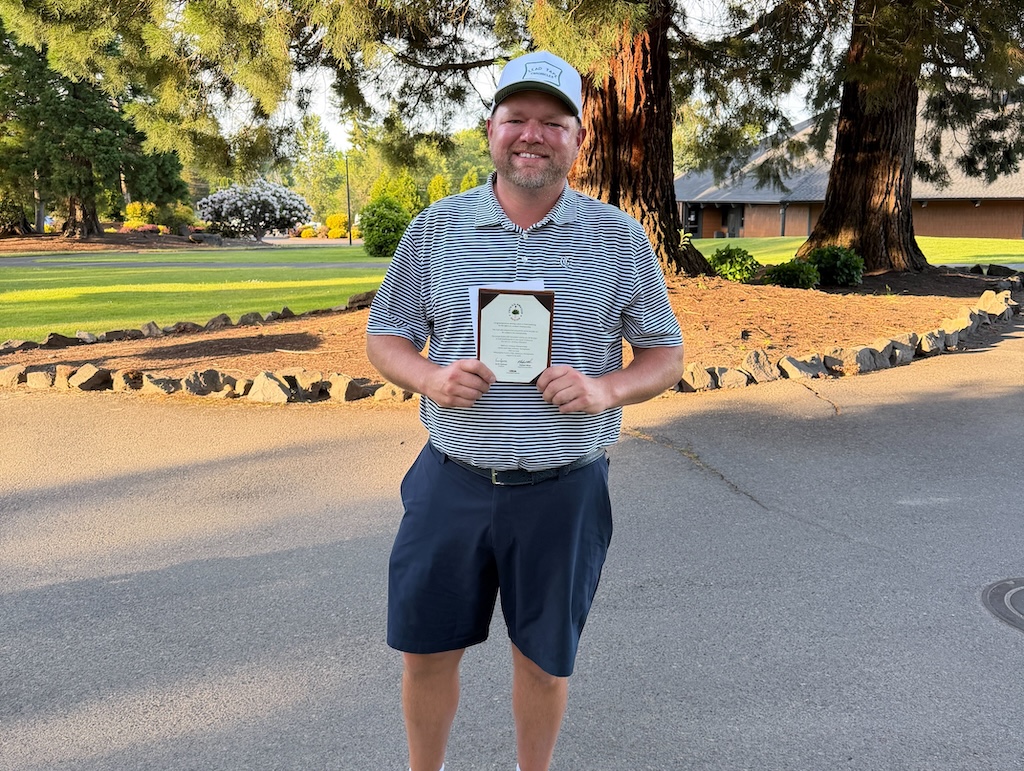
This past Monday, I played in the U.S. Amateur local qualifier at Rock Creek Country Club in Portland, Oregon. A full tee sheet from 7:30 a.m. to 1:55 p.m., the top 11 scores would make it to the U.S. Amateur final qualifying.
I teed off at 10:48 a.m.. With the 7:30 am tee time, you can get a feel for the leaders’ pace, and they were off and running on the challenging setup at Rock Creek.
View this post on Instagram
Getting to the highlight of the round on the par five 17th, a drive up the left side and 212 yards left to the front hole location. I took out a 5-iron with plans of middle of the green. The ball ended up 8 feet left of the hole, pin high. A slight downhill putt dropped in for an eagle 3 on the 17th. With the cut line looking to be anywhere from -2 to even par. This was the boost I had been waiting for all day.
With making par from the trees on 18, it was time to wait for a potential playoff with a posted score of one under par 71.
Three hours later, it was playoff time. 8 players for 6 spots. I made par on the playoff hole, which was good enough to advance to the U.S. Amateur final qualifying in July. USGA qualifiers sure deliver on all of the emotions in golf!
Club Junkie
Building my 2026 gamer WITB: Ranking the contenders and new putter projects – Club Junkie Podcast

The annual What’s In The Bag build is underway, and on this episode of Club Junkie, Brian breaks down the clubs currently leading the race for a spot in his 2026 gamer setup. From drivers and fairway woods to irons, wedges, and shafts, he ranks the equipment that’s performing best and explains what’s separating the front runners from the rest of the field.
Brian also heads into the workshop to discuss several putter projects currently on the bench. From head options and shaft choices to build ideas and testing plans, he shares what he’s working on and which putters could become serious contenders for the bag this season.
If you’re a gear junkie who loves equipment testing, club building, and the never-ending pursuit of the perfect setup, this episode is for you.
Follow Club Junkie:
Instagram: @clubjunkiepod
TikTok: @clubjunkiepod
Threads: @clubjunkiepod
X: @ClubJunkiePod
Club Junkie
Tour Edge Exotics mini driver review + TaylorMade Spider ZT Max first look – Club Junkie

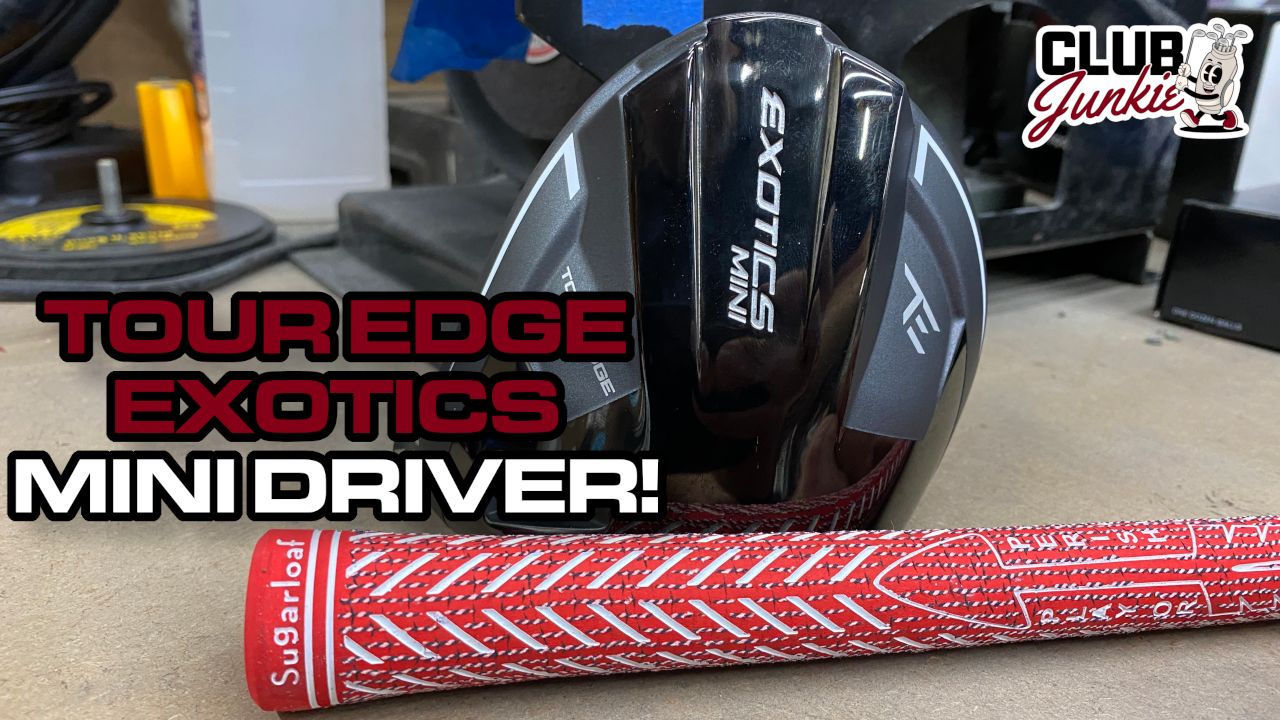
On this episode of Club Junkie, I put the new Tour Edge Exotics Mini Driver to the test and break down the performance, forgiveness, distance, and where it fits compared to a traditional driver or strong fairway wood. If you have been curious about adding a mini driver to the bag, this one is worth a look.
I also dive into the new TaylorMade Spider ZT Max putter that was recently spotted and discuss the growing zero torque putter trend. Plus, there is a closer look at the new Project X Titan Yellow shaft showing up on the PGA Tour and what makes it different from other profiles currently out there.

What’s the story behind Webb Simpson’s custom-stamped irons?

Memorial Tournament Tour Report: Rory McIlroy, Cameron Young switch up drivers, and more

Cadillac Championship Tour Report: Spieth’s sizable changes, McLaren Golf launches, and more

Russell Henley’s winning WITB: 2026 Charles Schwab Challenge

Kristoffer Reitan’s winning WITB: 2026 Truist Championship

Best irons 2026: Best irons overall, most forgiving irons, and more

J.T. Poston’s winning WITB: 2026 Memorial Tournament

Aaron Rai’s winning WITB: 2026 PGA Championship

Cameron Young’s winning WITB: 2026 Cadillac Championship

Details on Jason Day’s latest prototype Avoda iron setup


Ryan Palmer WITB 2026 (June)
Driver: Callaway Quantum Triple Diamond (9 degrees) Shaft: Project X HZRDUS Smoke Blue RDX 60 TX 3-wood: TaylorMade Qi10 (15 degrees) Shaft:...


Bud Cauley WITB 2026 (June)
Bud Cauley had >14 clubs in his bag when photographed prior to the Memorial Tournament. Driver: Titleist GTS2 (8 degrees) Shaft: Fujikura...


Hannah Green WITB 2026 (June)
Driver: Titleist GTS3 (10 degrees, D4 SureFit setting) Shaft: Mitsubishi Chemical Diamana RB 53 S 3-wood: Titleist GT3 (15 degrees,...


Asterisk Talley WITB 2026 (June)
Driver: TaylorMade Qi4D (9 degrees) Shaft: Fujikura Ventus Blue 6 S 3-wood: TaylorMade Qi4D (16.5 degrees) Shaft: Fujikura Ventus Blue...
-
 Equipment6 days ago
Memorial Tournament Tour Report: Rory McIlroy, Cameron Young switch up drivers, and more
-
 News2 weeks ago
Russell Henley’s winning WITB: 2026 Charles Schwab Challenge
-
 Equipment3 days ago
Best irons 2026: Best irons overall, most forgiving irons, and more
-
 Whats in the Bag4 days ago
J.T. Poston’s winning WITB: 2026 Memorial Tournament
-
 Equipment1 week ago
Details on Jason Day’s latest prototype Avoda iron setup
-
 Equipment3 weeks ago
CJ Cup Byron Nelson Tour Report: Koepka and Kim’s newest putters finally get hot
-

 News2 weeks ago
Charles Schwab Challenge Tour Report: MacIntyre, Åberg and Spaun all switch putters, TaylorMade launches new Spider
-
 Equipment2 weeks ago
Details on J.J. Spaun’s surprise putter switch


Steve Allison
Dec 4, 2015 at 10:45 am
Phil needs to get shed of that old timey putter, Please Phil go to Scotty!!
Steve Allison
Dec 4, 2015 at 10:40 am
The best thing Phil needs to do is to get rid of the old timey putter and go to Scotty Cameron and let Scotty make a putter that is right for him.
Jack
Dec 3, 2015 at 9:23 am
Great article. Another good read from Rich! Really interested to see the findings on dog legs. I’m thinking that you may see better scoring with players that shape the ball against the shape of the hole. Ie misses will more likely be on the ‘far side’ of the dog leg!
Pingback: Back Nine News – The Best Golf Stories & Videos of the Week | Golf Science
I'm Ron Burgundy??
Dec 2, 2015 at 2:18 pm
I enjoyed the analysis! It is very interesting to see stuff like this and number do not lie. I wonder how much is rheumatoid arthritis has played into his ability to be able to practice and play as often as he would like? I would assume that someone with his condition has good and bad days.
Richard
Dec 2, 2015 at 5:52 am
Very interesting but with one error which I wish all columnists at Golfwrx would get right. It is The Open NOT The British Open.
Richard
Dec 3, 2015 at 4:06 am
HI Bubba. With respect, please check out the PGA Tour Schedule for 2015/16… http://www.pgatour.com/news/2015/07/30/schedule-release.html
You will see that the PGA tour even call it “The Open Championship”. Calling it the British Open would be like calling The Masters The American Masters as there are various Masters tournements around the world. I know I’m being a golf pedant. 🙂
Bob
Dec 6, 2015 at 2:17 am
Isn’t calling it the British Open more analogous to calling the men’s open tournament run by the USGA the “U.S. Open”?
Bobalu
Dec 1, 2015 at 6:19 pm
RH- Well done. Interesting analysis. Let us know if Phil sees this and gives you any feedback.
Greg V
Dec 1, 2015 at 12:30 pm
Phil won $5.5 million in 2013 based largely on wins at the Scottish Open, Open Championship and a second place finish in the US Open. The keys to his fine play in those three tournaments were Phil’s use of the mini driver off the tee, and fantastic wedge play.
The mini driver and excellent wedge play are really all you need to know about the keys to Phil’s ability to win another major.
Richie Hunt
Dec 1, 2015 at 2:18 pm
Greg V –
I don’t have the data for those specific events because 2 are majors and the other is the Scottish Open which does not count towards those $5.5 million in earnings (PGA Tour only). You will generally find that in the Majors, shots from 175-250 yards matter most if you want to segment them. Driving is typically more important at the US Open than at the British Open. But, wedge play rarely makes a substantial impact. I think from 2013 we can see how elite Phil’s iron play was and I would imagine that it carried over to the British, Scottish and US Opens. In Phil’s years using the mini-driver, his driving still wasn’t very effective.
cgasucks
Dec 1, 2015 at 11:28 am
While I understand why Phil had to change instructors, he has to accept the fact that he’s not the young gun as he once was in the late 90s and early 2000s (Jordan, Rory, Jason and Dustin have that torch now) and his career is on the downswing. He’ll have to accept 10 ten finishes at best while he is old enough for the Champions tour.
HG Wells
Dec 1, 2015 at 11:25 am
I do think we’ve all been waiting for the other shoe to drop with the RA and it’s effect on his game. And of course his age can’t be overlooked, although based on his driving distance he’s still plenty competitive athletically. Really though, looking at those stats, doesn’t just look like someone who hasn’t been playing as much golf? It really all looks like just an overall decline in sharpness due to fewer reps in the practice area. It’s always seemed to me that his golf game kept his interest much longer than most of the top money winners in the era of instant-millionaire golf, but it’s only natural to slow down a bit when life is frankly pretty damn good by all appearances. And with that much money on the table, the young guys are now grinding harder than ever to get there.