
Opinion & Analysis
The equipment changes this Tour player made to improve


I spend most of my days working with club players who are trying to reach their potential, and most often they feel the answer is a better-looking swing. I thought it would make an interesting read for people to learn about what touring professionals do to find the 1 percent of improvement that can make such a big difference to their lives.
I have been working with Ben Silverman, a PGA Tour Canada player, for nearly two years now. Ben originally came to me looking to find some extra yardage, so we broke out all the usual testing protocols, including strength and power screens, as well as 3D motion capture. We were able to identify a couple opportunities for him to mix up his physical conditioning program to help him build some more speed, but this wasn’t the answer for him to have a better season in 2015. The first few months of our relationship were spent getting the technical thoughts out of Ben’s head so he could play freely. Once we had achieved a mental state where both practice and play were fun again, we started to identify opportunities for improvement.

Ben on the tee at an event this year.
The first thing we started looking at was Ben’s ability to stop the ball with long irons under tour conditions. His landing angles were coming in shallow, and we also found a yardage gap in a key scoring area. The first things to go were the shafts; Ben had been playing stiff flex Aerotech i95’s at the recommendation of another fitter. I feel it’s important to note that these were not tested for performance on a launch monitor. The Aerotech’s ended up in Ben’s bag due to a couple common assumptions that I’ve seen from both tour pros and amateurs alike:
- Lighter is not always faster.
- Graphite does not always fly higher.
Some players do experience a slight increase in club head speed, but this is not always the case, and there are several other factors to consider. Shaft manufacturers give us basic shaft information such as weight, flex, kick point and torque, but what they can’t tell us is how the golfer will respond to the shaft. Through controlled testing, we were able to increase launch angle and steepen landing angle by going to a shaft that was actually heavier and stiffer. True Temper’s Dynamic Gold Tour Issue S400 shafts performed the best in Ben’s irons, and they weigh a whopping 130 grams. That is an increase in static weight of nearly 40 percent.
Why did it work?
The increased overall weight caused Ben to release the club better, resulting in a significant increase in dynamic loft. By only changing the shaft, the ball was flying 11 feet higher, 6 yards farther and landing a full degree steeper with Ben’s irons. These went into play right away and he nearly got a win with the new shafts at the Mackenzie (Canadian) Tour stop in Fort McMurray, Alberta.

Heaver and stiffer shafts resulted in higher and farther shots with more stopping power.
Now that the shaft issue had been dealt with, it was time to get the gapping sorted out. A gapping analysis is a process whereby we measure the carry distance of every club in the bag. This is a critical step if you truly want to optimize equipment performance, but it is one that nearly all amateurs and most professionals have never done properly. In order to get this done, I hopped on a plane from Toronto and headed out to meet Ben in Saskatoon, Saskatchewan, at a PGA Tour Canada event.

This is 5iron through Lob Wedge. Clearly there was room for improvement.
To do a proper gapping analysis is a very arduous process. We did outdoor Trackman testing with each individual iron and Ben’s tournament golf ball to make sure that they hit the carry numbers that we charted out in the hotel room the night before.

Here is Ben’s “wish list” and our predicted lofts that would create those numbers.
In order to maximize accuracy, we found a spot on course at The Willows Country Club in Saskatoon, Saskatchewan, where we had level ground and no wind. The Normalize feature from Trackman is fantastic, but when working with a Tour Pro, I don’t want to leave anything to chance. We had our list of desired carry distances, but that did not mean we could create that with optimized landing angles. We went through the whole bag club by club until we had things exactly the way we wanted.
On our first run through the bag, we measured every single club to get a good baseline of where performance was. We could have checked the lies and lofts first, but I think that would have been a waste of time. After all, it is not the loft that matters; it’s the carry yardage. I think it is a good idea for most players to work backward here, determine the number you need for each club in the bag, and then find a club fitter that can optimize equipment to perform to your needs. Head Professional Brennen Gee was kind enough to give free reign in his club repair room so we headed back get to work where we immediately found that we had to work on both the lofts AND the swing weights.

Here is Ben giving me a hand with the swing weight scale.
While swing weight is important for consistency in the balance of the club throughout the set, it also has a small affect on launch angle. Several of the clubs in Ben’s set were lighter than his preferred D2 swing weight. I started weighing and carving the lead tape on the head, and then we had Ben double check everything on the swing weight scale. We adjusted the necessary lofts and headed back out to test.
We had to repeat this process, adjust and retest three times to get the 6 and 7 irons perfectly tuned. Every player has challenging spots in their golf bag to get just right. I call this the “compression gap.” It’s a function of club speed and loft, but all you really need to know is if you have a lower club speed it will occur in a short iron, and if you have a high club speed it will shift toward the longer clubs.

Ben’s set looking pretty with some fresh lead tape.
With everything taken care of, the upgraded hardware was in the bag ready to go. And Ben found himself one shot away from a win at the PGA Tour Canada event in Saskatoon.
I would strongly recommend that serious golfers, regardless of skill level, go through the same process Ben and me did if they have access to a launch monitor, a lie/loft machine and a swing weight scale. Something as simple as optimizing your carry distance and landing angle can have a significant improvement on performance for players of all levels.
You can follow Ben on Twitter @benw_silverman or his website www.bensilvermangolf.com as he enters the final stage of Web.com Q-school in early December.




This past Monday, I played in the U.S. Amateur local qualifier at Rock Creek Country Club in Portland, Oregon. A full tee sheet from 7:30 a.m. to 1:55 p.m., the top 11 scores would make it to the U.S. Amateur final qualifying.
I teed off at 10:48 a.m.. With the 7:30 am tee time, you can get a feel for the leaders’ pace, and they were off and running on the challenging setup at Rock Creek.
View this post on Instagram
Getting to the highlight of the round on the par five 17th, a drive up the left side and 212 yards left to the front hole location. I took out a 5-iron with plans of middle of the green. The ball ended up 8 feet left of the hole, pin high. A slight downhill putt dropped in for an eagle 3 on the 17th. With the cut line looking to be anywhere from -2 to even par. This was the boost I had been waiting for all day.
With making par from the trees on 18, it was time to wait for a potential playoff with a posted score of one under par 71.
Three hours later, it was playoff time. 8 players for 6 spots. I made par on the playoff hole, which was good enough to advance to the U.S. Amateur final qualifying in July. USGA qualifiers sure deliver on all of the emotions in golf!
Club Junkie
Building my 2026 gamer WITB: Ranking the contenders and new putter projects – Club Junkie Podcast

The annual What’s In The Bag build is underway, and on this episode of Club Junkie, Brian breaks down the clubs currently leading the race for a spot in his 2026 gamer setup. From drivers and fairway woods to irons, wedges, and shafts, he ranks the equipment that’s performing best and explains what’s separating the front runners from the rest of the field.
Brian also heads into the workshop to discuss several putter projects currently on the bench. From head options and shaft choices to build ideas and testing plans, he shares what he’s working on and which putters could become serious contenders for the bag this season.
If you’re a gear junkie who loves equipment testing, club building, and the never-ending pursuit of the perfect setup, this episode is for you.
Follow Club Junkie:
Instagram: @clubjunkiepod
TikTok: @clubjunkiepod
Threads: @clubjunkiepod
X: @ClubJunkiePod
Club Junkie
Tour Edge Exotics mini driver review + TaylorMade Spider ZT Max first look – Club Junkie

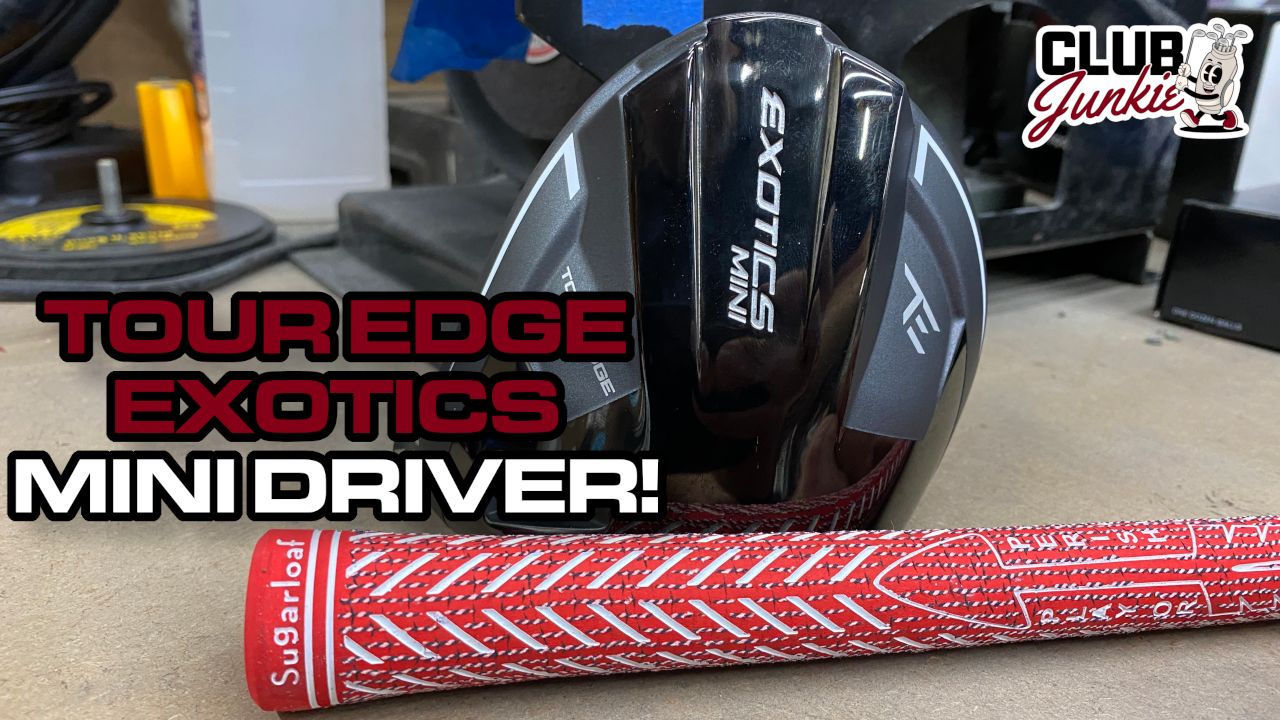
On this episode of Club Junkie, I put the new Tour Edge Exotics Mini Driver to the test and break down the performance, forgiveness, distance, and where it fits compared to a traditional driver or strong fairway wood. If you have been curious about adding a mini driver to the bag, this one is worth a look.
I also dive into the new TaylorMade Spider ZT Max putter that was recently spotted and discuss the growing zero torque putter trend. Plus, there is a closer look at the new Project X Titan Yellow shaft showing up on the PGA Tour and what makes it different from other profiles currently out there.

Justin Rose WITB 2026 (April): Full WITB breakdown with new McLaren irons

What’s the story behind Webb Simpson’s custom-stamped irons?

Memorial Tournament Tour Report: Rory McIlroy, Cameron Young switch up drivers, and more

Cadillac Championship Tour Report: Spieth’s sizable changes, McLaren Golf launches, and more

Russell Henley’s winning WITB: 2026 Charles Schwab Challenge

Kristoffer Reitan’s winning WITB: 2026 Truist Championship

Aaron Rai’s winning WITB: 2026 PGA Championship

J.T. Poston’s winning WITB: 2026 Memorial Tournament

Cameron Young’s winning WITB: 2026 Cadillac Championship

Best irons 2026: Best irons overall, most forgiving irons, and more


Bud Cauley WITB 2026 (June)
Bud Cauley had >14 clubs in his bag when photographed prior to the Memorial Tournament. Driver: Titleist GTS2 (8 degrees) Shaft: Fujikura...


Hannah Green WITB 2026 (June)
Driver: Titleist GTS3 (10 degrees, D4 SureFit setting) Shaft: Mitsubishi Chemical Diamana RB 53 S 3-wood: Titleist GT3 (15 degrees,...


Asterisk Talley WITB 2026 (June)
Driver: TaylorMade Qi4D (9 degrees) Shaft: Fujikura Ventus Blue 6 S 3-wood: TaylorMade Qi4D (16.5 degrees) Shaft: Fujikura Ventus Blue...

Brianna Do WITB 2026 (June)
Driver: Callaway Quantum Triple Diamond (9 degrees) Shaft: KBS PGW 3-wood: Callaway Elyte Titanium (15 degrees) Shaft: KBS PGW 5-wood:...
-
 Equipment6 days ago
Memorial Tournament Tour Report: Rory McIlroy, Cameron Young switch up drivers, and more
-
 News1 week ago
Russell Henley’s winning WITB: 2026 Charles Schwab Challenge
-
 Whats in the Bag3 days ago
J.T. Poston’s winning WITB: 2026 Memorial Tournament
-
 Equipment3 days ago
Best irons 2026: Best irons overall, most forgiving irons, and more
-

 Equipment1 week ago
Details on Jason Day’s latest prototype Avoda iron setup
-
 Equipment3 weeks ago
CJ Cup Byron Nelson Tour Report: Koepka and Kim’s newest putters finally get hot
-

 News2 weeks ago
Charles Schwab Challenge Tour Report: MacIntyre, Åberg and Spaun all switch putters, TaylorMade launches new Spider
-
 Equipment2 weeks ago
Details on J.J. Spaun’s surprise putter switch


Panther
Sep 7, 2016 at 12:34 am
The merchandiser in town has a loft/lie leverage clamp. I would be there twice a year because I could see my gaps change on course, they thought I was crazy. But I bought a couple dozen balls each time as partial reparations. The pro at my favorite course had 56 & 57* wedges, but a tweek here, a shaft change there and his gaps were squared away. Good article, it shows what working with a experienced fitter can help your game right away.
RJ
Dec 7, 2015 at 1:29 pm
Great article. Probably a process that better players will benefit more from. However, all players could definitely use a gap check and loft/lie adjustment!
Dan Corun
Dec 3, 2015 at 12:05 pm
To begin with I have been fitted for the clubs I currently play. It just comes down to what feels right and plays best for you. I feel that I swing faster with all my clubs and still have feel with graphite shafts. Mainly 55-65 gr. With steel shafts I do hit them solid but, I lose club head speed and I was wondering what his normal swing speed is or did I miss it in the article. Mine is 85-90 with the driver. I’m 63 and I do drills to increase my swing speed and keep flexible and in shape so, it isn’t that I can’t handle heavier shafts but that I prefer graphite shafts and the performance I get from them. The 73 yr old gentleman seems to like the heavier steel shafts so, it would seem age isn’t always a factor. I enjoy these golf discussions and always enjoy reading about other golfers thoughts and the equipment they play.
redneckrooster
Dec 1, 2015 at 2:11 pm
For o’l man what’s the cost of a fitting?
Not all have access to such fittings , any in Tennessee /Mississippi?
Liam Mucklow
Dec 1, 2015 at 5:47 pm
You guys would need to find someone that has Trackman, Lie/Loft Machine, golf course access, real golf balls, and the willingness and logic to perform the process. I can’t imagine anyone throwing this service in for free if you purchase irons as the margin on golf clubs is so small to begin with.
Collin
Nov 30, 2015 at 4:20 am
Where could someone get this done at.
Rich
Nov 29, 2015 at 5:03 pm
Shaft change and gapping? BORING! When you said equipment changes, I thought you were going to tell us that he got a whole new bag of clubs and was transformed into world no.1! I was so excited, but now I’m left with this empty feeling inside 🙁
MRC
Nov 29, 2015 at 10:27 am
Enjoyed tha article. I made the switch to Aerotech shafts and my ball flight is higher and I’m carrying the ball further. Swing speed is low to mid 90’s. Made possible thru professional fitter using trackman & outdoor driving range. Shafts were also pured.
KK
Nov 28, 2015 at 10:56 pm
I am surprised that the pro was not fitted via Trackman prior to 2013.
Liam Mucklow
Nov 28, 2015 at 2:48 pm
His putting stats are through the roof 🙂
Bill
Nov 28, 2015 at 12:41 pm
What about his pants, surely some improvement could be made there
TCJ
Nov 29, 2015 at 2:38 pm
Agreed!
Bob
Dec 2, 2015 at 12:00 pm
Yes Ben need’s a fashion fix to match his club fix. While we are fixing things the correct grammar would be “Ben and I” not “Ben and me did if they have access to a launch monitor”.
Great advise though.
Anthony
Nov 28, 2015 at 12:20 pm
Great read. Just curious, did you consider changing heads as well to possibly change launch angles? Say a CB in the long irons or has your experience shown the launch doesn’t change much assuming same lofts?
Also, what about his swing allowed him to hit it higher with a stiffer tipped shaft? I’m asking because I’m experimenting with XP115 to possibly increase launch.
Liam Mucklow
Nov 28, 2015 at 2:49 pm
Anthony,
This will be the subject of my next article.
MLECUNI
Nov 30, 2015 at 7:40 am
Hi, great article !
Really hope that you post the next one before x-mas !
Thanks
Sleng
Nov 28, 2015 at 3:40 am
Now that’s pants
I'm Ron Burgundy??
Nov 28, 2015 at 12:02 am
I enjoyed the read and love technology and tinkering.
Now about the irons.. Are those considered obsolete since Taylormade has come out with 15 sets since he got those?
Ob
Nov 28, 2015 at 10:44 am
You’re obsolete cos you’re only able to make the same stupid comments all the time
SAndrew
Nov 27, 2015 at 10:55 pm
Did the change in shafts for the longer iron (presumably 3, 4 & 5) resulted in the overall change in shafts for the shorter iron too? Or is it common for tour pros to use an odd shaft for a particular number of clubs only? If yes to the latter, does that matter?
Liam Mucklow
Nov 28, 2015 at 1:32 am
We changed the shafts in the entire set. The performance change was linear across all clubs.
Double Mocha Man
Nov 27, 2015 at 4:33 pm
Yep, Silverman needs to make an equipment adjustment with the pants. If I wore those I’d be distracted on every shot hearing chuckles from players within 300 yards of me.
Liam Mucklow
Nov 27, 2015 at 3:52 pm
There are a couple specialized testing techniques that I use for driver optimization. It takes to long to get into here, but could be a great subject for a follow up article.
BIG STU
Nov 27, 2015 at 8:15 pm
Finally someone who thinks and does like I have been doing for years. I ‘tune all of my clubs like that exactly. It does take a lot of time and effort when you do everything yourself.
N
Nov 27, 2015 at 3:44 pm
It’s the pants
Christian Sarran
Nov 27, 2015 at 1:50 pm
Any adjustments to the driver or fairway wood for more yards?
jjoro
Nov 27, 2015 at 12:52 pm
In my Experience I agree with the article. As a young man I played heavy, 130 gr. x tipped an inch in my irons and the same in Woods. I was really long with all and Graphite was not around then. I played a few PGA events and had a + hcp. for years. As I got older I fell into the light weight stuff thinking it would be better. As a club maker for a Major mfgr. I had access to all the latest stuff and fell into the lighter is better theory.
As I tried the newer light clubs I saw no significant gains and a real downturn in accuracy. At 75 I figured it was just age etc. Last year I was given a set of clubs from my old employer with 95 gr. steel shafts, they are wonderful. I hit the ball more solid, higher, and longer with the heavier clubs. Granted 95 gr. is not that heavy, but heavier than the 65 gr Graphites I have been playing, I love em. I also went to heavier Graphite Wood shafts and find it to be more manageable.
I really think that the lite clubs do little if anything to help. I have just had Open Heart Surgery and can hardly wait to get back at it and even to try heavier shafts. I have found that impact is more solid and consistent, height and distance is better, and accuracy is greatly improved, and I have found something I have lost with lite, and that is feel.
Bob Pegram
Dec 16, 2015 at 4:47 pm
jjoro –
I experienced the same thing. I went to 85 gram graphite x-flex shafts because I could hit a 4 iron in the shop farther than with the S400 is was using (with Flightscope). However, the 85 gram shafts were too light. I lost distance. As I have aged and become less flexible I made clubs that are 1-1/2 inches over length, still with graphite X flex shafts. Those got my distance back and allow me to stand more upright which is easier on my back. I lengthened the woods too for the same reason and got that distance back as well. The longer wood shafts are about 80 grams each.
In addition, with the longer shafts I don’t have to practice as much to keep my swing in shape.
Mat
Nov 27, 2015 at 12:42 pm
Iron gaps, ball flight, and landing angle. For every person that comes into this site and says they want more distance out of their irons, no. You don’t. THIS is how it’s done. Maybe you don’t have a trackman, but you can get your GameGolf to tell you your approximate gaps. This information is GOLDEN. Golf is a target game.
Now about those pants…
Don
Nov 27, 2015 at 10:25 am
This was a good read. Every little crevice is explored for the sake of that one percent!