
Opinion & Analysis
Five statistical shortcuts for lower scores


One of the very first things I examine with the PGA Tour players I work with is their basic scoring metrics. Those metrics include the following:
- Adjusted Total Scoring Average
- Adjusted Par-3 Scoring Average
- Adjusted Par-4 Scoring Average
- Adjusted Par-5 Scoring Average
- Adjusted Bogey Rate
- Adjusted Birdie Rate
The term “adjusted” means that actual average is adjusted based on the difficulty of the courses they play.
It’s important that golfers understand these metrics at a fundamental level to improve, because that is what the game is about: shooting the lowest possible score you can. And if you can better determine what your strengths and weaknesses are from a pure scoring perspective, you can then start to reverse engineer what you need to work on in order to get better.
Here’s five scoring metrics and/or strategies that can help you get your handicap trending in the right direction.
No.1: Par 4 Scoring Average

Sergio Garcia leads the PGA Tour in par-4 scoring average in 2014 at 3.96 strokes per hole. He also leads the Tour in scoring average, and ranks in the top-10 in GIR, sand save percentage, scrambling and approaches from 200-to-225 yards.
The scoring average golfers have on par 4’s has the strongest correlation to their total scoring average. This is particularly true on the PGA Tour, because Tour players play roughly 11-to-12 par 4’s per round. The same holds true for the average amateur on an 18-hole championship course.
Par 4’s are the truest test of a player’s overall ability, however, that does not mean a good par-4 player cannot struggle in certain areas. Phil Mickelson has been a terrible driver of the ball historically, yet he plays par 4’s extremely well. Mickelson just happens to make up for it by being one of the best iron players in the world, arguably the greatest trouble-shot player of all time and generally a good putter with a great short game. Boo Weekley tends to be a good par-4 player as well, but he is one of the worst putters on Tour and has a mediocre short game. He just makes it up with incredible driving of the ball and good-to-great iron play.
In order to play the par 4’s better, I recommend working on what I call the four cornerstones of the game:
- Driving
- Long approach shot play (175-to-225 yards for scratch or better golfers, 150-to-200 yards for other amateurs)
- Short Game (10-to-20 yards for less than 5-handicaps, 10-to-30 yards for 5+ handicaps with an emphasis on bunker shots)
- Putting (3-to-15 feet for less than 5-handicaps, 3-to-25 feet for 5+ handicaps)
If one can practice these areas and start to see improvement on the range, then they will very likely see a dramatic improvement in their play on the par 4’s. But, if their par-4 play is a problem, then it is very likely due to one of these issues.
No. 2: Bogey Rate
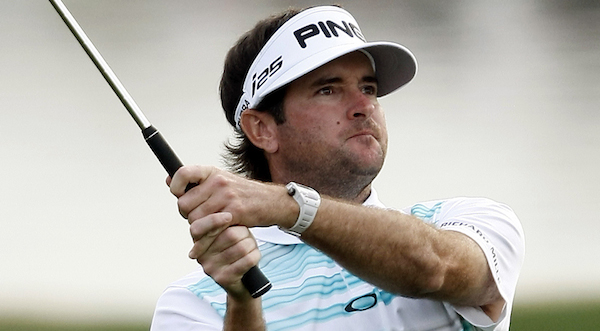
Bubba Watson is No. 2 in Bogey Avoidance on the PGA Tour (Sergio Garcia is No. 1), making bogeys only 13.21 percent of the time. While he’s not considered a great putter and ranks near the bottom of Tour player in sand save percentage, he a leader on Tour in many ball striking statistics including driving distance and GIR.
I list Bogey Rate second because it has the second strongest correlation to scoring average on Tour. The reason is that this stat includes all double, triple and quadruple bogeys. For all intents and purposes, the best somebody will do on a hole is make a birdie (eagles happen, but very rarely). Theoretically, however, a golfer can shoot an infinitely high score on each hole. And if a golfer makes a double bogey, they now need to make two birdies in order to break even. By then, they have already used up one-sixteenth of their round and are quickly running out of holes to make more birdies.
The other important facet to understand about bogeys is that they are often not related to a golfer’s short game. Instead, they are often related to a golfer’s ball striking ability. For example, even if a golfer is a terrible putter, if he leaves himself a 20-foot putt for birdie on every hole he’s not likely to three-putt that often. He may not make many birdies, but he is not going to make many bogeys either. That is why Hogan was such a great player even when he had the putting yips; he still hit the ball close to the cup repeatedly, and even his putting would not yield many bogeys.
I even came up with a game in 2013 Pro Golf Synopsis to help promote getting the ball closer to the hole called the “15/5 Score.” Here is how I recommend 10 handicaps or better to play it:
- 2 points for every birdie opportunity (putt or chip) inside 15 feet.
- 1 point for every par putt inside 5 feet.
- -3 points if the par putt is not inside 5 feet.
- +3 points for eagle putts inside 15 feet.
For golfers above with a handicap of 10 or higher, I would just go 1-stroke higher:
- 2 points for every par opportunity (putt or chip) inside 15 feet.
- 1 point for every bogey putt inside 5 feet.
- -3 points if the bogey putt is not inside 5 feet.
- +3 points for birdie putts inside 15 feet.
The golfer can only record one score per hole, so if a 4 handicap has a 12-foot birdie putt and leaves it to 2 feet, he or she can only record 2 points for the birdie opportunity inside 15 feet.
I admit that there are golfers who have high bogey rates because of their short game and putting. It’s just that poor ball striking tends to cause more bogeys than most golfers would believe. For those golfers who struggle with making bogeys because of their short game and putting, I advise that they work on their short game shots from 10-to-20 yards and their putting from 3-to-5 feet. The goal should be to make 90 percent of their putts from 3-to-5 feet. Once that is accomplished, move on to making 5-to-10 foot putts.
No. 3: Par 5 Scoring Average

Adam Scott leads the PGA Tour in par-5 scoring average at 4.45 strokes per hole. He ranks near the top in driving distance, driving accuracy and goes for the green on par 5’s 67.24 percent of the time, ninth most on Tour.
Par-5 performance is greatly influenced by the distance golfers have off the tee and their club head speed. We see a strong correlation between par-5 performance and the “go for it” rate on Tour. According to PGATour.com, a player is assumed to be going for the green if the second shot lands on or around the green or in the water. “Around the green” indicates the ball is within 30 yards of the edge of the green.
Take note that it counts as “going for it” any time a golfer hits their second shot within 30 yards of the edge of the green. So, a player could have a 300-yard shot to the hole and only be able to hit their 3 wood 250 yards, but it can still be considered a “go for it” if the ball is within 30 yards of the front edge of the green.
Obviously, golfers want to make sure it is feasible to attempt to reach a par 5 in two shots. If the shot requires the ball to fly over water that you’re not likely to carry, there’s no reason to go for it. On the other hand, I see a lot of amateurs and even Tour players lay up to a specific yardage when there is no real trouble instead of hitting their 3 wood as close to the hole as they can. Typically, this is a poor strategy.
All golfers, including Tour players, hit shots closer to the hole on average if the have a shorter shot; provided that the shot is from the same type of lie (fairway vs. fairway, rough vs. rough, sand vs. sand, etc). The idea of getting laying up to a golfer’s favorite yardage is faulty, because while a golfer may be able to stick it close frequently from a specific yardage, their variance in how close they can hit it to the hole becomes greater than if they were, say, 30 yards closer to the hole.
I have tracked numerous Tour players using ShotTracker and experimented with a few friends of mine that are amateurs. What we typically see is that a golfer’s money yardage is often not as money as they think it is.
The best case scenarios happen with Tour players. They will hit shots from their money yardage inside 5 feet, say, 20 percent of the time. And from 30 yards closer, they may only hit it inside 5 feet only 15 percent of the time. The real killer is not their good shots, however, but the deviation in all their shots. The money yardage will provide a greater variance in results than a shot that’s 30 yards closer to the hole. For every two times they hit it inside 5 feet from their money yardage, they may miss the green completely from that distance.
So, what we tend to see on Tour is that the longest hitters with high club head speeds tend to perform best on the par-5’s because they are playing them more like par 4’s. The good par-5 players that do not hit it long off the tee like Webb Simpson, Kevin Na and Matt Kuchar tend to be very aggressive in going for the par-5’s that they can go for and are good performers from 75-to-125 yards when they have to lay-up.
There is one very important caveat to this, however. Playing par 5’s well is mostly about being able to advance your second shot as close to the hole as possible. Most golfers get on a par 5 and are trying to bomb it off the tee to leave themselves with less club into the hole. The better par-5 players, on the other hand, often hit their “stock swing” driver and focus on making good contact and finding the fairway. That’s because even Tour players do not like hitting 3 woods out of the rough, and more often than not they will lay up if they are in the rough. The golden rule I stress to golfers is that any time your second shot is likely to be a 5-iron or longer, take your stock driver swing and focus on making good contact and finding the fairway. This applies for both par 5’s and long par 4’s.
No. 4: Birdie Rate
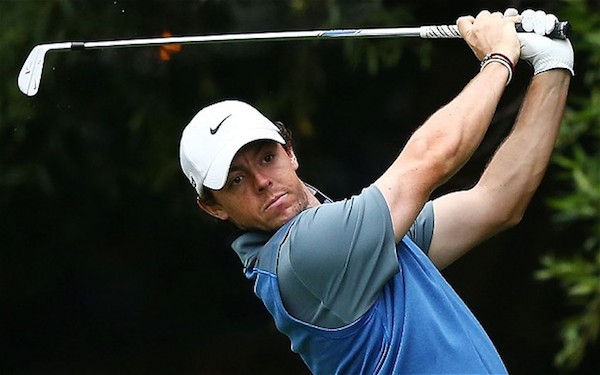
Rory McIlroy leads the PGA Tour in birdie average at 4.75 birdies per round. While he only ranks 72nd in Strokes Gained-Putting, he’s one of the most accurate players on Tour from 100-to-125 yards, 125-to-150 yards, 175-to-200 yards, 200-to-225 yards and 225-to-250 yards.
Birdie Rate is often tied in with Par-5 performance because golfers birdie par 5’s almost three times more than they birdie par 4’s and almost four times more than they birdie par 3’s.
There are some Tour players that generate a lot of birdies, but do not play the par 5’s that well. Those players are usually good at one of or both of these areas:
- Shots from 125-to-175 yards
- Making putts outside of 15 feet
Typical amateurs who makes a lot of birdies but do not play par-5’s well will likely be performing very well from 100-to-150 yards.
Making putts outside 15-feet is a very fleeting metric. Even the best putters on Tour have a very inconsistent percentage of putts made from outside 15 feet. Typically, making putts outside 15 feet will move towards the mean. So the golfer that is making a lot of birdies because they are putting great outside 15 feet will eventually see that cease, because that make percentage is going to regress over time.
No. 5: Par 3 Scoring Average
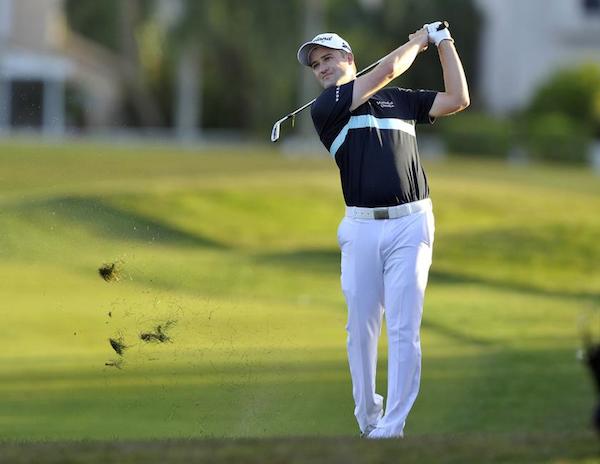
Russell Knox leads the PGA Tour in scoring average at 2.96 strokes per hole. While he only ranks 114th in Strokes Gained-Putting, he ranks 30th in putts from 15-to-20 feet and hits his shots closer to the hole than any other player on Tour with an average of 31 feet 11 inches.
Par-3 performance is:
- 1-part iron play
- 1-part short game play
- 1-part putting outside 20 feet
Typically, if a Tour player performs at least two of these parts well they will perform better than average on par 3’s. Par-3 performance is also a bit fleeting because one part of it relies on making putts that are longer than 20 feet, which you now know is a fleeting metric.
Recent research that I have conducted shows that between the frequency of shots and shot performance, bunker play accounts for 50-to-55 percent of a Tour player’s short game performance. For amateurs with a 5 handicap or greater, it accounts for 75-to-80 percent of their short game performance. That’s why most amateurs should concentrate on their bunker play to improve their scoring average. And they could greatly help themselves by avoiding those bunkers in front of the green, where I found that Tour players hit their shots an average of 38 percent farther away from the cup that shots from the bunkers to the side of the green or in back of the green.
I hope this information allows golfers to better understand scoring, what to practice and how to generate a better strategy to improve their score. Good luck!



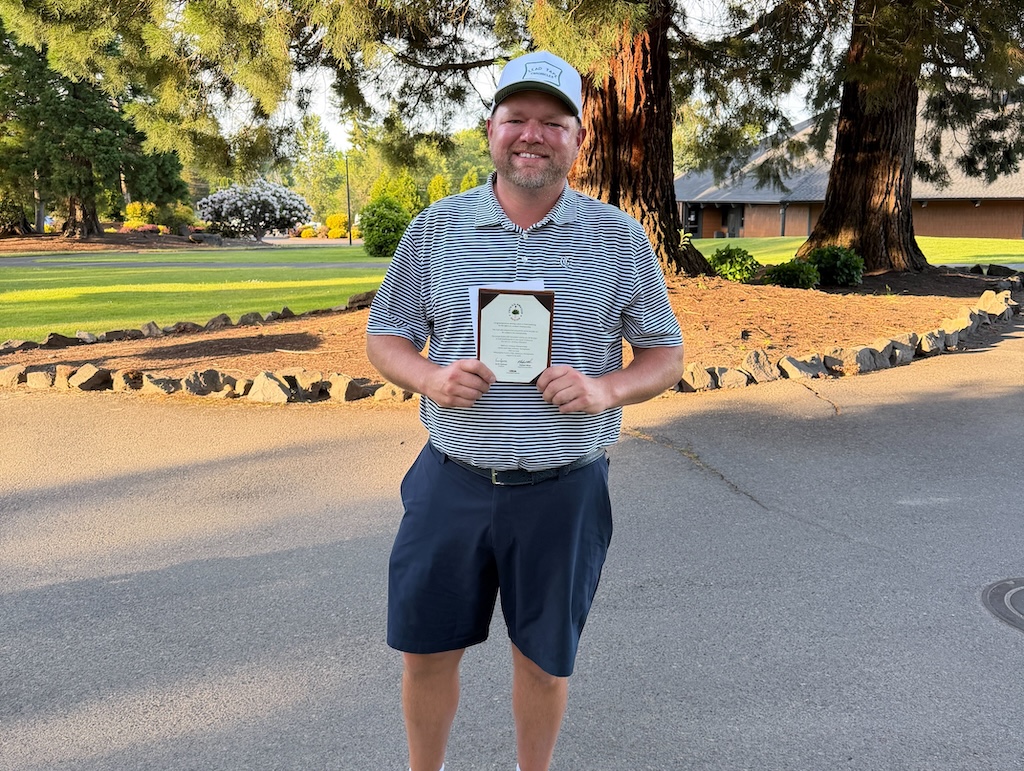
This past Monday, I played in the U.S. Amateur local qualifier at Rock Creek Country Club in Portland, Oregon. A full tee sheet from 7:30 a.m. to 1:55 p.m., the top 11 scores would make it to the U.S. Amateur final qualifying.
I teed off at 10:48 a.m.. With the 7:30 am tee time, you can get a feel for the leaders’ pace, and they were off and running on the challenging setup at Rock Creek.
View this post on Instagram
Getting to the highlight of the round on the par five 17th, a drive up the left side and 212 yards left to the front hole location. I took out a 5-iron with plans of middle of the green. The ball ended up 8 feet left of the hole, pin high. A slight downhill putt dropped in for an eagle 3 on the 17th. With the cut line looking to be anywhere from -2 to even par. This was the boost I had been waiting for all day.
With making par from the trees on 18, it was time to wait for a potential playoff with a posted score of one under par 71.
Three hours later, it was playoff time. 8 players for 6 spots. I made par on the playoff hole, which was good enough to advance to the U.S. Amateur final qualifying in July. USGA qualifiers sure deliver on all of the emotions in golf!
Club Junkie
Building my 2026 gamer WITB: Ranking the contenders and new putter projects – Club Junkie Podcast

The annual What’s In The Bag build is underway, and on this episode of Club Junkie, Brian breaks down the clubs currently leading the race for a spot in his 2026 gamer setup. From drivers and fairway woods to irons, wedges, and shafts, he ranks the equipment that’s performing best and explains what’s separating the front runners from the rest of the field.
Brian also heads into the workshop to discuss several putter projects currently on the bench. From head options and shaft choices to build ideas and testing plans, he shares what he’s working on and which putters could become serious contenders for the bag this season.
If you’re a gear junkie who loves equipment testing, club building, and the never-ending pursuit of the perfect setup, this episode is for you.
Follow Club Junkie:
Instagram: @clubjunkiepod
TikTok: @clubjunkiepod
Threads: @clubjunkiepod
X: @ClubJunkiePod
Club Junkie
Tour Edge Exotics mini driver review + TaylorMade Spider ZT Max first look – Club Junkie

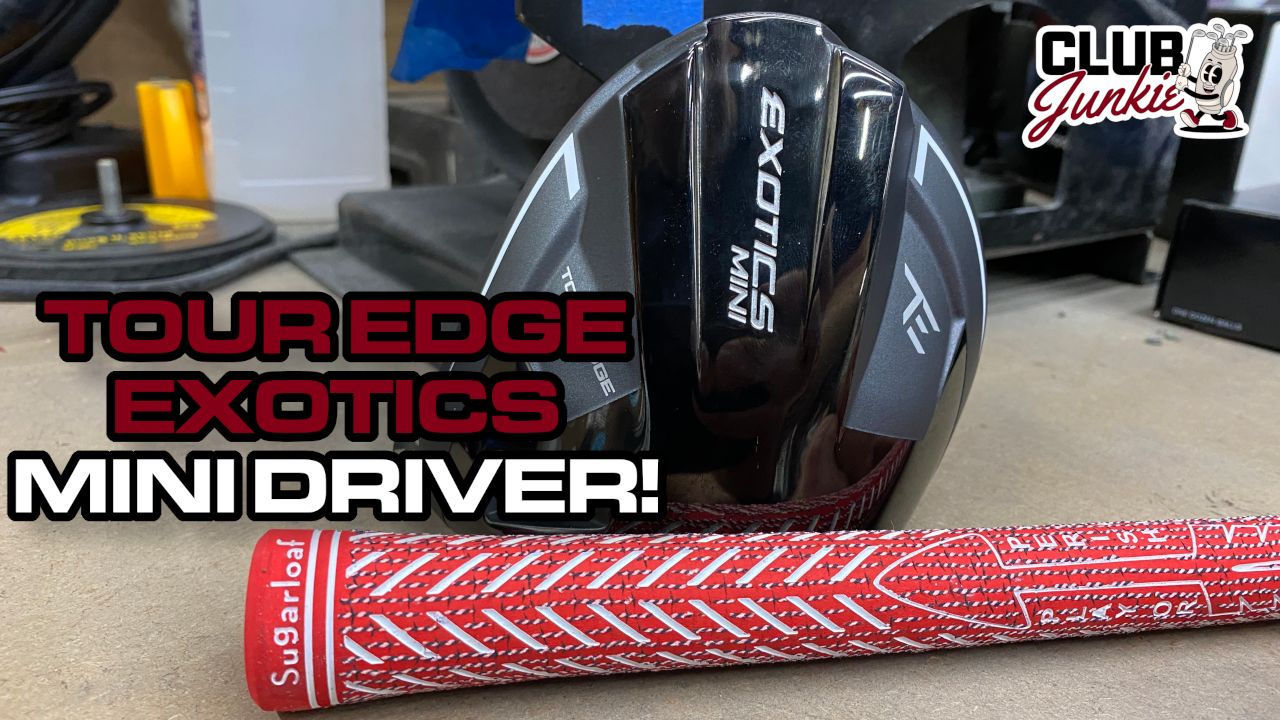
On this episode of Club Junkie, I put the new Tour Edge Exotics Mini Driver to the test and break down the performance, forgiveness, distance, and where it fits compared to a traditional driver or strong fairway wood. If you have been curious about adding a mini driver to the bag, this one is worth a look.
I also dive into the new TaylorMade Spider ZT Max putter that was recently spotted and discuss the growing zero torque putter trend. Plus, there is a closer look at the new Project X Titan Yellow shaft showing up on the PGA Tour and what makes it different from other profiles currently out there.

What’s the story behind Webb Simpson’s custom-stamped irons?

Memorial Tournament Tour Report: Rory McIlroy, Cameron Young switch up drivers, and more

Cadillac Championship Tour Report: Spieth’s sizable changes, McLaren Golf launches, and more

Russell Henley’s winning WITB: 2026 Charles Schwab Challenge

Kristoffer Reitan’s winning WITB: 2026 Truist Championship

Best irons 2026: Best irons overall, most forgiving irons, and more

J.T. Poston’s winning WITB: 2026 Memorial Tournament

Aaron Rai’s winning WITB: 2026 PGA Championship

Cameron Young’s winning WITB: 2026 Cadillac Championship

Details on Jason Day’s latest prototype Avoda iron setup


Ryan Palmer WITB 2026 (June)
Driver: Callaway Quantum Triple Diamond (9 degrees) Shaft: Project X HZRDUS Smoke Blue RDX 60 TX 3-wood: TaylorMade Qi10 (15 degrees) Shaft:...


Bud Cauley WITB 2026 (June)
Bud Cauley had >14 clubs in his bag when photographed prior to the Memorial Tournament. Driver: Titleist GTS2 (8 degrees) Shaft: Fujikura...


Hannah Green WITB 2026 (June)
Driver: Titleist GTS3 (10 degrees, D4 SureFit setting) Shaft: Mitsubishi Chemical Diamana RB 53 S 3-wood: Titleist GT3 (15 degrees,...


Asterisk Talley WITB 2026 (June)
Driver: TaylorMade Qi4D (9 degrees) Shaft: Fujikura Ventus Blue 6 S 3-wood: TaylorMade Qi4D (16.5 degrees) Shaft: Fujikura Ventus Blue...
-
 Equipment6 days ago
Memorial Tournament Tour Report: Rory McIlroy, Cameron Young switch up drivers, and more
-
 News2 weeks ago
Russell Henley’s winning WITB: 2026 Charles Schwab Challenge
-
 Equipment3 days ago
Best irons 2026: Best irons overall, most forgiving irons, and more
-
 Whats in the Bag4 days ago
J.T. Poston’s winning WITB: 2026 Memorial Tournament
-
 Equipment1 week ago
Details on Jason Day’s latest prototype Avoda iron setup
-
 Equipment3 weeks ago
CJ Cup Byron Nelson Tour Report: Koepka and Kim’s newest putters finally get hot
-

 News2 weeks ago
Charles Schwab Challenge Tour Report: MacIntyre, Åberg and Spaun all switch putters, TaylorMade launches new Spider
-
 Equipment2 weeks ago
Details on J.J. Spaun’s surprise putter switch


Mark
Jun 13, 2014 at 8:33 am
Good article Richie. For those who are dismissing it, take a closer look at your own game and evaluate your strengths and weaknesses. Then refer back to the article to see where you may gain the most from an improvement. I’m sure your intuition and knowledge of your own game can point you to your weaknesses even if you don’t keep detailed stats.
This year I’m working on being more aggressive into Par 5s (even when I can’t get all the way there), pitching and bunker play, and also improving my putting in the 3-15 foot range. I can already see improvements.
Kevin
Jun 9, 2014 at 11:44 am
You fail to put a score down for 15/5 Score in the bogey section as to what is good, average, bad.
joesixpack
Jun 9, 2014 at 11:29 am
Not a terrible article. I just don’t see it as very useful for many people. It’s too generic and focused on tour pros. I unfortunately do not have the game of a tour pro so in all likelihood these statistical trends you note based on tour pro data are not very relevant to me. You mentioned research you’ve done with amateurs as well, but again, my game looks nothing like the “average amateur”. I have my strengths and weaknesses that are particular to me. What the average pro or average amateur does is interesting to a degree, but there is so much variance from golfer to golfer that I just don’t find that useful at all.
The same is true for individual touring pros. You can tell Tim Clark that there’s a great correlation between “go for it” rate on par 5’s and par 5 scoring average, and it means nothing to him. He has to play to his strengths just like everybody else does.
What I do find useful is tracking my own stats and digging into my own statistical patterns. There are some great new products out there that work with smartphones and can track all of your shots and provide you with all of this data for your individual game. Use one and do your own statistical analysis and you won’t need to pay any attention to what the average tour pro or average amateur needs to do to score better on par 4s or par 3s. You can know what YOU need to do to score better.
John
Jun 9, 2014 at 8:59 am
Richie … don’t lose heart. I dug the article. Some people will never get it. I also noticed that the haters certainly didn’t add any alternative information.
Keep on keepin on.
Esben
Jun 9, 2014 at 6:53 am
First of all I think it is a great article, thanks for that Richie!
Too all of you guys that makes fun of this article, stating it is to obvious, haven’t really read it properly or either you just don’t get it.. As Richie mentioned in an above comment it is an article that goes into understanding how to get better on the par-3’s par-4’s and par-5’s holes which some of you clearly did not
understand!
I have read Richie’s articles for the past 2 months and for the last month I have been training on some the aspects of the game he mentioned in this article.
My focus have been on going for the par 5’s every time I can.
Improving my driving accuracy by swinging more controlled.
Improving my long iron play.
And lastly my putts from 1-6 feet.
That have made my handicap go from 3 to 1 in a month.
And yes I makes good sense to take statistic from your round to make things clearer, but every player should have an idea of where there game lacks!
If you don’t just train “the four cornerstones of the game” and you golf will improve!
Jm
Jun 8, 2014 at 8:50 pm
I think this is a good article with a misleading title.
And really it only helps anyone who keeps stats.
It really does a good job of providing/identifying the 5 basic scoring metrics you need to analyze in order to identify some of the most influential strengths and weaknesses in your game.
Once you find your strengths and weaknesses based on these 5 metrics then you can analyze why exactly you score well/poorly in certain areas
Carter
Jun 8, 2014 at 7:37 am
Solid article. The hacks above didn’t really think about the logic: look at what you are performing poorly at and then address how to improve there.
This certainly made me think about what to work on. I am scratch trying to get to plus and win club championship.
My par 4 scoring is mediocre for my hdcp and I can see it is due to less than fair driver accuracy and weak long iron play.
My bogie rate is not good. This is certainly bc I excel at short game yet long iron ball striking in general is a weak stat. .
My par 5 scoring, relatively speaking, is weak and I can see how trying to crush it off the tee instead of a stock driver in the fairway has greatly affected my score. When thinking about it, although I hit it plus 300 yards, I’m usually in the rough. Last 5 rounds I only hit 46% of fairways.
Birdie rate is average and improving par 5 stat will get me there.
My best stat above is par3 scoring, which makes sense because I’m abnormally great long putter and putter in general and my short game far exceeds the rest of my game.
So my priorities are:
Driver accuracy
175-225 shots
MFB
Jun 7, 2014 at 11:21 am
Putts inside three feet are good.
1 mulligan each 9.
Maximum score on a hole is Double Bogey.
Use a pencil with an eraser.
Stop after 15 holes.
melrosegod
Jun 7, 2014 at 9:41 am
What to work on to score better…
Drives
iron play
short game
putting
well now the game is just too easy!
Dave
Jun 7, 2014 at 9:40 am
So all I have to do is improve on the Par 3’s, 4’s and 5’s? Thanks for the tip.
Richie Hunt
Jun 7, 2014 at 11:15 pm
The article goes into *what goes into* improving on the par-3’s, par-4’s and par-5’s.
Colin
Jun 7, 2014 at 12:23 am
This article really put some groundbreaking information out there.
Scooter McGavin
Jun 6, 2014 at 7:10 pm
Soooo… Lower your scores by shooting more pars and birdies? If only somebody would have told me that sooner.
SN
Jun 6, 2014 at 8:32 pm
Totally agreed…
I didnt know that i should have worked on driving, irons, short game and putting.
This article is such an eye opener!!!
Square
Jun 6, 2014 at 8:58 pm
Scooter, that was funny….
Rich
Jun 6, 2014 at 7:01 pm
Statistics is so boring
Chris Steele
Jun 6, 2014 at 4:30 pm
I agree with Mike, All you’re really saying is hit better shots.
Jedidiah
Jun 6, 2014 at 4:04 pm
Still such a cutie richie
Duncan Castles
Jun 6, 2014 at 2:18 pm
Another excellent and informative article, Rich. Thanks.
Mike
Jun 6, 2014 at 1:16 pm
So not really shortcuts…this whole article is more like “he’s how to score in golf” and essentially means shoot better, score better lol
But thanks, was good, just a tad misleading.
Richie Hunt
Jun 6, 2014 at 2:29 pm
We had difficulty coming up with a good title. That certainly is not one of my strengths.