
Opinion & Analysis
Does it Mean A Thing if it Ain’t Got That Swing?

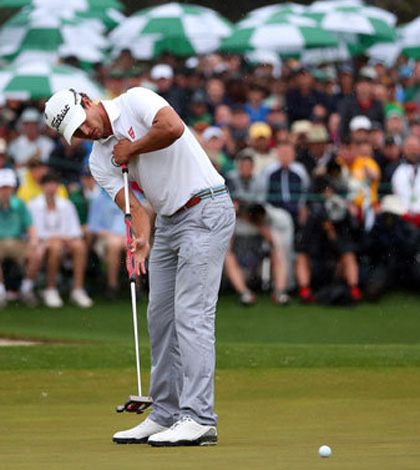
Golf cultivates a sense of continuity throughout the generations. The rules, the equipment and even the players have evolved. But with a little squinting to blur the differences, players from different centuries can be both treasured and compared to their contemporary counterparts.
The desire to maintain continuity seems to be the primary reasoning behind the USGA and the R&A adopting Rule 14-1b outlawing anchoring the putter. To be clear, this about a method, not the equipment. The putter that any player uses can be long enough to hang laundry; they just have to swing it freely starting in 2016.
Many people ask “why do it?” and “why now?” The anchored putter has been in use for years and PGA Tour Commissioner Tim Finchem says that there is no compelling data to show a competitive advantage by using an anchored putter. But the clear answers to those two questions are “because it works” and “better late than never.”
In his official statement, USGA President Glen Nager said:
“Having considered all of the input that we received, both before and after the proposed Rule was announced, our best judgment is that Rule 14-1b is necessary to preserve one of the important traditions and challenges of the game – that the player freely swing the entire club.”
A skilled Washington, D.C. attorney, Nager shows his skills when he states that the ban “eliminates the possible advantage that anchoring provides, ensuring that players of all skill levels face the same challenge inherent in the game of golf.”
While there may not have been any long-term scientific research done to support a ban, the governing bodies were willing to take action on the empirical evidence: Three out of the last four major winners have used the anchor putter, and Adam Scott’s win completed the “anchor slam.” The previous school of thought was that the same reason that a guy went to the anchor putter, being shaky under pressure, would be the same reason that the anchor putter would not win major tournaments in bunches, if at all. That turned out to be a myth that has been utterly destroyed.
The ruling is not a surprise; in fact it, had been anticipated for a long time because the governing bodies were know to have been leaning against allowing continued use of the anchor method. Sources close to the USGA said that the penny dropped for it when one of its senior officials observed a junior tournament in which the majority of the best young players was using the anchor putter and sinking putts from everywhere. The official realized that a generation was coming that would establish the advantage that was only hypothetical before.
Perhaps the most interesting part of the controversy about the ruling is who is for it and who is against it. Standing in favor of the ban are all-time greats like Tiger Woods and Arnold Palmer, arguably the two most influential players in history. Both have stated that an integral part of the game is to have every club swung freely, and the anchor method does not meet that standard. This is especially interesting from Palmer, a player who stopped winning majors when he stopped being able to hit clutch putts. The use of an anchored putter might have enabled to him to add to his eight career major victories.
On the other side of the debate are current players who have benefited from the anchored putter. Keegan Bradley, who won the 2011 PGA Championship with an anchored putter, has been vehement in his defense of the method and the other players that use it. Then there is the resistance of the PGA Tour and the PGA of America. Already on record as a defender of the long putter and the high-profile players that use them on Tour, Finchem has also suggested what was once considered heresy; that there could be a world with two sets of rules, one for pros and one for everyone else.
PGA of America President Ted Bishop was more blunt, saying in a recent blog that “[having two sets of rules] seems destined” sometime after the rule takes effect in 2016. The possibility of two sets of rules does not sit well Palmer.
“I don’t think that golf has a place for two sets of rules,” Palmer said. “I think one of the reasons that the game has progressed in the way that it has over the years is the fact that the amateurs and the pros all play the same game and they play under the same set of rules. I feel like that is very, very important.”
There is a slight chance that The King might be wearing no clothes in this case. His stance on “one game, one set of rules” was quite different when it came to the non-conforming Callaway ERC drivers he was sponsoring some years ago. In that instance, he said that recreational players should use whatever makes the game more fun when they go out to play “with family and friends.” Surely sinking more putts makes the game more fun?
It will also be interesting to see how the players perform using the anchored method during this twilight period between now and 2016. If they continue to win majors it could get ugly. In 2010, we had Ping Wedges with square grooves deemed illegal and Scott McCarron accusing Phil Mickelson of cheating for using them after the fact. Now Sergio and Tiger have introduced a new era of confrontation that may get taken to the next level if players continue to use and win with anchored putters.
At the end of the day this tempest will be forgotten, just like similar dust-ups over the introduction of the sand wedge (which Bobby Jones opposed), square grooves, driver size limits, the use of laser rangefinders, etc. The fact is that when it comes to rules and equipment, players will adapt and so will the public. The golf manufacturers will bemoan the dusty inventory of long putters in their warehouses. But maybe the public will eventually come to think of the anchored putter like the laser range finder, which is prohibited in Tour play but is routinely used by recreational golfers.
At the end of the day, the game will go on, free swinging putters and all.



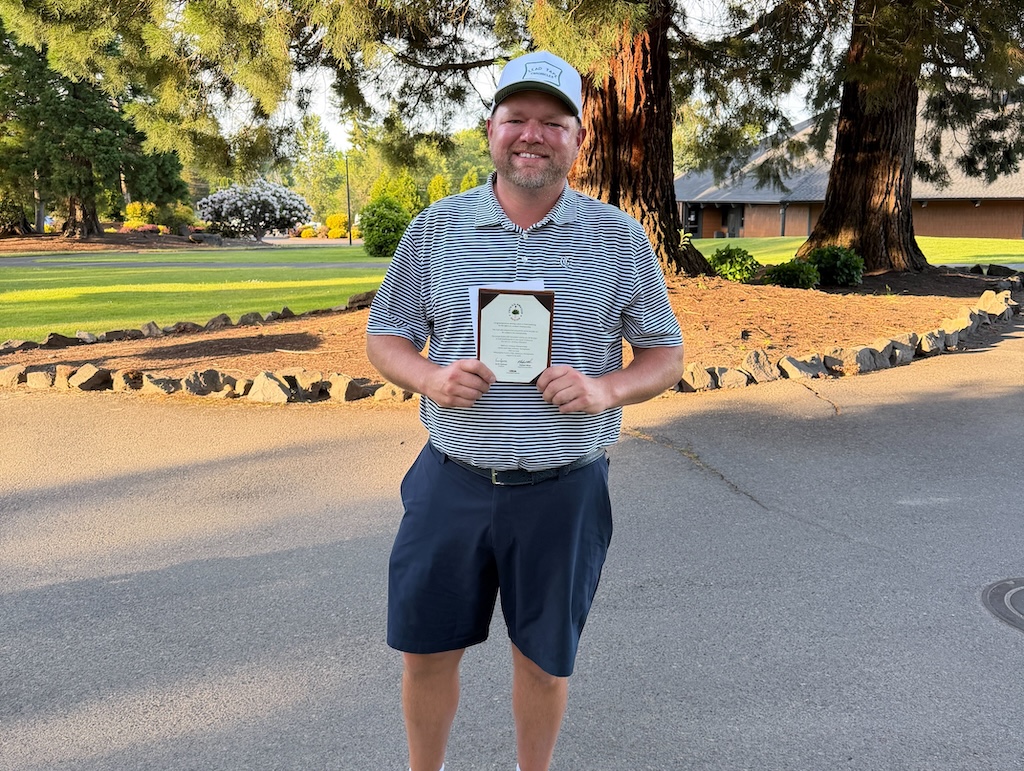
This past Monday, I played in the U.S. Amateur local qualifier at Rock Creek Country Club in Portland, Oregon. A full tee sheet from 7:30 a.m. to 1:55 p.m., the top 11 scores would make it to the U.S. Amateur final qualifying.
I teed off at 10:48 a.m.. With the 7:30 am tee time, you can get a feel for the leaders’ pace, and they were off and running on the challenging setup at Rock Creek.
View this post on Instagram
Getting to the highlight of the round on the par five 17th, a drive up the left side and 212 yards left to the front hole location. I took out a 5-iron with plans of middle of the green. The ball ended up 8 feet left of the hole, pin high. A slight downhill putt dropped in for an eagle 3 on the 17th. With the cut line looking to be anywhere from -2 to even par. This was the boost I had been waiting for all day.
With making par from the trees on 18, it was time to wait for a potential playoff with a posted score of one under par 71.
Three hours later, it was playoff time. 8 players for 6 spots. I made par on the playoff hole, which was good enough to advance to the U.S. Amateur final qualifying in July. USGA qualifiers sure deliver on all of the emotions in golf!
Club Junkie
Building my 2026 gamer WITB: Ranking the contenders and new putter projects – Club Junkie Podcast

The annual What’s In The Bag build is underway, and on this episode of Club Junkie, Brian breaks down the clubs currently leading the race for a spot in his 2026 gamer setup. From drivers and fairway woods to irons, wedges, and shafts, he ranks the equipment that’s performing best and explains what’s separating the front runners from the rest of the field.
Brian also heads into the workshop to discuss several putter projects currently on the bench. From head options and shaft choices to build ideas and testing plans, he shares what he’s working on and which putters could become serious contenders for the bag this season.
If you’re a gear junkie who loves equipment testing, club building, and the never-ending pursuit of the perfect setup, this episode is for you.
Follow Club Junkie:
Instagram: @clubjunkiepod
TikTok: @clubjunkiepod
Threads: @clubjunkiepod
X: @ClubJunkiePod
Club Junkie
Tour Edge Exotics mini driver review + TaylorMade Spider ZT Max first look – Club Junkie

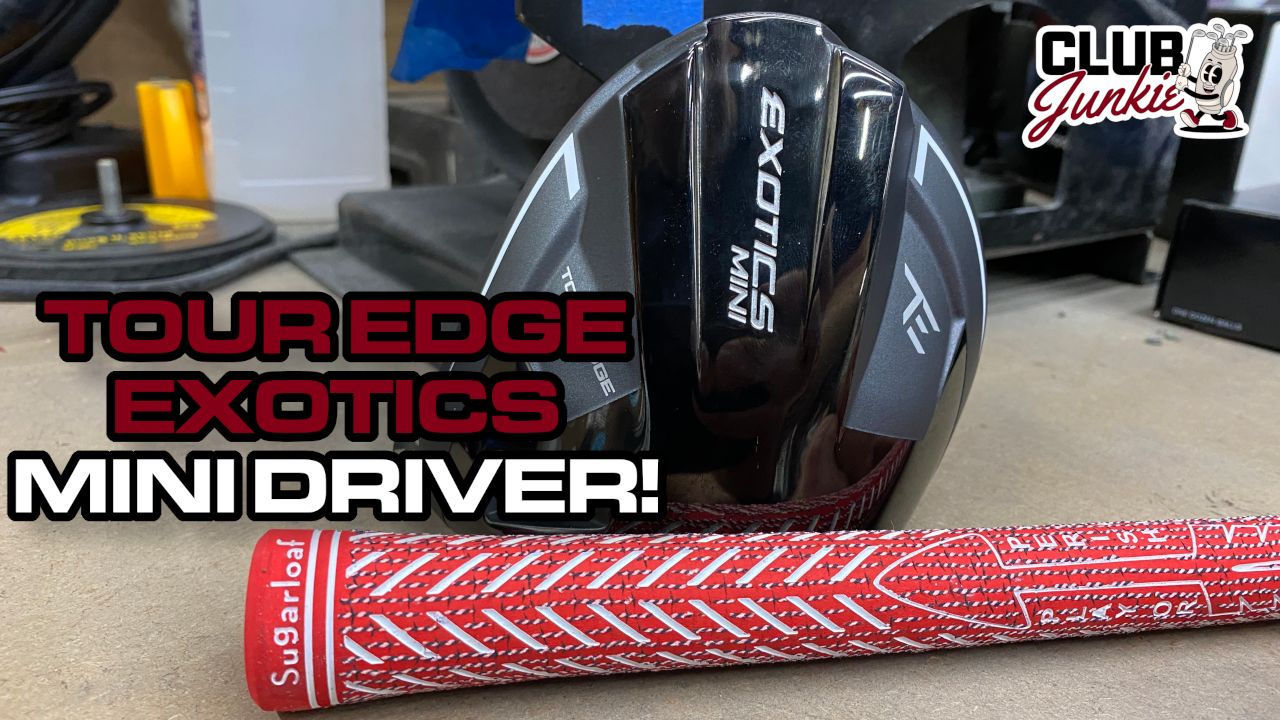
On this episode of Club Junkie, I put the new Tour Edge Exotics Mini Driver to the test and break down the performance, forgiveness, distance, and where it fits compared to a traditional driver or strong fairway wood. If you have been curious about adding a mini driver to the bag, this one is worth a look.
I also dive into the new TaylorMade Spider ZT Max putter that was recently spotted and discuss the growing zero torque putter trend. Plus, there is a closer look at the new Project X Titan Yellow shaft showing up on the PGA Tour and what makes it different from other profiles currently out there.

Justin Rose WITB 2026 (April): Full WITB breakdown with new McLaren irons

What’s the story behind Webb Simpson’s custom-stamped irons?

Memorial Tournament Tour Report: Rory McIlroy, Cameron Young switch up drivers, and more

Cadillac Championship Tour Report: Spieth’s sizable changes, McLaren Golf launches, and more

Russell Henley’s winning WITB: 2026 Charles Schwab Challenge

Kristoffer Reitan’s winning WITB: 2026 Truist Championship

J.T. Poston’s winning WITB: 2026 Memorial Tournament

Best irons 2026: Best irons overall, most forgiving irons, and more

Aaron Rai’s winning WITB: 2026 PGA Championship

Cameron Young’s winning WITB: 2026 Cadillac Championship


Bud Cauley WITB 2026 (June)
Bud Cauley had >14 clubs in his bag when photographed prior to the Memorial Tournament. Driver: Titleist GTS2 (8 degrees) Shaft: Fujikura...


Hannah Green WITB 2026 (June)
Driver: Titleist GTS3 (10 degrees, D4 SureFit setting) Shaft: Mitsubishi Chemical Diamana RB 53 S 3-wood: Titleist GT3 (15 degrees,...


Asterisk Talley WITB 2026 (June)
Driver: TaylorMade Qi4D (9 degrees) Shaft: Fujikura Ventus Blue 6 S 3-wood: TaylorMade Qi4D (16.5 degrees) Shaft: Fujikura Ventus Blue...

Brianna Do WITB 2026 (June)
Driver: Callaway Quantum Triple Diamond (9 degrees) Shaft: KBS PGW 3-wood: Callaway Elyte Titanium (15 degrees) Shaft: KBS PGW 5-wood:...
-
 Equipment6 days ago
Memorial Tournament Tour Report: Rory McIlroy, Cameron Young switch up drivers, and more
-
 News2 weeks ago
Russell Henley’s winning WITB: 2026 Charles Schwab Challenge
-
 Whats in the Bag4 days ago
J.T. Poston’s winning WITB: 2026 Memorial Tournament
-
 Equipment3 days ago
Best irons 2026: Best irons overall, most forgiving irons, and more
-

 Equipment1 week ago
Details on Jason Day’s latest prototype Avoda iron setup
-

 Equipment3 weeks ago
CJ Cup Byron Nelson Tour Report: Koepka and Kim’s newest putters finally get hot
-

 News2 weeks ago
Charles Schwab Challenge Tour Report: MacIntyre, Åberg and Spaun all switch putters, TaylorMade launches new Spider
-

 Equipment2 weeks ago
Details on J.J. Spaun’s surprise putter switch


kyle
Jun 5, 2013 at 12:29 pm
It really does not madder. I just had a leaner made. The usga has no rule on that yet. Iv been putting with a belly since I was 2yrs old. Now they want me to change. So iv been putting with this leaner for 3 weeks now and iv never putted better. Iv made more money than ever cuz of it. I could switch to a short putter and i would still putt great. Bellys are not for the yips. They were just an option thats all. but the usga took that option away, that is all that has happen here.
Roy D
May 30, 2013 at 10:58 am
I wish the USGA would ban the achored stroke at next week’s US Opon. It isn’t a “swing”… never has been. Nerves are part of the game & if you can’t make a putting stroke that’s on you not your competitors. The USGA got it right.
erkr
May 27, 2013 at 5:32 am
The anchored putter has been the resquer for players with putting problems and yips. I dont use it but don’t mind players do, since it puts some fun back in their game. My opinion is that USGA and RA should let the game evolve naturally.
lanceW
May 25, 2013 at 8:34 am
Talk about kicking a sleep’n dog. At best, the rule change will only create animosity among fellow golfers – & in my opinion will do nothing to grow the game. After 40 yrs? No way.
Charles W. Wright
May 24, 2013 at 2:32 pm
I inquired to the usga about members having the right to vote for these “purist” leaders of the usga. Was told members are all assoc. mems. That only golf clubs around the country vote for so called leadership. That sucks.I would love to be able to vote these people out. The game rules need to be amended anyway. Anyone who has perused the usga rulebook would know there are some totally stupid rules in there. These guys will probably ban shorts or uncollared shirts next, Anyway these putters have been deemed legally swung for 40 years. I don’t use one but respect those that do as players who’ve chosen a different putter than my own.The usga needs a change and soon. Golf is declining yearly and this kind of thing does not help.
Pingback: About USGA's Anchored Putter Ban - Golf Shop, Repair Center & Club Fitting - Bobby VanSweden - St. Pete, FL Golf Shop, Repair Center & Club Fitting – Bobby VanSweden – St. Pete, FL