
News
5 Things We Learned Saturday at the U.S. Open

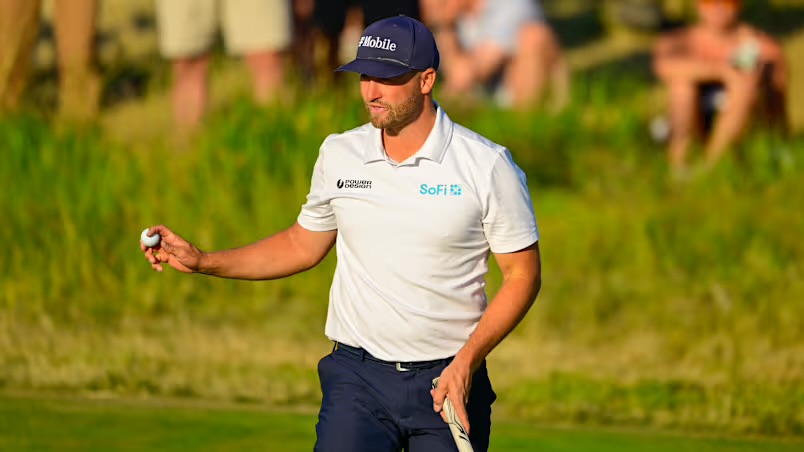
This Saturday of 2026 might have been the oddest moving day in U.S. Open history. The movement wasn’t seen in low scores (just two players broke par) nor was it seen in excruciatingly-high scores. Other than Harry Higgs and Justin Thomas, the golfers that posted higher than 74 were already out of contention. What did take place was a respositioning. The leader almost improved by a shot, until a bogey at 18 brought him back to level on the day.
What did happen, was an extension of the lead. What was a four-shot advantage at Saturday’s dawn, grew to a six-shot margin by Saturday’s dusk. The names of the pursuing players changed, but the leader did not. Had this been 1995 Shinnecock, or the 2004 iteration, or even the 2018 version, all numbers would have been higher. Keeping the fairways at width enable players to drive the ball into play, on most occasions. If the Los Angelels Country Club in 2023 was the height (or width) of a new style of U.S. Open course, 2026 Shinnecock is the Eastern-Lite version.
Shinnecock’s routing and greens are still the star of the show. Placement on the incorrect side of the fairway leads to a reduction of likelihood of a successful approach. Arrival on the wrong tier of the green, or the green surrounds, reduces the chance of a putt or chip for birdie, or even par. Don’t believe that the bunkers are merciful, nor that the rough has been tamed. There are plenty of places to lose, without warning, a pair of shots.
In 2026, one golfer has navigated his way better than the entire field, to the tune of two shots per round. It’s a complicated numbers game, as the cast of pursuers has changed overnight. On Saturday morning, Matt Fitzpatrick, Xander Schauffele, and Collin Morikawa represented a threat to Wyndham Clark. On Sunday morning, we will look to Scottie Scheffler, Tom Kim, and Sahith Theegala to track the leader. Sunday in Southampton will offer bottleneck traffic and, perhaps, a bottleneck at the top of the leader’s board. Our crystal ball is cloudy, but we do know five things that mattered on day three. We’d like to share those with you.
Item #1: Scottie Scheffler is in position
The most valuable plot line in the days prior to the start of this Open championship, was Scottie Scheffler’s pursuit of the career Grand Slam. Six golfers have achieved this level of recognition among the male professional golfers of the last two centuries. The first five are Jones, Sarazen, Nicklaus, Player, and Woods, and they were joined in 2025, finally, by McIlroy.
Also in 2025, Scottie Scheffler won The Open championship at Royal Portrush. He did so in the same manner that he had won his previous four major titles: by a wide margin. At Shinnecock Hills, Scheffler finds himself in a second-place tie, six shots behind the leader. With no offense to Sam Stevens, Sahith Theegala, nor Tom Kim, Scheffler’s is the name that should matter.
Scheffler began Saturday with bogey at the opening two holes. He steadied the ship through the course’s turn for home, then did something that no other golfer in the field did on the third day. He began to make birdies. He collected one at the tenth hole, then three consecutive from holes fourteen through sixteen. If not for the combination of weak iron, ambitious bunker shot, and under-read putt at the 17th hole, he might have finished one shot closer to the leader.
The thing that matters most for Scheffler is his tee time. He was the first to reach the clubhouse at one-under par, which meant that he, and not the remaining triumvirate, will walk all 18 holes on Sunday with the current leader. It will be reminiscent of a U.S. Amateur final, in which Scheffler finds himself six holes down at lunch. With 18 holes left to play, he needs to pursue his prey, and chase him down.
Item #2: Is Emiliano Grillo golf’s Messi?
Emiliano Grillo hails from the same land of the azulceleste as Lionel Messi. Both Argentines currently have the attention of the world of sport. Grillo was one of two golfers to navigate Shinnecock’s turbulent fairways and uneven greens in red figures. Grillo had a run of four consecutive birdies to close his front nine. Perhaps he played in a vacuum, in which the troublesome winds that detoured the other golfers, had zero effect on him. Perhaps he figured out a secret to William Flynn’s masterpiece. Coming home, Grillo wasn’t as brilliant, but he was effeicient. He toured the second nine in plus-one figures. It wasn’t the best on the day, but it was far from the worst.
Grillo finds himself seven shots adrift of Wyndham Clark. He resides in a tie for sixth with Keith Mitchell, Xander Schauffele, and Sam Burns. Grillo needs another 67 to find contention on Sunday. Even if Clark comes back to the field, someone else will rise up, and Grillo will need to match that effort. The journeyman has won on tour, and has contended in major events, albeit not in a stretch run. Grillo tees off on Sunday in the 2:08 tee time, behind just two pairings. He will partner Sam Stevens, certainly not an intimidating mate. The stars may have aligned for Grillo. Time will tell.
Item #3: Theegala and Stevens
The last time I saw Sahith Theegala, he was matched with Akshay Bhatia in a Good Good youtube video, against Sean Walsh and Brad Dahlke. Theegala’s personality came through like shimmer on a morning pond. Theegala is a man at peace with himself and his world, and that might just make him the ideal contender on a U.S. Open Sunday.
Sam Stevens has not competed against the Good Good brethren, so I had to do a deeper dive into his career, to get a sense of his self and his chances. Stevens last won a professional event in 2021, at the Colombia Classic on PGA Tour Americas. The CC remains his only monetary win to date, although he has earned a pair of runner-up finishes on the PGA Tour. What a world this would be, if his second pro victory was the U.S. Open! Stevens aided Viktor Hovland and Matthew Wolff in the 2018 NCAA Team Championship, as their Oklahoma State Cowboys assemblage won the title. Not much help, but maybe, just a little?
Theegala played a balanced, almost boring, third day at Shinnecock. He had a birdie, a bogey, and sixteen pars. Those sort of days used to win Open titles, back in the days of narrow fairways, trees, and hyper rough. Like Grillo, if Theegala or Stevens can reach four-under par, I like their chances. Stevens will have to decrease his bogey load (four on day three) to contend.
Item #4: Tom Kim
Wasn’t it just after the worldwide pandemic, when Tom Kim was the It Guy? Kim won back-to-back Shriners in 2022 and 2023, and added a Wyndham (spooky!) title, also in 2022. He was included in the indoor golf extravaganza known as TGL, on no less than Tiger Woods’ JGL squad. The past three years have brought zero titles to the young Korean, so to say that he is overdue, is an understatement. Is he due for a major win? Perhsps he is.
Kim’s third round was not of the postcard variety. He missed five of fourteen driving fairways, and eleven greens. He made bogey on one-third of his holes. His 28 putts were all that kept him in the final four games for Sunday. What does Kim need to improve on day four? Everything. He needs to corral his driver, harness his irons, and putt well. It is asking a lot, but this is the U.S. Open.
Item #5: Everyone else and a winner
Matt Fitzpatrick was the unexpected surprise on Saturday. His game appeared ideal for Shinnecock, then he began to miss fairways (six in total, one worse than Tom Kim) and greens (seven in total, same as Kim) and putts (33 putts on the day.) Fitzy would need the touch of the gods on Sunday, to add a second national title to his 2022 title at Brookline.
The trio of Schauffele, Fleetwood, and Morikawa, shows how diffcult individual golf is. Both Collin and Xander, as mentioned before in this column, have two of four major titles and each lacks the U.S. Open. Did they want it too much on Saturday? Probably. As for Fleetwood, success in Ryder Cup does not translate to major wins. He came close in 2018 at Shinnecock Hills, and had another chance in 2026. He needed Grillo’s third round, but everything went against him. Fleetwood hit 11 of 14 fairways, and 14 of 18 greens. He took 33 putts, which translates to not close enough when on the green, and not successful enough, when trying to save par. Like Fitzpatrick, Schauffele, and Morikawa, Tommy will need divine intervention on Sunday for a chance at the chalice.
Here is our longshot pick. He is the fellow who opened this championship with 41 shots, only to follow it with a second nine of 29 strokes. He is Josh Allen’s favorite pro-am partner, and he is known among friends and allys as Cashmere Keith. He is both well-dressed and powerful. On this Sunday, this Father’s Day of 2026, Keith Mitchell becomes everyone’s Daddy by posting 63 and winning the U.S. Open.


News
Scottish Open Tour Report: Away from driving irons, here’s what else Scotland had to offer including McIlroy’s bag updates

With the PGA Tour’s annual trip across the pond comes the usual bevy of changes to the top end of players’ bags.
Out with the high-lofted fairway woods, and in with a good old-fashioned driving iron to keep ball flights lower in the blustery conditions found on the shores of the United Kingdom.
Rory McIlroy, who opened the Genesis Scottish Open with a 5-under 65 at The Renaissance Club in North Berwick, Scotland, did just that, opting for his TaylorMade P760 3-iron instead of his Qi4D 5-wood, which has been in the bag most of the year. The P760 is the same model of iron McIlroy has regularly in play in his 4-iron, and actually what he used for his famous 18th-hole approach at The Renaissance, where he hit a 2-iron to just a few feet to win the tournament in 2023.

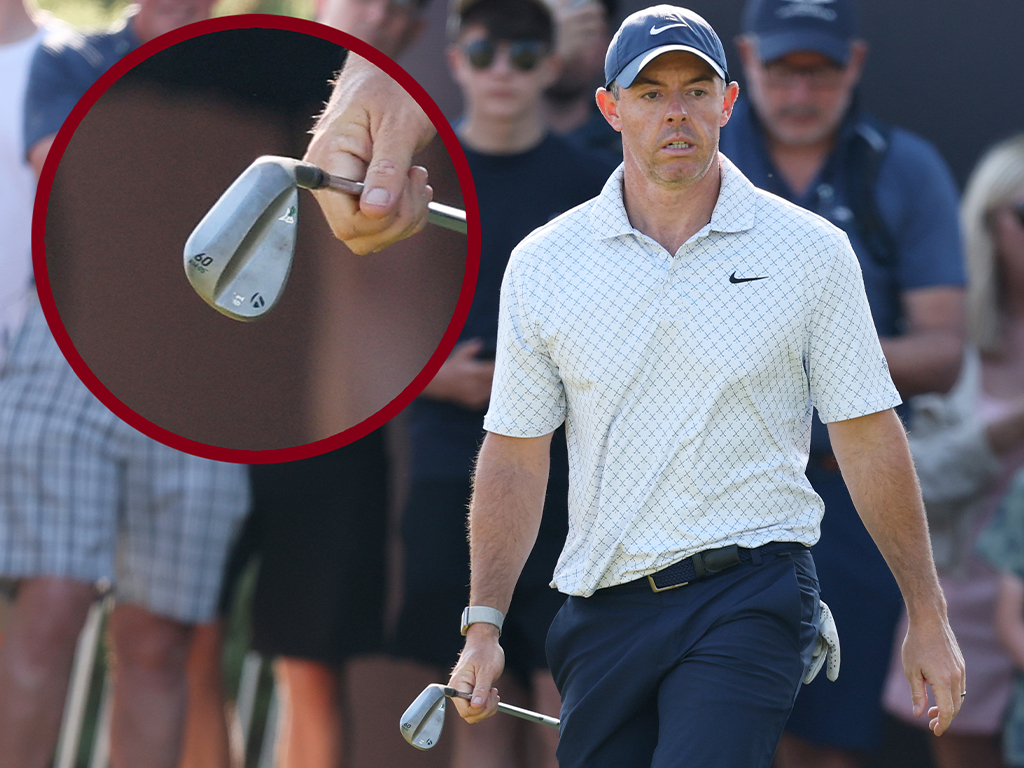
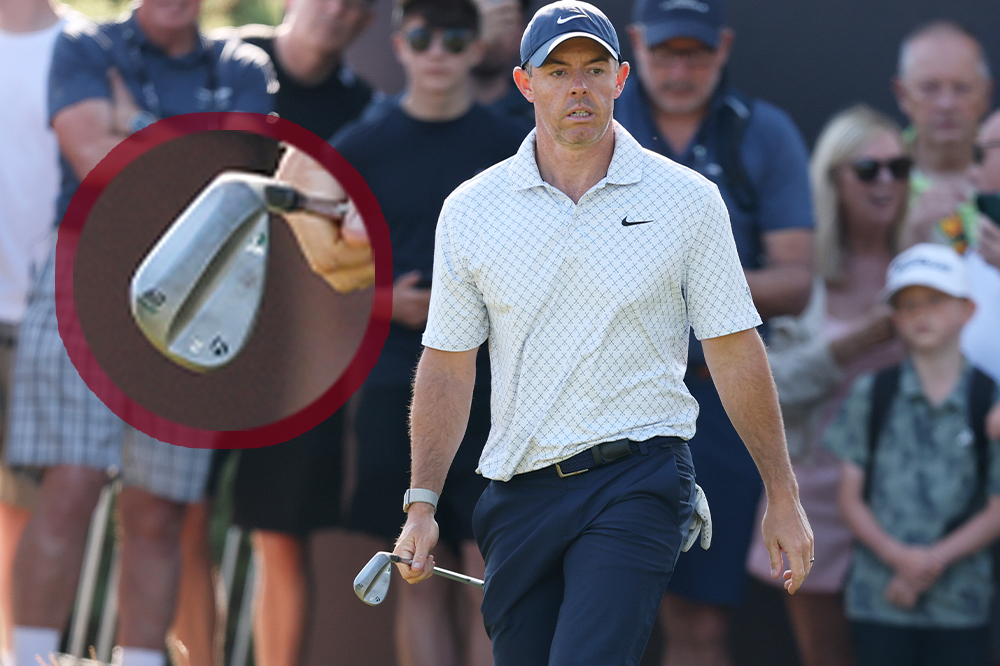
The addition of the driving iron wouldn’t have surprised many, but McIlroy’s change in lob wedge might have. After switching into the newly released MG5 lineup for his win at the Irish Open last year, he returned to the MG4 head for his trip to Scotland this week. With that also came a custom grind RM5.
It’s a grind, spotted before on Tour; McIlroy played it in an MG3 wedge in 2023, which McIlroy at the time said combined the best parts of previous Vokey and Nike wedges he had played.
The MG4 wedge this time around features less bounce than most at just 5 degrees, to help lower the sharp leading edge and pick the ball cleanly off the tight fescue grasses at this week’s Scottish Open and also The Open Championship next week, and what looks like plenty of heel and trailing-edge relief to help when opening the face.
Inside Tour Golf first spotted McIlroy’s wedge change.
Patrick Reed ditches the blade
One of golf’s longest-serving blademen decided to switch things up.
Patrick Reed, who has already won twice this year on the DP World Tour and has all but secured a PGA Tour card for next season, decided to join mallet mania.
Both his victories came with a Scotty Cameron Tour Rat 1.5 Proto, but for Scotland, Reed moved into a Phantom 12 with a welded slant neck.
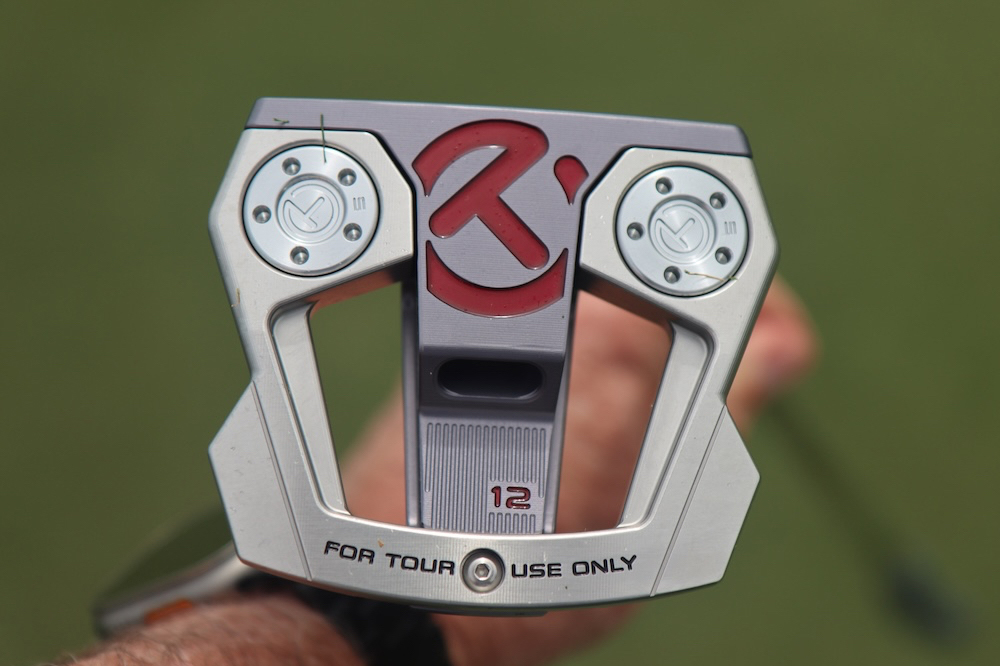
According to the Golf Channel broadcast, Reed had played a mallet once before, but for most of his career has played either a Scotty Cameron or Odyssey blade.
During the two rounds in Scotland, Reed gained 3.7 shots on the greens.
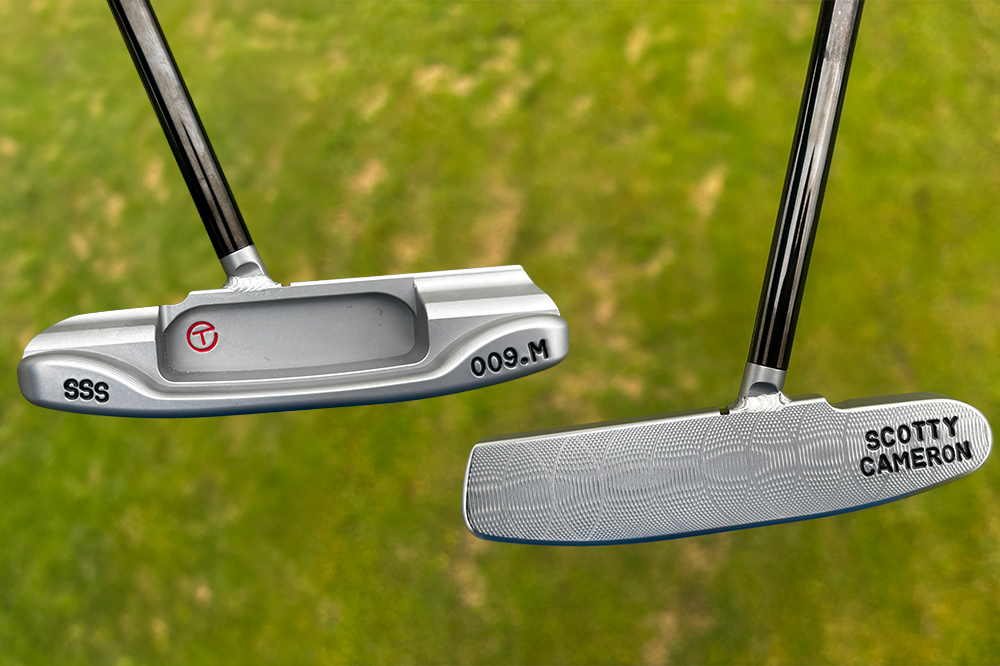
For those worried about another blade putter taking a back seat, 3.7 is the same number of strokes gained by Jordan Smith during his second-round 63 that saw him vault to the top of the leaderboard. The Englishman did that with a new 009 center-shafted Scotty Cameron blade. According to Golf Digest’s Jamie Kennedy in over 1,000 rounds as a pro, it’s Smith’s fourth-best putting performance.
Fitzpatrick makes putter change … kind of
Another golfer who has won multiple times this season made a putter change in Scotland, although not as dramatic a swap as Reed’s.
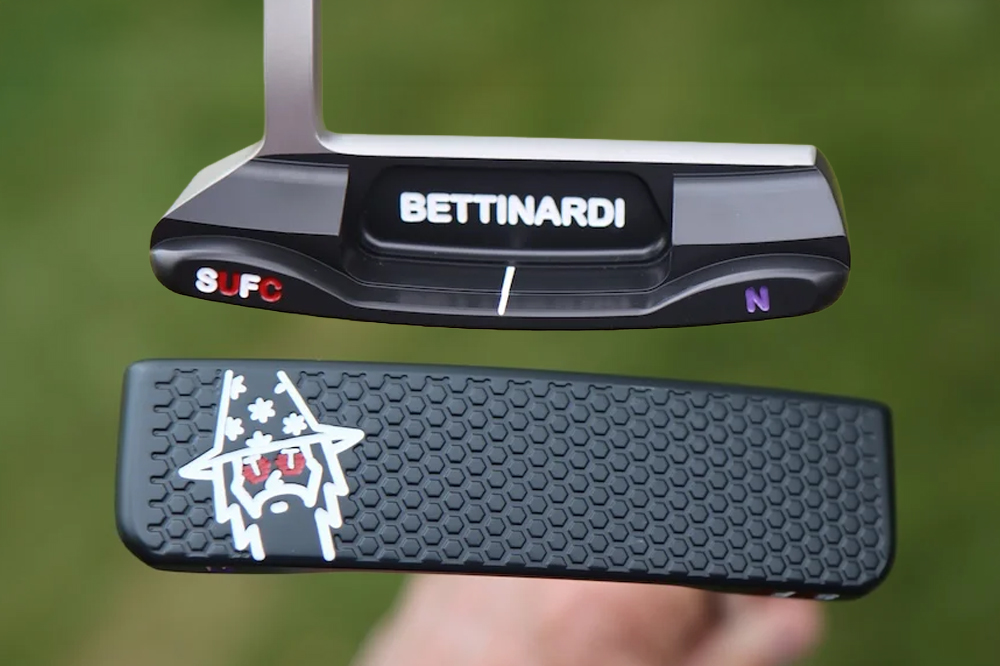
Matt Fitzpatrick, a three-time winner on Tour in 2026, decided to put in play a customized Bettinardi BB1 Fitz Flow blade putter.
We first spotted the newer version of the flatstick at the Travelers Championship just a few weeks ago, featuring a honeycomb-milled sole.
With potential for baked-out greens on the links course over the next two weeks, Bettinardi told GolfWRX that Fitzpatrick wanted to have some texture on the sole to prevent it from sliding.
Titleist debuts Black Vapor
Titleist launched two new limited-edition lineups this summer with its “Black Vapor” T-Series irons and Vokey SM11 wedges, which bring a refreshing cosmetic update to the latest generation of Titleist iron and wedge technology in a durable, darker finish.
Starting with the T-Series irons, the “Titanium Carbide Vapor” finish will be available on the ’25 series T100, T150, T250 and T350 models. But what does this mean?
Titanium Carbide Vapor is a PVD (Physical Vapor Deposition) finish to the club head, where the material is vaporized in a vacuum and bonds to the club head to help with durability and smudge resistance.
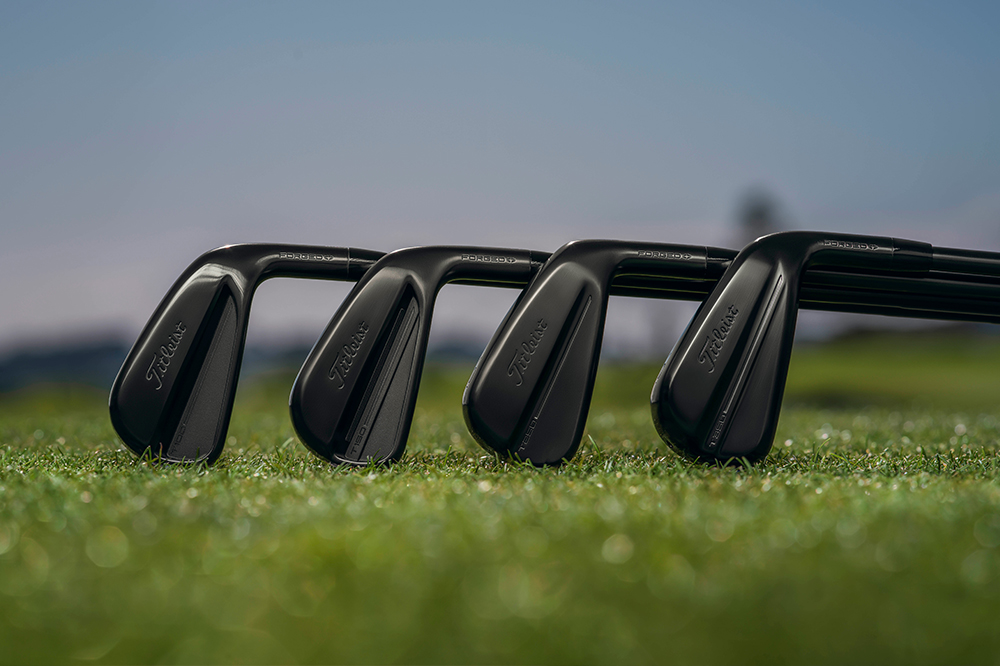
It was spotted on-site at The Renaissance Club, with Justin Thomas testing a T250 2-iron in the finish. In a social post from Titleist, Tour rep JJ Van Wezenbeeck said that Thomas was looking to “try and bring the peak height on his 5-wood, which is around 120 feet, down to around 80 to 90 feet, which gives him a lot of control off the tee, but also allows just enough height for some of those downwind shots and into the longer holes.”
Spotted: First look at Srixon’s new ZXi RKT fairway woods and hybrids
Plenty was still happening Stateside at the ISCO Championship, with the first looks at Srixon’s new ZXi RKT fairway woods and hybrids.
Just a couple of weeks ago at the Travelers Championship, Srixon launched its new lineup of drivers on tour, with the ZXi RKT family taking full flight.
Plenty of changes came with the new drivers, including a new sole makeup along with the new-looking material labeled “Acousticore,” which could be a different design structure internally, stepping away from the Star Frame that Srixon has used in the past. At the Travelers, Srixon showed off four different models: A core head, LS, Max, and LS+.
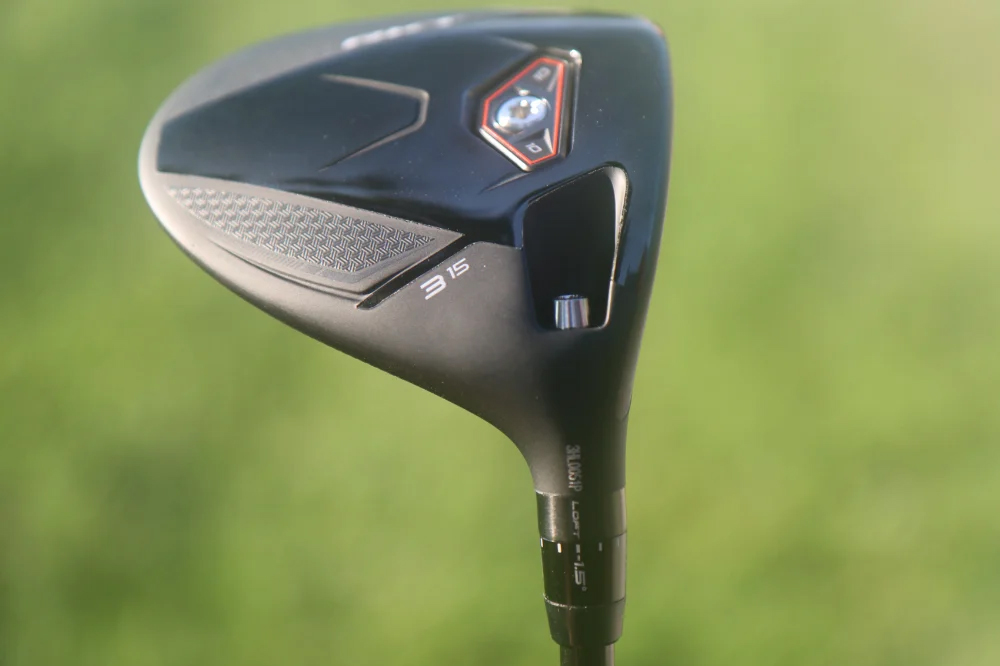
Now at the ISCO, hosted at Hurstbourne Country Club in Louisville, Kentucky, we have a first look at the new RKT fairway and hybrid lineup. GolfWRX’s Tour Photographer Greg Moore was out earlier in the Bluegrass State to get first-hand images of the new clubs, which are posted here.

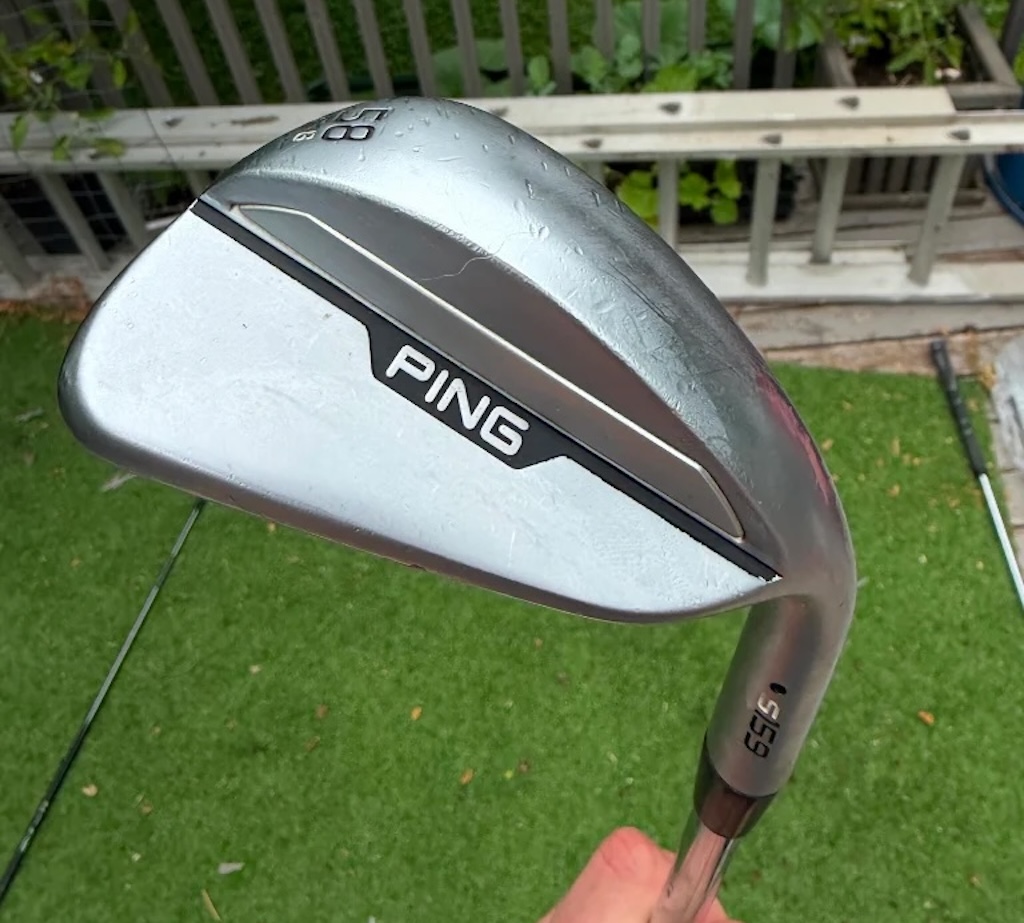
Currently in the GolfWRX Classifieds, member AnOKgolfer has a multi-item head-only listing built around Avoda combo-length iron heads, a Ping S159 wedge and several items that have already sold.
The current title reflects a final price drop and shows the remaining highlighted pieces: Avoda Origin Combo Length 4-PW black heads, an Avoda W2 LW head and a Ping S159 58-degree E Grind wedge.
The thread is also a good example of how fast GolfWRX Classifieds listings can move, with multiple Ping, TaylorMade, Edel, and shaft items marked sold inside the same post.
- Avoda Origin Combo Length iron heads, 4-PW, listed at $600.
- Avoda Origin W2 LW head listed at $90, with the seller noting some rusting on the top and face.
- Ping S159 58-degree E Grind wedge listed at $95.
- Sold items in the post include Ping G440 LST and G440K heads, a TaylorMade R7 mini driver head, a TaylorMade Qi10 Tour 5-wood head, Edel wedge, Axiom shaft set and other gear.
- The seller notes prices are shipped with goods and services in the lower 48, with Canada, Alaska and Hawaii at buyer expense.
Entire thread: Final Price drop!! Heads For Sale! Ping S159 58* Wedge, Avoda Combo Length 4-PW Black Heads, Avoda W2 LW Hea
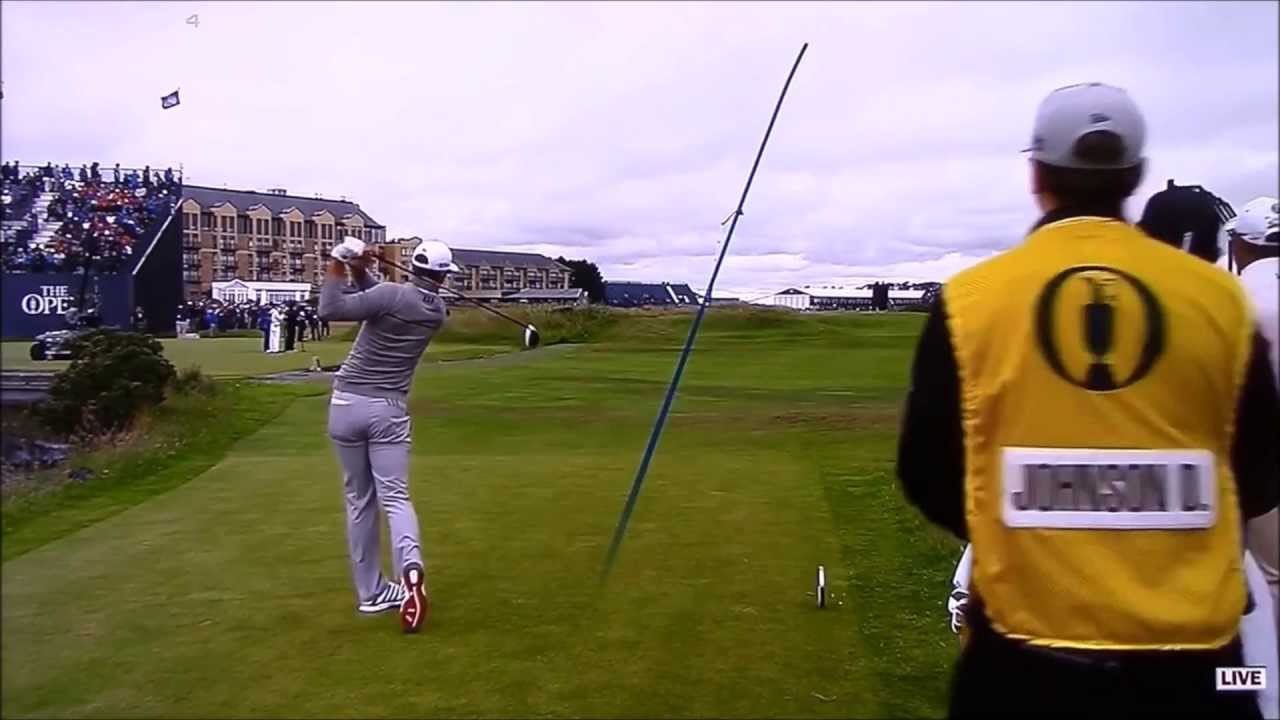
In our forums, member rooski asked a question that many good players eventually face: should a player force a predictable shot shape, even if the swing naturally wants to live closer to neutral?
@rooski described himself as a player whose handicap can range from plus-1 to around 3 depending on practice. Launch-monitor numbers often show a neutral path and face, but the driver can produce either a 20-yard draw or a 20-yard fade. On tight courses, that creates a hard aiming problem.
As a PGA coach, I would not want a player to force a shot shape just for the sake of having one. But I do want a player to have a stock window, especially off the tee. The most valuable shot shape is the one that removes one side of the course often enough to simplify decisions.
- @g_swell said to play what you brought that day, but also emphasized locking in a stock shape and varying trajectory more than trying to work the ball both ways.
- @GoGoErky pointed out that a perfectly neutral swing can bring a two-way miss into play and said a predictable shot shape can be a better long-term goal.
- @ShortGolfer brought the conversation back to dispersion, club selection and choosing landing areas that keep the ball in play.
- @RayPlan asked the right diagnostic question: what is the player’s most common natural ball flight?
- @vman added a strong practice idea: build a shot-shape intention, develop trajectories with that shape and test it on the course.
Entire thread: Should I force myself to play a certain shot shape?

Best irons 2026: Best irons overall, most forgiving irons, and more

J.T. Poston’s winning WITB: 2026 Memorial Tournament

Memorial Tournament Tour Report: Rory McIlroy, Cameron Young switch up drivers, and more

Wyndham Clark’s winning WITB: 2026 U.S. Open

Russell Henley’s winning WITB: 2026 Charles Schwab Challenge

Details on Jason Day’s latest prototype Avoda iron setup

Viktor Hovland’s winning WITB: 2026 Travelers Championship

WITB Time Machine: Retief Goosen’s winning WITB, 2004 U.S. Open

Bryson DeChambeau pairs new big-stick speed with new-shoe stability

Photos from the 2026 U.S. Open

Luke List WITB 2026 (July)
Luke List had >14 clubs in his bag when photographed prior to the John Deere Classic. Driver: Titleist GTS3 (9 degrees, SureFit...


Seungyul Noh WITB 2026 (July)
Seungyul Noh had >14 clubs in his bag when photographed prior to the John Deere Classic. Driver: Callaway Quantum Triple Diamond...


Daniel Iceman (Kentucky PGA Section Champ) WITB 2026 (July)
Driver: Callaway Elyte Triple Diamond (8 degrees) Shaft: Ventus TR Blue 6 X 3-wood: Callaway Paradym Ai Smoke Triple Diamond (15 degrees)...


Kevin Streelman WITB 2026 (July)
Driver: Titleist GTS3 (9 degrees) Shaft: Aldila Rogue 125 MSI 70 2.5 Tour X 3-wood: TaylorMade Qi35 (16.5 degrees) Shaft: Fujikura Ventus Blue...
-
 News3 weeks ago
Wyndham Clark’s winning WITB: 2026 U.S. Open
-
 Whats in the Bag2 weeks ago
Viktor Hovland’s winning WITB: 2026 Travelers Championship
-
 Whats in the Bag6 days ago
Chris Gotterup’s winning WITB: 2026 John Deere Classic
-

 News3 days ago
Rory McIlroy sheds light on Nike Golf’s 2016 equipment industry exit
-

 Tour Photo Galleries3 weeks ago
Photos from the 2026 Travelers Championship
-
 Equipment2 weeks ago
Wyndham Clark’s Ping putter: There’s more to the lead tape than just weight
-

 News2 weeks ago
Details on Viktor Hovland’s driver, shaft change
-

 News2 weeks ago
Travelers Championship Tour Report: The Spieth putter switch that never happened (and the Fowler, Spaun & Rose switches that did)

