
Opinion & Analysis
Augusta National: Where players must play safe, and where they can take chances


The 90th Masters is right here at our fingertips. It’s great to see the players at Augusta National getting in their practice rounds, skipping the ball across the pond on 16, and preparing for another historic week.
Strategy and sticking to your game plan are number one at Augusta. When the ball ends up in the wrong position, sometimes making bogey is the best possible outcome. On certain holes, if you play them correctly, the worst you can do is make a birdie. It all takes thought and countless executions.
Augusta National is a unique test, with holes that allow scoring and others that demand caution. Any hole during The Masters can bring heartbreak or joy. Some of golf’s best drama unfolds here.
It got me thinking, how would I attack this course? The statistics breakdown what holes are the most difficult, but it is important to note how the player keeps the momentum rolling throughout the round. This is my take on three holes I would play safely and three I would play aggressively at Augusta National during the Masters.
What To Play Safe
Hole 1 – Tea Olive
Starting the round on the first hole, you will commonly see a challenge, but also a welcoming handshake to greet you to your round. Augusta National features something a little different. 445 yards right out of the gate and a stern challenge. Ranked 6th in difficulty overall on the course with a scoring average of 4.236, this is a great opening hole with a fair challenge. Making par here is a great score to start your day.
The drive is slightly downhill, with a bunker starting around 270 yards out. Where the bunker begins is also where the fairway starts to narrow. The bunker ends on the right about 315 yards from the tee.
It will be interesting to see if players can carry it past that mark this week. Key factors are adrenaline, wind, and tee time. Heavier morning air poses a true challenge, but given today’s talent, someone may carry the trap. Players will challenge the bunker and leave themselves a mid- to short-iron into the green.
The approach to the green demands attention. The green has enough room, but being pin high is crucial. Its front features a large false front. These are the keys to a solid opening shot.
Don’t risk letting your ball trickle down the false front, leaving a tough wedge shot and risking bogey. Playing it safe here is wise.
Hole 5 – Magnolia
The fifth hole is 495 yards and a complete test from tee to green. With a scoring average of 4.267, it ranks as Augusta’s fifth toughest.
This is another example where hitting a great drive near the right-center of the fairway helps you avoid the deep bunkers on the left. Those bunkers can quickly bring bogey or worse into play. The primary reason? These bunkers are very deep, so advancing the ball toward the green from them often requires a smart layup, even on a par 4.
Don’t focus on trouble — focus on your target. The second shot is to a green that looks smaller than it is, with crucial tiers.
Long left is trouble, but the back bunker offers some relief if you add spin. The old advice — “two putt and move on” — applies here.
Where this hole is on the front nine, it is important to keep the momentum going or kick things off with a good par after a potential slower start. As you move into the par-3 sixth hole and the par-5 eighth hole, making par on the fifth hole is like making par or a bit better beyond what the stat sheet shows.
Hole 11 – White Dogwood
Historically, the most difficult hole at Augusta, the 11th hole doesn’t relent from the moment the ball is teed up until it finds the bottom of the cup. At 520 yards, the beginning of Amen Corner starts with an elevated drive as the hole goes slightly downhill to the right, favoring a left-to-right ball flight as the fairway slopes left.
Picking your target, committing, and finding the fairway are essential. As you make your way down to Rae’s Creek, a pond sits left of the green. The challenge with the second shot is that you often have a draw lie, but trouble left with a long to mid-iron in hand. When players are 175 to 200 yards out on the left side of the fairway, they have a 77% chance of making par. Players with 200 to 225 yards into the green see their chance of making bogey rise from 18% to 25%.
Many shots end up right of the green to avoid the pond left. Mounds on the right can funnel the ball onto the green when approaching from the left side of the fairway.
But, in a great twist of design, these mounds can also propel the ball into the water. The margin is razor-thin.
The green slopes mainly toward the pond, so be mindful of the putt. It takes focused shots just to reach the green, and reading putts breaks toward the pond is critical. Par is an achievement before moving to 12.
All three of these holes, I’m sure, a competitor would sign off on making par on each one of them every round of the tournament. The 1st, 5th, and 11th are challenging, fair, and points in the round where par is a good score as you keep building your round at Augusta.
Where To Be Aggressive
Hole 3 – Flowering Peach
Playing Augusta aggressively is a very fine line, making it a great venue for managing risk. There are times to make your move. The third hole often sparks debate—do you go for it from the tee, or scale back and play to your favorite number for the approach?
This hole has traditionally ranked 14th in difficulty with a scoring average of 4.071. Given that conditions are likely to be firm, I think this week is a good time to give the driver a go on the third hole. A well-hit driver can leave most players with 50 yards or less to the green. The landing area for a touch wedge does decrease, but the proximity to the green is the difference.
Players have said this week that the fairways are very lush, so the ball sits up more than in years past. This can make wedge shots spin even more.
Most birdies are seen here, with the hole location in the back center portion of the green, where players are left with an uphill putt. Of course, we have seen theatrics with the traditional Sunday hole location on the left side of the green as the green slopes in that direction.
Hole 8 – Yellow Jasmine
The par-5 eighth is a good spot to go on offense. A left-side drive is safe, but challenging the right and the bunker can open a clearer shot to the green.
At 570 yards, this hole requires two good shots. It ranks 15th at The Masters, averaging 4.813. The right fairway bunker can be cleared at about 300 yards.
The second shot goes uphill with a partially blind approach. Favoring the right side of the green leaves more room between the ball and the hole location. There are mounds on the left that can help the ball roll onto the green if your second shot favors that side.
I believe it’s worth challenging the bunker off the tee by aiming down the middle and favoring the right side. Second shot up the hill, playing a draw works well if the ball stays fairly straight, you have a pitch from the safe side, right of the green. If the shot is executed, you are putting for an eagle.
Hole 13 – Azalea
One of the most popular holes in golf is the 13th at Augusta National. Risk reward, favoring the bold with proper execution. This 545-yard par 5 ranks 17th in difficulty in Masters history, averaging 4.775 strokes. A drive to the left earns a flatter lie and a shorter second shot, but brings the creek into play. Players often hit sweeping draws here. If the ball goes straight, they can recover with a second shot and play a third over the creek onto the green from 50 to 80 yards. Taking the safer right side off the tee leaves a longer approach and a more significant right-to-left lie. It is ultimately a crucial decision point in the round.
Approach shots land into the green, which slopes from back-left to front-right, so it depends on which direction your ball is coming from, which it can filter towards the hole or the other direction.
At 545 yards, this second shot is more than likely a green light. Full commitment is needed with the creek surrounding the green and four bunkers behind the green. We have seen the shots over the years with heroic efforts and results. Being the 13th hole, it would take a true disaster to completely forego a climb up the leaderboard with more opportunities after the 13th.
This is a great discussion of how holes create scenarios that force players to play either safely or aggressively in the round at the Masters. Each decision is equally tied to the others in course management decisions. I will be keeping an eye on how these holes play this week in the tournament. In a perfect world, I think out of these six holes, if they can be played in two under par each day, the player will be in the mix for a Green Jacket. Of course, they will have to perform all around, but these are anchor points in playing championship golf at Augusta.



This past Monday, I played in the U.S. Amateur local qualifier at Rock Creek Country Club in Portland, Oregon. A full tee sheet from 7:30 a.m. to 1:55 p.m., the top 11 scores would make it to the U.S. Amateur final qualifying.
I teed off at 10:48 a.m.. With the 7:30 am tee time, you can get a feel for the leaders’ pace, and they were off and running on the challenging setup at Rock Creek.
View this post on Instagram
Getting to the highlight of the round on the par five 17th, a drive up the left side and 212 yards left to the front hole location. I took out a 5-iron with plans of middle of the green. The ball ended up 8 feet left of the hole, pin high. A slight downhill putt dropped in for an eagle 3 on the 17th. With the cut line looking to be anywhere from -2 to even par. This was the boost I had been waiting for all day.
With making par from the trees on 18, it was time to wait for a potential playoff with a posted score of one under par 71.
Three hours later, it was playoff time. 8 players for 6 spots. I made par on the playoff hole, which was good enough to advance to the U.S. Amateur final qualifying in July. USGA qualifiers sure deliver on all of the emotions in golf!
Club Junkie
Building my 2026 gamer WITB: Ranking the contenders and new putter projects – Club Junkie Podcast

The annual What’s In The Bag build is underway, and on this episode of Club Junkie, Brian breaks down the clubs currently leading the race for a spot in his 2026 gamer setup. From drivers and fairway woods to irons, wedges, and shafts, he ranks the equipment that’s performing best and explains what’s separating the front runners from the rest of the field.
Brian also heads into the workshop to discuss several putter projects currently on the bench. From head options and shaft choices to build ideas and testing plans, he shares what he’s working on and which putters could become serious contenders for the bag this season.
If you’re a gear junkie who loves equipment testing, club building, and the never-ending pursuit of the perfect setup, this episode is for you.
Follow Club Junkie:
Instagram: @clubjunkiepod
TikTok: @clubjunkiepod
Threads: @clubjunkiepod
X: @ClubJunkiePod
Club Junkie
Tour Edge Exotics mini driver review + TaylorMade Spider ZT Max first look – Club Junkie

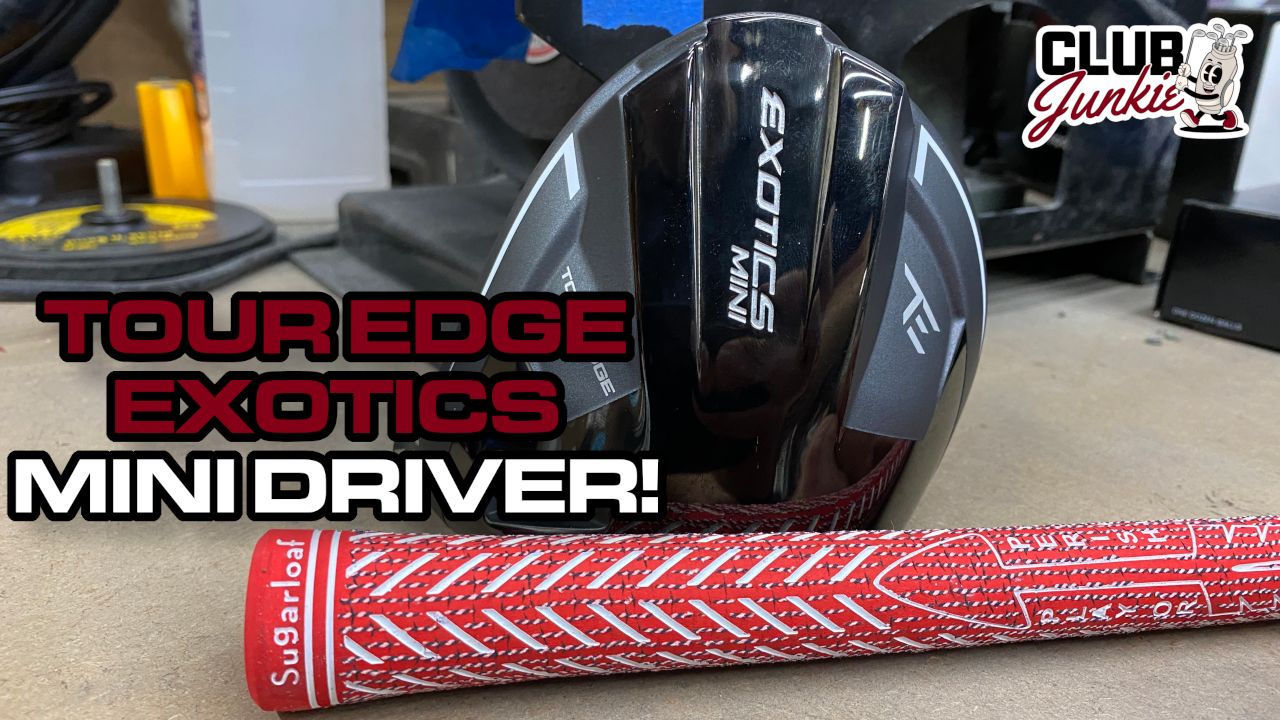
On this episode of Club Junkie, I put the new Tour Edge Exotics Mini Driver to the test and break down the performance, forgiveness, distance, and where it fits compared to a traditional driver or strong fairway wood. If you have been curious about adding a mini driver to the bag, this one is worth a look.
I also dive into the new TaylorMade Spider ZT Max putter that was recently spotted and discuss the growing zero torque putter trend. Plus, there is a closer look at the new Project X Titan Yellow shaft showing up on the PGA Tour and what makes it different from other profiles currently out there.

Justin Rose WITB 2026 (April): Full WITB breakdown with new McLaren irons

What’s the story behind Webb Simpson’s custom-stamped irons?

Memorial Tournament Tour Report: Rory McIlroy, Cameron Young switch up drivers, and more

Cadillac Championship Tour Report: Spieth’s sizable changes, McLaren Golf launches, and more

Russell Henley’s winning WITB: 2026 Charles Schwab Challenge

Kristoffer Reitan’s winning WITB: 2026 Truist Championship

Aaron Rai’s winning WITB: 2026 PGA Championship

J.T. Poston’s winning WITB: 2026 Memorial Tournament

Best irons 2026: Best irons overall, most forgiving irons, and more

Cameron Young’s winning WITB: 2026 Cadillac Championship


Bud Cauley WITB 2026 (June)
Bud Cauley had >14 clubs in his bag when photographed prior to the Memorial Tournament. Driver: Titleist GTS2 (8 degrees) Shaft: Fujikura...


Hannah Green WITB 2026 (June)
Driver: Titleist GTS3 (10 degrees, D4 SureFit setting) Shaft: Mitsubishi Chemical Diamana RB 53 S 3-wood: Titleist GT3 (15 degrees,...


Asterisk Talley WITB 2026 (June)
Driver: TaylorMade Qi4D (9 degrees) Shaft: Fujikura Ventus Blue 6 S 3-wood: TaylorMade Qi4D (16.5 degrees) Shaft: Fujikura Ventus Blue...


Brianna Do WITB 2026 (June)
Driver: Callaway Quantum Triple Diamond (9 degrees) Shaft: KBS PGW 3-wood: Callaway Elyte Titanium (15 degrees) Shaft: KBS PGW 5-wood:...
-
 Equipment6 days ago
Memorial Tournament Tour Report: Rory McIlroy, Cameron Young switch up drivers, and more
-
 News1 week ago
Russell Henley’s winning WITB: 2026 Charles Schwab Challenge
-
 Whats in the Bag3 days ago
J.T. Poston’s winning WITB: 2026 Memorial Tournament
-
 Equipment3 days ago
Best irons 2026: Best irons overall, most forgiving irons, and more
-

 Equipment1 week ago
Details on Jason Day’s latest prototype Avoda iron setup
-

 Equipment3 weeks ago
CJ Cup Byron Nelson Tour Report: Koepka and Kim’s newest putters finally get hot
-

 News2 weeks ago
Charles Schwab Challenge Tour Report: MacIntyre, Åberg and Spaun all switch putters, TaylorMade launches new Spider
-

 Equipment2 weeks ago
Details on J.J. Spaun’s surprise putter switch

