
Opinion & Analysis
On Scottie Scheffler wondering ‘What’s the point of winning?’

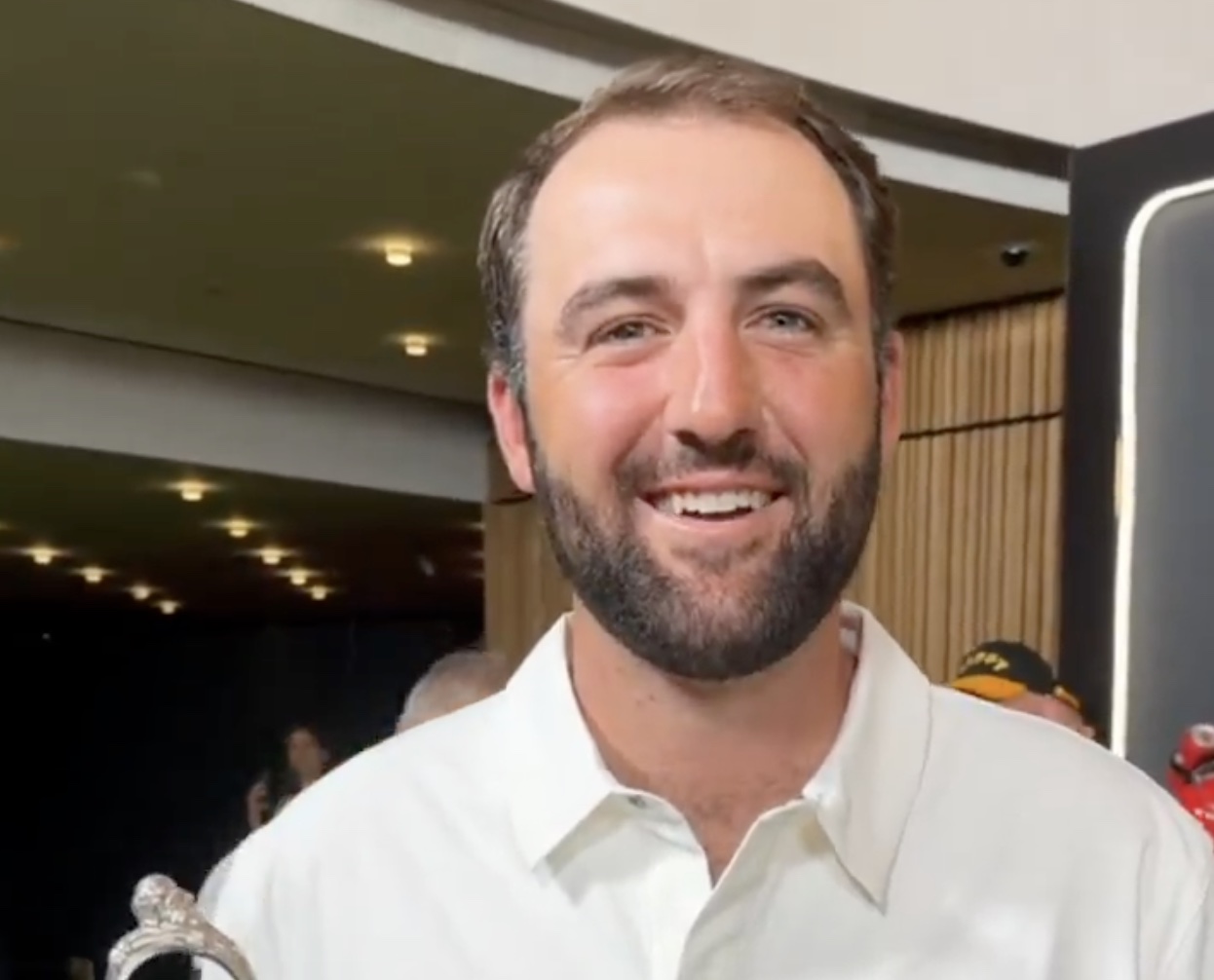
Last week, I came across a reel from BBC Sport on Instagram featuring Scottie Scheffler speaking to the media ahead of The Open at Royal Portrush. In it, he shared that he often wonders what the point is of wanting to win tournaments so badly — especially when he knows, deep down, that it doesn’t lead to a truly fulfilling life.
View this post on Instagram
“Is it great to be able to win tournaments and to accomplish the things I have in the game of golf? Yeah, it brings tears to my eyes just to think about it because I’ve literally worked my entire life to be good at this sport,” Scheffler said. “To have that kind of sense of accomplishment, I think, is a pretty cool feeling. To get to live out your dreams is very special, but at the end of the day, I’m not out here to inspire the next generation of golfers. I’m not out here to inspire someone to be the best player in the world, because what’s the point?”
Ironically — or perhaps perfectly — he went on to win the claret jug.
That question — what’s the point of winning? — cuts straight to the heart of the human journey.
As someone who’s spent over two decades in the trenches of professional golf, and in deep study of the mental, emotional, and spiritual dimensions of the game, I see Scottie’s inner conflict as a sign of soul evolution in motion.
I came to golf late. I wasn’t a junior standout or college All-American. At 27, I left a steady corporate job to see if I could be on the PGA Tour starting as a 14-handicap, average-length hitter. Over the years, my journey has been defined less by trophies and more by the relentless effort to navigate the deeply inequitable and gated system of professional golf — an effort that ultimately turned inward and helped me evolve as both a golfer and a person.
One perspective that helped me make sense of this inner dissonance around competition and our culture’s tendency to overvalue winning is the idea of soul evolution.
The University of Virginia’s Division of Perceptual Studies has done extensive research on reincarnation, and Netflix’s Surviving Death (Episode 6) explores the topic, too. Whether you take it literally or metaphorically, the idea that we’re on a long arc of growth — from beginner to sage elder — offers a profound perspective.
If you accept the premise literally, then terms like “young soul” and “old soul” start to hold meaning. However, even if we set the word “soul” aside, it’s easy to see that different levels of life experience produce different worldviews.
Newer souls — or people in earlier stages of their development — may be curious and kind but still lack discernment or depth. There is a naivety, and they don’t yet question as deeply, tending to see things in black and white, partly because certainty feels safer than confronting the unknown.
As we gain more experience, we begin to experiment. We test limits. We chase extreme external goals — sometimes at the expense of health, relationships, or inner peace — still operating from hunger, ambition, and the fragility of the ego.
It’s a necessary stage, but often a turbulent and unfulfilling one.
David Duval fell off the map after reaching World No. 1. Bubba Watson had his own “Is this it?” moment with his caddie, Ted Scott, after winning the Masters.
In Aaron Rodgers: Enigma, reflecting on his 2011 Super Bowl win, Rodgers said:
“Now I’ve accomplished the only thing that I really, really wanted to do in my life. Now what? I was like, ‘Did I aim at the wrong thing? Did I spend too much time thinking about stuff that ultimately doesn’t give you true happiness?’”
Jim Carrey once said, “I think everybody should get rich and famous and do everything they ever dreamed of so they can see that it’s not the answer.”
Eventually, though, something shifts.
We begin to see in shades of gray. Winning, dominating, accumulating—these pursuits lose their shine. The rewards feel more fleeting. Living in a constant state of fight-or-flight makes us feel alive, yes, but not happy and joyful.
Compassion begins to replace ambition. Love, presence, and gratitude become more fulfilling than status, profits, or trophies. We crave balance over burnout. Collaboration over competition. Meaning over metrics.
Interestingly, if we zoom out, we can apply this same model to nations and cultures. Countries, like people, have a collective “soul stage” made up of the individuals within them.
Take the United States, for example. I’d place it as a mid-level soul: highly competitive and deeply driven, but still learning emotional maturity. Still uncomfortable with nuance. Still believing that more is always better. Despite its global wins, the U.S. currently ranks just 23rd in happiness (as of 2025). You might liken it to a gifted teenager—bold, eager, and ambitious, but angsty and still figuring out how to live well and in balance. As much as a parent wants to protect their child, sometimes the child has to make their own mistakes to truly grow.
So when Scottie Scheffler wonders what the point of winning is, I don’t see someone losing strength.
I see someone evolving.
He’s beginning to look beyond the leaderboard. Beyond metrics of success that carry a lower vibration. And yet, in a poetic twist, Scheffler did go on to win The Open. But that only reinforces the point: even at the pinnacle, the question remains. And if more of us in the golf and sports world — and in U.S. culture at large — started asking similar questions, we might discover that the more meaningful trophy isn’t about accumulating or beating others at all costs.
It’s about awakening and evolving to something more than winning could ever promise.



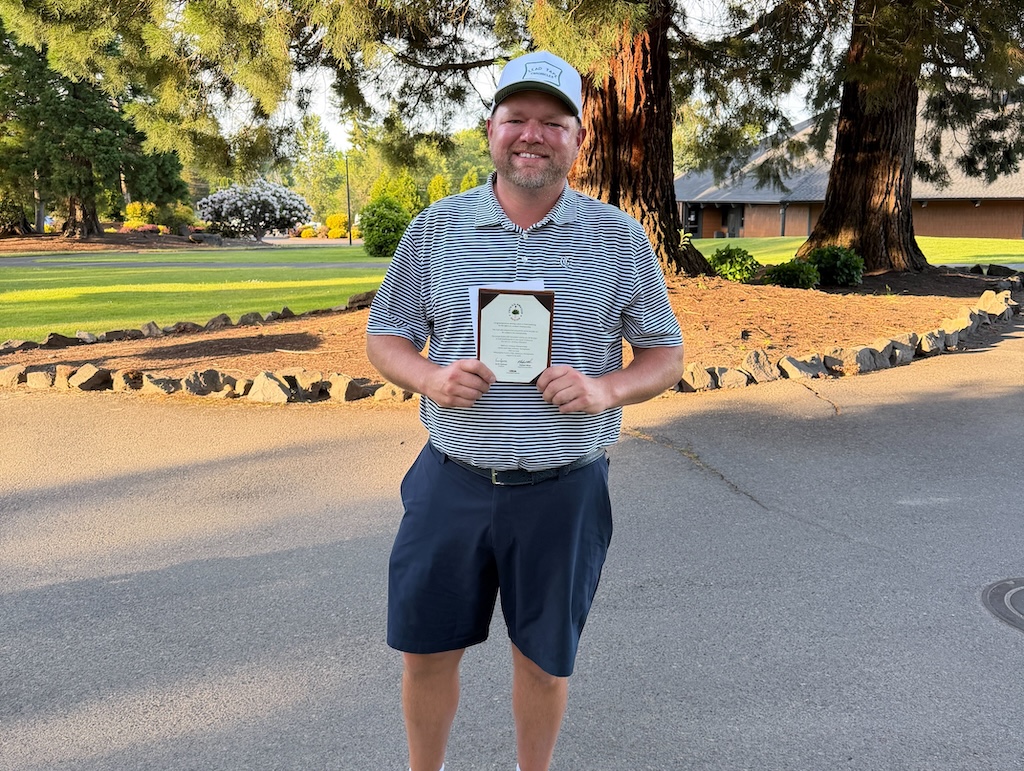
This past Monday, I played in the U.S. Amateur local qualifier at Rock Creek Country Club in Portland, Oregon. A full tee sheet from 7:30 a.m. to 1:55 p.m., the top 11 scores would make it to the U.S. Amateur final qualifying.
I teed off at 10:48 a.m.. With the 7:30 am tee time, you can get a feel for the leaders’ pace, and they were off and running on the challenging setup at Rock Creek.
View this post on Instagram
Getting to the highlight of the round on the par five 17th, a drive up the left side and 212 yards left to the front hole location. I took out a 5-iron with plans of middle of the green. The ball ended up 8 feet left of the hole, pin high. A slight downhill putt dropped in for an eagle 3 on the 17th. With the cut line looking to be anywhere from -2 to even par. This was the boost I had been waiting for all day.
With making par from the trees on 18, it was time to wait for a potential playoff with a posted score of one under par 71.
Three hours later, it was playoff time. 8 players for 6 spots. I made par on the playoff hole, which was good enough to advance to the U.S. Amateur final qualifying in July. USGA qualifiers sure deliver on all of the emotions in golf!
Club Junkie
Building my 2026 gamer WITB: Ranking the contenders and new putter projects – Club Junkie Podcast

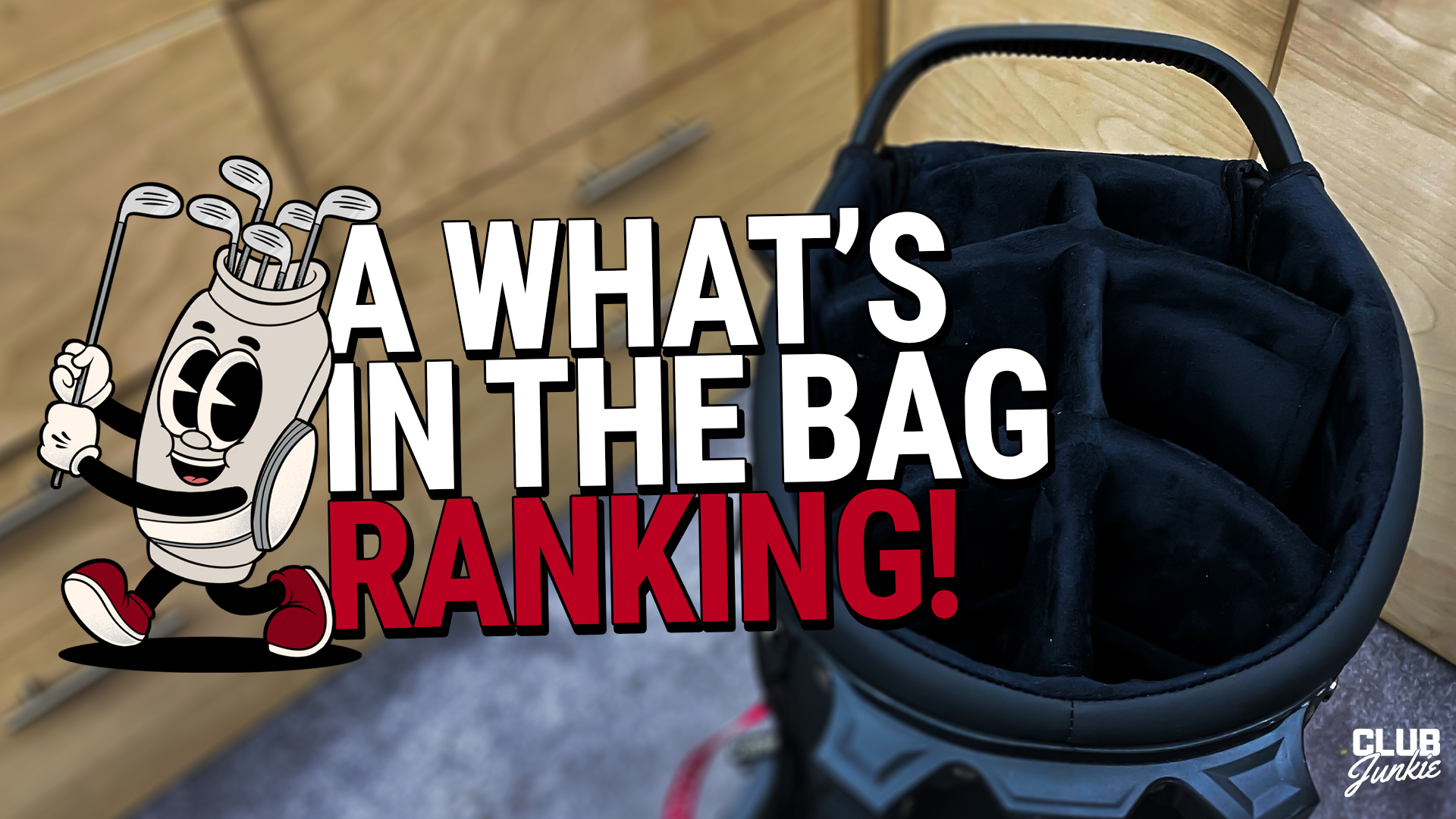
The annual What’s In The Bag build is underway, and on this episode of Club Junkie, Brian breaks down the clubs currently leading the race for a spot in his 2026 gamer setup. From drivers and fairway woods to irons, wedges, and shafts, he ranks the equipment that’s performing best and explains what’s separating the front runners from the rest of the field.
Brian also heads into the workshop to discuss several putter projects currently on the bench. From head options and shaft choices to build ideas and testing plans, he shares what he’s working on and which putters could become serious contenders for the bag this season.
If you’re a gear junkie who loves equipment testing, club building, and the never-ending pursuit of the perfect setup, this episode is for you.
Follow Club Junkie:
Instagram: @clubjunkiepod
TikTok: @clubjunkiepod
Threads: @clubjunkiepod
X: @ClubJunkiePod
Club Junkie
Tour Edge Exotics mini driver review + TaylorMade Spider ZT Max first look – Club Junkie

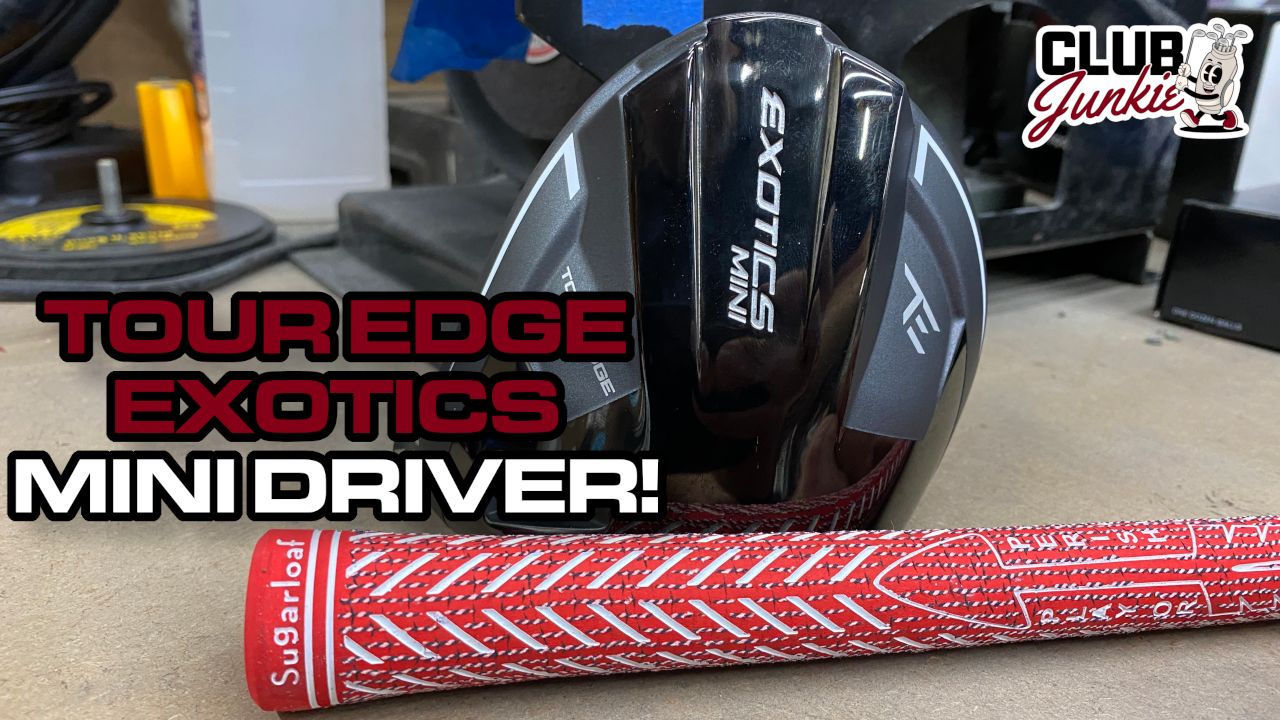
On this episode of Club Junkie, I put the new Tour Edge Exotics Mini Driver to the test and break down the performance, forgiveness, distance, and where it fits compared to a traditional driver or strong fairway wood. If you have been curious about adding a mini driver to the bag, this one is worth a look.
I also dive into the new TaylorMade Spider ZT Max putter that was recently spotted and discuss the growing zero torque putter trend. Plus, there is a closer look at the new Project X Titan Yellow shaft showing up on the PGA Tour and what makes it different from other profiles currently out there.

Justin Rose WITB 2026 (April): Full WITB breakdown with new McLaren irons

What’s the story behind Webb Simpson’s custom-stamped irons?

Memorial Tournament Tour Report: Rory McIlroy, Cameron Young switch up drivers, and more

Cadillac Championship Tour Report: Spieth’s sizable changes, McLaren Golf launches, and more

Russell Henley’s winning WITB: 2026 Charles Schwab Challenge

Kristoffer Reitan’s winning WITB: 2026 Truist Championship

Best irons 2026: Best irons overall, most forgiving irons, and more

J.T. Poston’s winning WITB: 2026 Memorial Tournament

Aaron Rai’s winning WITB: 2026 PGA Championship

Cameron Young’s winning WITB: 2026 Cadillac Championship


Bud Cauley WITB 2026 (June)
Bud Cauley had >14 clubs in his bag when photographed prior to the Memorial Tournament. Driver: Titleist GTS2 (8 degrees) Shaft: Fujikura...


Hannah Green WITB 2026 (June)
Driver: Titleist GTS3 (10 degrees, D4 SureFit setting) Shaft: Mitsubishi Chemical Diamana RB 53 S 3-wood: Titleist GT3 (15 degrees,...


Asterisk Talley WITB 2026 (June)
Driver: TaylorMade Qi4D (9 degrees) Shaft: Fujikura Ventus Blue 6 S 3-wood: TaylorMade Qi4D (16.5 degrees) Shaft: Fujikura Ventus Blue...


Brianna Do WITB 2026 (June)
Driver: Callaway Quantum Triple Diamond (9 degrees) Shaft: KBS PGW 3-wood: Callaway Elyte Titanium (15 degrees) Shaft: KBS PGW 5-wood:...
-
 Equipment6 days ago
Memorial Tournament Tour Report: Rory McIlroy, Cameron Young switch up drivers, and more
-
 News2 weeks ago
Russell Henley’s winning WITB: 2026 Charles Schwab Challenge
-
 Equipment3 days ago
Best irons 2026: Best irons overall, most forgiving irons, and more
-
 Whats in the Bag4 days ago
J.T. Poston’s winning WITB: 2026 Memorial Tournament
-

 Equipment1 week ago
Details on Jason Day’s latest prototype Avoda iron setup
-

 Equipment3 weeks ago
CJ Cup Byron Nelson Tour Report: Koepka and Kim’s newest putters finally get hot
-

 News2 weeks ago
Charles Schwab Challenge Tour Report: MacIntyre, Åberg and Spaun all switch putters, TaylorMade launches new Spider
-

 Equipment2 weeks ago
Details on J.J. Spaun’s surprise putter switch

