
Opinion & Analysis
What are the odds? (Hole-in-one, becoming a pro golfer, and more)


Golf has been my faithful companion for 45 years now. My love affair with this magnificent game began in 1980 when I was just 5 years old, swinging clubs that seemed impossibly large in my small hands. Today, at almost 50 (May 24th), I can look back on a life intertwined with golf—not just as a player, but as someone who has made it my livelihood since 1996. Becoming a PGA Professional and Coach in 2009 was the culmination of a journey that started on dewy morning greens all those decades ago.
But as I reflect on my lifetime in golf, I’m struck by something that makes this game so uniquely challenging and rewarding: the sheer improbability of achievement at its highest levels. Golf is perhaps the only major sport where perfection is mathematically impossible, and excellence is statistically improbable.
Let’s explore what makes this game so humbling, yet so addictive, by examining the odds of various achievements.
Coveted Shots
The hole-in-one represents golf’s perfect moment—a single stroke that finds the bottom of the cup. For the average golfer, the odds of making a hole-in-one are approximately 12,000 to 1. For tour professionals, those odds improve dramatically to about 3,000 to 1. I’ve been fortunate enough to witness several, though my own has remained elusive.
Eagles on par-5 holes are more attainable, with odds of about 250 to 1 for average golfers. Tour professionals make eagles on par-5s at a rate of about 1 in every 23 attempts. Eagles on par-4s, however, are far rarer. For amateur golfers, the odds are roughly 6,000 to 1, while tour professionals face odds of about 1,000 to 1.
The double eagle (or albatross)—scoring three under par on a single hole—represents one of golf’s rarest achievements. The odds for an average golfer are approximately 1 million to 1. Even for professionals, it’s about 60,000 to 1. To put this in perspective, the odds of being struck by lightning in your lifetime are about 15,000 to 1—making a double eagle more than four times less likely.
Scoring
Breaking scoring barriers represents significant milestones in a golfer’s journey. Breaking 100 is achievable for most dedicated beginners, with about 55% of all golfers eventually reaching this milestone. Breaking 90 becomes more challenging, with approximately 25% of all golfers achieving this level.
The odds become considerably steeper when we look at breaking 80, with only about 5% of all golfers ever reaching this benchmark. Breaking 70 is rarer still—less than 0.5% of all golfers will ever card a round in the 60s.
And breaking 60? The odds are astronomical.
In PGA Tour history, there have been 15 sub-60 rounds in official events. These include 14 rounds of 59 and one round of 58, which was shot by Jim Furyk. There have been 9 sub-60 rounds on the Korn Ferry Tour. These rounds include a 57, a 58, and seven 59s. Notably, Cristobal Del Solar shot a 57 at the Astara Golf Championship, which is the lowest score ever in a PGA Tour-sanctioned event.
There has been only one sub-60 round on the LPGA Tour, and it was achieved by Annika Sörenstam with a score of 59 in 2001.
The odds of this achievement, even for the world’s elite, stand at about a 1-in-millions (less than 0.0001%).
Handicap
The USGA Handicap System provides another lens through which to view golf’s difficulty. Approximately 50-55% of golfers maintain a handicap above 15, meaning more than half of all dedicated players average at least 20 strokes over par. Only about 25% of golfers achieve a handicap below 10, representing consistent play at a relatively high level.
A scratch handicap (0) is achieved by only about 1.6% of all golfers—an exclusive club indeed. And a plus handicap (+1 or better), indicating a player who consistently scores below par, is the domain of just 0.1% of golfers worldwide. These players represent the elite amateurs and professionals who have mastered the game to an extraordinary degree.
Gaining a College Scholarship
For young golfers dreaming of playing at the collegiate level, the competition is fierce. For men seeking Division I scholarships, the odds are approximately 125 to 1 (about 0.80%), with only about 2,500 spots available nationwide. Division II offers slightly better prospects at about 85 to 1 (1.18%).
Women face better odds due to Title IX requirements and fewer participants overall. The chances of securing a Division I scholarship for women are approximately 65 to 1 (1.54%), while Division II opportunities come in at about 45 to 1 (2.3%). Still, these represent daunting odds for aspiring collegiate golfers.
Playing Professionally
The pyramid narrows dramatically when we examine professional golf. The odds of making it onto the Korn Ferry Tour (the primary pathway to the PGA TOUR) are approximately 5,000 to 1 (just 0.02%) for a dedicated junior golfer. For women, the Epson Tour presents similar challenges with odds around 4,000 to 1 (0.025%).
The DP World Tour (formerly European Tour) and PGA TOUR represent even steeper climbs, with odds of roughly 7,500 to 1 (0.013%) and 10,000 to 1 (0.01%), respectively. The Champions Tour (for players 50 and older) and LPGA Tour present odds of about 6,000 to 1 (0.017%) and 8,000 to 1 (0.0125%).
Winning on these tours represents another quantum leap in difficulty. The odds of winning on the Korn Ferry Tour are approximately 1 in 150 (0.67%) for tour members. On the PGA TOUR, even for card-carrying members, the odds of winning a single event are about 1 in 250 (0.4%). Multiple wins become exponentially more improbable.
The ultimate achievement—winning a major championship—presents nearly insurmountable odds. For a tour professional, the chances of winning a single major are approximately 1 in 500 (0.2%). Winning multiple majors? About 1 in 2,000 (0.05%). And the career Grand Slam—winning all four majors in a lifetime—has been achieved by only six men in the modern era: Gene Sarazen, Ben Hogan, Gary Player, Jack Nicklaus, Tiger Woods, and now, in 2025, Rory McIlroy. The odds? Roughly 1 in 100,000 (0.001%), even for a tour professional.
Despite its Difficulty, Golf is Loved Worldwide
What makes these statistics so fascinating is that despite golf’s notorious difficulty, its popularity continues to soar. In 2024, a record 47.2 million Americans played golf, either on or off the course—a 45% increase since record-keeping began in 2016. On-course participation alone reached 28.1 million, the highest number since 2008, with 28% being female and 25% being Black, Asian, or Hispanic.
Globally, approximately 68 million golfers worldwide participated in the sport in 2024. If we include all individuals who have hit a golf ball with a club, whether on or off a course, the number swells to over 106 million.
This paradox—a game so difficult that statistical excellence is nearly impossible, yet so beloved by millions—speaks to golf’s unique character. Perhaps it’s precisely because perfection remains eternally out of reach that we continue to pursue it. Or maybe it’s because golf, unlike most sports, allows players of vastly different abilities to compete fairly through its handicap system.
Whatever the reason, as I look back on my 45 years with this maddening, beautiful game, I’m struck by how the improbability of mastery has never diminished my love for it. In fact, it may be the very reason I’ve dedicated my life to golf.
In a world increasingly focused on instant gratification, golf remains steadfastly, stubbornly difficult—and that’s exactly what makes it so rewarding when we occasionally, against all odds, achieve moments of excellence.
PGA Professional Brendon Elliott is an award-winning coach and golf writer. You can check out his writing work and learn more about him by visiting BEAGOLFER.golf and OneMoreRollGolf.com.
Editor’s note: “My Take” is an ongoing series where Brendon shares his thoughts and opinions on various aspects of the game and industry. These are Brendon’s opinions and do not necessarily reflect those of GolfWRX, its staff, and its affiliates.






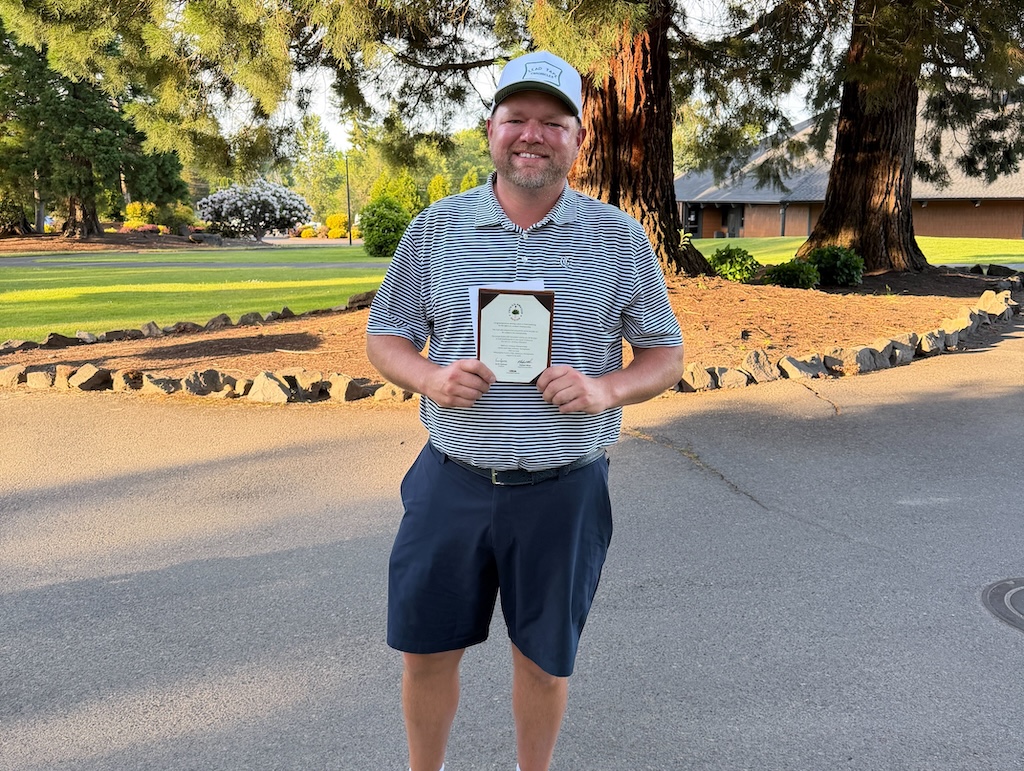
This past Monday, I played in the U.S. Amateur local qualifier at Rock Creek Country Club in Portland, Oregon. A full tee sheet from 7:30 a.m. to 1:55 p.m., the top 11 scores would make it to the U.S. Amateur final qualifying.
I teed off at 10:48 a.m.. With the 7:30 am tee time, you can get a feel for the leaders’ pace, and they were off and running on the challenging setup at Rock Creek.
View this post on Instagram
Getting to the highlight of the round on the par five 17th, a drive up the left side and 212 yards left to the front hole location. I took out a 5-iron with plans of middle of the green. The ball ended up 8 feet left of the hole, pin high. A slight downhill putt dropped in for an eagle 3 on the 17th. With the cut line looking to be anywhere from -2 to even par. This was the boost I had been waiting for all day.
With making par from the trees on 18, it was time to wait for a potential playoff with a posted score of one under par 71.
Three hours later, it was playoff time. 8 players for 6 spots. I made par on the playoff hole, which was good enough to advance to the U.S. Amateur final qualifying in July. USGA qualifiers sure deliver on all of the emotions in golf!
Club Junkie
Building my 2026 gamer WITB: Ranking the contenders and new putter projects – Club Junkie Podcast

The annual What’s In The Bag build is underway, and on this episode of Club Junkie, Brian breaks down the clubs currently leading the race for a spot in his 2026 gamer setup. From drivers and fairway woods to irons, wedges, and shafts, he ranks the equipment that’s performing best and explains what’s separating the front runners from the rest of the field.
Brian also heads into the workshop to discuss several putter projects currently on the bench. From head options and shaft choices to build ideas and testing plans, he shares what he’s working on and which putters could become serious contenders for the bag this season.
If you’re a gear junkie who loves equipment testing, club building, and the never-ending pursuit of the perfect setup, this episode is for you.
Follow Club Junkie:
Instagram: @clubjunkiepod
TikTok: @clubjunkiepod
Threads: @clubjunkiepod
X: @ClubJunkiePod
Club Junkie
Tour Edge Exotics mini driver review + TaylorMade Spider ZT Max first look – Club Junkie

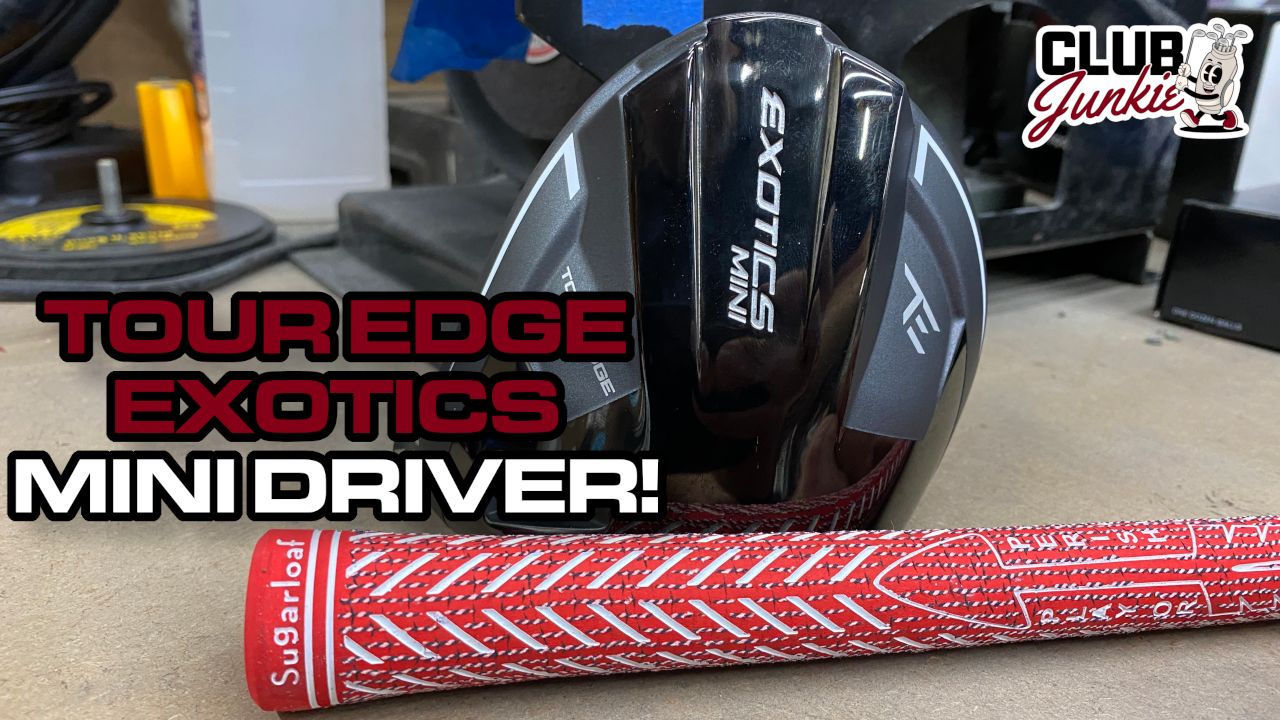
On this episode of Club Junkie, I put the new Tour Edge Exotics Mini Driver to the test and break down the performance, forgiveness, distance, and where it fits compared to a traditional driver or strong fairway wood. If you have been curious about adding a mini driver to the bag, this one is worth a look.
I also dive into the new TaylorMade Spider ZT Max putter that was recently spotted and discuss the growing zero torque putter trend. Plus, there is a closer look at the new Project X Titan Yellow shaft showing up on the PGA Tour and what makes it different from other profiles currently out there.

Justin Rose WITB 2026 (April): Full WITB breakdown with new McLaren irons

What’s the story behind Webb Simpson’s custom-stamped irons?

Memorial Tournament Tour Report: Rory McIlroy, Cameron Young switch up drivers, and more

Cadillac Championship Tour Report: Spieth’s sizable changes, McLaren Golf launches, and more

Russell Henley’s winning WITB: 2026 Charles Schwab Challenge

Kristoffer Reitan’s winning WITB: 2026 Truist Championship

J.T. Poston’s winning WITB: 2026 Memorial Tournament

Aaron Rai’s winning WITB: 2026 PGA Championship

Best irons 2026: Best irons overall, most forgiving irons, and more

Cameron Young’s winning WITB: 2026 Cadillac Championship


Bud Cauley WITB 2026 (June)
Bud Cauley had >14 clubs in his bag when photographed prior to the Memorial Tournament. Driver: Titleist GTS2 (8 degrees) Shaft: Fujikura...


Hannah Green WITB 2026 (June)
Driver: Titleist GTS3 (10 degrees, D4 SureFit setting) Shaft: Mitsubishi Chemical Diamana RB 53 S 3-wood: Titleist GT3 (15 degrees,...


Asterisk Talley WITB 2026 (June)
Driver: TaylorMade Qi4D (9 degrees) Shaft: Fujikura Ventus Blue 6 S 3-wood: TaylorMade Qi4D (16.5 degrees) Shaft: Fujikura Ventus Blue...


Brianna Do WITB 2026 (June)
Driver: Callaway Quantum Triple Diamond (9 degrees) Shaft: KBS PGW 3-wood: Callaway Elyte Titanium (15 degrees) Shaft: KBS PGW 5-wood:...
-
 Equipment6 days ago
Memorial Tournament Tour Report: Rory McIlroy, Cameron Young switch up drivers, and more
-
 News1 week ago
Russell Henley’s winning WITB: 2026 Charles Schwab Challenge
-
 Whats in the Bag3 days ago
J.T. Poston’s winning WITB: 2026 Memorial Tournament
-
 Equipment3 days ago
Best irons 2026: Best irons overall, most forgiving irons, and more
-

 Equipment1 week ago
Details on Jason Day’s latest prototype Avoda iron setup
-
 Equipment3 weeks ago
CJ Cup Byron Nelson Tour Report: Koepka and Kim’s newest putters finally get hot
-

 News2 weeks ago
Charles Schwab Challenge Tour Report: MacIntyre, Åberg and Spaun all switch putters, TaylorMade launches new Spider
-
 Equipment2 weeks ago
Details on J.J. Spaun’s surprise putter switch


Gianni Padrino
May 21, 2025 at 1:40 am
Why did you not mention Brysons 58? When talking about odds it is kind of misleading to only include PGA Tour events. Most people do not play in PGA Tour but on courses all around the world from absolute beginners to the elite. The phrasing makes it seem there has been a 58 only once ever.