
Opinion & Analysis
Embracing AI and machine learning in the golf industry: A PGA Professional’s perspective

As a PGA Professional for 16 years and a nearly three-decade veteran of the golf industry, I have dedicated my career to understanding and enhancing the game through coaching, equipment selection, and course management. Throughout this time, I’ve witnessed remarkable advancements, but none have been as transformative as the rise of artificial intelligence (AI) and machine learning. These technologies are changing how we play the game and revolutionizing the entire golfing experience.
At the recent PGA Merchandise Show in Orlando, I had the opportunity to talk with Brent Neville, the CEO of ShotSense Golf and the creator of a remarkable and what I feel will be a game-changing app for golfers.
Brent is a high-tech industry leader with 15 years of experience in engineering, geospatial analysis, and AI-driven analytics. He is also the real deal: a Notre Dame grad with a BS in Mechanical Engineering and an MBA in Finance and Marketing from Northwestern’s Kellogg School of Management. He and his team at ShotSense Golf are revolutionizing on-course decision-making with their free iOS app, which delivers personalized shot strategies for every shot on any course.
Brent and I have had lengthy discussions about AI and LLMs (large language models), how they can help society in general, and their applications in golf. Below is some of what Brent shared with me.
1. AI and Training Data
Artificial Intelligence, particularly large language models (LLMs), depends on the data it learns from. These models work by predicting the next word in a sequence based on patterns they recognize. For example, if a model often sees “cat” followed by “whisker,” it will likely predict “whisker” after “cat” in the future. This approach is effective for predictable data, like the English language or consistent human behaviors, since these patterns tend to repeat.
For instance, a machine learning model can predict dentist appointments by analyzing historical data, such as patient turnout on different days of the week. Google Maps uses similar concepts by examining large amounts of location and traffic data to forecast conditions. However, predictions can become tricky when individual choices deviate from common patterns, like someone opting for a different route.
In sports like golf, the complexity increases significantly. Each golf shot is influenced by many factors, such as course layout, weather conditions, and a player’s unique situation on that particular day. Unlike language, where patterns are more stable, predicting a golf shot is much more challenging because every shot is its own distinct scenario. This is why the ShotSense Golf method focuses on optimization rather than straightforward machine learning—there are just too many changing factors to rely solely on past data for accurate predictions.
2. Brody and Strokes Gained
A great example of how analytical methods have evolved is seen in the progression of statistical models in sports. The book “Moneyball,” released around 2003, changed how baseball teams evaluate players by introducing innovative metrics like WAR (wins above replacement). A decade later, “Astroball” built on this by using advanced computing and a better understanding of data correlations to provide even deeper insights.
In golf, Mark Broadie’s book Every Shot Counts introduced the strokes gained concept. This concept uses average data sets to evaluate performance from different distances, such as saying it takes about 2.82 strokes to reach the green from 100 yards on the fairway. However, this approach misses key factors, such as wind direction or the difficulty of hitting a small green at a challenging course like TPC Sawgrass.
Broad averages were initially necessary because computing limitations prevented detailed analyses of every situation. Now, technology can handle millions of calculations quickly, allowing for more specific and context-driven evaluations. ShotSense Golf exemplifies this by using real-time data to analyze various shot scenarios, considering nuances that traditional strokes gained metrics might overlook—like whether being behind a tree gives a better shot opportunity than being in the rough.

Brent has experience working at an AI/ML startup and Microsoft. He highlights that the biggest challenge in AI is delivering real value. While large language models (LLMs) showcase significant productivity gains, applying them to specific industries, like golf, can be complex.
Simply adding AI to a problem is often ineffective. Defining the use case and determining if AI is genuinely needed is vital. Currently, there’s a trend of applying LLMs to everything, from chatbots for weather updates to rules of the game. However, the key is identifying valuable applications for AI. For instance, LLMs have proven helpful in summarizing golf notes.
In golf, AI can be categorized into two main areas: hitting the ball and strategy.
Hitting the Ball:
- Club Development: AI helps optimize club design using simulations, a practice that’s been around for over a decade.
- Swing Analysis: Many players are interested, but this requires extensive labeled data from successful swings, which is hard to gather.
- Launch Monitors: Use machine learning to analyze data and predict performance.
- Fitness Routines: AI can customize fitness plans by combining ML and LLM approaches.
Strategy:
- Rangefinders: Limited AI, mainly predictive models based on shot data.
- GPS Apps: Primarily for data display, offering little AI advantage.
- Course Management Tools: Often outdated, lacking AI integration.
- Hardware Tracking: Focuses on data collection, with basic analytics provided in apps.
AI is not a one-size-fits-all solution but can drive value in targeted applications. ShotSense Golf, for example, uses machine learning and optimization, similar to how Google Maps functions—efficiency improved through data-driven updates.
Reader, please support me by checking out my three weekly columns on RG.org. On Mondays, I present “The Starter,” which recaps the week gone by in golf. On Thursdays, I give you “Fairway Focus,” which previews the week to come in golf. And on Saturdays, I dish up the “Weekend Fore-cast,” a look at what’s on tap for the upcoming weekend.
Editor’s note: “My Take” will be an ongoing weekly series where Brendon shares his thoughts and opinions on various aspects of the game and industry. These are Brendon’s opinions and do not necessarily reflect those of GolfWRX, its staff, and its affiliates.






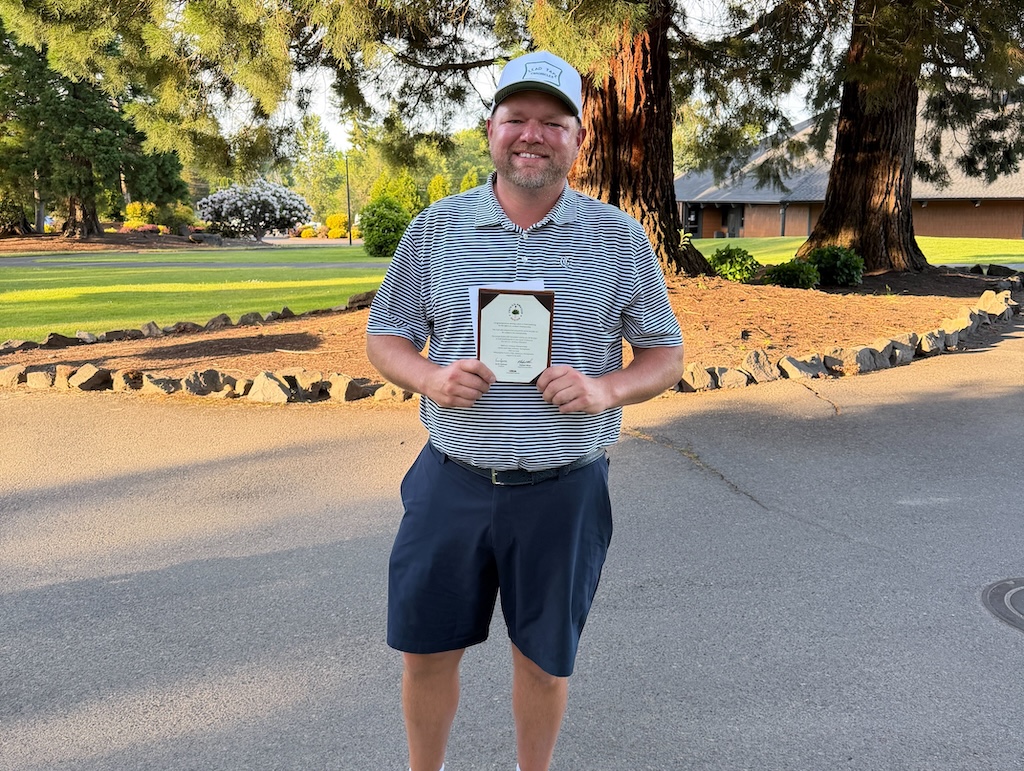
This past Monday, I played in the U.S. Amateur local qualifier at Rock Creek Country Club in Portland, Oregon. A full tee sheet from 7:30 a.m. to 1:55 p.m., the top 11 scores would make it to the U.S. Amateur final qualifying.
I teed off at 10:48 a.m.. With the 7:30 am tee time, you can get a feel for the leaders’ pace, and they were off and running on the challenging setup at Rock Creek.
View this post on Instagram
Getting to the highlight of the round on the par five 17th, a drive up the left side and 212 yards left to the front hole location. I took out a 5-iron with plans of middle of the green. The ball ended up 8 feet left of the hole, pin high. A slight downhill putt dropped in for an eagle 3 on the 17th. With the cut line looking to be anywhere from -2 to even par. This was the boost I had been waiting for all day.
With making par from the trees on 18, it was time to wait for a potential playoff with a posted score of one under par 71.
Three hours later, it was playoff time. 8 players for 6 spots. I made par on the playoff hole, which was good enough to advance to the U.S. Amateur final qualifying in July. USGA qualifiers sure deliver on all of the emotions in golf!
Club Junkie
Building my 2026 gamer WITB: Ranking the contenders and new putter projects – Club Junkie Podcast

The annual What’s In The Bag build is underway, and on this episode of Club Junkie, Brian breaks down the clubs currently leading the race for a spot in his 2026 gamer setup. From drivers and fairway woods to irons, wedges, and shafts, he ranks the equipment that’s performing best and explains what’s separating the front runners from the rest of the field.
Brian also heads into the workshop to discuss several putter projects currently on the bench. From head options and shaft choices to build ideas and testing plans, he shares what he’s working on and which putters could become serious contenders for the bag this season.
If you’re a gear junkie who loves equipment testing, club building, and the never-ending pursuit of the perfect setup, this episode is for you.
Follow Club Junkie:
Instagram: @clubjunkiepod
TikTok: @clubjunkiepod
Threads: @clubjunkiepod
X: @ClubJunkiePod
Club Junkie
Tour Edge Exotics mini driver review + TaylorMade Spider ZT Max first look – Club Junkie

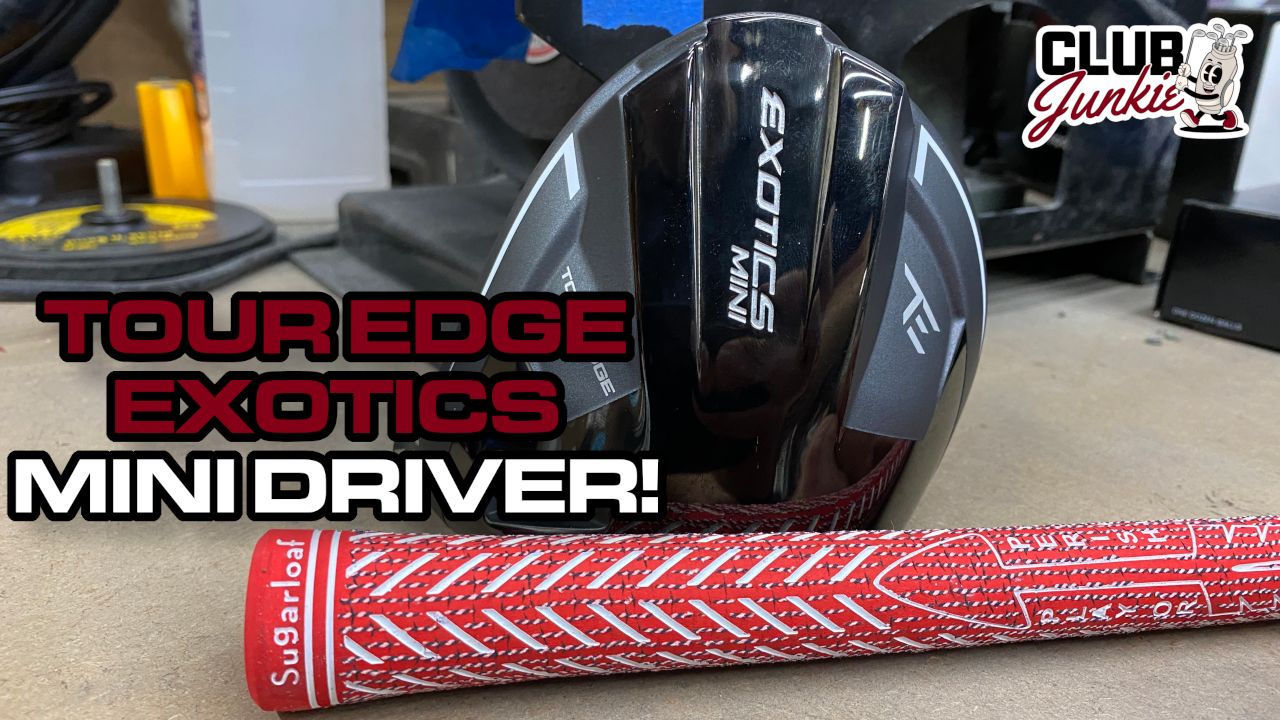
On this episode of Club Junkie, I put the new Tour Edge Exotics Mini Driver to the test and break down the performance, forgiveness, distance, and where it fits compared to a traditional driver or strong fairway wood. If you have been curious about adding a mini driver to the bag, this one is worth a look.
I also dive into the new TaylorMade Spider ZT Max putter that was recently spotted and discuss the growing zero torque putter trend. Plus, there is a closer look at the new Project X Titan Yellow shaft showing up on the PGA Tour and what makes it different from other profiles currently out there.

Justin Rose WITB 2026 (April): Full WITB breakdown with new McLaren irons

What’s the story behind Webb Simpson’s custom-stamped irons?

Memorial Tournament Tour Report: Rory McIlroy, Cameron Young switch up drivers, and more

Cadillac Championship Tour Report: Spieth’s sizable changes, McLaren Golf launches, and more

Russell Henley’s winning WITB: 2026 Charles Schwab Challenge

Kristoffer Reitan’s winning WITB: 2026 Truist Championship

Best irons 2026: Best irons overall, most forgiving irons, and more

J.T. Poston’s winning WITB: 2026 Memorial Tournament

Aaron Rai’s winning WITB: 2026 PGA Championship

Cameron Young’s winning WITB: 2026 Cadillac Championship


Bud Cauley WITB 2026 (June)
Bud Cauley had >14 clubs in his bag when photographed prior to the Memorial Tournament. Driver: Titleist GTS2 (8 degrees) Shaft: Fujikura...


Hannah Green WITB 2026 (June)
Driver: Titleist GTS3 (10 degrees, D4 SureFit setting) Shaft: Mitsubishi Chemical Diamana RB 53 S 3-wood: Titleist GT3 (15 degrees,...


Asterisk Talley WITB 2026 (June)
Driver: TaylorMade Qi4D (9 degrees) Shaft: Fujikura Ventus Blue 6 S 3-wood: TaylorMade Qi4D (16.5 degrees) Shaft: Fujikura Ventus Blue...


Brianna Do WITB 2026 (June)
Driver: Callaway Quantum Triple Diamond (9 degrees) Shaft: KBS PGW 3-wood: Callaway Elyte Titanium (15 degrees) Shaft: KBS PGW 5-wood:...
-
 Equipment6 days ago
Memorial Tournament Tour Report: Rory McIlroy, Cameron Young switch up drivers, and more
-
 News2 weeks ago
Russell Henley’s winning WITB: 2026 Charles Schwab Challenge
-
 Equipment3 days ago
Best irons 2026: Best irons overall, most forgiving irons, and more
-
 Whats in the Bag4 days ago
J.T. Poston’s winning WITB: 2026 Memorial Tournament
-

 Equipment1 week ago
Details on Jason Day’s latest prototype Avoda iron setup
-
 Equipment3 weeks ago
CJ Cup Byron Nelson Tour Report: Koepka and Kim’s newest putters finally get hot
-

 News2 weeks ago
Charles Schwab Challenge Tour Report: MacIntyre, Åberg and Spaun all switch putters, TaylorMade launches new Spider
-

 Equipment2 weeks ago
Details on J.J. Spaun’s surprise putter switch

