
Opinion & Analysis
The Wedge Guy: What really makes a wedge work? Part 2


In my last post, I explained the basic performance dynamics of “smash factor” and “gear effect” as they apply to your wedges and your wedge play success. If you missed that post, you can read it here.
At the end of that post, I promised “part 2” of this discussion of what makes a wedge work the way it does. So, let’s dive into the other two components of any wedge – the shaft and the grip.
It’s long been said that the shaft is “the engine of the golf club.” The shaft (and grip) are your only connection to all the technologies that are packed into the head of any golf club, whether it be a driver, fairway, hybrid, iron, wedge or even putter.
And you cannot ignore those two components of your wedges if your goal is optimizing your performance.
I’ve long been an advocate of what I call a “seamless transition” from your irons into your wedges, so that the feel and performance do not disconnect when you choose a gap wedge, for example, instead of your iron-set-matching “P-club.” In today’s golf equipment marketplace, more and more golfers are making the investment of time and money to experience an iron fitting, going through trial and error and launch monitor measuring to get just the right shaft in their irons.
But then so many of those same golfers just go into a store and choose wedges off the retail display, with no similar science involved at all. And that’s why I see so many golfers with a huge disconnect between their custom-fitted irons, often with lighter and/or softer graphite or light steel shafts . . . and their off-the-rack wedges with the stock stiff steel ‘wedge flex’ shaft common to those stock offerings.
If your wedge shafts are significantly heavier and stiffer than the shafts in your irons, it is physically impossible for you to make the same swing. Period.
To quickly improve your wedge play, one of the first things you can do is have your wedges re-shafted with the same or similar shaft that is in your irons.
There’s another side of that shaft weight equation; if you don’t have the forearm and hand strength of a PGA Tour professional, you simply cannot “handle” the same weight shaft that those guys play to master the myriad of ‘touch shots’ around the greens.
Now, let’s move on to the third and other key component of your wedges – the grips. If those are not similar in shape and feel to the grips on your irons, you have another disconnect. Have your grips checked by a qualified golf club professionals to make sure you are in sync there.
The one caveat to that advice is that I am a proponent of a reduced taper in your wedge grips – putting two to four more layers of tape under the lower hand, or selecting one of the many reduced taper grips on the market. That accomplishes two goals for your scoring.
First, it helps reduce overactive hands in your full and near-full wedge swings. Quiet hands are key to good wedge shots.
And secondly, it provides a more consistent feel of the wedge in your hands as you grip down for those shorter and more delicate shots around the greens. And you should always grip down as you get into those touch shots. I call it “getting closer to your work.”
So, if you will spend as much time selecting the shafts and grips for your wedges as you do choosing the brand, model, and loft of them, your scoring range performance will get better.
More from the Wedge Guy




This past Monday, I played in the U.S. Amateur local qualifier at Rock Creek Country Club in Portland, Oregon. A full tee sheet from 7:30 a.m. to 1:55 p.m., the top 11 scores would make it to the U.S. Amateur final qualifying.
I teed off at 10:48 a.m.. With the 7:30 am tee time, you can get a feel for the leaders’ pace, and they were off and running on the challenging setup at Rock Creek.
View this post on Instagram
Getting to the highlight of the round on the par five 17th, a drive up the left side and 212 yards left to the front hole location. I took out a 5-iron with plans of middle of the green. The ball ended up 8 feet left of the hole, pin high. A slight downhill putt dropped in for an eagle 3 on the 17th. With the cut line looking to be anywhere from -2 to even par. This was the boost I had been waiting for all day.
With making par from the trees on 18, it was time to wait for a potential playoff with a posted score of one under par 71.
Three hours later, it was playoff time. 8 players for 6 spots. I made par on the playoff hole, which was good enough to advance to the U.S. Amateur final qualifying in July. USGA qualifiers sure deliver on all of the emotions in golf!
Club Junkie
Building my 2026 gamer WITB: Ranking the contenders and new putter projects – Club Junkie Podcast

The annual What’s In The Bag build is underway, and on this episode of Club Junkie, Brian breaks down the clubs currently leading the race for a spot in his 2026 gamer setup. From drivers and fairway woods to irons, wedges, and shafts, he ranks the equipment that’s performing best and explains what’s separating the front runners from the rest of the field.
Brian also heads into the workshop to discuss several putter projects currently on the bench. From head options and shaft choices to build ideas and testing plans, he shares what he’s working on and which putters could become serious contenders for the bag this season.
If you’re a gear junkie who loves equipment testing, club building, and the never-ending pursuit of the perfect setup, this episode is for you.
Follow Club Junkie:
Instagram: @clubjunkiepod
TikTok: @clubjunkiepod
Threads: @clubjunkiepod
X: @ClubJunkiePod
Club Junkie
Tour Edge Exotics mini driver review + TaylorMade Spider ZT Max first look – Club Junkie

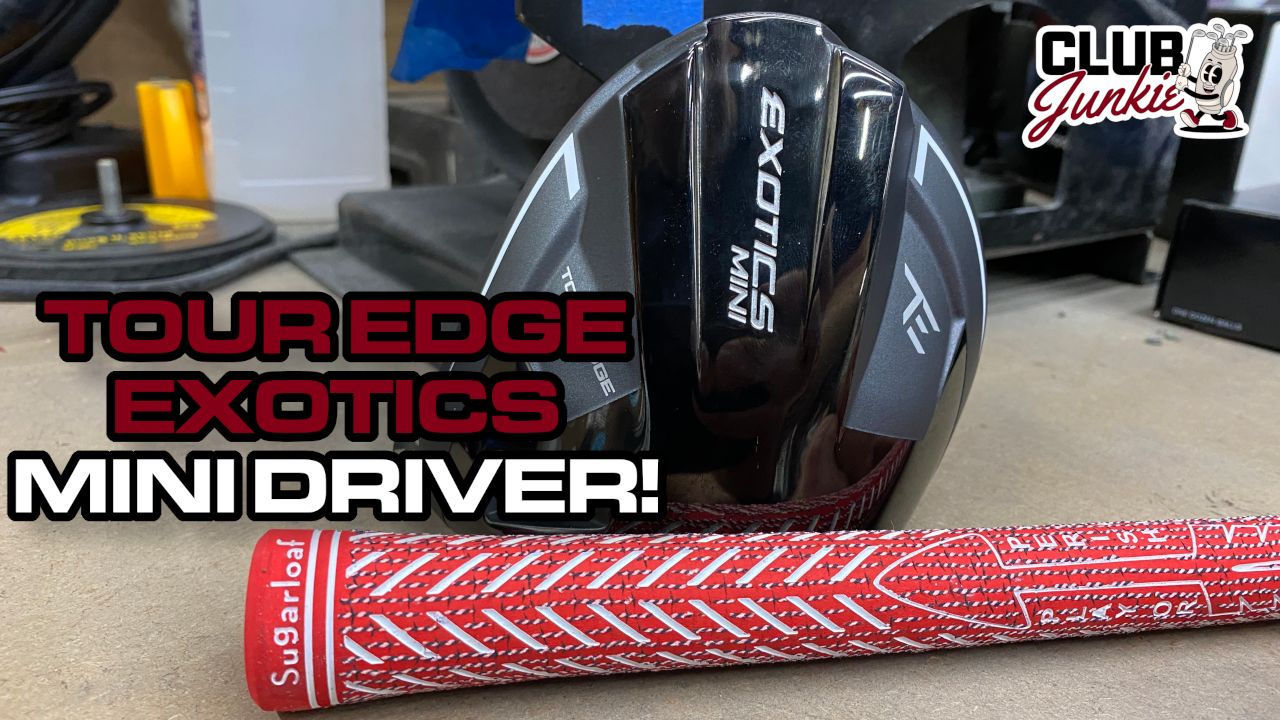
On this episode of Club Junkie, I put the new Tour Edge Exotics Mini Driver to the test and break down the performance, forgiveness, distance, and where it fits compared to a traditional driver or strong fairway wood. If you have been curious about adding a mini driver to the bag, this one is worth a look.
I also dive into the new TaylorMade Spider ZT Max putter that was recently spotted and discuss the growing zero torque putter trend. Plus, there is a closer look at the new Project X Titan Yellow shaft showing up on the PGA Tour and what makes it different from other profiles currently out there.

Justin Rose WITB 2026 (April): Full WITB breakdown with new McLaren irons

What’s the story behind Webb Simpson’s custom-stamped irons?

Memorial Tournament Tour Report: Rory McIlroy, Cameron Young switch up drivers, and more

Cadillac Championship Tour Report: Spieth’s sizable changes, McLaren Golf launches, and more

Russell Henley’s winning WITB: 2026 Charles Schwab Challenge

Kristoffer Reitan’s winning WITB: 2026 Truist Championship

Aaron Rai’s winning WITB: 2026 PGA Championship

Cameron Young’s winning WITB: 2026 Cadillac Championship

J.T. Poston’s winning WITB: 2026 Memorial Tournament

Best irons 2026: Best irons overall, most forgiving irons, and more


Bud Cauley WITB 2026 (June)
Bud Cauley had >14 clubs in his bag when photographed prior to the Memorial Tournament. Driver: Titleist GTS2 (8 degrees) Shaft: Fujikura...


Hannah Green WITB 2026 (June)
Driver: Titleist GTS3 (10 degrees, D4 SureFit setting) Shaft: Mitsubishi Chemical Diamana RB 53 S 3-wood: Titleist GT3 (15 degrees,...


Asterisk Talley WITB 2026 (June)
Driver: TaylorMade Qi4D (9 degrees) Shaft: Fujikura Ventus Blue 6 S 3-wood: TaylorMade Qi4D (16.5 degrees) Shaft: Fujikura Ventus Blue...

Brianna Do WITB 2026 (June)
Driver: Callaway Quantum Triple Diamond (9 degrees) Shaft: KBS PGW 3-wood: Callaway Elyte Titanium (15 degrees) Shaft: KBS PGW 5-wood:...
-
 Equipment6 days ago
Memorial Tournament Tour Report: Rory McIlroy, Cameron Young switch up drivers, and more
-
 News1 week ago
Russell Henley’s winning WITB: 2026 Charles Schwab Challenge
-
 Whats in the Bag3 days ago
J.T. Poston’s winning WITB: 2026 Memorial Tournament
-
 Equipment3 days ago
Best irons 2026: Best irons overall, most forgiving irons, and more
-

 Equipment1 week ago
Details on Jason Day’s latest prototype Avoda iron setup
-
 Equipment3 weeks ago
CJ Cup Byron Nelson Tour Report: Koepka and Kim’s newest putters finally get hot
-

 News2 weeks ago
Charles Schwab Challenge Tour Report: MacIntyre, Åberg and Spaun all switch putters, TaylorMade launches new Spider
-
 Equipment2 weeks ago
Details on J.J. Spaun’s surprise putter switch


geohogan
Jul 26, 2024 at 12:33 pm
Suggest that “soft hands” is a result of letting our through swing
in chipping and pitching, be a subconscious reaction to the backswing.
When we try to control both BS and DS consciously, is when we lose soft hands
bring in thin, heavy and fat shots.
Jamie
May 9, 2024 at 4:58 pm
Just re-shafted all wedges into KBS Hi Rev and KBS Tour wedge shafts after playing the “wedge flex” for years and it is unreal the change it has made. 80-120 is dialed in like it has never been before.