
Opinion & Analysis
The Wedge Guy: Golf mastery begins with your wedge game


I’ve written multiple times about just how challenging this game is to learn. Nowhere else in life is the human body required to go through such a complex sequence of motions anywhere near this level of difficulty.
From learning how to properly hold a golf club and position your body in the right way to set up a fundamentally sound golf swing, to understanding the sequence of motions that get you to the top of the backswing, to executing a reverse sequence of motions through impact into the follow-through, well, there is just nothing else you do in life that is even remotely close.
I have always been fascinated by the technique aspect of the game, and thoroughly enjoy visiting with experienced teaching professionals, sharing ideas and concepts of how to help golfers in the most efficient manner. Recently, I made my 41st annual trip to the PGA Show in Orlando and had the opportunity to interact with a number of both old and new acquaintances, wherein we engaged in discussions about the best way to help golfers learn.
It is essentially inarguable that each position you pass through in the golf swing is a direct result of the position you passed through immediately prior, and each position will determine what happens next. In essence, the golf swing is a constant reminder that “you can’t get “there” from “here.”
An improper hold on the golf club completely prohibits the ability of the wrists to hinge and rotate correctly throughout the swing. While you can see some subtle differences in grips on the professional tours, those are limited to a preference for overlap vs. interlock style and slight variations in how strong or weak the hands are rotated. But all accomplished players hold the club in essentially the same way.
Likewise, a fundamentally unsound posture and ball position effectively prevent the body from moving in a way as to affect a sound takeaway, transition, and downswing/follow-through. Again, if you watch professional golfers, you’ll see only slight variations in posture and ball position, other than the changes based on the club they are about to hit. The slight differences you do see are mostly as an accommodation for varying heights – a 6’3” golfer simply cannot take the same posture at address as a 5’6” golfer, given that their club length for any given shot is very close to the same. [NOTE: The length and lie specifications of tour player clubs do not vary nearly as much as you see coming out of the “custom-fitting” world.]
Finally, what your body core, arms and hands, and the golf club are doing through the impact zone is really not that much different in a 30-yard pitch shot than they are in a full swing 8-iron shot – the range of motion is just smaller and slower.
So, the point of today’s post is this: If you will learn to master the core fundamentals of the 30-yard basic pitch shot, your entire golf game will benefit.
There are a ton of good instructional videos to help you fully understand how the body and club work together on a routine pitch shot, so I strongly encourage you to watch, mimic, and learn. And for those of you who are “snowed in” for the coming weeks or months, the best way to learn this is in slow motion, without a ball in the way.
Almost all teaching professionals agree that a new and improved motion technique needs to be understood and learned before you put a ball into the equation. The key is lots of reps without worrying about ball impact. The ball is an intimidator to your focus on making the correct move — if a ball is there, your goal becomes to “hit the ball,” rather than to execute the proper sequence of motions you are trying to learn.
So, if you really want to get better through the bag, commit to learning how to execute a solid, repeating technique for 30-yard pitch shots.




This past Monday, I played in the U.S. Amateur local qualifier at Rock Creek Country Club in Portland, Oregon. A full tee sheet from 7:30 a.m. to 1:55 p.m., the top 11 scores would make it to the U.S. Amateur final qualifying.
I teed off at 10:48 a.m.. With the 7:30 am tee time, you can get a feel for the leaders’ pace, and they were off and running on the challenging setup at Rock Creek.
View this post on Instagram
Getting to the highlight of the round on the par five 17th, a drive up the left side and 212 yards left to the front hole location. I took out a 5-iron with plans of middle of the green. The ball ended up 8 feet left of the hole, pin high. A slight downhill putt dropped in for an eagle 3 on the 17th. With the cut line looking to be anywhere from -2 to even par. This was the boost I had been waiting for all day.
With making par from the trees on 18, it was time to wait for a potential playoff with a posted score of one under par 71.
Three hours later, it was playoff time. 8 players for 6 spots. I made par on the playoff hole, which was good enough to advance to the U.S. Amateur final qualifying in July. USGA qualifiers sure deliver on all of the emotions in golf!
Club Junkie
Building my 2026 gamer WITB: Ranking the contenders and new putter projects – Club Junkie Podcast

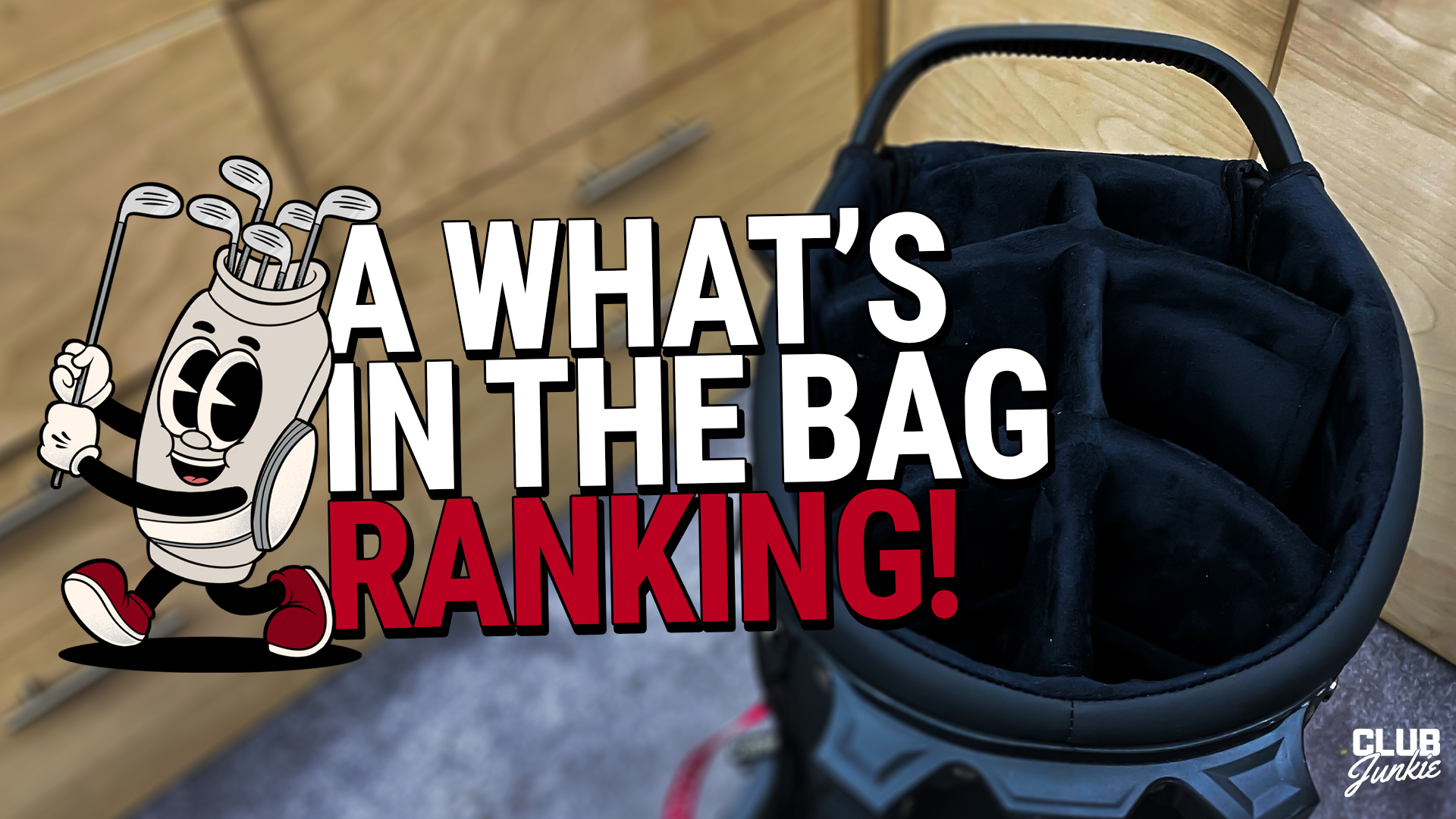
The annual What’s In The Bag build is underway, and on this episode of Club Junkie, Brian breaks down the clubs currently leading the race for a spot in his 2026 gamer setup. From drivers and fairway woods to irons, wedges, and shafts, he ranks the equipment that’s performing best and explains what’s separating the front runners from the rest of the field.
Brian also heads into the workshop to discuss several putter projects currently on the bench. From head options and shaft choices to build ideas and testing plans, he shares what he’s working on and which putters could become serious contenders for the bag this season.
If you’re a gear junkie who loves equipment testing, club building, and the never-ending pursuit of the perfect setup, this episode is for you.
Follow Club Junkie:
Instagram: @clubjunkiepod
TikTok: @clubjunkiepod
Threads: @clubjunkiepod
X: @ClubJunkiePod
Club Junkie
Tour Edge Exotics mini driver review + TaylorMade Spider ZT Max first look – Club Junkie

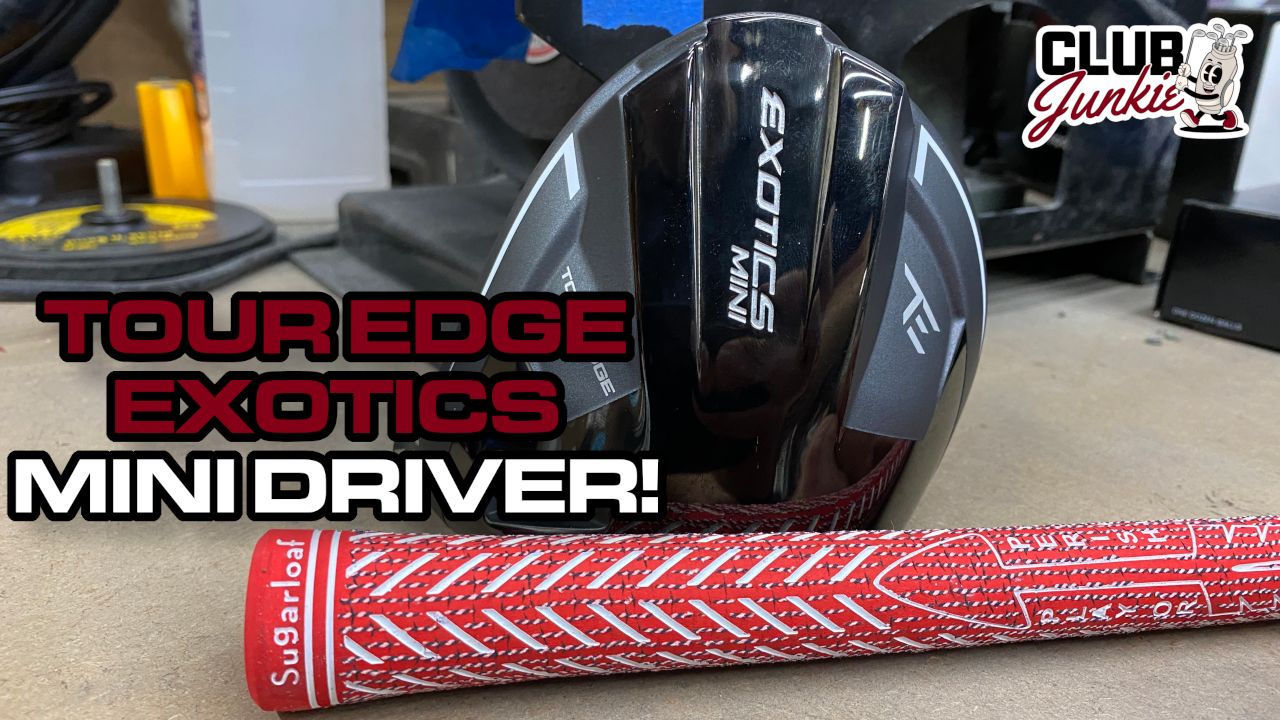
On this episode of Club Junkie, I put the new Tour Edge Exotics Mini Driver to the test and break down the performance, forgiveness, distance, and where it fits compared to a traditional driver or strong fairway wood. If you have been curious about adding a mini driver to the bag, this one is worth a look.
I also dive into the new TaylorMade Spider ZT Max putter that was recently spotted and discuss the growing zero torque putter trend. Plus, there is a closer look at the new Project X Titan Yellow shaft showing up on the PGA Tour and what makes it different from other profiles currently out there.

Justin Rose WITB 2026 (April): Full WITB breakdown with new McLaren irons

What’s the story behind Webb Simpson’s custom-stamped irons?

Memorial Tournament Tour Report: Rory McIlroy, Cameron Young switch up drivers, and more

Cadillac Championship Tour Report: Spieth’s sizable changes, McLaren Golf launches, and more

Russell Henley’s winning WITB: 2026 Charles Schwab Challenge

Kristoffer Reitan’s winning WITB: 2026 Truist Championship

Best irons 2026: Best irons overall, most forgiving irons, and more

J.T. Poston’s winning WITB: 2026 Memorial Tournament

Aaron Rai’s winning WITB: 2026 PGA Championship

Cameron Young’s winning WITB: 2026 Cadillac Championship


Ryan Palmer WITB 2026 (June)
Driver: Callaway Quantum Triple Diamond (9 degrees) Shaft: Project X HZRDUS Smoke Blue RDX 60 TX 3-wood: TaylorMade Qi10 (15 degrees) Shaft:...


Bud Cauley WITB 2026 (June)
Bud Cauley had >14 clubs in his bag when photographed prior to the Memorial Tournament. Driver: Titleist GTS2 (8 degrees) Shaft: Fujikura...


Hannah Green WITB 2026 (June)
Driver: Titleist GTS3 (10 degrees, D4 SureFit setting) Shaft: Mitsubishi Chemical Diamana RB 53 S 3-wood: Titleist GT3 (15 degrees,...


Asterisk Talley WITB 2026 (June)
Driver: TaylorMade Qi4D (9 degrees) Shaft: Fujikura Ventus Blue 6 S 3-wood: TaylorMade Qi4D (16.5 degrees) Shaft: Fujikura Ventus Blue...
-
 Equipment6 days ago
Memorial Tournament Tour Report: Rory McIlroy, Cameron Young switch up drivers, and more
-
 News2 weeks ago
Russell Henley’s winning WITB: 2026 Charles Schwab Challenge
-
 Equipment3 days ago
Best irons 2026: Best irons overall, most forgiving irons, and more
-
 Whats in the Bag4 days ago
J.T. Poston’s winning WITB: 2026 Memorial Tournament
-

 Equipment1 week ago
Details on Jason Day’s latest prototype Avoda iron setup
-

 Equipment3 weeks ago
CJ Cup Byron Nelson Tour Report: Koepka and Kim’s newest putters finally get hot
-

 News2 weeks ago
Charles Schwab Challenge Tour Report: MacIntyre, Åberg and Spaun all switch putters, TaylorMade launches new Spider
-

 Equipment2 weeks ago
Details on J.J. Spaun’s surprise putter switch


Österreich erhältlich mylan Braunschweig
Jun 14, 2024 at 6:04 pm
pharmacie en ligne médicaments Belgique Tetrafarma Elsloo comprar medicamentos en línea en Bélgica
Pingback: The Wedge Guy: The easiest-to-learn golf basic – GolfWRX
Low Cost Investor
Mar 4, 2024 at 9:26 pm
Totally agree. Great advice.