
Opinion & Analysis
Phil Kenyon: Tapered grips could be holding you back


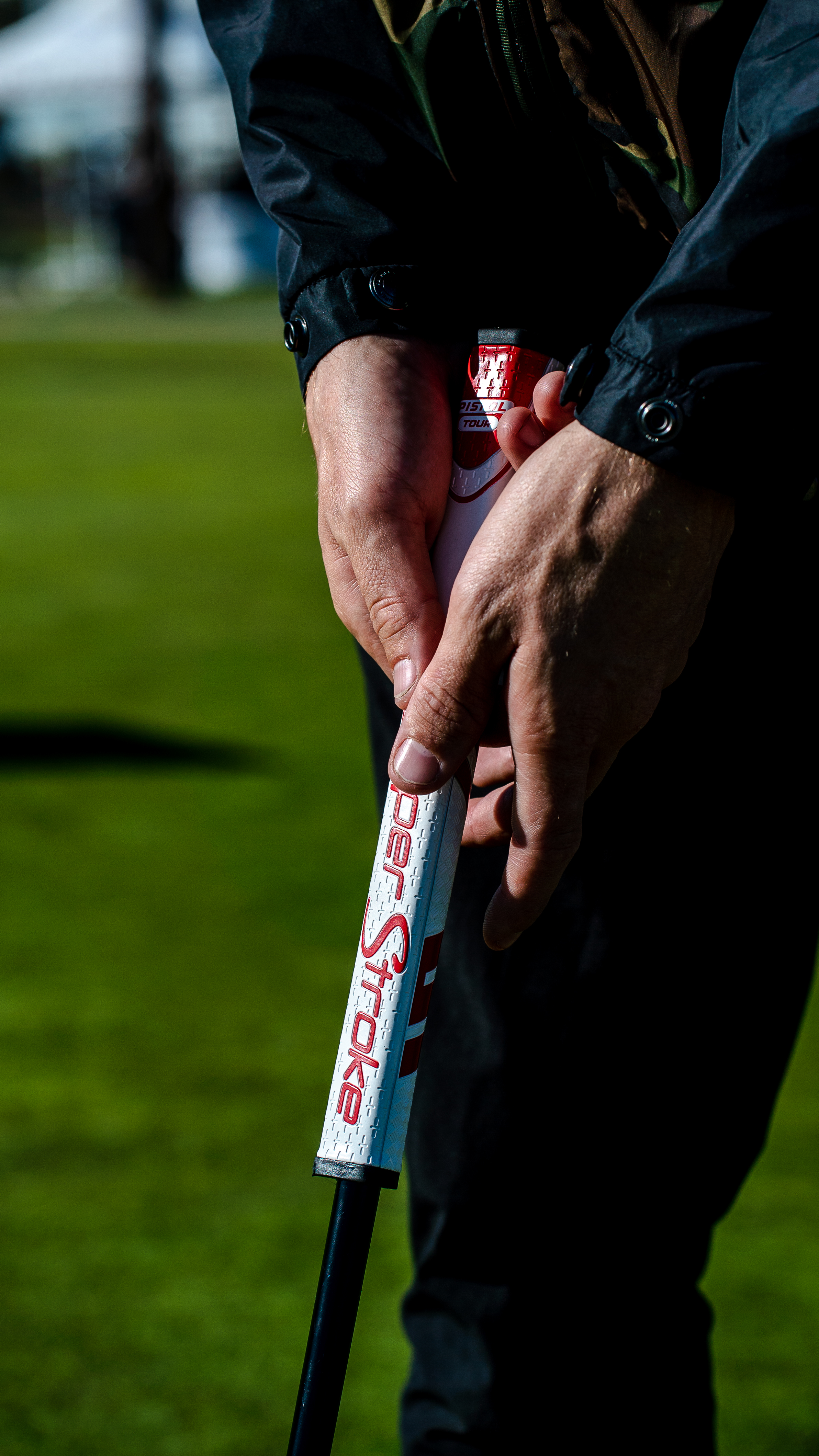
If there was a simple equipment change you could use to add control and responsive feel to your putting stroke, you’d try it, right? Well, perhaps the most practical and innovative design benefit in putter grip technology has been around for years, just hiding in plain sight. When many people look at a SuperStroke putter grip, they tend to apply terms like “oversized,” “wide,” or “fat” when, in reality, the success formula is in the fact that the grips don’t taper.
SuperStroke refers to its patented No Taper Technology and describes the design as a “uniform grip profile to minimize grip pressure and maintain putter head path for a more consistent stroke.” As a putting teacher, it’s easy for me to appreciate anything that quiets a golfer’s hands in his putting stroke. Let me explain why reduced-taper putter grips work better for most golfers.
LESS TAPER, MORE CONTROL
I see a lot of amateurs who are too handsy and wristy in their strokes rotate the putter head too much. A tapered putter grip can be partly blamed for a wristy stroke. When a putter grip is tapered and it’s thinner in the trail-hand position, golfers sacrifice even more control and consistency. They will fidget and start to make compensations to try to get comfortable. That can lead to too much hand and wrist involvement in the putting stroke.
I’ve done studies that reveal the size of the putter grip and reduced tapering clearly influence the kinematics of wrist movement in the putting stroke. The study basically showed how the no-taper, larger grips like SuperStroke grip could help a lot of golfers. We’ve found that when the grip is thicker and easier to place the hands on, golfers find the proper hand position a lot more easily. The feedback that you get from the consumer and in fittings matches the empirical evidence we found.
When you give a golfer an increased amount of grip to hold on to in the trail hand, you’re adding stability to the control hand. You’re giving them the ability to better control their stroke without excess hand or wrist motion. They generally feel more comfortable over the ball, too, and make fewer adjustments when the trail hand feels comfortable and stable.
In our study with biomechanist Mark Bull, we saw positive effects of a larger putter grip size, particularly in the width of the grip (including the reduced-tapering design) across a sample group of golfers. We found the bigger the grip (with less tapering in the trail-hand area), the slower the rate of rotation and the lower amount of overall rotation of the putter head. It also reduced flexion extension of the wrist, as well as promoting more ulnar deviation in the wrist; more towards ulnar means higher hands through the stroke and less stroke breakdown.
EVEN TOUR PROS BENEFIT
When I first started to work with Gary Woodland, it was at The U.S. Open in 2018 where he finished T36. He had a particular excessive wrist action as he would start his stroke, so we kind of altered his grip just to try and help modify that. He was struggling a bit with the grip change, so we switched the putter grip at the PGA Championship from the stock tapered putter grip to a non-tapered SuperStroke Pistol Tour and it made a significant difference. Gary could place his hands on the club correctly without thinking about it, and he finished T6 that week.
With a non-tapered grip, Gary could take the putter away with less hinge in the wrist. His problem was that his lead wrist would flex immediately as he was taking the putter away and when we got him into the Pistol Tour, it reduced that flexion. It mirrors what our study showed regarding grip size and shape influencing and reducing wrist movement.
Anytime someone’s got overactive hand action or over-active wrist sequences, that’s where I think experimenting with different sized grips is helpful. In a SuperStroke grip, that size is consistent throughout the grip so it’s easier to make a synchronized putting motion.
EXPERIMENT TO FIND YOUR FIT
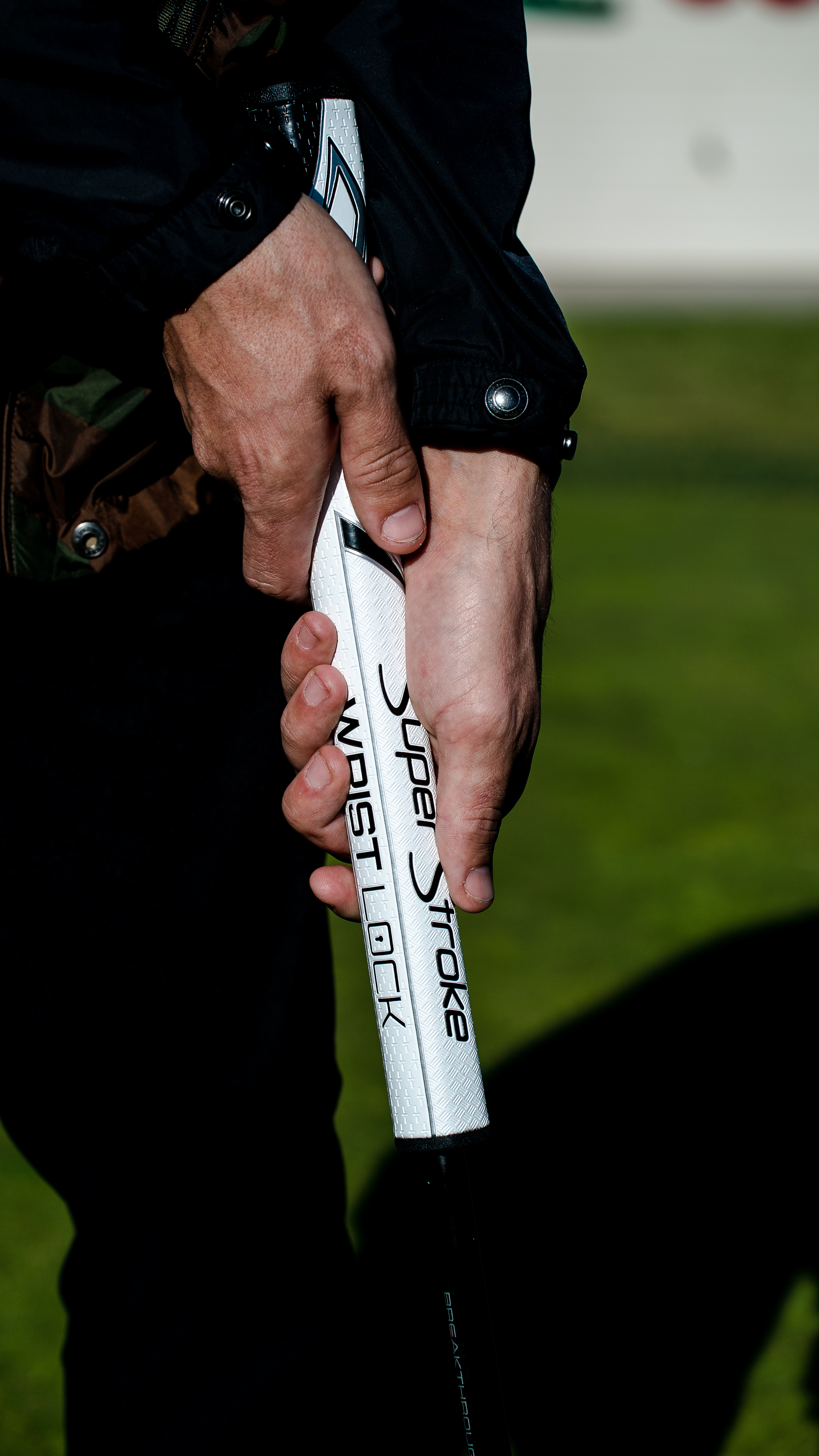
The other aspect SuperStroke excels at is in offering a variety of grip models that accommodate the different ways golfers grip the putter. Whether they use a claw putting style or lock in the wrists or however they prefer to find that individualized feel and the sensation in the hands and on the club, SuperStroke’s versatility on their product line is very beneficial. It matters which grip gives you the most tactile response, so having different shapes and different options helps personalize the fit a lot more.
Testing and experimenting with a variety of grip designs can be a big benefit to your putting, so it’s something we make a part of our putting fittings. Some people like a more rounded feel while others like to feel a more defined edge in the hands. Whatever gives you quality feedback and a better awareness of where the club face is, that’s the best set-up for you. I also like the new texture and the Spyne technology SuperStroke’s latest Zenergy line. It helps your proprioception and awareness of where that clubface is.
I encourage you to try a grip style that gives you the confidence that putting stroke is stable, consistent and pure with as few compensations or moving parts in your putting stroke. Check out SuperStrokeUSA.com to learn more about the full array of putter grip options that might not only improve the feel of your putting stroke, but also your effectiveness on the greens.
Phil Kenyon is one of golf’s leading putter instructors. Trusted by players like Justin Rose, Max Homa, Matt Fitzpatrick, Tommy Fleetwood, Keegan Bradley, Gary Woodland and Francesco Molinari, Kenyon travels with the professional tours and also helms his namesake golf academies. Phil Kenyon Putting has studios located in both Southport and Greater Manchester in the UK, and at Sea Island Resort in Sea Island, GA. Learn more about Kenyon’s online putting academy here.



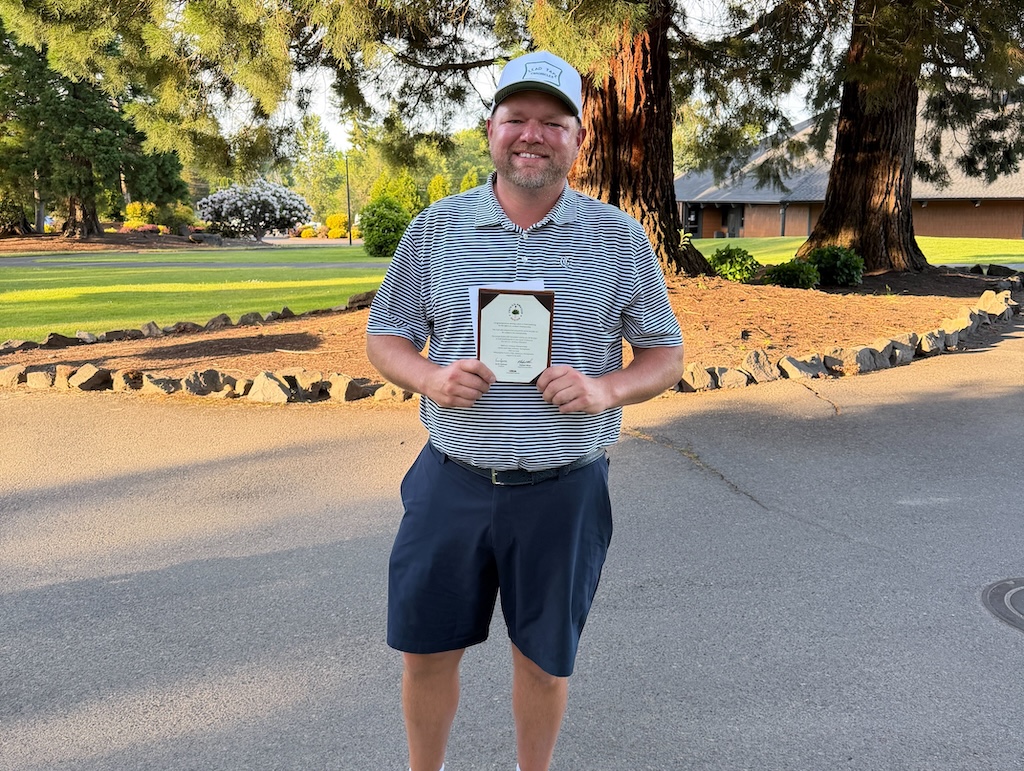
This past Monday, I played in the U.S. Amateur local qualifier at Rock Creek Country Club in Portland, Oregon. A full tee sheet from 7:30 a.m. to 1:55 p.m., the top 11 scores would make it to the U.S. Amateur final qualifying.
I teed off at 10:48 a.m.. With the 7:30 am tee time, you can get a feel for the leaders’ pace, and they were off and running on the challenging setup at Rock Creek.
View this post on Instagram
Getting to the highlight of the round on the par five 17th, a drive up the left side and 212 yards left to the front hole location. I took out a 5-iron with plans of middle of the green. The ball ended up 8 feet left of the hole, pin high. A slight downhill putt dropped in for an eagle 3 on the 17th. With the cut line looking to be anywhere from -2 to even par. This was the boost I had been waiting for all day.
With making par from the trees on 18, it was time to wait for a potential playoff with a posted score of one under par 71.
Three hours later, it was playoff time. 8 players for 6 spots. I made par on the playoff hole, which was good enough to advance to the U.S. Amateur final qualifying in July. USGA qualifiers sure deliver on all of the emotions in golf!
Club Junkie
Building my 2026 gamer WITB: Ranking the contenders and new putter projects – Club Junkie Podcast

The annual What’s In The Bag build is underway, and on this episode of Club Junkie, Brian breaks down the clubs currently leading the race for a spot in his 2026 gamer setup. From drivers and fairway woods to irons, wedges, and shafts, he ranks the equipment that’s performing best and explains what’s separating the front runners from the rest of the field.
Brian also heads into the workshop to discuss several putter projects currently on the bench. From head options and shaft choices to build ideas and testing plans, he shares what he’s working on and which putters could become serious contenders for the bag this season.
If you’re a gear junkie who loves equipment testing, club building, and the never-ending pursuit of the perfect setup, this episode is for you.
Follow Club Junkie:
Instagram: @clubjunkiepod
TikTok: @clubjunkiepod
Threads: @clubjunkiepod
X: @ClubJunkiePod
Club Junkie
Tour Edge Exotics mini driver review + TaylorMade Spider ZT Max first look – Club Junkie

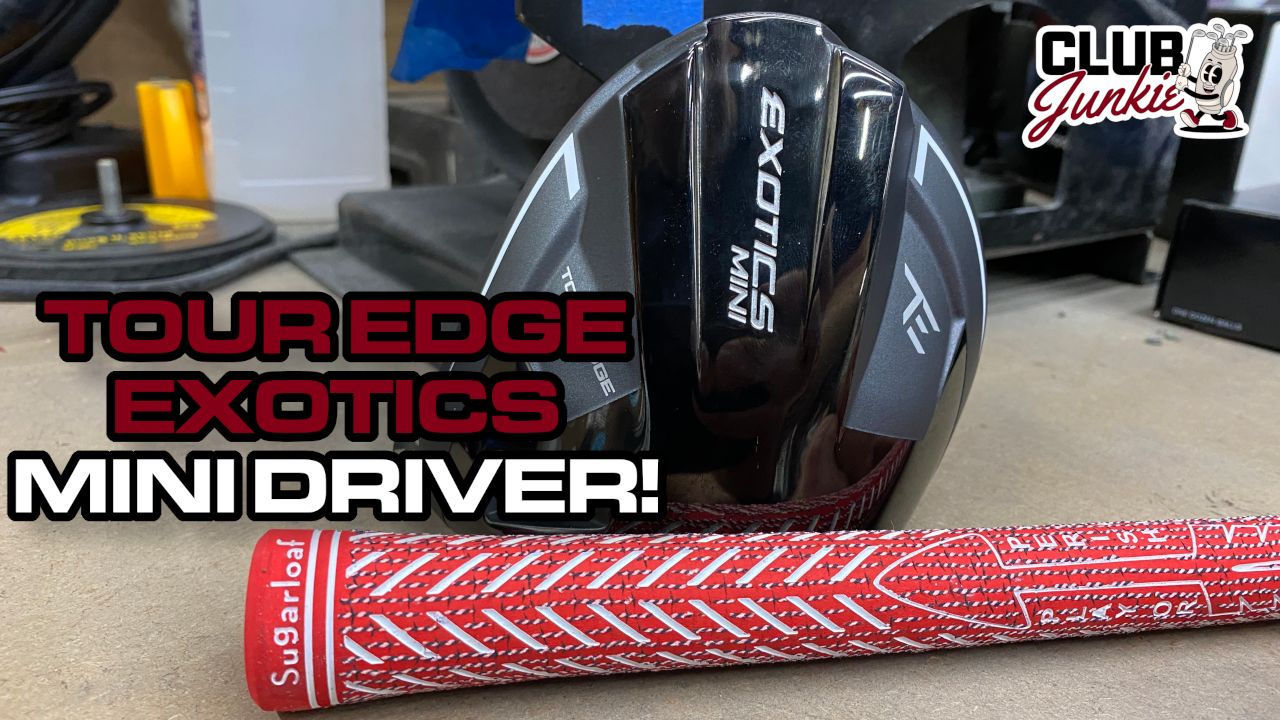
On this episode of Club Junkie, I put the new Tour Edge Exotics Mini Driver to the test and break down the performance, forgiveness, distance, and where it fits compared to a traditional driver or strong fairway wood. If you have been curious about adding a mini driver to the bag, this one is worth a look.
I also dive into the new TaylorMade Spider ZT Max putter that was recently spotted and discuss the growing zero torque putter trend. Plus, there is a closer look at the new Project X Titan Yellow shaft showing up on the PGA Tour and what makes it different from other profiles currently out there.

Justin Rose WITB 2026 (April): Full WITB breakdown with new McLaren irons

What’s the story behind Webb Simpson’s custom-stamped irons?

Memorial Tournament Tour Report: Rory McIlroy, Cameron Young switch up drivers, and more

Cadillac Championship Tour Report: Spieth’s sizable changes, McLaren Golf launches, and more

Russell Henley’s winning WITB: 2026 Charles Schwab Challenge

Kristoffer Reitan’s winning WITB: 2026 Truist Championship

Best irons 2026: Best irons overall, most forgiving irons, and more

J.T. Poston’s winning WITB: 2026 Memorial Tournament

Aaron Rai’s winning WITB: 2026 PGA Championship

Cameron Young’s winning WITB: 2026 Cadillac Championship


Ryan Palmer WITB 2026 (June)
Driver: Callaway Quantum Triple Diamond (9 degrees) Shaft: Project X HZRDUS Smoke Blue RDX 60 TX 3-wood: TaylorMade Qi10 (15 degrees) Shaft:...


Bud Cauley WITB 2026 (June)
Bud Cauley had >14 clubs in his bag when photographed prior to the Memorial Tournament. Driver: Titleist GTS2 (8 degrees) Shaft: Fujikura...


Hannah Green WITB 2026 (June)
Driver: Titleist GTS3 (10 degrees, D4 SureFit setting) Shaft: Mitsubishi Chemical Diamana RB 53 S 3-wood: Titleist GT3 (15 degrees,...


Asterisk Talley WITB 2026 (June)
Driver: TaylorMade Qi4D (9 degrees) Shaft: Fujikura Ventus Blue 6 S 3-wood: TaylorMade Qi4D (16.5 degrees) Shaft: Fujikura Ventus Blue...
-
 Equipment6 days ago
Memorial Tournament Tour Report: Rory McIlroy, Cameron Young switch up drivers, and more
-
 News2 weeks ago
Russell Henley’s winning WITB: 2026 Charles Schwab Challenge
-
 Equipment3 days ago
Best irons 2026: Best irons overall, most forgiving irons, and more
-
 Whats in the Bag4 days ago
J.T. Poston’s winning WITB: 2026 Memorial Tournament
-

 Equipment1 week ago
Details on Jason Day’s latest prototype Avoda iron setup
-

 Equipment3 weeks ago
CJ Cup Byron Nelson Tour Report: Koepka and Kim’s newest putters finally get hot
-

 News2 weeks ago
Charles Schwab Challenge Tour Report: MacIntyre, Åberg and Spaun all switch putters, TaylorMade launches new Spider
-

 Equipment2 weeks ago
Details on J.J. Spaun’s surprise putter switch

