
Opinion & Analysis
The Wedge Guy: Understanding iron designs, Part 1

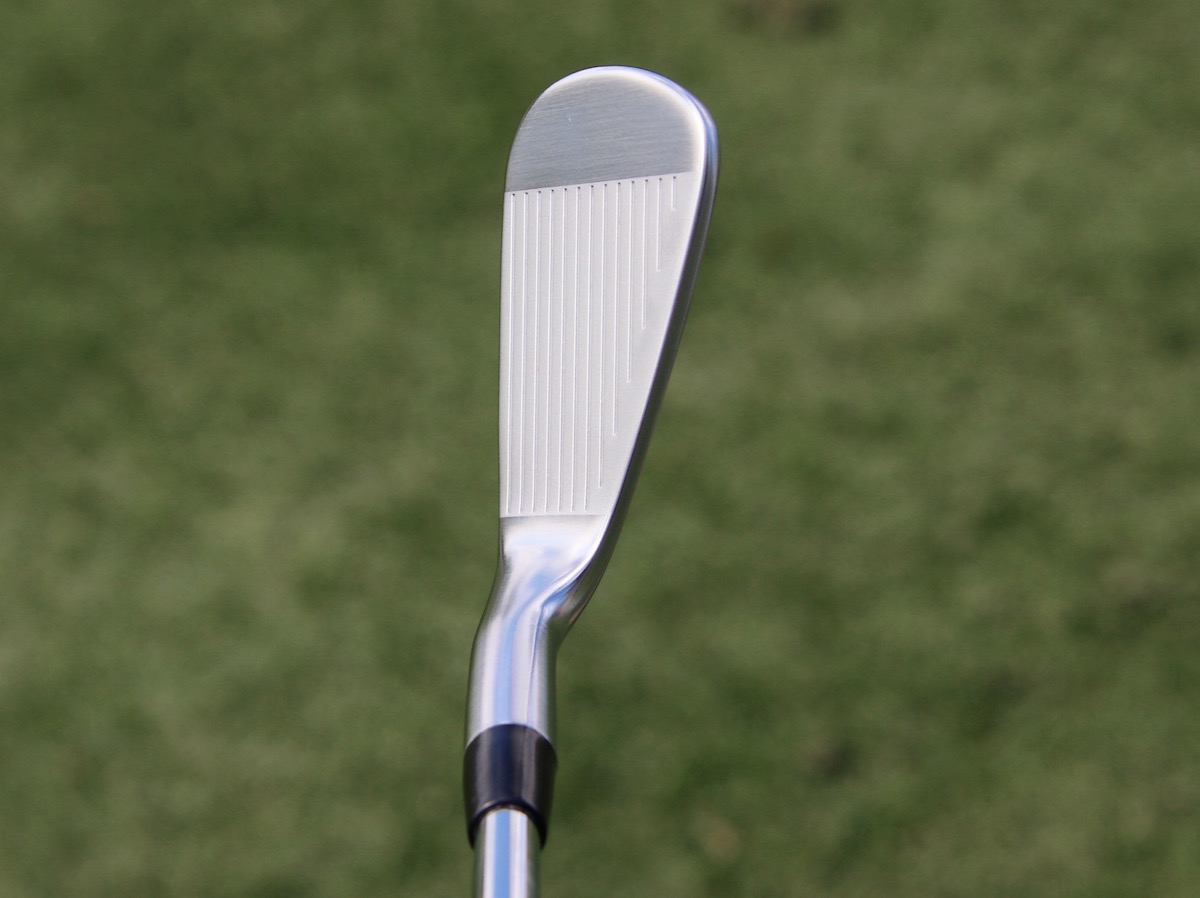
As we all know, the universe of iron designs is immensely diverse, with nearly every brand offering at least three or four models of each of their lines and changing the cosmetics or even the line names every couple of years — even if ever-so-slightly. There is simply no way any golfer can know much about any of them, much less enough to make an informed decision as to which models you should be considering, given your individual preferences for brand, appearance, and performance.
Even in the complex and thorough fitting environment that is growing exponentially, how is one supposed to make an intelligent decision about which model is most likely to deliver what you are really seeking? Hopefully, this two-part series can shed some light on this complex environment and simplify the process for you.
I will begin by stating that I am trying to be brand-agnostic with this topic. While I favor certain brands over others for various reasons, it is simply not realistic to say that “X” company builds the best irons and “Y” company builds the worst. Every major brand and many minor ones are producing top-quality golf clubs — “bad” products simply cannot make it in the marketplace, whether you’re talking golf clubs or balls, fly rods, shotguns, automobiles, cell phones, it really doesn’t matter. “Bad” products are rejected by consumers and go away, while good ones usually continue to enjoy success (though that’s not always so).
What makes choosing irons so challenging is that within each brand’s line-up is a wide range of design concepts, each one purporting to deliver a given package of performance. While one of the major brands limits its iron selection to just four models, another “top five” company has no less than fourteen, not counting mix-and-match combo sets. All the others fall somewhere in between.
But in spite of all the differences, I believe the entire spectrum of iron models can be reduced to four basic “types” of irons, with each having its strengths and weaknesses. Within each of the four basic types of irons, you can find an almost endless array of brands and models, with the biggest differences being in cosmetics, not performance. So, here is how I see the four basic categories and the strengths and weaknesses of each:
- Reasonably traditional blades. By this, I mean mostly a single-piece forging – a solid piece of carbon steel pounded into shape under 800 tons of pressure. For this category, I’ll define the design as some sort of ‘muscle back”, wherein the majority of the mass of the clubhead is more evenly distributed across the lower half of the blade, though some might exhibit a slight bit of depression or “cavity” to displace a bit of the mass toward the heel or toe. This type of iron is favored by the more advanced shotmakers for the ability to work the ball. And these are found in the bags of most of professional golf’s best iron players. These players will give us some forgiveness so they can get the most out of their advanced skills.
- Super game improvement models. I have put this category second, in that I really don’t understand what “super” means. Either you can hit the ball in the face of the club with reasonable consistency or you can’t. If you can’t…get lessons. And if you can, I don’t think this category will help any golfer really improve. Harsh, but that’s the way I see it.
- Game improvement models. These were traditionally characterized by “perimeter weighting” or “cavity back” design. Inspired by the early Ping Eye2 and all its copies, it was generally proven that a thinner face and more mass around the perimeter of the clubhead helped golfers get more forgiveness of their reasonable mis-hits…at the cost of some shotmaking precision, which is also indisputable. In today’s marketplace, this category seems divided between single-piece designs with more weight low and in the toe, and those multi-material designs with thinner, faster faces and tungsten loading in the sole to pursue greater distance . . . delivered with higher ball flights and reduced spin. This type of iron best suits golfers who are more concerned with helping their worst shots than optimizing their best ones.
- Modern blades/distance players blades. This is currently a hot category, as manufacturers work to balance the clean look of a blade iron with technologies that mimic or even improve upon traditional perimeter-weighted designs. The use of multi-materials is also pushing these irons to launch higher with lower spin…as the pursuit of distance is driving everything these days. My beef with many of these is that they apply 6-iron technologies – thin face, low CG, high launch, lower spin – to the higher lofts where those are NOT what you want.
In the simplest of iron design analysis, what you see is what you will get. The trick is knowing what to look for, and I’ll get into that next week.




This past Monday, I played in the U.S. Amateur local qualifier at Rock Creek Country Club in Portland, Oregon. A full tee sheet from 7:30 a.m. to 1:55 p.m., the top 11 scores would make it to the U.S. Amateur final qualifying.
I teed off at 10:48 a.m.. With the 7:30 am tee time, you can get a feel for the leaders’ pace, and they were off and running on the challenging setup at Rock Creek.
View this post on Instagram
Getting to the highlight of the round on the par five 17th, a drive up the left side and 212 yards left to the front hole location. I took out a 5-iron with plans of middle of the green. The ball ended up 8 feet left of the hole, pin high. A slight downhill putt dropped in for an eagle 3 on the 17th. With the cut line looking to be anywhere from -2 to even par. This was the boost I had been waiting for all day.
With making par from the trees on 18, it was time to wait for a potential playoff with a posted score of one under par 71.
Three hours later, it was playoff time. 8 players for 6 spots. I made par on the playoff hole, which was good enough to advance to the U.S. Amateur final qualifying in July. USGA qualifiers sure deliver on all of the emotions in golf!
Club Junkie
Building my 2026 gamer WITB: Ranking the contenders and new putter projects – Club Junkie Podcast

The annual What’s In The Bag build is underway, and on this episode of Club Junkie, Brian breaks down the clubs currently leading the race for a spot in his 2026 gamer setup. From drivers and fairway woods to irons, wedges, and shafts, he ranks the equipment that’s performing best and explains what’s separating the front runners from the rest of the field.
Brian also heads into the workshop to discuss several putter projects currently on the bench. From head options and shaft choices to build ideas and testing plans, he shares what he’s working on and which putters could become serious contenders for the bag this season.
If you’re a gear junkie who loves equipment testing, club building, and the never-ending pursuit of the perfect setup, this episode is for you.
Follow Club Junkie:
Instagram: @clubjunkiepod
TikTok: @clubjunkiepod
Threads: @clubjunkiepod
X: @ClubJunkiePod
Club Junkie
Tour Edge Exotics mini driver review + TaylorMade Spider ZT Max first look – Club Junkie

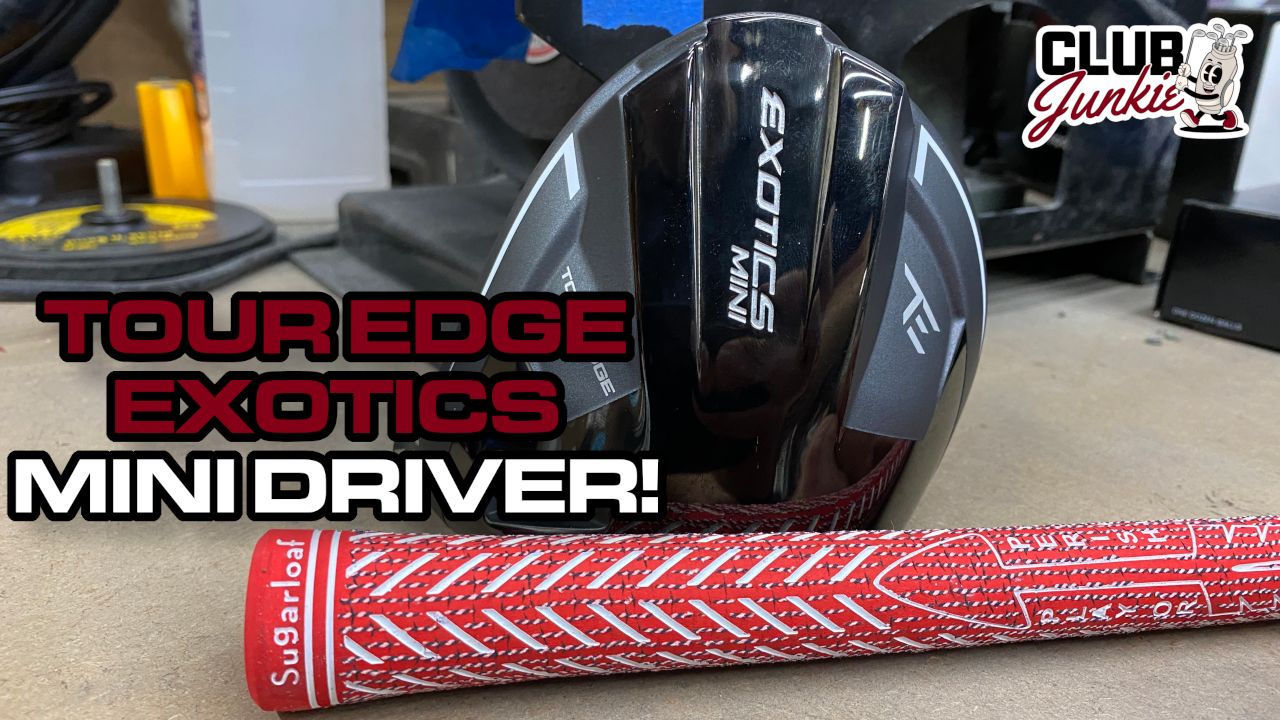
On this episode of Club Junkie, I put the new Tour Edge Exotics Mini Driver to the test and break down the performance, forgiveness, distance, and where it fits compared to a traditional driver or strong fairway wood. If you have been curious about adding a mini driver to the bag, this one is worth a look.
I also dive into the new TaylorMade Spider ZT Max putter that was recently spotted and discuss the growing zero torque putter trend. Plus, there is a closer look at the new Project X Titan Yellow shaft showing up on the PGA Tour and what makes it different from other profiles currently out there.

Justin Rose WITB 2026 (April): Full WITB breakdown with new McLaren irons

What’s the story behind Webb Simpson’s custom-stamped irons?

Memorial Tournament Tour Report: Rory McIlroy, Cameron Young switch up drivers, and more

Cadillac Championship Tour Report: Spieth’s sizable changes, McLaren Golf launches, and more

Russell Henley’s winning WITB: 2026 Charles Schwab Challenge

Kristoffer Reitan’s winning WITB: 2026 Truist Championship

Best irons 2026: Best irons overall, most forgiving irons, and more

J.T. Poston’s winning WITB: 2026 Memorial Tournament

Aaron Rai’s winning WITB: 2026 PGA Championship

Cameron Young’s winning WITB: 2026 Cadillac Championship


Ryan Palmer WITB 2026 (June)
Driver: Callaway Quantum Triple Diamond (9 degrees) Shaft: Project X HZRDUS Smoke Blue RDX 60 TX 3-wood: TaylorMade Qi10 (15 degrees) Shaft:...


Bud Cauley WITB 2026 (June)
Bud Cauley had >14 clubs in his bag when photographed prior to the Memorial Tournament. Driver: Titleist GTS2 (8 degrees) Shaft: Fujikura...


Hannah Green WITB 2026 (June)
Driver: Titleist GTS3 (10 degrees, D4 SureFit setting) Shaft: Mitsubishi Chemical Diamana RB 53 S 3-wood: Titleist GT3 (15 degrees,...


Asterisk Talley WITB 2026 (June)
Driver: TaylorMade Qi4D (9 degrees) Shaft: Fujikura Ventus Blue 6 S 3-wood: TaylorMade Qi4D (16.5 degrees) Shaft: Fujikura Ventus Blue...
-
 Equipment6 days ago
Memorial Tournament Tour Report: Rory McIlroy, Cameron Young switch up drivers, and more
-
 News2 weeks ago
Russell Henley’s winning WITB: 2026 Charles Schwab Challenge
-
 Equipment3 days ago
Best irons 2026: Best irons overall, most forgiving irons, and more
-
 Whats in the Bag4 days ago
J.T. Poston’s winning WITB: 2026 Memorial Tournament
-
 Equipment1 week ago
Details on Jason Day’s latest prototype Avoda iron setup
-
 Equipment3 weeks ago
CJ Cup Byron Nelson Tour Report: Koepka and Kim’s newest putters finally get hot
-

 News2 weeks ago
Charles Schwab Challenge Tour Report: MacIntyre, Åberg and Spaun all switch putters, TaylorMade launches new Spider
-
 Equipment2 weeks ago
Details on J.J. Spaun’s surprise putter switch


Pingback: The Wedge Guy: Understanding Iron Designs, Part 2. - Fly Pin High
Pingback: The Wedge Guy: Understanding iron designs, Part 2 – GolfWRX
Aaron
Aug 28, 2023 at 2:26 pm
“My beef with many of these is that they apply 6-iron technologies – thin face, low CG, high launch, lower spin – to the higher lofts where those are NOT what you want.”
Which irons would you say do this? Which irons in this category are better in this regard?
Josh
Aug 24, 2023 at 1:21 pm
“And these are found in the bags of most of professional golf’s best iron players.”
An increasing percentage of Professionals are bagging more traditional Player’s Distance/borderline Game Improvement irons at the bottom of the bag, because decreasing variance on strikes is more valuable than utter top-end performance. Most of the major manufacturers have embraced blended sets as a top line marketing strategy, because traditional ‘blade’ irons are great at the top end where feel matters but they amplify error too much on the long ball.
Tate Guild
Aug 24, 2023 at 12:14 pm
Does anyone know which iron brand and model that is that is shown in the picture?
Bob
Aug 24, 2023 at 2:44 pm
That is the Miura AS-1 7 iron that Adam just sidelined.
Bob
Aug 24, 2023 at 11:16 am
My favorite part of iron design is how the how pitching wedges have gone from 50 to 44 degrees. So much innovation, especially for clubs designed for precision not distance.
The consumer is so smart and sophisticated now.
M
Aug 24, 2023 at 3:41 pm
You’re so smart you’re still stuck on the label of the club lol
You’re still only allowed 14 clubs total in the bag, divide the yardages however you want with them, that’s all you gotta do, eejit
Bob
Aug 25, 2023 at 9:45 am
You must sell golf clubs for a living M lol