
Opinion & Analysis
If you don’t have the confidence in yourself, you will always find a way not to improve


Editor’s note: This article was submitted by Featured Writer James Deaton.
The game of golf has always been a passion of mine. However, life gets in the way and I had to step away from the game for a few years. What I found when I returned to the game was eye-opening at the least. I am older now in my late fifties and so much has changed since I have been away. I found immediately that my skill set has diminished greatly. I no longer had the swing speed for example or the flexibility to get through the ball as I did because of back issues. Regardless, I was determined to improve and I was willing to put in the work.
I then found myself at the range using every swing aid from a divot board to alignment sticks. I got a set of irons that should have been the best fit for me, according to every article that I could find. This was my first mistake not getting properly fitted by a professional. We will return to that discovery at a later time. This only added to my frustration and it seems no matter what I did and regardless of how many hours I spent hitting ball after ball it was just not coming together as I had hoped. It wasn’t the clubs, It was simply that I would not commit to the changes that I needed to make.
One day I was on the putting green and an older gentleman was next to me. I watched him as putt after putt was falling from everywhere. Finally, out of total frustration, I asked him to look at my putting stroke. He only watched me make a few strokes and then told me that was enough. Confused about how quickly he stopped me, I asked him so what is wrong with my stroke?
He gently said to me that “If you don’t have confidence in yourself you will always find a way not to improve.”
I don’t think I will ever forget that advice.
It is very difficult to find your confidence in the sport of Golf when nothing is going right at the range, on the course, or even in lessons. An example, how many of us take lessons then after the lesson we completely fall apart? You try and make all the swing changes and thoughts work for you, and it’s a real struggle. If you don’t have confidence in the changes and how they will improve your game you will most likely resort back with nothing gained. It was clear that I needed to work on my mental game and my confidence was clearly shaken.
I found that for me, confidence was gained and retained in small steps and accomplishments. I took the steps of working from the green out to the tee box. I began on the putting green and received some lessons on my fundamentals. I felt like I was taking a step back, after all, I was a scratch golfer and played pretty well back then. However, I needed to face the reality of this game. I began to learn again and that taught me to gain confidence also required patience. I took my time and relearned the fundamentals offered myself patience and took small steps forward. In every step I took forward my confidence grew. The more I started to believe in myself the more putts began to fall. I began to look at the thirty-foot putts with more confidence and that they can be made. I had to remind myself that anything can happen if work on the fundamentals. Of course, you don’t make all of them not even remotely close. But I began to make a few difficult putts. As we all know, there are days when everything seems to fall apart and days when nothing gets anywhere near the cup. However, if your confidence is there, you will work your way through the hard rounds you will continue to improve.
I now had to find the same confidence for the rest of my game. One day I walked on the range and looked around me. I found I was not alone in my struggles. There were golfers of all skill levels with different training aids. They were working on swing plane, coming over the top, coming too far from the inside, everything you usually see on a range, but don’t really usually pay attention to. When you have no confidence we all seek out the spot on the line that is furthest from anyone. However, I was there to build my confidence. I then found a gentleman hitting irons with such beautiful draws, solid and crisp. I took the spot next to him and decided to pull the band-aid off quickly. I warmed up feeling that every eye on the range was watching me as I hit it fat or thin and basically spraying the ball everywhere. Then I remembered what my goal was and that was to build my confidence and not allow another person’s skill level to reduce mine. So I took a step back, took a breath, and began to hit soft wedges, a slower swing speed, focused on contact. In other words, I was patient, and I focused the entire session on it. I did this for the next few weeks working my way through the irons and my confidence began to return.
My patience began to reward me as my confidence grew. I was able to commit to the swing thoughts in my lessons and I improved. Once again small steps with patience were the recipe for my confidence to grow.
All of that confidence was growing until it came time to work on my driver. It was a complete disaster. Any progress I had made with my confidence, and my patience, immediately left. I was quickly resorting back to my mistakes and found myself at the end of the range line again alone. When I realized this, I forced myself to go back to the center of the line. It was then that I did the unthinkable as any golfer can relate. I gathered my courage and removed my pride. I teed the ball, took the driver back only a few feet, and softly swung through the ball. I continued slowly as I began to find the feel again. I would take the driver back further, focusing on fundamentals as I maintained my posture through the ball as my instructor had shown me. Patience and humility, I reminded myself. Just be confident that you are doing the right things and you will improve.
It took a couple of weeks before I felt it was time to work on my speed. I was once told that “the scorecard does not care how far you hit the ball just where you hit the ball.” With that thought in mind, I was not going bomb it or to try and draw the ball or hit a fade, as straight as possible was my goal. I slowly built up my speed to where I was confident that I would hit the fairway. The distance would come in time I told myself. The patience once again rewarded me and I found myself improving my distance. Most important of all, I gained the confidence to trust my swing, by focusing on the fundamentals and I began to find more fairways. The more fairways I found the lower my score was in relation.
Ask any serious golfer and they will tell you they are always working on some aspect of their game. There is always something that goes wrong, and we need to refocus and find our way back again. I learned that no matter what your skill level is, regardless if you are an elite golfer or a recreational golfer you must discover how to build your confidence and in some cases how to recover it. It takes not only confidence in your abilities but also in your ability to have the patience to learn. It was having the patience to take small steps that brought small achievements that built my confidence. Perhaps something in my experience will help you find confidence, if only to remind you of how important it is in this game that we love so much.



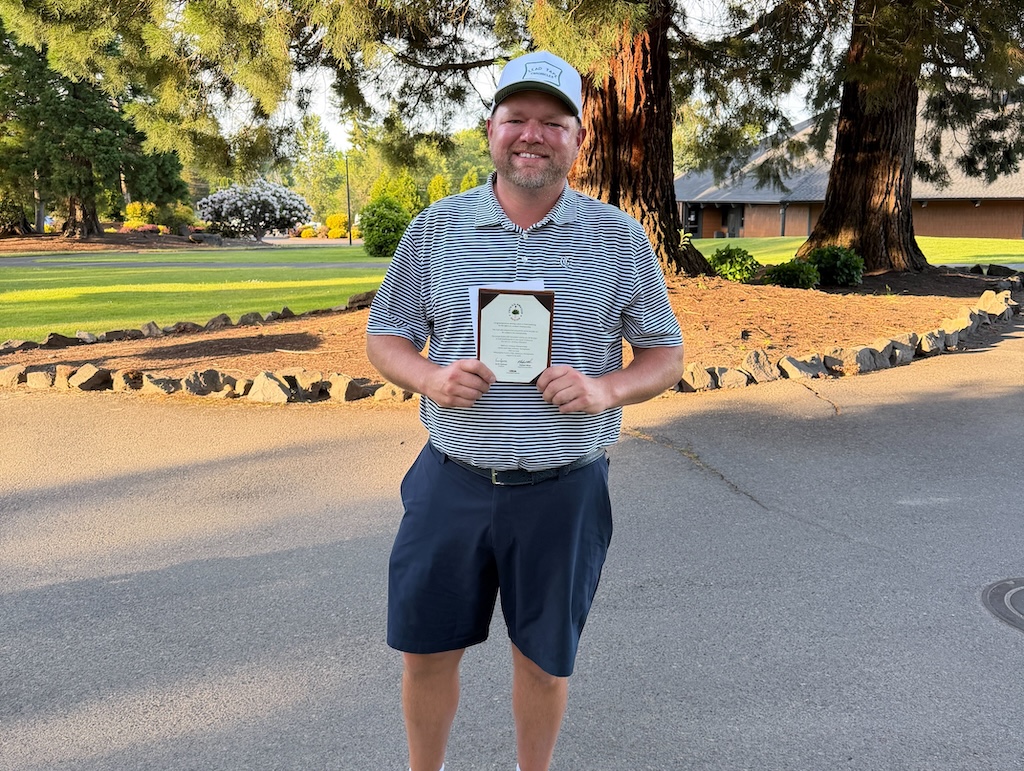
This past Monday, I played in the U.S. Amateur local qualifier at Rock Creek Country Club in Portland, Oregon. A full tee sheet from 7:30 a.m. to 1:55 p.m., the top 11 scores would make it to the U.S. Amateur final qualifying.
I teed off at 10:48 a.m.. With the 7:30 am tee time, you can get a feel for the leaders’ pace, and they were off and running on the challenging setup at Rock Creek.
View this post on Instagram
Getting to the highlight of the round on the par five 17th, a drive up the left side and 212 yards left to the front hole location. I took out a 5-iron with plans of middle of the green. The ball ended up 8 feet left of the hole, pin high. A slight downhill putt dropped in for an eagle 3 on the 17th. With the cut line looking to be anywhere from -2 to even par. This was the boost I had been waiting for all day.
With making par from the trees on 18, it was time to wait for a potential playoff with a posted score of one under par 71.
Three hours later, it was playoff time. 8 players for 6 spots. I made par on the playoff hole, which was good enough to advance to the U.S. Amateur final qualifying in July. USGA qualifiers sure deliver on all of the emotions in golf!
Club Junkie
Building my 2026 gamer WITB: Ranking the contenders and new putter projects – Club Junkie Podcast

The annual What’s In The Bag build is underway, and on this episode of Club Junkie, Brian breaks down the clubs currently leading the race for a spot in his 2026 gamer setup. From drivers and fairway woods to irons, wedges, and shafts, he ranks the equipment that’s performing best and explains what’s separating the front runners from the rest of the field.
Brian also heads into the workshop to discuss several putter projects currently on the bench. From head options and shaft choices to build ideas and testing plans, he shares what he’s working on and which putters could become serious contenders for the bag this season.
If you’re a gear junkie who loves equipment testing, club building, and the never-ending pursuit of the perfect setup, this episode is for you.
Follow Club Junkie:
Instagram: @clubjunkiepod
TikTok: @clubjunkiepod
Threads: @clubjunkiepod
X: @ClubJunkiePod
Club Junkie
Tour Edge Exotics mini driver review + TaylorMade Spider ZT Max first look – Club Junkie

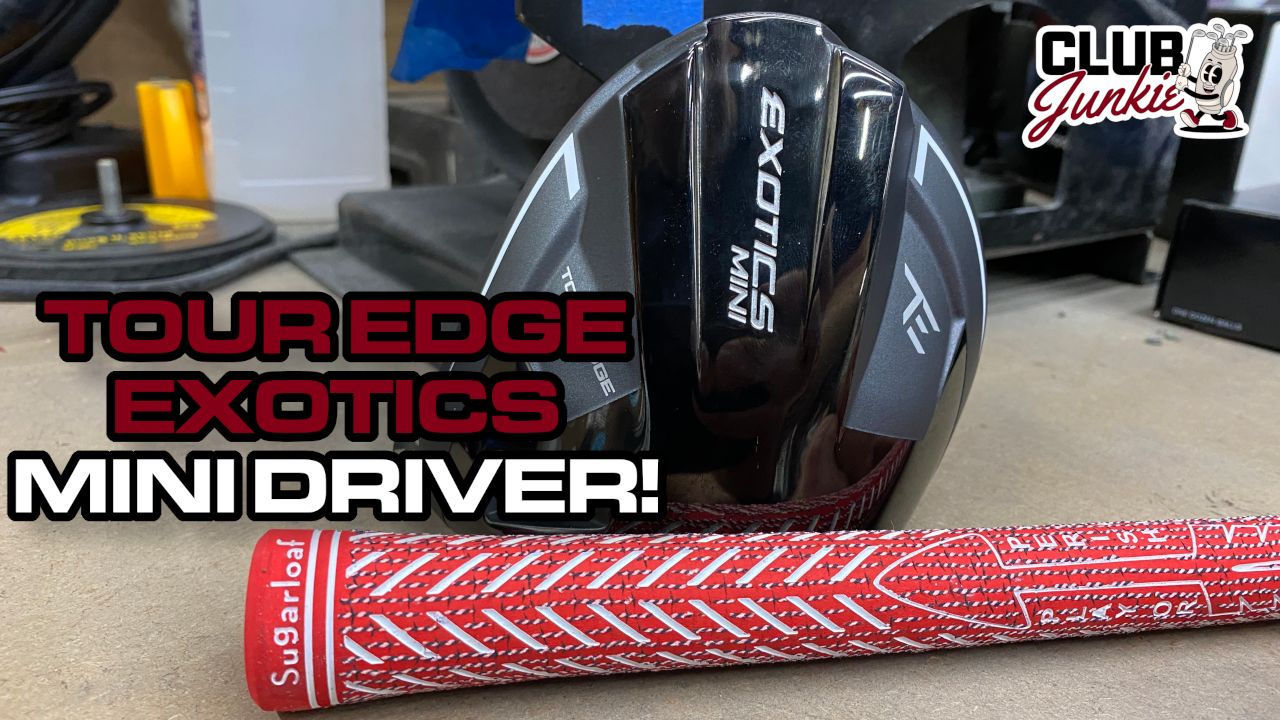
On this episode of Club Junkie, I put the new Tour Edge Exotics Mini Driver to the test and break down the performance, forgiveness, distance, and where it fits compared to a traditional driver or strong fairway wood. If you have been curious about adding a mini driver to the bag, this one is worth a look.
I also dive into the new TaylorMade Spider ZT Max putter that was recently spotted and discuss the growing zero torque putter trend. Plus, there is a closer look at the new Project X Titan Yellow shaft showing up on the PGA Tour and what makes it different from other profiles currently out there.

What’s the story behind Webb Simpson’s custom-stamped irons?

Memorial Tournament Tour Report: Rory McIlroy, Cameron Young switch up drivers, and more

Cadillac Championship Tour Report: Spieth’s sizable changes, McLaren Golf launches, and more

Russell Henley’s winning WITB: 2026 Charles Schwab Challenge

Kristoffer Reitan’s winning WITB: 2026 Truist Championship

Best irons 2026: Best irons overall, most forgiving irons, and more

J.T. Poston’s winning WITB: 2026 Memorial Tournament

Aaron Rai’s winning WITB: 2026 PGA Championship

Cameron Young’s winning WITB: 2026 Cadillac Championship

Details on Jason Day’s latest prototype Avoda iron setup


Christiaan Maas WITB 2026 (June)
Driver: TaylorMade Qi4D LS (8 degrees) Shaft: Fujikura Ventus TR Blue 6 X 3-wood: TaylorMade Qi10 (15 degrees) Shaft: Fujikura Ventus Black...


Ryan Palmer WITB 2026 (June)
Driver: Callaway Quantum Triple Diamond (9 degrees) Shaft: Project X HZRDUS Smoke Blue RDX 60 TX 3-wood: TaylorMade Qi10 (15 degrees) Shaft:...


Bud Cauley WITB 2026 (June)
Bud Cauley had >14 clubs in his bag when photographed prior to the Memorial Tournament. Driver: Titleist GTS2 (8 degrees) Shaft: Fujikura...


Hannah Green WITB 2026 (June)
Driver: Titleist GTS3 (10 degrees, D4 SureFit setting) Shaft: Mitsubishi Chemical Diamana RB 53 S 3-wood: Titleist GT3 (15 degrees,...
-
 Equipment6 days ago
Memorial Tournament Tour Report: Rory McIlroy, Cameron Young switch up drivers, and more
-
 News2 weeks ago
Russell Henley’s winning WITB: 2026 Charles Schwab Challenge
-
 Equipment3 days ago
Best irons 2026: Best irons overall, most forgiving irons, and more
-
 Whats in the Bag4 days ago
J.T. Poston’s winning WITB: 2026 Memorial Tournament
-
 Equipment1 week ago
Details on Jason Day’s latest prototype Avoda iron setup
-

 Equipment3 weeks ago
CJ Cup Byron Nelson Tour Report: Koepka and Kim’s newest putters finally get hot
-

 News2 weeks ago
Charles Schwab Challenge Tour Report: MacIntyre, Åberg and Spaun all switch putters, TaylorMade launches new Spider
-

 Equipment2 weeks ago
Details on J.J. Spaun’s surprise putter switch


geohogan
Aug 11, 2023 at 8:59 am
ChatGPT:the phenomenon you described is a well-known psychological test and illustrates an essential aspect of how our minds work. The test shows that trying not to think about something, like monkeys in this case, tends to lead to thoughts about it. This is known as the “Ironic Process Theory” or the “White Bear Phenomenon,” first introduced by Daniel Wegner.
The theory suggests that when we try to suppress certain thoughts actively, we ironically end up bringing those thoughts to the forefront of our minds. This happens because the subconscious mind does not process negatives directly. When we are told not to think about something, the subconscious mind tends to focus on the subject itself to determine what not to think about.
From top of BS to Impact is less than 1/4 second.. far too short a time for conscious control. Our subconscious fulfils more than 98% of our intentions (Ref Dr David Eagleman). Chain action links such as golf swing require us to surrender to our subconscious to achieve desired results. That means creating positive intentions, by a singular intention. .. call it creative confidence.
Fred Layton
Jul 28, 2023 at 1:18 pm
Aargh.
The author’s egotism actually has very little to do with most people’s progress or lack thereof, except to the extent people with it, like him, regard said progress with mental bs.
Striking the ball properly is a physical skill, which those who can do it have managed to invest with near mystical properties as some feat of mental strength,, to the detriment of everybody else.
You should not have confidence in doing well that which you cannot do.
Simple enough.