
Opinion & Analysis
The Wedge Guy: The case against set-match wedges

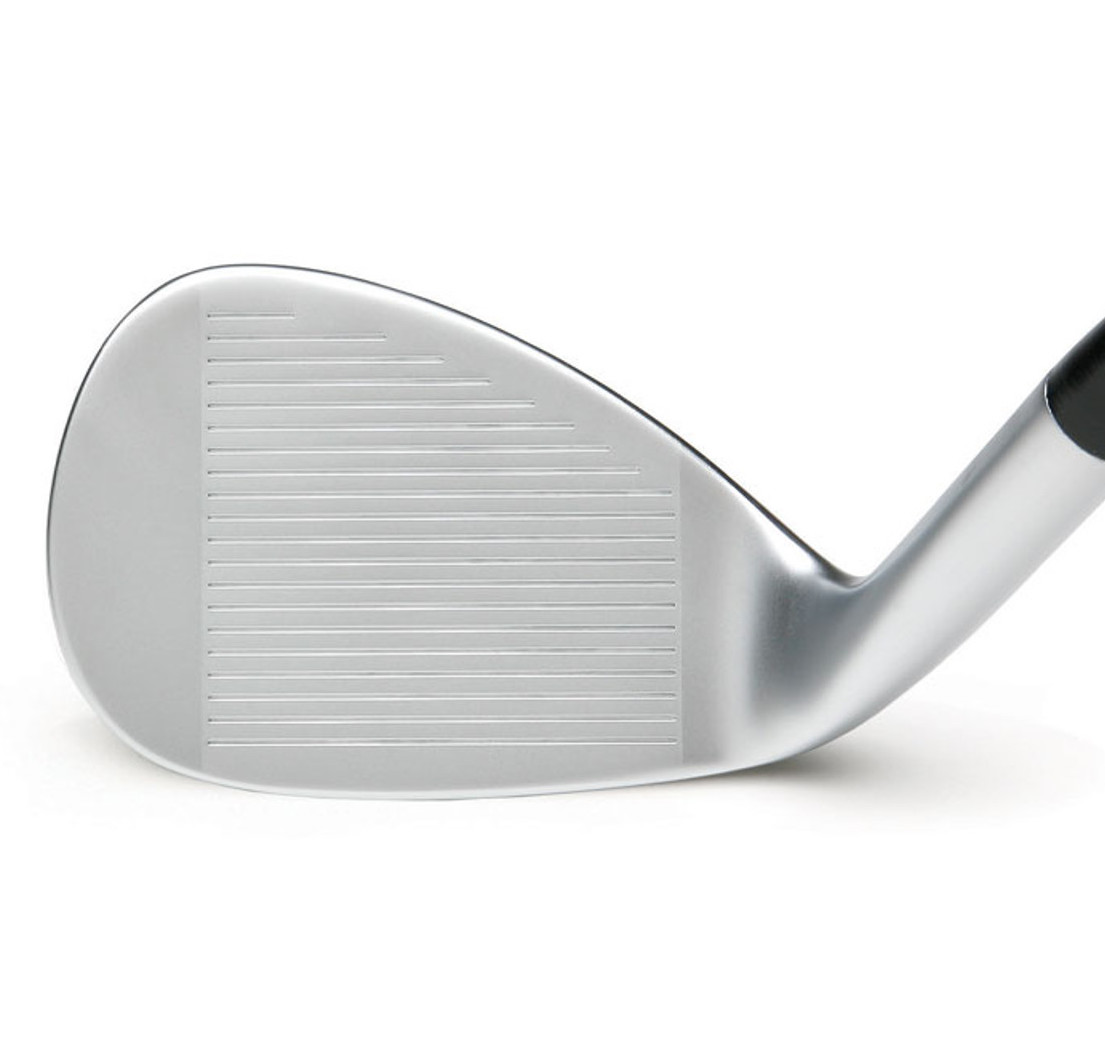
One side-effect of the relentless effort by major iron makers to win the “launch monitor wars” that pit one 6- or 7-iron against another is that the lofts throughout sets of irons have been continually strengthened to a point of what I consider ridiculousness. There are two major problems with this trend in specifications for sets of irons. The first is that to try to win the “launch monitor wars,” iron makers have to try to make their 6- and 7-irons go farther than the other guys’. That means making those mid-irons stronger in loft and using a bit of “trickery” by increasing the loft gapping between your higher-loft scoring clubs so that your “P-club” doesn’t get too strong, too (though modern “P-clubs” of 43-45 degrees of loft are really not “pitching wedges” at all).
Historically, iron lofts progressed through the set at four-degree loft intervals, and .5-inch length differentials. This wasn’t happenstance at all, it was the result of rigorous testing by professionals and average golfers. Those technical differences typically delivered consistent distance gapping from the pitching wedge down through the set.
A review of the specifications of almost every set of irons on the market today, however, will reveal that loft differentials are now five degrees between the short irons and as little as two degrees at the long end of the set. This is totally counter-intuitive to how you can improve your short iron and wedge precision. Why in the world would you want to increase the distance differences between your shorter irons, which is where you most need distance control precision? After all, a 6-iron shot that is 25 to 30 feet long or short is pretty darn good, but it sucks if you have a 9-iron or wedge in your hands.
Understand that the “holy grail” of distance in golf club design is the combination of high launch and low spin. Achieving this is relatively simple – put as much mass in the bottom of the golf clubhead as possible.
So, the second major problem caused by the “launch monitor wars” is how modern irons are designed. The early “solution” to longer-hitting mid-irons was extreme sole-weighting with thinner faces. The newer technologies we’re seeing in irons combine even faster faces with heavy tungsten inserts in the sole of the club.
But the problem with almost all irons on the market – especially in the “game improvement” category – is that this same design and technologies are applied throughout the “matched” set of irons and even into “wedges” that display that same design concept. And that’s where your prime scoring clubs are being compromised.
High launch and low spin are great in a driver or fairway wood, and maybe even desirable in your middle irons — but that is the exact opposite of what you need to achieve consistent distance precision in prime scoring range when you have a short iron or wedge in your hands.
Almost all accomplished players have learned to hit their short irons and wedges with a penetrating ball flight and lots of spin to stop the ball in its tracks once it hits the green. So why would you ever want to play short irons and wedges that have all their mass at the bottom, which is designed to deliver the exact opposite of what you should be seeking?
Now, let’s go back to the title of today’s post.
Either your 6- or 7-iron is 28 to 30 degrees of loft – but have you ever stopped to think that this loft is closer to that of your driver than to where your “wedge” lofts begin (around 45 degrees)? I feel certain that no golfer in the history of the world has ever proclaimed
“I really like my 7-iron. Can you make me a driver that looks just like it?”
In fact, from your 7-iron down to your driver, you likely have at least four, if not five, completely different clubhead designs in order to optimize performance at a given range of lofts. That iron design might evolve to a driving iron design a few degrees lower, then most likely to a hybrid design a few degrees lower than that, then to a fairway wood as lofts get below twenty degrees, and finally to a driver at 9 to 12 degrees.
So, if it takes four to five completely different clubhead designs to optimize performance at the long end of the set, how realistic is it that only one design throughout your set of irons can deliver the performance and precision you need at the short end?
I’ve always believed that every club in your bag has a specific purpose and expectation. Fairway woods, hybrids, and long irons are to get you close to or maybe even on the green from a long-distance approach. With middle irons (5 through 7 or 8), your goal is to get on the green within a reasonable distance, or certainly not to leave yourself a tough greenside save.
Your “money clubs” are those with lofts above 37 to 40 degrees, as this is where you have a chance to get close enough for the occasional one-putt, whether that is for a birdie, par, or bogey. And this is the end of your set where you likely have not spent the time to make sure it’s just right.
To accent just how important this part of your set really is, did you know (if you discount the fact that almost all so-called par-5 holes on the tour are really just long par 4s for those guys) the entire PGA Tour is over par outside 9-iron range?
Something to think about, for sure.




This past Monday, I played in the U.S. Amateur local qualifier at Rock Creek Country Club in Portland, Oregon. A full tee sheet from 7:30 a.m. to 1:55 p.m., the top 11 scores would make it to the U.S. Amateur final qualifying.
I teed off at 10:48 a.m.. With the 7:30 am tee time, you can get a feel for the leaders’ pace, and they were off and running on the challenging setup at Rock Creek.
View this post on Instagram
Getting to the highlight of the round on the par five 17th, a drive up the left side and 212 yards left to the front hole location. I took out a 5-iron with plans of middle of the green. The ball ended up 8 feet left of the hole, pin high. A slight downhill putt dropped in for an eagle 3 on the 17th. With the cut line looking to be anywhere from -2 to even par. This was the boost I had been waiting for all day.
With making par from the trees on 18, it was time to wait for a potential playoff with a posted score of one under par 71.
Three hours later, it was playoff time. 8 players for 6 spots. I made par on the playoff hole, which was good enough to advance to the U.S. Amateur final qualifying in July. USGA qualifiers sure deliver on all of the emotions in golf!
Club Junkie
Building my 2026 gamer WITB: Ranking the contenders and new putter projects – Club Junkie Podcast

The annual What’s In The Bag build is underway, and on this episode of Club Junkie, Brian breaks down the clubs currently leading the race for a spot in his 2026 gamer setup. From drivers and fairway woods to irons, wedges, and shafts, he ranks the equipment that’s performing best and explains what’s separating the front runners from the rest of the field.
Brian also heads into the workshop to discuss several putter projects currently on the bench. From head options and shaft choices to build ideas and testing plans, he shares what he’s working on and which putters could become serious contenders for the bag this season.
If you’re a gear junkie who loves equipment testing, club building, and the never-ending pursuit of the perfect setup, this episode is for you.
Follow Club Junkie:
Instagram: @clubjunkiepod
TikTok: @clubjunkiepod
Threads: @clubjunkiepod
X: @ClubJunkiePod
Club Junkie
Tour Edge Exotics mini driver review + TaylorMade Spider ZT Max first look – Club Junkie

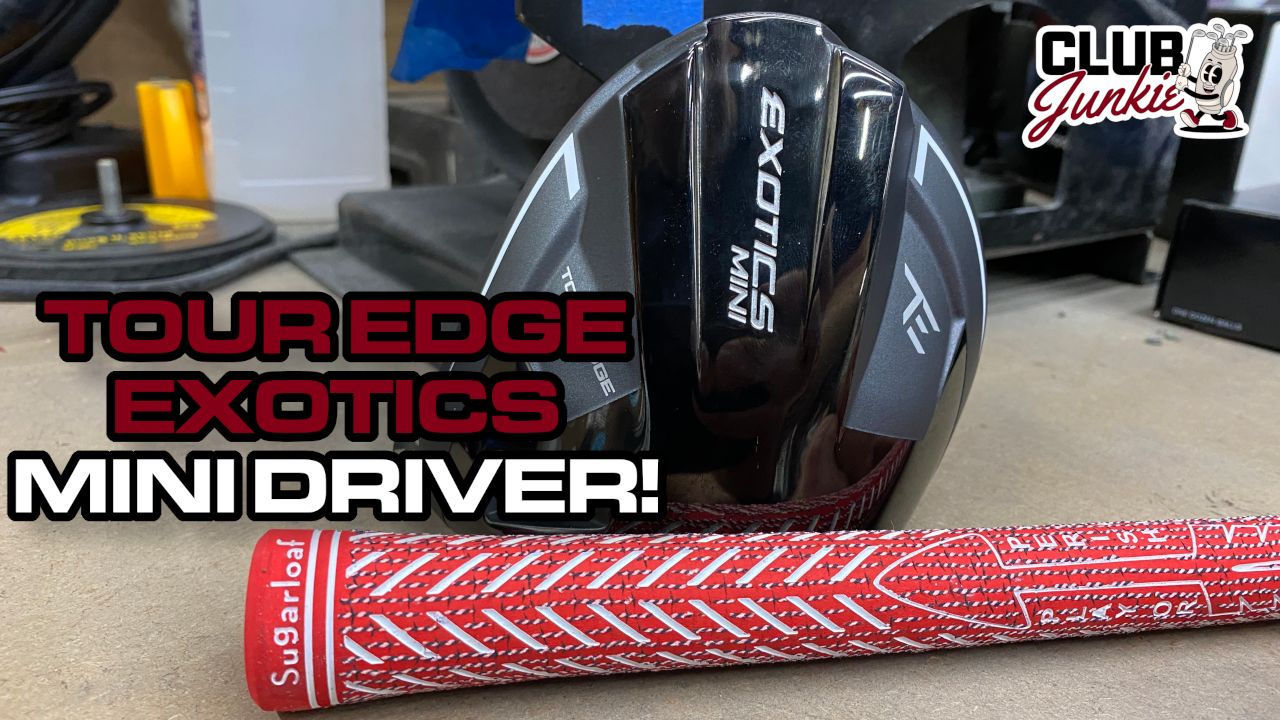
On this episode of Club Junkie, I put the new Tour Edge Exotics Mini Driver to the test and break down the performance, forgiveness, distance, and where it fits compared to a traditional driver or strong fairway wood. If you have been curious about adding a mini driver to the bag, this one is worth a look.
I also dive into the new TaylorMade Spider ZT Max putter that was recently spotted and discuss the growing zero torque putter trend. Plus, there is a closer look at the new Project X Titan Yellow shaft showing up on the PGA Tour and what makes it different from other profiles currently out there.

Justin Rose WITB 2026 (April): Full WITB breakdown with new McLaren irons

What’s the story behind Webb Simpson’s custom-stamped irons?

Memorial Tournament Tour Report: Rory McIlroy, Cameron Young switch up drivers, and more

Cadillac Championship Tour Report: Spieth’s sizable changes, McLaren Golf launches, and more

Russell Henley’s winning WITB: 2026 Charles Schwab Challenge

Kristoffer Reitan’s winning WITB: 2026 Truist Championship

Best irons 2026: Best irons overall, most forgiving irons, and more

J.T. Poston’s winning WITB: 2026 Memorial Tournament

Aaron Rai’s winning WITB: 2026 PGA Championship

Cameron Young’s winning WITB: 2026 Cadillac Championship


Bud Cauley WITB 2026 (June)
Bud Cauley had >14 clubs in his bag when photographed prior to the Memorial Tournament. Driver: Titleist GTS2 (8 degrees) Shaft: Fujikura...


Hannah Green WITB 2026 (June)
Driver: Titleist GTS3 (10 degrees, D4 SureFit setting) Shaft: Mitsubishi Chemical Diamana RB 53 S 3-wood: Titleist GT3 (15 degrees,...


Asterisk Talley WITB 2026 (June)
Driver: TaylorMade Qi4D (9 degrees) Shaft: Fujikura Ventus Blue 6 S 3-wood: TaylorMade Qi4D (16.5 degrees) Shaft: Fujikura Ventus Blue...

Brianna Do WITB 2026 (June)
Driver: Callaway Quantum Triple Diamond (9 degrees) Shaft: KBS PGW 3-wood: Callaway Elyte Titanium (15 degrees) Shaft: KBS PGW 5-wood:...
-
 Equipment6 days ago
Memorial Tournament Tour Report: Rory McIlroy, Cameron Young switch up drivers, and more
-
 News2 weeks ago
Russell Henley’s winning WITB: 2026 Charles Schwab Challenge
-
 Equipment3 days ago
Best irons 2026: Best irons overall, most forgiving irons, and more
-
 Whats in the Bag4 days ago
J.T. Poston’s winning WITB: 2026 Memorial Tournament
-

 Equipment1 week ago
Details on Jason Day’s latest prototype Avoda iron setup
-

 Equipment3 weeks ago
CJ Cup Byron Nelson Tour Report: Koepka and Kim’s newest putters finally get hot
-

 News2 weeks ago
Charles Schwab Challenge Tour Report: MacIntyre, Åberg and Spaun all switch putters, TaylorMade launches new Spider
-
 Equipment2 weeks ago
Details on J.J. Spaun’s surprise putter switch


Paul Lafleur
Jul 26, 2023 at 10:40 am
Wow, I absolutely must have the set’s GW. It’s basically the PW i grew up with. i do not pitch or chip with it. I cannot imagine someone thinking this way.
Pingback: Iron fitting is a logical process, but Wedge Guy says it's not. - Fly Pin High
Pingback: Wedge Guy: There’s no logic to iron fitting – GolfWRX
Jules Burgess
Jun 29, 2023 at 12:24 pm
Very well written piece . I have started again after a gap of 10 years and bought some new Hogans last year as a combo set which works well, but I want to buy another set of clubs for Winter golf and was amazed checking current lofts on various brands . I realised some time ago that a pro hitting a 9 iron( or a wedge) as far as they do could only be achieved in reality with a tweaked loft , but had not appreciated that it had hit the mainstream .
Matts
Jun 29, 2023 at 10:16 am
Agree totally! Most golfers are very gullible unfortunately to the 7 iron long distance race. Playing partner hits a modern day 7 iron the same distance and carry as an older traditional 6 iron and thinks he is benefitting from new technology. Guess what, the above two irons have exactly the same lofts!
Ryan
Jul 2, 2023 at 12:33 pm
So true! I play a set with traditional lofts so my 7 iron is 35°. Distance can’t come close to a 7 that’s lofted 30-32°.
Bob Pegram
Aug 18, 2023 at 5:37 pm
I agree completely. I use an old set of Callaway irons: RAZR X Forged cavity backs – the ones Furyk used to shoot 58. They are from 2011 and have old lofts. Even with those I still need 4 wedges: PW, GW, SW, LW. My PW is 47 degrees and my GW is 51 degrees.