
Opinion & Analysis
The Wedge Guy: What’s in a name?

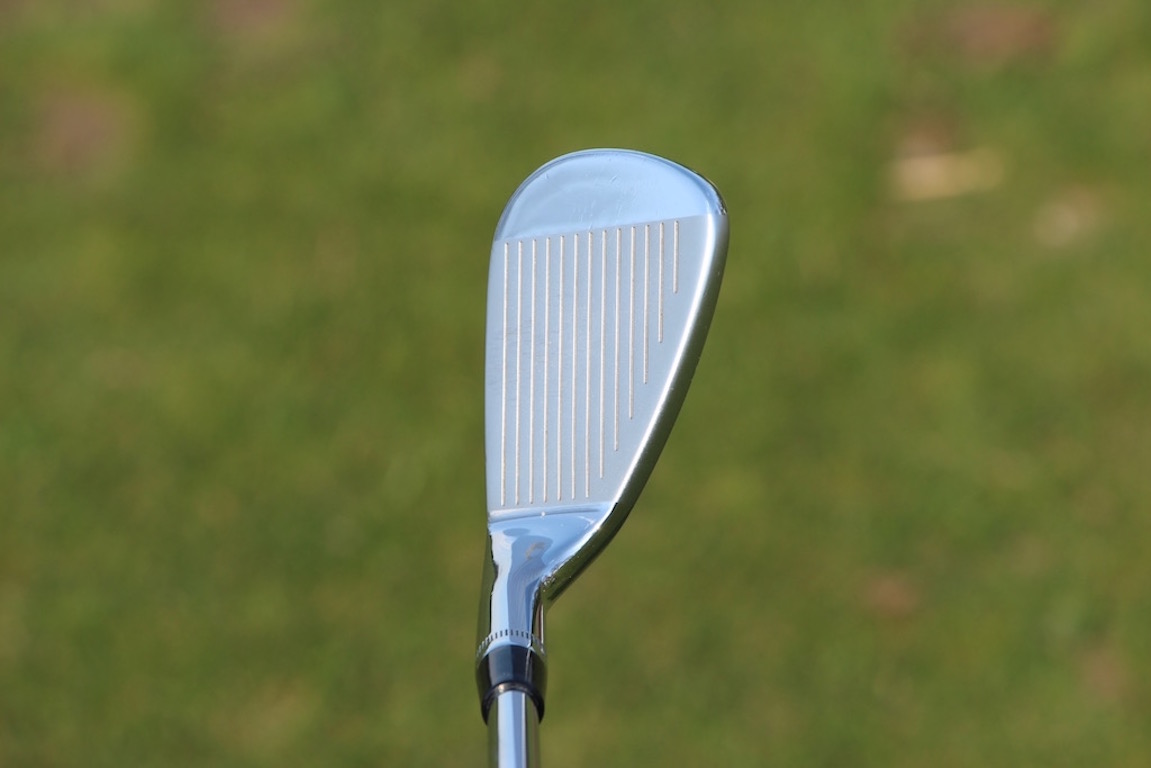
There was an extremely romantic line from Romeo and Juliet by William Shakespeare that professes, “A rose by any other name would smell as sweet.” That may be so, as it implies that the name of the rose has nothing to do with its quality as a beautiful, fragrant flower.
Shakespeare aside, though, the fact is that we do assign meaning to the names of things. We know what “beer” is (or at least should be). Likewise, the words shovel, hammer, water, and so on pretty clearly tell us what to expect when we see it and use it. A rake cannot pass for a shovel, a hair brush makes a pretty poor hammer, and a tall glass of sand wouldn’t really quench your thirst, would it?
But when it comes to names of things, the golf club industry has ventured far afield, especially when comes to the “pitching wedge.” Hear me out and you just might improve your scoring range performance.
This week’s post was “inspired” by a long-time golf industry friend of mine — a former PGA Professional and industry rep — who was coming back into golf after a few years off to tend to a young family. I was flattered that he called me to chat about wedges, leading with “What the h— has happened to irons?”
He went on to explain that he had just been through a fitting and was “prescribed” one of the new iron models from a major brand (who shall remain nameless to protect the guilty). He was floored that the “P-club” which most people call a “pitching wedge” was built to 42 degrees of loft.
Let’s venture back a few decades when iron sets took on numbers. That last club after the 9-iron – the one with the highest loft of 50 to 52 degrees – eventually came to be known as the “pitching wedge.” MacGregor often numbered that iron “10”, and others simply put “W” on it, but the club was the same, about 35 inches long and loft of 50 to 52 degrees.
Those professionals of the 40s, 50s, 60s, and 70s learned to be masters with their “pitching wedges,” hitting all kinds of magical scoring shots from about 115-120 yards and in. They could hit them low, high, and in between. They could turn the ball over or hit a little cut. They could make the ball hit and stop on a dime, or release and roll out a bit.
Even though they all carried a “sand wedge,” the legends recognized it as a specialized tool for bunker play and only certain shots around the green where the enhanced bounce and loft would give them a bit more flexibility with their creative shotmaking. For most, the “pitching wedge” was the prime scoring club.
But as perimeter weighting evolved, iron lofts began a path of constant strengthening, to a point where the “P-club” really wasn’t a wedge at all. It can be argued — no, proven — that true “pitching” capability ended when the loft of that club dipped below 48 degrees. By the way, those legendary pros and elite players also mastered bump-and-run shots, most often turning to their 8-iron or 9-iron, which had loft of, you guessed it, about 42-44 degrees of loft.
So, here we are in the 2020s. Golf hasn’t changed all that much, but your bag of tools sure has. You certainly need a selection of clubs in your bag in a range of lofts from 20 to about 45 degrees for your full-swing approach shots to give you consistent distance gapping so your approach play can be optimized. It’s your preference as to how many of those are irons, hybrids, or high-loft fairway woods – whatever makes you better.
But you also need a true “pitching wedge” of 49-53 degrees of loft, in addition to one or two wedges of more loft for those more challenging greenside recoveries. In modern golf club parlance, you might call that club your “gap wedge,” but it can be so much more than just the club you use when you are inside “P-club” range.
Our research indicates most golfers will see more consistent distance control and improved spin if you will learn to hit your less-than-full wedge shots with your “true pitching wedge” of 49-53 degrees of loft. The dynamics of that club greatly reduce the ball’s tendency to slide up the clubface, which always costs you distance control and spin. And it is actually more forgiving of shots hit slightly fat or thin. So there’s that, too.
I’ve been accused of being “old school”, and maybe I am, but calling a golf club one thing doesn’t make it something it isn’t. And your “P-club” is no longer a true pitching wedge any more than calling your 5-iron a driver makes it one.
More from the Wedge Guy
- The Wedge Guy: 4 essential tips to get more out of your equipment
- The Wedge Guy: Method or feel?
- The Wedge Guy: What really needs fixing in your game?




This past Monday, I played in the U.S. Amateur local qualifier at Rock Creek Country Club in Portland, Oregon. A full tee sheet from 7:30 a.m. to 1:55 p.m., the top 11 scores would make it to the U.S. Amateur final qualifying.
I teed off at 10:48 a.m.. With the 7:30 am tee time, you can get a feel for the leaders’ pace, and they were off and running on the challenging setup at Rock Creek.
View this post on Instagram
Getting to the highlight of the round on the par five 17th, a drive up the left side and 212 yards left to the front hole location. I took out a 5-iron with plans of middle of the green. The ball ended up 8 feet left of the hole, pin high. A slight downhill putt dropped in for an eagle 3 on the 17th. With the cut line looking to be anywhere from -2 to even par. This was the boost I had been waiting for all day.
With making par from the trees on 18, it was time to wait for a potential playoff with a posted score of one under par 71.
Three hours later, it was playoff time. 8 players for 6 spots. I made par on the playoff hole, which was good enough to advance to the U.S. Amateur final qualifying in July. USGA qualifiers sure deliver on all of the emotions in golf!
Club Junkie
Building my 2026 gamer WITB: Ranking the contenders and new putter projects – Club Junkie Podcast

The annual What’s In The Bag build is underway, and on this episode of Club Junkie, Brian breaks down the clubs currently leading the race for a spot in his 2026 gamer setup. From drivers and fairway woods to irons, wedges, and shafts, he ranks the equipment that’s performing best and explains what’s separating the front runners from the rest of the field.
Brian also heads into the workshop to discuss several putter projects currently on the bench. From head options and shaft choices to build ideas and testing plans, he shares what he’s working on and which putters could become serious contenders for the bag this season.
If you’re a gear junkie who loves equipment testing, club building, and the never-ending pursuit of the perfect setup, this episode is for you.
Follow Club Junkie:
Instagram: @clubjunkiepod
TikTok: @clubjunkiepod
Threads: @clubjunkiepod
X: @ClubJunkiePod
Club Junkie
Tour Edge Exotics mini driver review + TaylorMade Spider ZT Max first look – Club Junkie

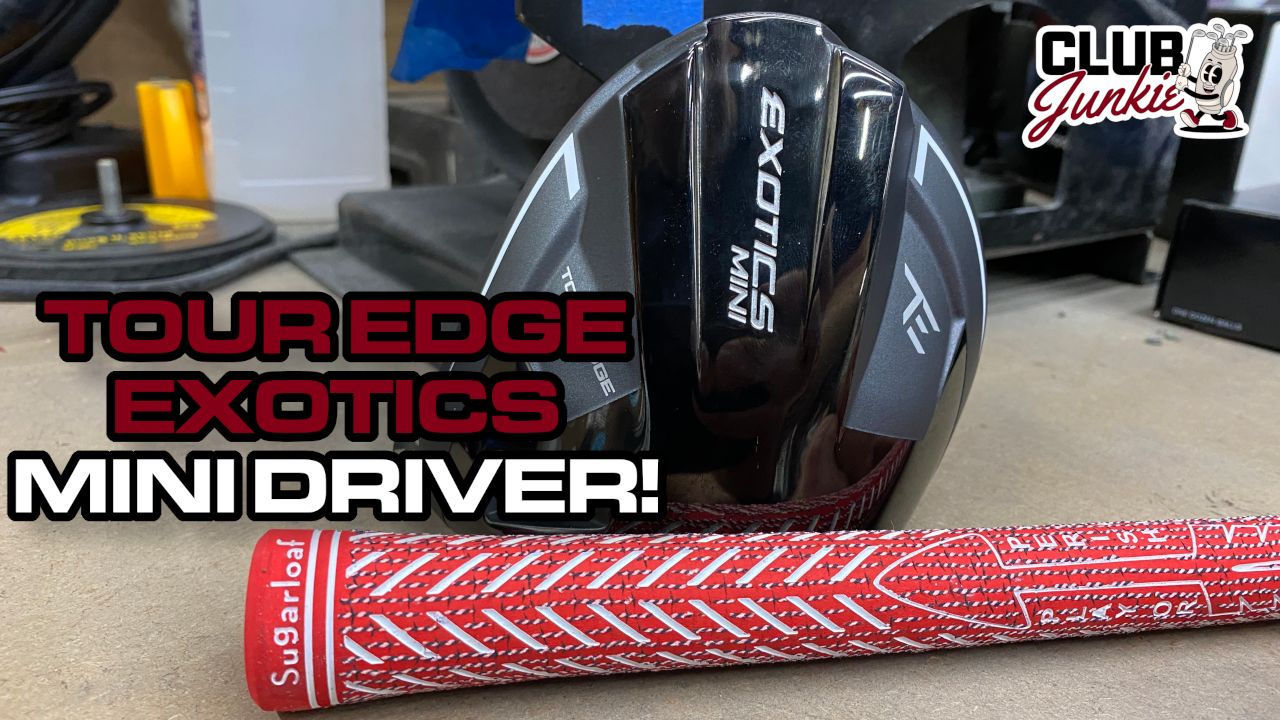
On this episode of Club Junkie, I put the new Tour Edge Exotics Mini Driver to the test and break down the performance, forgiveness, distance, and where it fits compared to a traditional driver or strong fairway wood. If you have been curious about adding a mini driver to the bag, this one is worth a look.
I also dive into the new TaylorMade Spider ZT Max putter that was recently spotted and discuss the growing zero torque putter trend. Plus, there is a closer look at the new Project X Titan Yellow shaft showing up on the PGA Tour and what makes it different from other profiles currently out there.

Justin Rose WITB 2026 (April): Full WITB breakdown with new McLaren irons

What’s the story behind Webb Simpson’s custom-stamped irons?

Memorial Tournament Tour Report: Rory McIlroy, Cameron Young switch up drivers, and more

Cadillac Championship Tour Report: Spieth’s sizable changes, McLaren Golf launches, and more

Russell Henley’s winning WITB: 2026 Charles Schwab Challenge

Kristoffer Reitan’s winning WITB: 2026 Truist Championship

Aaron Rai’s winning WITB: 2026 PGA Championship

J.T. Poston’s winning WITB: 2026 Memorial Tournament

Best irons 2026: Best irons overall, most forgiving irons, and more

Cameron Young’s winning WITB: 2026 Cadillac Championship


Bud Cauley WITB 2026 (June)
Bud Cauley had >14 clubs in his bag when photographed prior to the Memorial Tournament. Driver: Titleist GTS2 (8 degrees) Shaft: Fujikura...


Hannah Green WITB 2026 (June)
Driver: Titleist GTS3 (10 degrees, D4 SureFit setting) Shaft: Mitsubishi Chemical Diamana RB 53 S 3-wood: Titleist GT3 (15 degrees,...


Asterisk Talley WITB 2026 (June)
Driver: TaylorMade Qi4D (9 degrees) Shaft: Fujikura Ventus Blue 6 S 3-wood: TaylorMade Qi4D (16.5 degrees) Shaft: Fujikura Ventus Blue...

Brianna Do WITB 2026 (June)
Driver: Callaway Quantum Triple Diamond (9 degrees) Shaft: KBS PGW 3-wood: Callaway Elyte Titanium (15 degrees) Shaft: KBS PGW 5-wood:...
-
 Equipment6 days ago
Memorial Tournament Tour Report: Rory McIlroy, Cameron Young switch up drivers, and more
-
 News1 week ago
Russell Henley’s winning WITB: 2026 Charles Schwab Challenge
-
 Whats in the Bag3 days ago
J.T. Poston’s winning WITB: 2026 Memorial Tournament
-
 Equipment3 days ago
Best irons 2026: Best irons overall, most forgiving irons, and more
-
 Equipment1 week ago
Details on Jason Day’s latest prototype Avoda iron setup
-

 Equipment3 weeks ago
CJ Cup Byron Nelson Tour Report: Koepka and Kim’s newest putters finally get hot
-

 News2 weeks ago
Charles Schwab Challenge Tour Report: MacIntyre, Åberg and Spaun all switch putters, TaylorMade launches new Spider
-
 Equipment2 weeks ago
Details on J.J. Spaun’s surprise putter switch


Nathan Riggle
May 31, 2023 at 1:26 pm
This is a good article, but in reality, the set “gap wedge” is a old school spec’d pitching wedge. So yes, a PW is no longer a “traditional” PW but the “gap w” is, so things have changed but at the same time, all that really has changed is the number that is stamped on the bottom of a sole.
Pingback: The Wedge Guy: Are you making the game too hard? - Fly Pin High
Pingback: The Wedge Guy: Are you making the game too hard? – GolfWRX
ericsokp
May 20, 2023 at 12:36 am
Personally, I was saddened to see the Ben Hogan Company go out of business (again!) as they were about the only OEM that typically started their iron sets at around 22* and then proceeded in even 4* increments. This gave consistent gapping and you ended up with a 46* PW and a 50* Utility/Gap Wedge, with Sand Wedges then available in the 55* – 60* range.
If I was to buy a newer set of irons with the stronger lofts prevalent today, I’d have to have a cheat sheet to remember what irons are for what distance.
Pickles
May 4, 2023 at 4:12 pm
Terry, why are you so partial to the name of the club?
I disagree with you on three points. If TLDR: let’s just name it a 10 iron like Honma and move on, who cares.
1. You want to emphasize that it’s a Pitching wedge because that’s it’s name, but undermine your own argument when you mention that the club had varying names historically:
“And your “P-club” is no longer a true pitching wedge any more than calling your 5-iron a driver makes it one.”…”MacGregor often numbered that iron “10””. If all manufactures stamped it as a 10 iron, would you be happy?
2. You argue that golf is the same, but our equipment has changed. “So, here we are in the 2020s. Golf hasn’t changed all that much, but your bag of tools sure has.”
I agree the equipment is hugely different, but so too is the game. The courses are hundreds (if not near a thousand) of yards longer. The agronomy can be much more extreme with faster greens, tighter fairways and aprons. Longer, thicker rough. The top level pro/amateur players are stronger and smarter with advanced analytics that trickle down into the regular game. So no, I don’t believe the game is the same, no game is the same compared to 75 years ago. That little chippy 8iron you mention wouldn’t be playable for 98% of the shots I hit in tournaments.
3. You note golfers are best with partial wedge shots: “Our research indicates most golfers will see more consistent distance control and improved spin if you will learn to hit your less-than-full wedge shots with your “true pitching wedge” of 49-53 degrees of loft.”
This finding is opposite to Dave Pelz’s, that golfers can more easily replicate consistent distances with full swings. He notes this as the catalyst of his invention of the lob wedge, it was easier for players to make a full swing 80 (or whatever) yard shot than a partial swing to produce the same distance.
Reality Check
May 15, 2023 at 9:57 pm
LOL – “that little chippy 8 iron wouldn’t play on 98% of my tourney rounds.”
You might want to tell that to Jim Furyk, who made a career (and won a major, and shot 58 on tour) by being deadly around the greens with a toe down chipping motion where he used all the irons in the bag to roll chips up to the cup.
https://www.dailymotion.com/video/x2mp64n
But you’re such a baller, do tell us again how the game has changed and you can’t play that way anymore.
Terry Koehler
May 18, 2023 at 9:25 am
I like Furyk’s suggestion for a solid chipping technique, but this article is referring to pitch shots, not chipping. And for those, you need a different technique and a club that is at least 49-30 degrees of loft. Every golfer’s arsenal should include good chipping and good pitching techniques and tools.
Reality Check
May 23, 2023 at 1:56 pm
“By the way, those legendary pros and elite players also mastered bump-and-run shots, most often turning to their 8-iron or 9-iron, which had loft of, you guessed it, about 42-44 degrees of loft.”
I get what you are saying – but truly, I think it’s abit odd to make these bright line designations between chips, pitches, lobs, bump and runs, etc. The reality is that golfers are faced with a variety of short game situations and a good deal of creativity is required. I very much agree with what you said in the article, and completely disagree with Pickles. There are a lot of ways to go about things, and just because one player uses a high lofted wedges inside 80 yards, it does not mean that is the only way to do things.
WoodenHead
May 4, 2023 at 12:02 am
So true! It became much more difficult to chip the modern urethane covered golf balls with anything less than a club with at least 52 degrees!