
Opinion & Analysis
Is Park Golf the world’s next golf craze?


Before the onset of Covid-19, the number of new golfers taking up the game was on a decline worldwide. The same trend was prevalent here in South Korea until the pandemic unexpectedly created a golf boom over the past 3 years. And thanks to state-of-the-art golf simulators and its easy accessibility, the ‘screen golf’ culture here made it safe and easy for newbies to get a taste for the game.
Now as the threat of the virus abates, a recent study showed that many of the new golfers are leaving the game in search of other activities. If you are familiar with Korea’s golf environment, the reasons are understandable. Although we are the world’s third largest consumer of golf, the high costs to play the game keep the entry barrier high. Playing a round of golf is much more affordable and easier in the US and Canada to be sure, but today I would like to talk about a new form of golf that has enjoyed tremendous growth and popularity here in recent years.

A new strain of golf virus that is sweeping Asia and coming to America is… Park Golf! (Picture: www.gigagolf.co.kr)
Park Golf… Say What Now?
Park Golf is a new type of golf that started in 1983 in a small town in Japan. The founders of Park Golf wanted to play a game of golf that was easily accessible and playable for people of all ages while keeping the name, rules, and equipment as simple as possible.
As the name implies, Park Golf literally means playing golf in a park. Using pretty much the same rules as regular golf, the goal is to get the ball into a hole using the fewest strokes. The game is played on a small 9- or 18-hole course about 1/10th the size of an actual golf course, and even uses the same words like par, birdie, eagle, out of bounds, etc.
The key difference is that Park Golf only requires a single club that resembles a croquet mallet with zero-degree loft and a plastic ball the size of a billiard ball. Imagine a faster-paced game of croquet with the rules of golf and voila. Park Golf, or as I first called it, Geriatric Golf.
Right. So why would any self-respecting golfer find this miniaturized version interesting at all? When it first came across my desk a couple years ago, my snort of derision was heard across the office upon reading that it was comparable to REAL golf for fun and enjoyment.
Give me a break. But then it kept popping up again and again throughout the year; how fast it was growing, how so many cities and provinces throughout Korea are allotting funds and land to encourage the ‘sport’, and so on. The tipping point where I finally decided to see what the hubbub was about was when I noticed that a Park Golf course was operating within walking distance from my office.

Park Golf has it all, complete with bunkers, rough and fairways, and even OBs.
Overall, it took me over a year to actually work up enough curiosity to stand on the first tee box with a mallet club in my hand. However, I was soon surprised to find myself obsessing about how to hit the ball straighter and further – all things that I would normally do at Golf. Of all the similarities it has with Golf, the addictive nature had to be the biggest.
Park Golf, Past And Present
Unbeknownst to most, Park Golf has been around for a while and this year actually marks the 40th anniversary of the sport. Since it was first conceived in 1983 in the small non-descript town of Makubetsu, Japan, it is now actively enjoyed in over 18 countries including the United States, Canada, China, Australia, Taiwan, and Central America.

For some addictive golf action at a fraction of the price, Park Golf can’t be beat (Picture: DestroyerGolfPark.com)
In Japan alone, there are now more than 5 million players (or “parkers” as they call themselves) and over 700 Park Golf courses playing under the official rules set out by IPGA (International Park Golf Association). In Korea, Park Golf has also grown rapidly since its introduction in 1995, and owing to the incredibly addictive nature of the sport (it is golf, after all), the number of courses and players has nearly doubled year on year to rival those of Japan.
In addition, the number of new Parkers is growing by hundreds each day, so much so that even large OEM manufacturers like Callaway, Mizuno, and Honma have jumped in to make equipment for the sport. What began as a humble game in a small Japanese town, Park Golf is now supported globally with an official Park Golf Association in many countries, all following a systematic framework of game rules, equipment, and hosting of various domestic and international competitions around the world.

Dick Beyer in his trademark mask at Destoyer Park Golf, America’s first PG course (www.destroyerparkgolf.com)
It may also surprise you to know that Park Golf is also alive and well in America, just 40 minutes outside Buffalo in the town of Akron, New York. A quick search on Google found that the game was introduced to the US in a big way by Hall of Fame professional wrestler Dick “The Destroyer” Beyer.
During his career in Japan, he fell in love with the game and began dreaming of introducing the sport to the US. As a result, America’s first DESTROYER PARK GOLF was launched in 2013. The par-66, 18-hole course is proudly owned and maintained by the married couple, Kris Beyer and Chris Jones, who are both die-hard advocates for the game. Details of their story can be read here.
Park Golf Rules & Equipment
Park Golf rules for the golf course and equipment are created and strictly governed by IPGA, formerly named Japan Park Golf Association (https://ipgaa.com/ in the US). Similar to golf, it is played on a Park Golf course with 18 holes that make up a golf round. Each hole is 20 to 100 meters long and the hole width is 8 inches in diameter and fitted with a flag pin. The par 66 course is approximately 1/10th the size of an actual course and is made up of par 3, par 4, and par 5 holes. A typical round can take up to about 90~120 minutes, depending on the pace of play and skill level.

Birthplace of Park Golf, the town of Makubetsu in Japan (Picture courtesy of Park Golf NPGA on YouTube)
True to the founders’ original philosophy of keeping the game simple, you only need one club, a ball, and a rubber tee. The mallet-shaped club can be made of wood, carbon, and steel, and uses a thicker carbon shaft than a regular golf club. It too is regulated by rules that it must be no more than 86cm in length and no more than 600g in total weight.
The club face is reinforced with a carbon face to absorb the impact of a plastic ball weighing around 90 grams, and has zero loft (it takes some skills to get the ball airborne past the knee!). As a side, I was worried that hitting a bigger heavier plastic ball might cause injury, but the mallet club and its shaft absorbed any shock that the impact produced. It felt ‘pure’ when hitting out of the middle of the club face, and the exhilaration from a shot struck well was just like those in regular golf.

Park Golf equipment is simple. Just add skills. (Picture: www.parkgolf.or.jp)
The tee box is typically a golf mat 1.25m x 1.25m in size. Balls are made of special plastic materials and are teed up on rubber tees for stroke play or match play. Like regular golf, it can be played with up to 4 players, but can also be played alone. Similar rules and etiquettes from golf are followed and there are marked areas for out-of-bounds where penalty strokes are imposed.
Park Golf may seem that it is easier to play, as it requires less number of clubs and shorter holes. Dubbed as being “croquet on steroids” however, the game is quite formidable and is not be compared to mere pitch and putt. One challenging aspect is that the ball usually rolls along the ground for most of the hole, and gauging the right amount of oomph to send the ball to desired distance requires both experience and muscle control. For me, it was maddeningly engaging as I expected to dominate the sport on my first outing. To the guffaws of the seniors I joined to play my first round, I failed to break 90 despite playing golf for 35 years. It was on.
Benefits of Park Golf
The great advantage of Park Golf is its inclusivity and accessibility. The whole family can enjoy it together at a fraction of the cost it takes to play Golf. For example, the price of a round of Park Golf near me is between 2,000 and 5,000 Korean Won, and less than $10 a round in the US.

The town of Makubetsu in Japan is like the St.Andrews of Park Golf (Picture courtesy of Park Golf NPGA on YouTube)
You can probably guess why Park Golf is so popular in Asia given the steep green fees and the long hours it takes to play a round on a regular course. With Park Golf, the entry barriers are low and it offers plenty of fresh air and exercise compared to indoor golf simulators. The break-out industry is also helping local communities in many ways, and have shown to benefit the social well-being and welfare of senior citizens by fostering healthier lifestyles, new connections, and friendships.
Furthermore, Park Golf is growing at a tremendous speed both here and overseas because it can be enjoyed by men and women, boys and girls of all ages. Puh-lease, right? You’ll never catch me playing this glorified putt-putt. I’ll give up regular golf on my deathbed, you say? Yep. I said it too. But in this age of sitting and staring at mobile phone screens all day, Park Golf may just be the perfect leisure activity for the whole family to enjoy well into ripe old age.

A family affair. (Picture courtesy of Park Golf NPGA on YouTube)
My mom and dad recently visiting from Canada had a blast playing with me. As golfers themselves, they were making jokes about Park Golf too. But they were soon into how similar it felt to actual golf. After the quick round, my dad wondered aloud if they’d be around to play a round with me and my own son, who just turned one. A small lump caught in my throat, and I said a small prayer inside wishing that three generations of our family can one day stand on the tee box together.
So What Is It Really Like?
My first round of Park Golf was late last May as a walk-on with a friend. This fact in itself is amazing, since NO regular golf courses in Korea allow walk-ons or joins. The mini-course was quite busy with mostly older seniors but a few middle-aged folks were playing with their children. I watched with interest as an older gent hit his tee shot toward the green with a wooden mallet and thought this would be a walk in the park, pun intended.

A short 5-min walk from my office at $7 a round. Best lunch hour, ever. More than 3 hundred of these in Korea so far and growing.
I was in for a rude awakening as I carded back-to-back triple bogey on the first two holes. Luckily my friend didn’t fare any better, so we decided to put a small wager on our Ryder Park match and the rest was history. For the next month, we spent our lunch hours power-walking to the course next to the office and screaming at the ball to either get there or sit down. The older parkers looked at us scrambling around their turf in amusement, but we were too immersed to notice most of the time. After all, those narrow holes flanked by OBs were no joke.

OB stakes suck regardless of whether its Park Golf or regular golf. (Picture: www.parkgolf.or.jp)
By the end of the summer, my best score was +2 over par and I even managed to card a hole-in-one; something I never did on a larger golf course. It was a great ego boost, and I was strutting around like a peacock until I overheard a septuagenarian behind us saying he shot 12 under par that morning. It’s good to have goals.
I think the fun and benefits of Park Golf is often underestimated due to its simplicity at first, especially by golfers. Again, it takes legit skills to make a larger 80~100g ball fly a hundred meters with a zero-lofted club. Like regular golf, distance control is very important and can take a while to be able to control the roll for distance over uneven terrain. And don’t even get me started on the topic of backspin. Imagine using only a putter to play a 300-yard hole and you get the idea.

Once you tee up the ball, it can’t be touched until you hole out.
My experience with Park Golf was every bit as competitive and stimulating as a normal round of golf. With the low cost and easy accessibility here in Korea, I can only foresee the sport getting bigger and bigger. In addition to the aforementioned OEMS, many Korean golf club manufacturers have also turned their attention to creating Park Golf clubs which can run you up between $300~$1000 for a single club. Luckily, local courses also rent clubs and balls for about $2 to further lend themselves to easy access and enjoyment.

A renowned Korean golf club manufacturer Giga Golf has said it has seen huge demand growth for Park Golf equipment (Picture: www.gigagolf.co.kr)
Interestingly, I have recently learned that fierce competition exists between Japanese and domestic manufacturers in the equipment sector for Park Golf, so you just know that this sport will break out globally soon. For those who are in urban planning or social welfare sector of local and municipal government, this could be the next big local attraction to elevate your city’s status. I know I’d love to see Park Courses when I visit Vancouver.
In all fairness, the first instinctive response of most golfers reading this will be dismissive. Sure, I get that. We already play the greatest game on earth, so why settle for a discounted version? I did the same. My advice, though? Don’t knock it till you’ve tried it. There are now over 15 million parkers and more converts like me coming every day.

Check out the power swing and the accessories on the waist clip. Niiiiiice. Gotta look good no matter what sport we play. ((Picture: www.parkgolf.or.jp)
I started golf towards the end of Jr. High and missed out during grade school because I thought it was for old fogies. In high school, friends who didn’t play golf said the same thing and laughed at my Argyle pants. I often wonder how their addiction to golf is going now. I bet they wished they started sooner.
The moral of my story is we’re not getting any younger. So if you get a chance to swing a mallet, go ahead. Live life, I dare you. You’ll be glad you did.







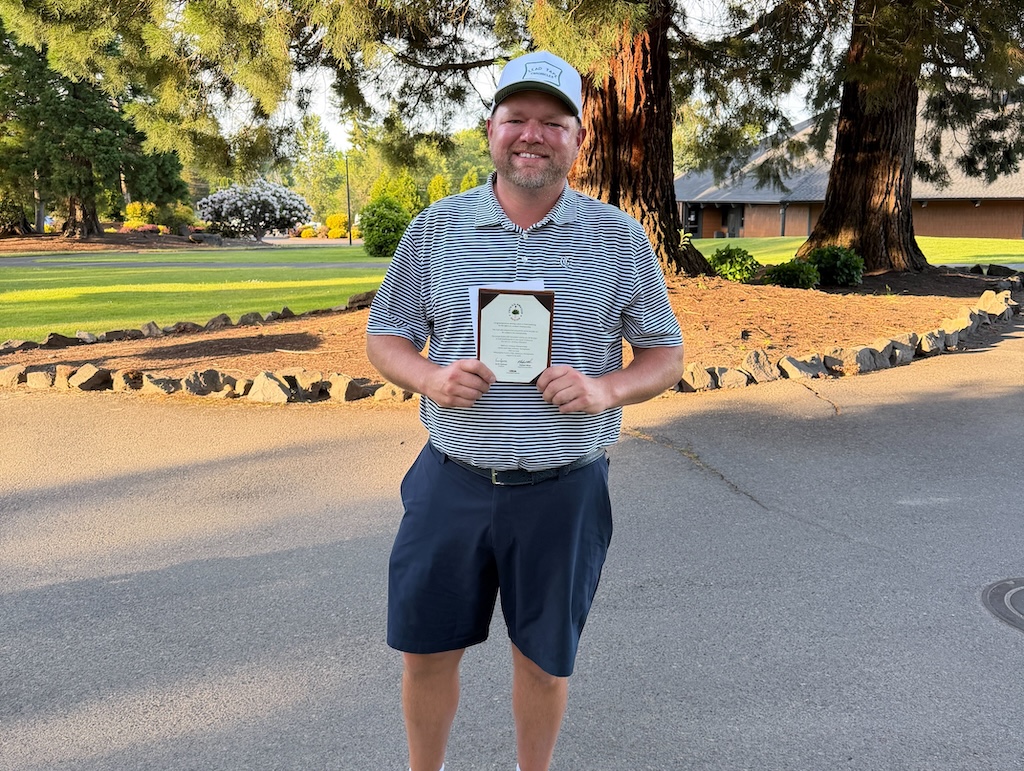
This past Monday, I played in the U.S. Amateur local qualifier at Rock Creek Country Club in Portland, Oregon. A full tee sheet from 7:30 a.m. to 1:55 p.m., the top 11 scores would make it to the U.S. Amateur final qualifying.
I teed off at 10:48 a.m.. With the 7:30 am tee time, you can get a feel for the leaders’ pace, and they were off and running on the challenging setup at Rock Creek.
View this post on Instagram
Getting to the highlight of the round on the par five 17th, a drive up the left side and 212 yards left to the front hole location. I took out a 5-iron with plans of middle of the green. The ball ended up 8 feet left of the hole, pin high. A slight downhill putt dropped in for an eagle 3 on the 17th. With the cut line looking to be anywhere from -2 to even par. This was the boost I had been waiting for all day.
With making par from the trees on 18, it was time to wait for a potential playoff with a posted score of one under par 71.
Three hours later, it was playoff time. 8 players for 6 spots. I made par on the playoff hole, which was good enough to advance to the U.S. Amateur final qualifying in July. USGA qualifiers sure deliver on all of the emotions in golf!
Club Junkie
Building my 2026 gamer WITB: Ranking the contenders and new putter projects – Club Junkie Podcast

The annual What’s In The Bag build is underway, and on this episode of Club Junkie, Brian breaks down the clubs currently leading the race for a spot in his 2026 gamer setup. From drivers and fairway woods to irons, wedges, and shafts, he ranks the equipment that’s performing best and explains what’s separating the front runners from the rest of the field.
Brian also heads into the workshop to discuss several putter projects currently on the bench. From head options and shaft choices to build ideas and testing plans, he shares what he’s working on and which putters could become serious contenders for the bag this season.
If you’re a gear junkie who loves equipment testing, club building, and the never-ending pursuit of the perfect setup, this episode is for you.
Follow Club Junkie:
Instagram: @clubjunkiepod
TikTok: @clubjunkiepod
Threads: @clubjunkiepod
X: @ClubJunkiePod
Club Junkie
Tour Edge Exotics mini driver review + TaylorMade Spider ZT Max first look – Club Junkie

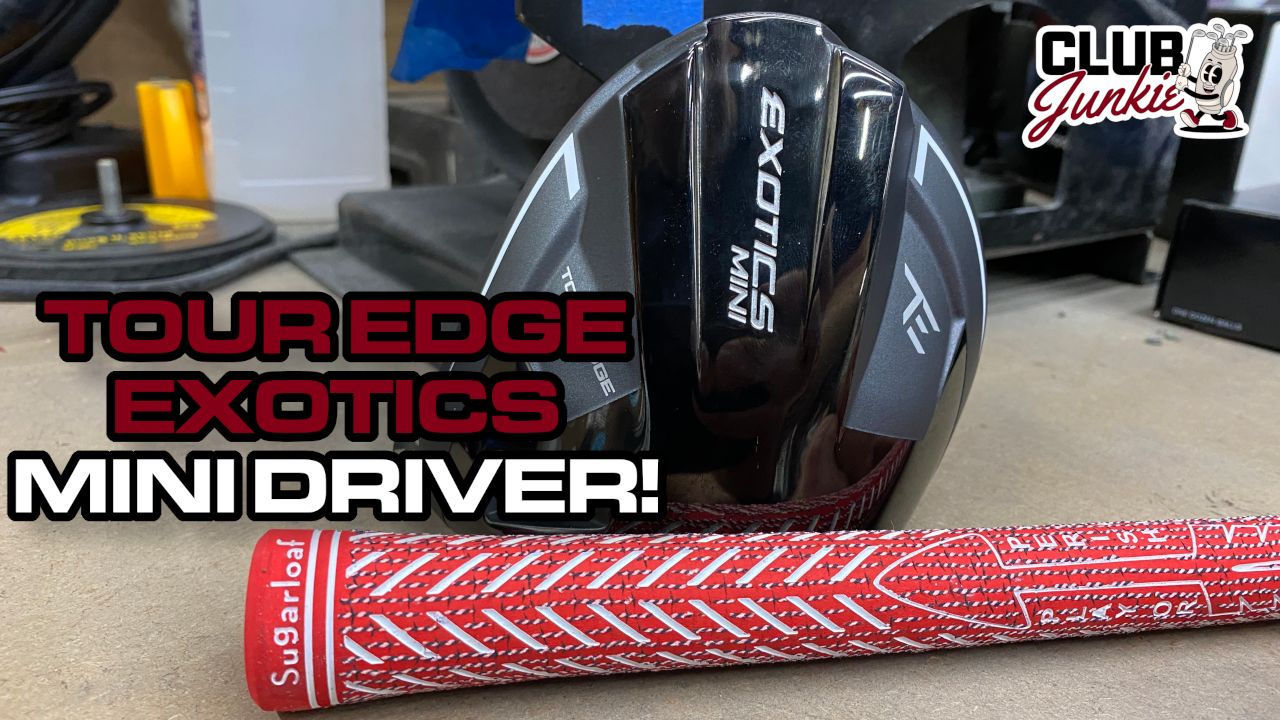
On this episode of Club Junkie, I put the new Tour Edge Exotics Mini Driver to the test and break down the performance, forgiveness, distance, and where it fits compared to a traditional driver or strong fairway wood. If you have been curious about adding a mini driver to the bag, this one is worth a look.
I also dive into the new TaylorMade Spider ZT Max putter that was recently spotted and discuss the growing zero torque putter trend. Plus, there is a closer look at the new Project X Titan Yellow shaft showing up on the PGA Tour and what makes it different from other profiles currently out there.

Justin Rose WITB 2026 (April): Full WITB breakdown with new McLaren irons

What’s the story behind Webb Simpson’s custom-stamped irons?

Memorial Tournament Tour Report: Rory McIlroy, Cameron Young switch up drivers, and more

Cadillac Championship Tour Report: Spieth’s sizable changes, McLaren Golf launches, and more

Russell Henley’s winning WITB: 2026 Charles Schwab Challenge

Kristoffer Reitan’s winning WITB: 2026 Truist Championship

J.T. Poston’s winning WITB: 2026 Memorial Tournament

Best irons 2026: Best irons overall, most forgiving irons, and more

Aaron Rai’s winning WITB: 2026 PGA Championship

Cameron Young’s winning WITB: 2026 Cadillac Championship


Bud Cauley WITB 2026 (June)
Bud Cauley had >14 clubs in his bag when photographed prior to the Memorial Tournament. Driver: Titleist GTS2 (8 degrees) Shaft: Fujikura...


Hannah Green WITB 2026 (June)
Driver: Titleist GTS3 (10 degrees, D4 SureFit setting) Shaft: Mitsubishi Chemical Diamana RB 53 S 3-wood: Titleist GT3 (15 degrees,...


Asterisk Talley WITB 2026 (June)
Driver: TaylorMade Qi4D (9 degrees) Shaft: Fujikura Ventus Blue 6 S 3-wood: TaylorMade Qi4D (16.5 degrees) Shaft: Fujikura Ventus Blue...

Brianna Do WITB 2026 (June)
Driver: Callaway Quantum Triple Diamond (9 degrees) Shaft: KBS PGW 3-wood: Callaway Elyte Titanium (15 degrees) Shaft: KBS PGW 5-wood:...
-
 Equipment6 days ago
Memorial Tournament Tour Report: Rory McIlroy, Cameron Young switch up drivers, and more
-
 News1 week ago
Russell Henley’s winning WITB: 2026 Charles Schwab Challenge
-
 Whats in the Bag3 days ago
J.T. Poston’s winning WITB: 2026 Memorial Tournament
-
 Equipment3 days ago
Best irons 2026: Best irons overall, most forgiving irons, and more
-
 Equipment1 week ago
Details on Jason Day’s latest prototype Avoda iron setup
-
 Equipment3 weeks ago
CJ Cup Byron Nelson Tour Report: Koepka and Kim’s newest putters finally get hot
-

 News2 weeks ago
Charles Schwab Challenge Tour Report: MacIntyre, Åberg and Spaun all switch putters, TaylorMade launches new Spider
-
 Equipment2 weeks ago
Details on J.J. Spaun’s surprise putter switch


Thomas Horstmann
May 26, 2023 at 9:25 am
I think this has merit. Now how can we get a Park Golf course established in Poeira, IL We have the Peoria Park District with at least one or two regular golf courses that are no longer used. They are in beautiful park settings and could be easily established.
Pat
Apr 25, 2023 at 3:04 pm
Nope
jgpl001
Apr 24, 2023 at 5:44 am
The word “Craze” says it all, it is ABSOLUTE nonsense, end of
Schteve
Apr 22, 2023 at 8:08 am
This look awful, but is good for millenials.
Crashtestdummy
Apr 21, 2023 at 3:18 am
It looks fun and Might be entertaining every once in a while, but it definitely won’t motivate me to play and practice regularly. I’m addicted to golf. Lol.
John
Apr 20, 2023 at 2:26 pm
Looks like Yolf I’ve seen on a couple sites. Thought it may be some fun playing with my granddaughter.
U
Apr 20, 2023 at 1:18 pm
The PGA in the US will never allow this to take over as it will ruin their bottom line as their real courses and golf equipment shops. It will have to be done on its own as a separate sport and business away from the PGA if it is to succeed in the US.
Rick
Apr 20, 2023 at 11:35 am
I would like to see about 3/4 of the people on regular golf courses play this instead. Golf is hard, and they are just clogging up the courses for us!
Rascal
Apr 24, 2023 at 10:35 pm
This is what foot golf should have been imo