
Opinion & Analysis
The Wedge Guy: Anatomy of a wedge head


In last week’s post, I dissected the wedge into its relative component parts to explore what really makes a wedge work. Like any golf club, wedges are a combination of components – head, shaft and grip – assembled to a certain set of specifications for length, overall weight, shaft flex, lie angle, swingweight, etc. And like any other golf clubs, if any of these components or specifications are not right for an individual golfer, performance will suffer. What’s amazing to me in my 30-plus years of studying wedge performance and the wedge category as a business and golfers’ relationships with their wedges is how little attention this “stepchild in the bag” gets from the top down.
I realize that “stepchild” moniker is pretty tough, but an objective review of wedge designs and models over the past five decades shows this category is the least evolved of the entire golf equipment industry. And as I have taken sneak peeks into golfers’ bags for over 40 years, I’m constantly amazed at how mis-matched and ill-suited most of their wedge set make-ups really are. But back to my observation of five decades of golf equipment evolution.
Over that period, we’ve seen drivers evolve from persimmon to the original metal woods, to Big Bertha-sized heads, to the current 460cc standard, to adjustable hosels, to composite construction, adjustable weights, high MOI, and ever-increasing technologies to make faces faster and faster.
Fairway “wood” technology has essentially kept pace with drivers.
Iron designs have evolved from one piece forged blades and a smattering of very simple perimeter weighted designs to the modern multi-piece marvels that deliver ever-increasing distance, higher ball flight and much more forgiveness.
And hybrids came out of nowhere only 20 years ago and now have achieved what must be 100% adoption by golfers at all skill levels.
Maybe the putter category has been the most changed of all. The Ping Anser and all its copies replaced the Bullseye and 8802-style blades almost overnight. Mallets got ever larger and delivered a higher MOI than had been thought possible. Face-balancing, lie angle balancing and other technologies have never stopped evolving. Milled manufacturing, various face inserts, broomstick, armlock, belly putters…the variety in the category is staggering.
But what about the old bottom-of-the bag wedges? Compared to these other categories, most models of wedges in the stores today are not all that different from wedge designs as far back as the 1960s. A simple, one-piece head, either forged or cast into shape, with the only serious attention having been given to CNC-milling of grooves to exact specifications and the creation of a practically endless selection of specialized grinds. And when you tear them down to shaping, one brand pretty much looks like another…and they all pretty much work the same, too.
In reality, wedge performance is not all that different from that of any other golf club category.
The exact distribution of the 290-300 grams of mass in the clubhead is what determines ball flight performance, i.e. trajectory, overall distance, spin and forgiveness. Wedges are not immune to the “laws” of golf club design:
- Weight low in the clubhead produces higher ball flight with minimal spin.
- Lack of mass behind off-center hits reduces the smash factor and therefore distance is lost and spin is reduced.
While wedges were mostly unchanged – except for graphics and finish – from the 1980s to the early 2010s, almost all manufacturers have begun to migrate a slight bit of mass higher in the clubhead over the last couple of generations. Look at the offerings from all major brands and you can see this, and you can see that they are all still almost just alike.
This modest movement of mass puts a slight bit more “oomph” behind that shot hit a bit higher in the face, but moving as little mass as most have done really doesn’t do all that much, but it does help a little.
 This image illustrates just how much different the thickness is in the typical mainstream wedge head design from the lower part of the face to the upper 2/3. Elite players have learned how to consistently (but not always) make contact between the 2nd and 5th grooves (A), so that the amount of mass behind and above the point of impact is optimized. But even those players occasionally catch one a bit higher (B) and the result is that smash factor is reduced by up to 20%, and the ball pops up higher and doesn’t fly as far or with as much spin.
When you see a tour professional come up 3o to 50 or more feet short in wedge range, understand they just do NOT misjudge their swings by that much. No, those shots happen when they miss that low-face impact point by as little as a quarter inch . . . because that result is built into the clubhead itself and the laws of golf club physics do not know who the golfer is. High-face impact causes serious impact degradation for anyone.
It really is that simple…and that challenging. If you really want to change wedge performance, you simply have to significantly change your wedges…not just the brand, but the clubhead design, shaft and specifications must be optimized.
And that’s what has been keeping me up nights for over 30 years…




This past Monday, I played in the U.S. Amateur local qualifier at Rock Creek Country Club in Portland, Oregon. A full tee sheet from 7:30 a.m. to 1:55 p.m., the top 11 scores would make it to the U.S. Amateur final qualifying.
I teed off at 10:48 a.m.. With the 7:30 am tee time, you can get a feel for the leaders’ pace, and they were off and running on the challenging setup at Rock Creek.
View this post on Instagram
Getting to the highlight of the round on the par five 17th, a drive up the left side and 212 yards left to the front hole location. I took out a 5-iron with plans of middle of the green. The ball ended up 8 feet left of the hole, pin high. A slight downhill putt dropped in for an eagle 3 on the 17th. With the cut line looking to be anywhere from -2 to even par. This was the boost I had been waiting for all day.
With making par from the trees on 18, it was time to wait for a potential playoff with a posted score of one under par 71.
Three hours later, it was playoff time. 8 players for 6 spots. I made par on the playoff hole, which was good enough to advance to the U.S. Amateur final qualifying in July. USGA qualifiers sure deliver on all of the emotions in golf!
Club Junkie
Building my 2026 gamer WITB: Ranking the contenders and new putter projects – Club Junkie Podcast

The annual What’s In The Bag build is underway, and on this episode of Club Junkie, Brian breaks down the clubs currently leading the race for a spot in his 2026 gamer setup. From drivers and fairway woods to irons, wedges, and shafts, he ranks the equipment that’s performing best and explains what’s separating the front runners from the rest of the field.
Brian also heads into the workshop to discuss several putter projects currently on the bench. From head options and shaft choices to build ideas and testing plans, he shares what he’s working on and which putters could become serious contenders for the bag this season.
If you’re a gear junkie who loves equipment testing, club building, and the never-ending pursuit of the perfect setup, this episode is for you.
Follow Club Junkie:
Instagram: @clubjunkiepod
TikTok: @clubjunkiepod
Threads: @clubjunkiepod
X: @ClubJunkiePod
Club Junkie
Tour Edge Exotics mini driver review + TaylorMade Spider ZT Max first look – Club Junkie

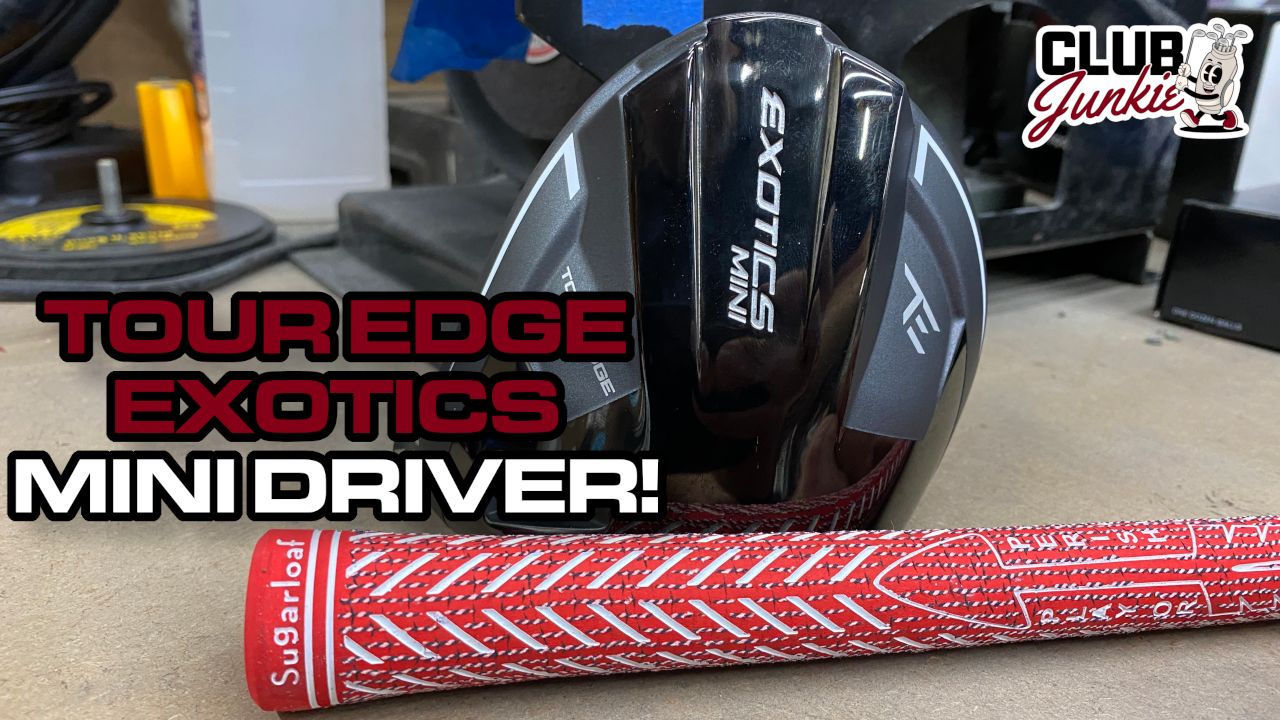
On this episode of Club Junkie, I put the new Tour Edge Exotics Mini Driver to the test and break down the performance, forgiveness, distance, and where it fits compared to a traditional driver or strong fairway wood. If you have been curious about adding a mini driver to the bag, this one is worth a look.
I also dive into the new TaylorMade Spider ZT Max putter that was recently spotted and discuss the growing zero torque putter trend. Plus, there is a closer look at the new Project X Titan Yellow shaft showing up on the PGA Tour and what makes it different from other profiles currently out there.

Justin Rose WITB 2026 (April): Full WITB breakdown with new McLaren irons

What’s the story behind Webb Simpson’s custom-stamped irons?

Memorial Tournament Tour Report: Rory McIlroy, Cameron Young switch up drivers, and more

Cadillac Championship Tour Report: Spieth’s sizable changes, McLaren Golf launches, and more

Russell Henley’s winning WITB: 2026 Charles Schwab Challenge

Kristoffer Reitan’s winning WITB: 2026 Truist Championship

Aaron Rai’s winning WITB: 2026 PGA Championship

J.T. Poston’s winning WITB: 2026 Memorial Tournament

Best irons 2026: Best irons overall, most forgiving irons, and more

Cameron Young’s winning WITB: 2026 Cadillac Championship


Bud Cauley WITB 2026 (June)
Bud Cauley had >14 clubs in his bag when photographed prior to the Memorial Tournament. Driver: Titleist GTS2 (8 degrees) Shaft: Fujikura...


Hannah Green WITB 2026 (June)
Driver: Titleist GTS3 (10 degrees, D4 SureFit setting) Shaft: Mitsubishi Chemical Diamana RB 53 S 3-wood: Titleist GT3 (15 degrees,...


Asterisk Talley WITB 2026 (June)
Driver: TaylorMade Qi4D (9 degrees) Shaft: Fujikura Ventus Blue 6 S 3-wood: TaylorMade Qi4D (16.5 degrees) Shaft: Fujikura Ventus Blue...

Brianna Do WITB 2026 (June)
Driver: Callaway Quantum Triple Diamond (9 degrees) Shaft: KBS PGW 3-wood: Callaway Elyte Titanium (15 degrees) Shaft: KBS PGW 5-wood:...
-
 Equipment6 days ago
Memorial Tournament Tour Report: Rory McIlroy, Cameron Young switch up drivers, and more
-
 News1 week ago
Russell Henley’s winning WITB: 2026 Charles Schwab Challenge
-
 Whats in the Bag3 days ago
J.T. Poston’s winning WITB: 2026 Memorial Tournament
-
 Equipment3 days ago
Best irons 2026: Best irons overall, most forgiving irons, and more
-

 Equipment1 week ago
Details on Jason Day’s latest prototype Avoda iron setup
-
 Equipment3 weeks ago
CJ Cup Byron Nelson Tour Report: Koepka and Kim’s newest putters finally get hot
-

 News2 weeks ago
Charles Schwab Challenge Tour Report: MacIntyre, Åberg and Spaun all switch putters, TaylorMade launches new Spider
-
 Equipment2 weeks ago
Details on J.J. Spaun’s surprise putter switch


Pingback: The Wedge Guy: Are you really willing to get better at golf? – GolfWRX