
Opinion & Analysis
The Wedge Guy: Building a stronger golf swing

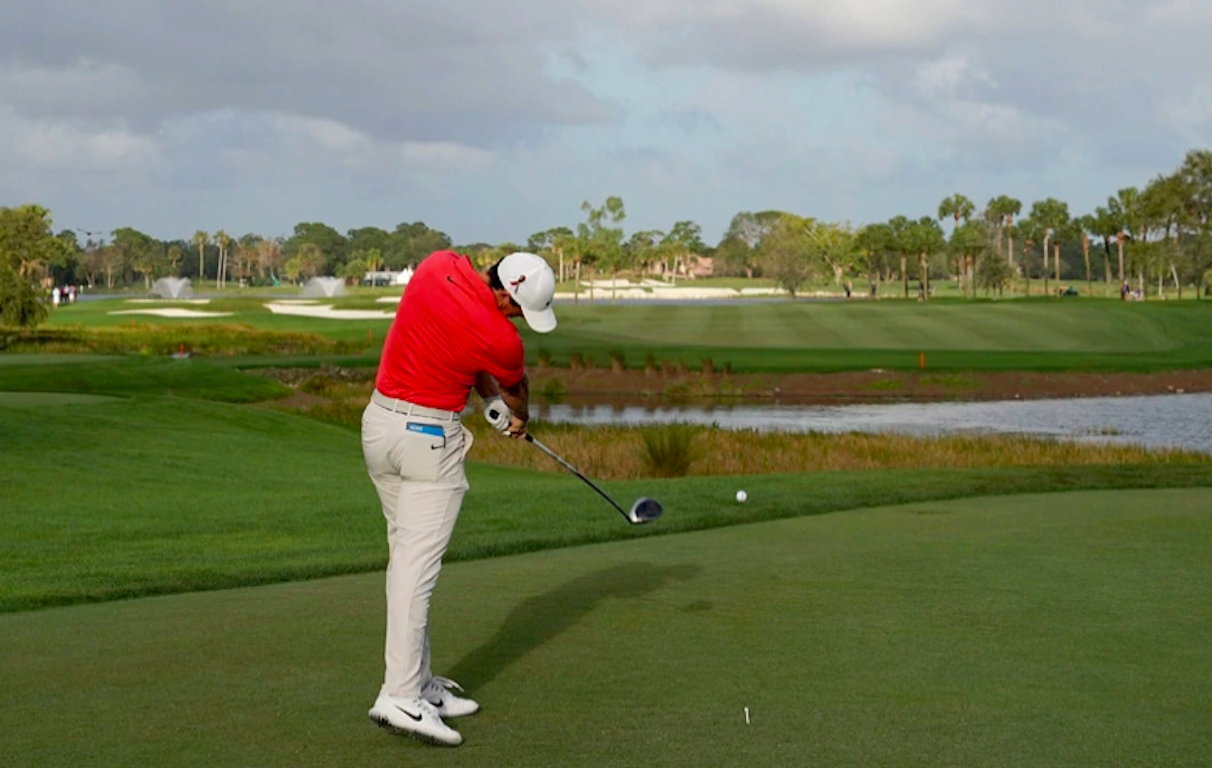
Golf fitness has become a pretty big topic over the past few years, and not just for the guys and ladies on the professional tours. There are plenty of articles, blogs, podcasts and products totally focused on getting your body golf-ready.
As we all age, of course, we naturally lose muscle tone and strength, but also flexibility. For the most part, our culture puts most of us in jobs that are relatively “movement-free” in that much of our days are spent behind a desk and sitting. Neither are very good for your golf game.
If your best golf is important to you, there is no question that improving your flexibility and building stronger, faster muscles can help you become a better player, but there is definitely a right and wrong way to do that. In golf, we don’t really care about conventional muscle strength, such as that required to lift heavy weights. After all, a golf club weights much less than a pound. What we are after in golf conditioning is S-P-E-E-D and endurance. We want our muscles to be of a quick-fire capability and we must do that within a framework of flexibility and range of motion. A strong and powerful golf swing requires a full range of motion and very precise and coordinated movements of the body core, arms and hands/wrists. The faster you can do this, the more clubhead speed you develop – it’s really THAT simple.
Let me begin by stating my opinion on distance. Unless you are playing a driver that’s over 4-5 years old, significantly more distance is not likely for sale in the driver rack. The same goes for the iron selection.
The secret to more distance lies in improving your quality of contact and strength training. The simple fact is that better fundamentals come through instruction and practice. And here are my top five workouts to help you build more clubhead speed:
• Stretching. This applies to all golfers but particularly, but us older guys and girls would benefit greatly by daily stretching to improve our golf power. Of particular importance are the torso muscles and the large muscles in the legs and shoulders. Read up on this subject and you’ll find a wealth of information on stretching exercises specifically designed for the golf swing. A few minutes a day can make a world of difference pretty quickly.
• Core Training. Strengthening the big muscles of the body core is hugely beneficial to golf swing power. But, as I mentioned, what you are after is S-P-E-E-D, not brute strength. And again, there are a number of published exercise routines and techniques for achieving a stronger body core. An internet search will keep you reading and learning for hours.
• “Off Side” Strength. The golf swing has to be led by a strong “front side” pull, and that means we have to rely on our “off” hand for power. For right handed people, that means you should bias your strength training to your left side so that it can achieve more of a balance. I like to do this with a weighted club (there are many on the market), and swing it left side only to build that pull-through power.
• Release Strength. The “secret” power move in the golf swing is a strong rotation of the hands and forearms through the impact zone. The wrists do not create power in the swing by unhinging – they do it by rotating the club through impact in sync with the rotation of the body core. It does no good to develop core rotational speed if your hand rotation cannot keep up. Conversely, of course, fast hands with a slow body core will be limited in power as well. You can keep a light dumbbell in your office and/or living room to do simple rotation exercises while you are on the phone or watching TV. It WILL pay off.
• Golf Swing Speed. This has become a hot topic in golf fitness and there are several very good speed trainers out there. As I mentioned, there is no better golf swing strengthening exercise than to swing a weighted club. But go with the lighter ones and make your workout one of more and faster reps with less weight. Heavier weights and less reps build big muscles and lead to more fatigue and post-workout soreness and recovery. You don’t want that. Fifty to a hundred swings every afternoon/morning with one of these speed trainers will work wonders. And while you’re doing those, focus on your fundamentals – posture, grip, extension back and through, rotation through impact – the things that will build power and distance.
So, there you have my top five ways to improve your distance through the bag, while also actively combatting the natural effects of getting older. If golf is important to you, isn’t it worth giving your “golf health” a few minutes a day?







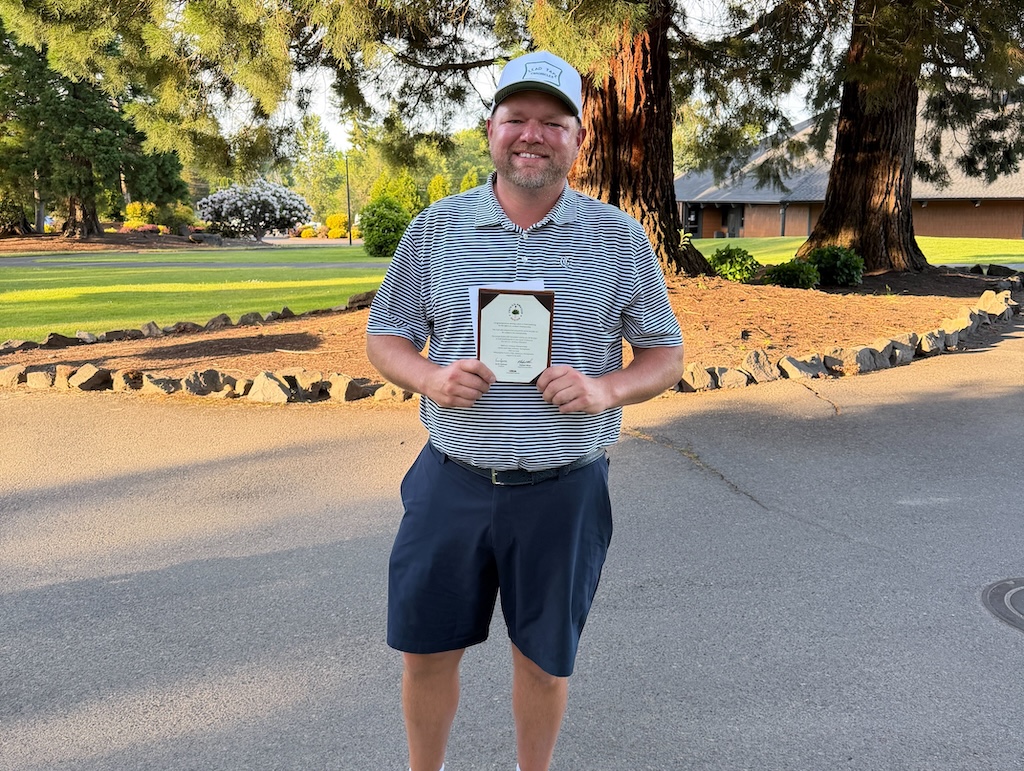
This past Monday, I played in the U.S. Amateur local qualifier at Rock Creek Country Club in Portland, Oregon. A full tee sheet from 7:30 a.m. to 1:55 p.m., the top 11 scores would make it to the U.S. Amateur final qualifying.
I teed off at 10:48 a.m.. With the 7:30 am tee time, you can get a feel for the leaders’ pace, and they were off and running on the challenging setup at Rock Creek.
View this post on Instagram
Getting to the highlight of the round on the par five 17th, a drive up the left side and 212 yards left to the front hole location. I took out a 5-iron with plans of middle of the green. The ball ended up 8 feet left of the hole, pin high. A slight downhill putt dropped in for an eagle 3 on the 17th. With the cut line looking to be anywhere from -2 to even par. This was the boost I had been waiting for all day.
With making par from the trees on 18, it was time to wait for a potential playoff with a posted score of one under par 71.
Three hours later, it was playoff time. 8 players for 6 spots. I made par on the playoff hole, which was good enough to advance to the U.S. Amateur final qualifying in July. USGA qualifiers sure deliver on all of the emotions in golf!
Club Junkie
Building my 2026 gamer WITB: Ranking the contenders and new putter projects – Club Junkie Podcast

The annual What’s In The Bag build is underway, and on this episode of Club Junkie, Brian breaks down the clubs currently leading the race for a spot in his 2026 gamer setup. From drivers and fairway woods to irons, wedges, and shafts, he ranks the equipment that’s performing best and explains what’s separating the front runners from the rest of the field.
Brian also heads into the workshop to discuss several putter projects currently on the bench. From head options and shaft choices to build ideas and testing plans, he shares what he’s working on and which putters could become serious contenders for the bag this season.
If you’re a gear junkie who loves equipment testing, club building, and the never-ending pursuit of the perfect setup, this episode is for you.
Follow Club Junkie:
Instagram: @clubjunkiepod
TikTok: @clubjunkiepod
Threads: @clubjunkiepod
X: @ClubJunkiePod
Club Junkie
Tour Edge Exotics mini driver review + TaylorMade Spider ZT Max first look – Club Junkie

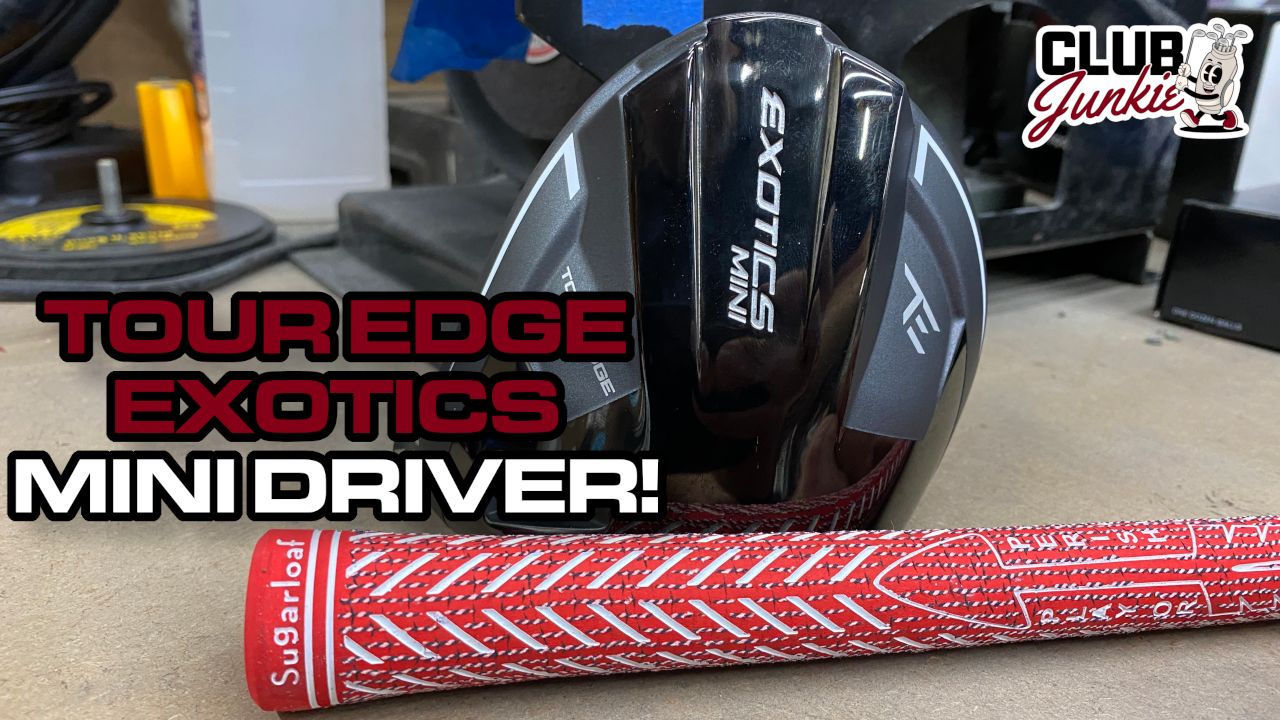
On this episode of Club Junkie, I put the new Tour Edge Exotics Mini Driver to the test and break down the performance, forgiveness, distance, and where it fits compared to a traditional driver or strong fairway wood. If you have been curious about adding a mini driver to the bag, this one is worth a look.
I also dive into the new TaylorMade Spider ZT Max putter that was recently spotted and discuss the growing zero torque putter trend. Plus, there is a closer look at the new Project X Titan Yellow shaft showing up on the PGA Tour and what makes it different from other profiles currently out there.

Justin Rose WITB 2026 (April): Full WITB breakdown with new McLaren irons

What’s the story behind Webb Simpson’s custom-stamped irons?

Memorial Tournament Tour Report: Rory McIlroy, Cameron Young switch up drivers, and more

Cadillac Championship Tour Report: Spieth’s sizable changes, McLaren Golf launches, and more

Russell Henley’s winning WITB: 2026 Charles Schwab Challenge

Kristoffer Reitan’s winning WITB: 2026 Truist Championship

Aaron Rai’s winning WITB: 2026 PGA Championship

J.T. Poston’s winning WITB: 2026 Memorial Tournament

Best irons 2026: Best irons overall, most forgiving irons, and more

Cameron Young’s winning WITB: 2026 Cadillac Championship


Bud Cauley WITB 2026 (June)
Bud Cauley had >14 clubs in his bag when photographed prior to the Memorial Tournament. Driver: Titleist GTS2 (8 degrees) Shaft: Fujikura...


Hannah Green WITB 2026 (June)
Driver: Titleist GTS3 (10 degrees, D4 SureFit setting) Shaft: Mitsubishi Chemical Diamana RB 53 S 3-wood: Titleist GT3 (15 degrees,...


Asterisk Talley WITB 2026 (June)
Driver: TaylorMade Qi4D (9 degrees) Shaft: Fujikura Ventus Blue 6 S 3-wood: TaylorMade Qi4D (16.5 degrees) Shaft: Fujikura Ventus Blue...

Brianna Do WITB 2026 (June)
Driver: Callaway Quantum Triple Diamond (9 degrees) Shaft: KBS PGW 3-wood: Callaway Elyte Titanium (15 degrees) Shaft: KBS PGW 5-wood:...
-
 Equipment6 days ago
Memorial Tournament Tour Report: Rory McIlroy, Cameron Young switch up drivers, and more
-
 News1 week ago
Russell Henley’s winning WITB: 2026 Charles Schwab Challenge
-
 Whats in the Bag3 days ago
J.T. Poston’s winning WITB: 2026 Memorial Tournament
-
 Equipment3 days ago
Best irons 2026: Best irons overall, most forgiving irons, and more
-

 Equipment1 week ago
Details on Jason Day’s latest prototype Avoda iron setup
-
 Equipment3 weeks ago
CJ Cup Byron Nelson Tour Report: Koepka and Kim’s newest putters finally get hot
-

 News2 weeks ago
Charles Schwab Challenge Tour Report: MacIntyre, Åberg and Spaun all switch putters, TaylorMade launches new Spider
-

 Equipment2 weeks ago
Details on J.J. Spaun’s surprise putter switch


Bob Jones
Nov 21, 2022 at 10:52 am
Regarding wrist rotation. The wrists are not built to rotate. They can hinge in the X-axis and Y-axis, but they cannot rotate in the Z-axis. It is the forearms that rotate and the wrists and hands follow. This is not a trivial distinction, and it is not a matter of opinion. It is basic functional human anatomy. Actively rotating the forearms in the golf swing means the rotation has be perfectly timed for the clubhead to be square at impact. Without LOTS of practice this is hard to do, and even then there will be days when it just doesn’t work. All rotation in the golf swing should occur in the shoulder joints.
Paul Runyan
Nov 20, 2022 at 4:21 pm
I work out with a Swing Emulator and have for years.
Basically it’s a weight stack of plates of 10 to 100 pounds.
You can adjust it for height, arm length, length of swing and Swing Plane.
3 sets of 15 at 40 lbs is harder than it looks. And l, do it barefooted to feel the pressure in the feet and toes! One arm swings and opposite swings aren’t a picnic either. BUT!…
At age 65 my Swing speed was around 115. I used to push it to 80 lbs but backed off to 40 and 50 pounds. I still can get the club to parallel at age 70. Not bad.
I agree with the author, 90% of it, but for older players, pushing heavy weights can have a diminishing return and too much rest is needed especially after the 2nd day of using this machine. I’d rather go lighter and play more golf.
I can usually out drive most senior and younger guys and have but what’s the point if you can’t putt or have a short game!!
My drivers are optimized for me and I use standard Mizuno irons, Mizuno Mp 69 and JPX 921 Tours. Switched over to lighter LPGA iron shafts, 950 gh and wondering why I didn’t do this 10 years earlier!
Josh
Nov 4, 2022 at 2:59 pm
Wow….I have respect for Terry and think he is a wealth of knowledge on many things. Strength and conditioning, however, is not one of them. To build a “stronger swing” and increase club head speed, the golfer needs to increase strength by lifting weights heavier than they are used to lifting. All he said was you need some strength, but not “brute” strength. This is extremely vague. The golf club may not be that heavy when it is static, bit when you are moving it 80-100 mph, it becomes a LOT HEAVIER and you need to be strong to handle that speed, otherwise injuries occur. Terry, take a look at the longest hitters in the world…do you think they go into the gym and say to themselves “I don’t need any brute strength”?
sjn
Nov 3, 2022 at 7:07 pm
fifty to 100 hubdered swings every day wtih speed trainers? the only thing you will pick up like that is injuries .
sjn
Nov 5, 2022 at 9:24 am
LOL should read what I type ; should ’50 to 100 faast swings every day’ . 20/30 max twice or thre times a week is plenty , and only then if you you are strong and fexible.
Chip2win
Nov 3, 2022 at 6:38 am
Strength=SPEED. You need to be strong to hit it long. ?