
Opinion & Analysis
The Wedge Guy: Just what can a golf club do?


Not to bemoan the subject, but I’ve been in somewhat of a slump lately, and that provided the inspiration for this week’s post.
My slump is a peculiar one, in that I’m driving the ball as well as ever, hitting lots of fairways and getting my fair share of distance. But my iron play – usually a strength of my game – has gone sour. So bad, that one of my regular playing buddies offered his suggestion that maybe it was time to ditch my old Ben Hogan FT. Worth 15 blades for a more forgiving set of irons.
I didn’t choose to get into this explanation with him, but thought it was well worth some time invested in this week’s post. If you are thinking about purchasing any new clubs – whether driver, fairways, hybrids, irons or wedges (I’ll leave putters for a separate conversation) – I believe you should start the process by accurately and honestly defining exactly what it is that you are seeking to “fix” with this new purchase.
I see some golf club advertising in the wedge category, for example, that claims this certain product can lead to “no more chunks or skulls.” The fact is . . . that is impossible. With the possible exception of the putter category, the mere changing of a golf club head design has absolutely ZERO effect on the quality of impact with the ball.
All golf clubhead technology for the past 60-plus years has been focused on two essential goals – to make the ball leave the club faster and/or higher, and to mitigate the loss of impact efficiency as ball contact is made other than on the ideal “sweet spot”.
On that subject, every golf club has a single pin-point spot on the face where energy transfer will be optimized. And no matter whether it is a driver, hybrid, iron or wedge, ball impact elsewhere on the face will result in a reduced smash factor, or transfer of clubhead speed to ball speed. In most club categories, the engineers are always focused on how to minimize that loss of smash factor, so that your “less than perfect” shots can be more acceptable and playable.
But here’s the kicker.
The ball can only react to how that clubface is delivered at impact – clubhead speed, path and face angle, and the point of impact on the face – and the golf club designer can only do so much within those parameters.
For example, a face that is open at impact will cause the ball to fly to the right and probably higher (for a right-hand player), and one that is hooded and/or closing through impact will make it go left and lower. All the technology in the world won’t change that. Likewise, for those shots hit fat or “in the forehead”, it really doesn’t matter what the clubhead design is like.
But a shot hit with a square clubface, approaching the ball on a solid path, but slightly missing the sweet spot, can certainly be helped by improved clubhead technology.
However, my observation of thousands of golf shots of my own and hit by my golf buddies over the many years in this game reveals this simple fact of our crazy game.
The vast majority of bad golf shots cannot be helped by golf club technology, as they are the result of bad swing mechanics, not inferior clubhead design. Those mechanics are mostly influenced by the golfer’s grip on the club and his or her pathway through impact. And for those of us who have hit thousands of golf shots over many years, it quite often boils down to poor mental work leading up to the swing.
This sounds like a crazy “reveal” by someone who has made a living for forty years designing and marketing golf clubs, doesn’t it? Yes, I have spent the better part of four decades working to make golf clubs work better, whether it was the hundred-plus putters I’ve designed, two sets of irons or the dozens of wedges I’ve created. I’m very proud of that body of work, as I’ve always been able to improve each generation of design.
That all said, however, I’m convinced most poor golf shots are pre-ordained before the club is ever taken into the backswing, and no amount of golf club technology will ever change that. The pathway to better and more consistent golf will always begin with improving your fundamentals, starting with your grip and posture at address . . . developing sound swing mechanics . . . supported by a healthy, positive mental approach to each shot . . . and then having the right tools in your bag.
Oh, and back to my own slump? I’m recalling sage advice from my father, given to me so many, many years ago . . .
“There’s nothing wrong with your game, son, that another thousand practice balls won’t fix.”



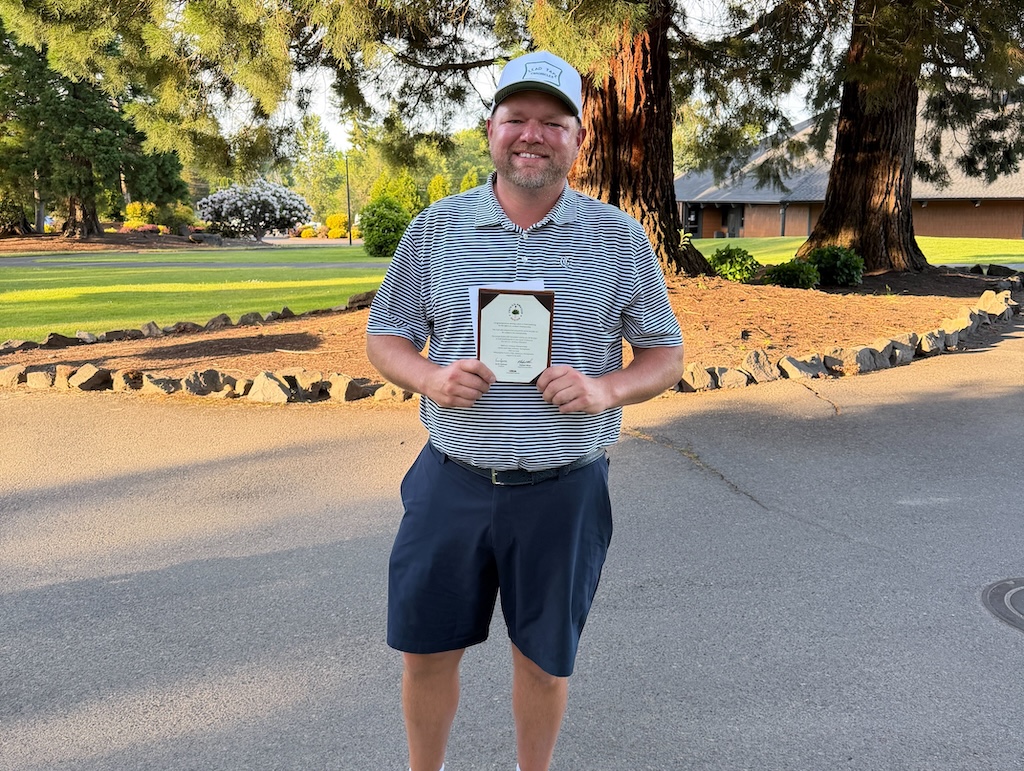
This past Monday, I played in the U.S. Amateur local qualifier at Rock Creek Country Club in Portland, Oregon. A full tee sheet from 7:30 a.m. to 1:55 p.m., the top 11 scores would make it to the U.S. Amateur final qualifying.
I teed off at 10:48 a.m.. With the 7:30 am tee time, you can get a feel for the leaders’ pace, and they were off and running on the challenging setup at Rock Creek.
View this post on Instagram
Getting to the highlight of the round on the par five 17th, a drive up the left side and 212 yards left to the front hole location. I took out a 5-iron with plans of middle of the green. The ball ended up 8 feet left of the hole, pin high. A slight downhill putt dropped in for an eagle 3 on the 17th. With the cut line looking to be anywhere from -2 to even par. This was the boost I had been waiting for all day.
With making par from the trees on 18, it was time to wait for a potential playoff with a posted score of one under par 71.
Three hours later, it was playoff time. 8 players for 6 spots. I made par on the playoff hole, which was good enough to advance to the U.S. Amateur final qualifying in July. USGA qualifiers sure deliver on all of the emotions in golf!
Club Junkie
Building my 2026 gamer WITB: Ranking the contenders and new putter projects – Club Junkie Podcast

The annual What’s In The Bag build is underway, and on this episode of Club Junkie, Brian breaks down the clubs currently leading the race for a spot in his 2026 gamer setup. From drivers and fairway woods to irons, wedges, and shafts, he ranks the equipment that’s performing best and explains what’s separating the front runners from the rest of the field.
Brian also heads into the workshop to discuss several putter projects currently on the bench. From head options and shaft choices to build ideas and testing plans, he shares what he’s working on and which putters could become serious contenders for the bag this season.
If you’re a gear junkie who loves equipment testing, club building, and the never-ending pursuit of the perfect setup, this episode is for you.
Follow Club Junkie:
Instagram: @clubjunkiepod
TikTok: @clubjunkiepod
Threads: @clubjunkiepod
X: @ClubJunkiePod
Club Junkie
Tour Edge Exotics mini driver review + TaylorMade Spider ZT Max first look – Club Junkie

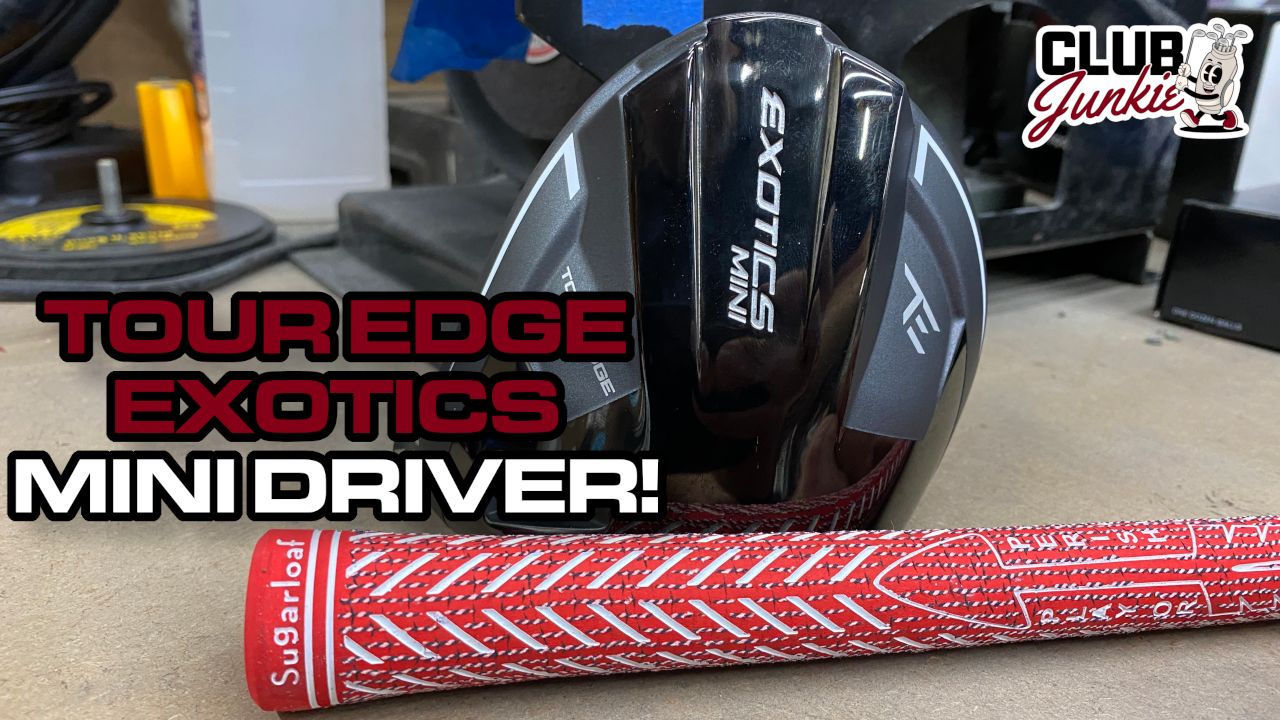
On this episode of Club Junkie, I put the new Tour Edge Exotics Mini Driver to the test and break down the performance, forgiveness, distance, and where it fits compared to a traditional driver or strong fairway wood. If you have been curious about adding a mini driver to the bag, this one is worth a look.
I also dive into the new TaylorMade Spider ZT Max putter that was recently spotted and discuss the growing zero torque putter trend. Plus, there is a closer look at the new Project X Titan Yellow shaft showing up on the PGA Tour and what makes it different from other profiles currently out there.

Justin Rose WITB 2026 (April): Full WITB breakdown with new McLaren irons

What’s the story behind Webb Simpson’s custom-stamped irons?

Memorial Tournament Tour Report: Rory McIlroy, Cameron Young switch up drivers, and more

Cadillac Championship Tour Report: Spieth’s sizable changes, McLaren Golf launches, and more

Russell Henley’s winning WITB: 2026 Charles Schwab Challenge

Kristoffer Reitan’s winning WITB: 2026 Truist Championship

Best irons 2026: Best irons overall, most forgiving irons, and more

J.T. Poston’s winning WITB: 2026 Memorial Tournament

Aaron Rai’s winning WITB: 2026 PGA Championship

Cameron Young’s winning WITB: 2026 Cadillac Championship


Ryan Palmer WITB 2026 (June)
Driver: Callaway Quantum Triple Diamond (9 degrees) Shaft: Project X HZRDUS Smoke Blue RDX 60 TX 3-wood: TaylorMade Qi10 (15 degrees) Shaft:...


Bud Cauley WITB 2026 (June)
Bud Cauley had >14 clubs in his bag when photographed prior to the Memorial Tournament. Driver: Titleist GTS2 (8 degrees) Shaft: Fujikura...


Hannah Green WITB 2026 (June)
Driver: Titleist GTS3 (10 degrees, D4 SureFit setting) Shaft: Mitsubishi Chemical Diamana RB 53 S 3-wood: Titleist GT3 (15 degrees,...


Asterisk Talley WITB 2026 (June)
Driver: TaylorMade Qi4D (9 degrees) Shaft: Fujikura Ventus Blue 6 S 3-wood: TaylorMade Qi4D (16.5 degrees) Shaft: Fujikura Ventus Blue...
-
 Equipment6 days ago
Memorial Tournament Tour Report: Rory McIlroy, Cameron Young switch up drivers, and more
-
 News2 weeks ago
Russell Henley’s winning WITB: 2026 Charles Schwab Challenge
-
 Equipment3 days ago
Best irons 2026: Best irons overall, most forgiving irons, and more
-
 Whats in the Bag4 days ago
J.T. Poston’s winning WITB: 2026 Memorial Tournament
-
 Equipment1 week ago
Details on Jason Day’s latest prototype Avoda iron setup
-
 Equipment3 weeks ago
CJ Cup Byron Nelson Tour Report: Koepka and Kim’s newest putters finally get hot
-

 News2 weeks ago
Charles Schwab Challenge Tour Report: MacIntyre, Åberg and Spaun all switch putters, TaylorMade launches new Spider
-
 Equipment2 weeks ago
Details on J.J. Spaun’s surprise putter switch


CG
Jul 6, 2022 at 5:35 pm
I’m going to disagree. As a person who spent several decades shooting in the 60’s every week (still hold one course record, a 61 at a course near my home), a few years ago I noticed a drop off in my iron play. After some reflection, I put the Mizunos down and went to a more forgiving club. (Taylormade Speedblades about 8-9 years ago). They’re a little bigger, a little lighter, launch a bit higher and yes, a bit stronger lofted. More mass and a bigger face means there’s less torque on shots not hit perfectly. They don’t feel as good as my forged irons (a bit harsh) but I hit more greens and more shots closer to the hole.
dave d
Jul 6, 2022 at 2:01 pm
Love this. I am an 8 hcp, have played for most of the last 25 years with a set of 1972 Hogan Apex blades I bought used for $35. Despite playing with other irons (e.g., Callaway x-12 Steelhead, Ping Eye 2, Mizuno modern blades, Ping iE1), my best tournament scores and lowest hcp periods have come with the 1972 Hogan blades.
I put the Ping iE1s in the bag early this season and thought I’d see my hcp drop 1-2 strokes based on improved results from marginal mishits. But I didn’t break 80 for two months…then put the Hogans back in the bag and broke 80 4x in the next few weeks.