
Opinion & Analysis
The Wedge Guy: Do irons really need to go longer?

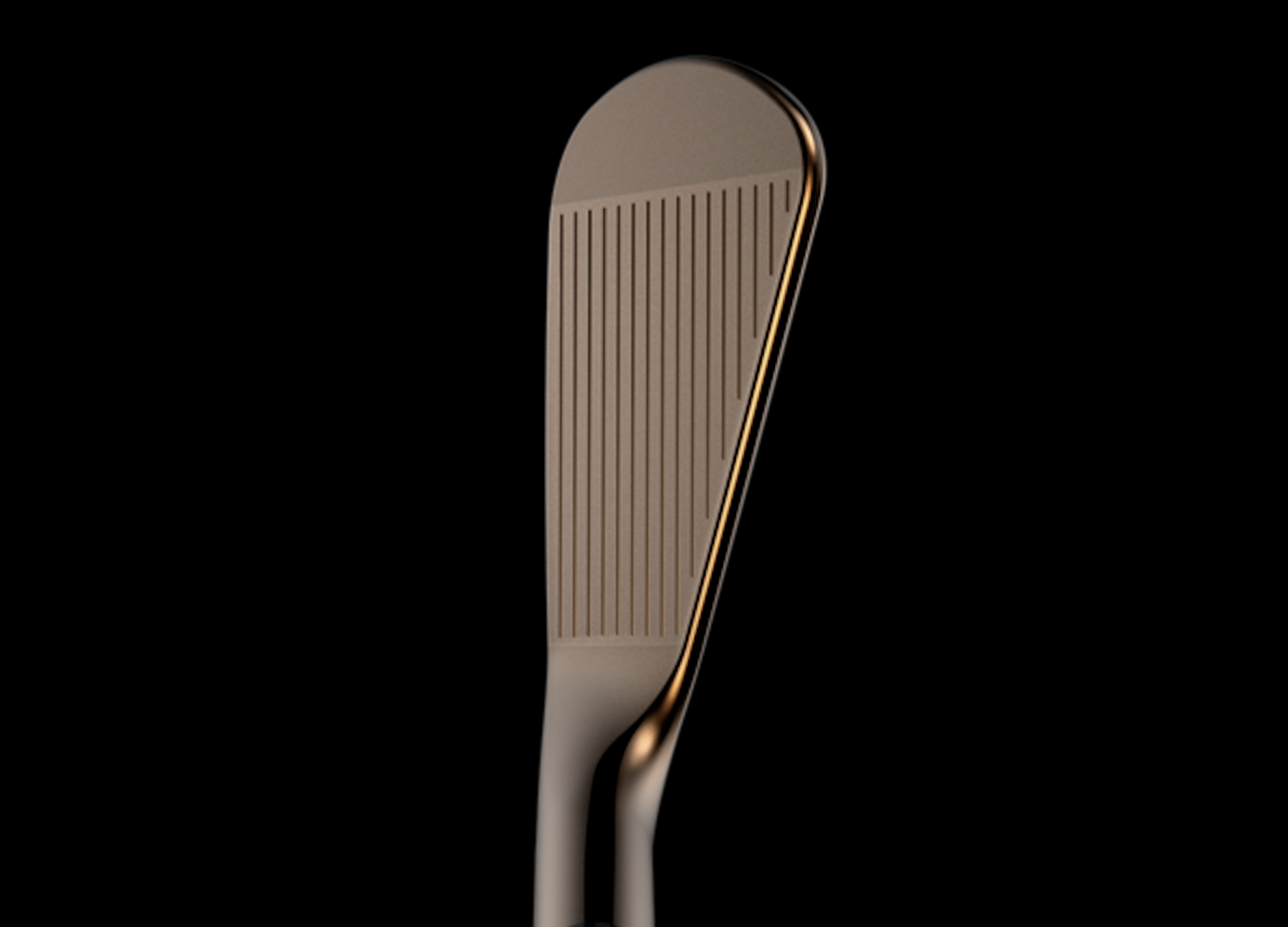
At Edison Golf, we put high emphasis on getting the right lofts in our customers bags to deliver precision distance gapping where distance control matters most – in prime scoring range. Our proprietary WedgeFit® Scoring Range Analysis helps us get there, and one of the key questions we ask is the loft of your current 9-iron and pitching wedge.
Please understand I have been collecting this type of data from wedge-fitting profiles for over 20 years, and now have seen over 60,000 of these. What’s interesting is to watch the evolution of the answers to those two questions. Twenty years ago, for example, the 9-iron and PW lofts would typically be around 42-43 degrees and 46-47 degrees, respectively. By 2010, those lofts had migrated downward to 40-41 degrees for the 9-iron and 44-45 for the “P-club”. (I began to call it that, because it’s just not a true “wedge” at that low of a loft.)
But how far are the irons makers going to take that lunacy? I see WedgeFit profiles now with “P-clubs” as low as 42-43 degrees and 9-irons five degrees less than that – 37-38 degrees. The big companies are getting there by incorporating mid-iron technologies – i.e. fast faces, multi-material, ultra-low CG, etc. – into the clubs where precision distance control is imperative.
Fans, you just cannot get precision distance control with those technologies.
But the real problem is that golfers aren’t being told this is what’s happening, so they are still wanting to buy “gap wedges” of 50-52 degrees, and that is leaving a huge distance gap in prime scoring range for most golfers.
So, to get to the title of this post, “Do Irons Really Need To Go Longer?” let’s explore the truth for most golfers.
Your new set of irons features these technologies and the jacked-up lofts that go with them, so now your “P-club” flies 125-130 instead of the 115-120 it used to go (or whatever your personal numbers are). But your 50- to 52-degree gap wedge still goes 95-100, so you just lost a club in prime scoring range. How is that going to help your scores?
Please understand I’m not trying to talk anyone out of a new set of irons, but I strongly urge you to understand the lofts and lengths of those new irons and make sure the fitter or store lets you hit the 9-iron and “P-club” on the launch monitor, as well as the 7-iron demo. That way you can see what impact those irons are going to have on your prime scoring range gapping.
But here’s something that also needs to get your close attention. In many of the new big-brand line-ups, the companies also offer their “tour” or “pro” model . . . and they are usually at least two degrees weaker and ¼ to 3/8 inch shorter than the “game improvement” models you are considering.
But really, how much sense does that make? The tour player, who’s bigger and stronger than you, plays irons that are shorter and easier to control than the model they are selling you. Hmm.
It’s kind of like drivers actually. On Iron Byron, the 46” driver goes further than the 45, so that’s what the stores are full of. But tour bags are full of drivers shorter than that 46-inch “standard”. So, if the tour player only hits 55-60% of his fairways with a 45” driver, how many are you going to hit with a 46?
I’m just sayin…




This past Monday, I played in the U.S. Amateur local qualifier at Rock Creek Country Club in Portland, Oregon. A full tee sheet from 7:30 a.m. to 1:55 p.m., the top 11 scores would make it to the U.S. Amateur final qualifying.
I teed off at 10:48 a.m.. With the 7:30 am tee time, you can get a feel for the leaders’ pace, and they were off and running on the challenging setup at Rock Creek.
View this post on Instagram
Getting to the highlight of the round on the par five 17th, a drive up the left side and 212 yards left to the front hole location. I took out a 5-iron with plans of middle of the green. The ball ended up 8 feet left of the hole, pin high. A slight downhill putt dropped in for an eagle 3 on the 17th. With the cut line looking to be anywhere from -2 to even par. This was the boost I had been waiting for all day.
With making par from the trees on 18, it was time to wait for a potential playoff with a posted score of one under par 71.
Three hours later, it was playoff time. 8 players for 6 spots. I made par on the playoff hole, which was good enough to advance to the U.S. Amateur final qualifying in July. USGA qualifiers sure deliver on all of the emotions in golf!
Club Junkie
Building my 2026 gamer WITB: Ranking the contenders and new putter projects – Club Junkie Podcast

The annual What’s In The Bag build is underway, and on this episode of Club Junkie, Brian breaks down the clubs currently leading the race for a spot in his 2026 gamer setup. From drivers and fairway woods to irons, wedges, and shafts, he ranks the equipment that’s performing best and explains what’s separating the front runners from the rest of the field.
Brian also heads into the workshop to discuss several putter projects currently on the bench. From head options and shaft choices to build ideas and testing plans, he shares what he’s working on and which putters could become serious contenders for the bag this season.
If you’re a gear junkie who loves equipment testing, club building, and the never-ending pursuit of the perfect setup, this episode is for you.
Follow Club Junkie:
Instagram: @clubjunkiepod
TikTok: @clubjunkiepod
Threads: @clubjunkiepod
X: @ClubJunkiePod
Club Junkie
Tour Edge Exotics mini driver review + TaylorMade Spider ZT Max first look – Club Junkie

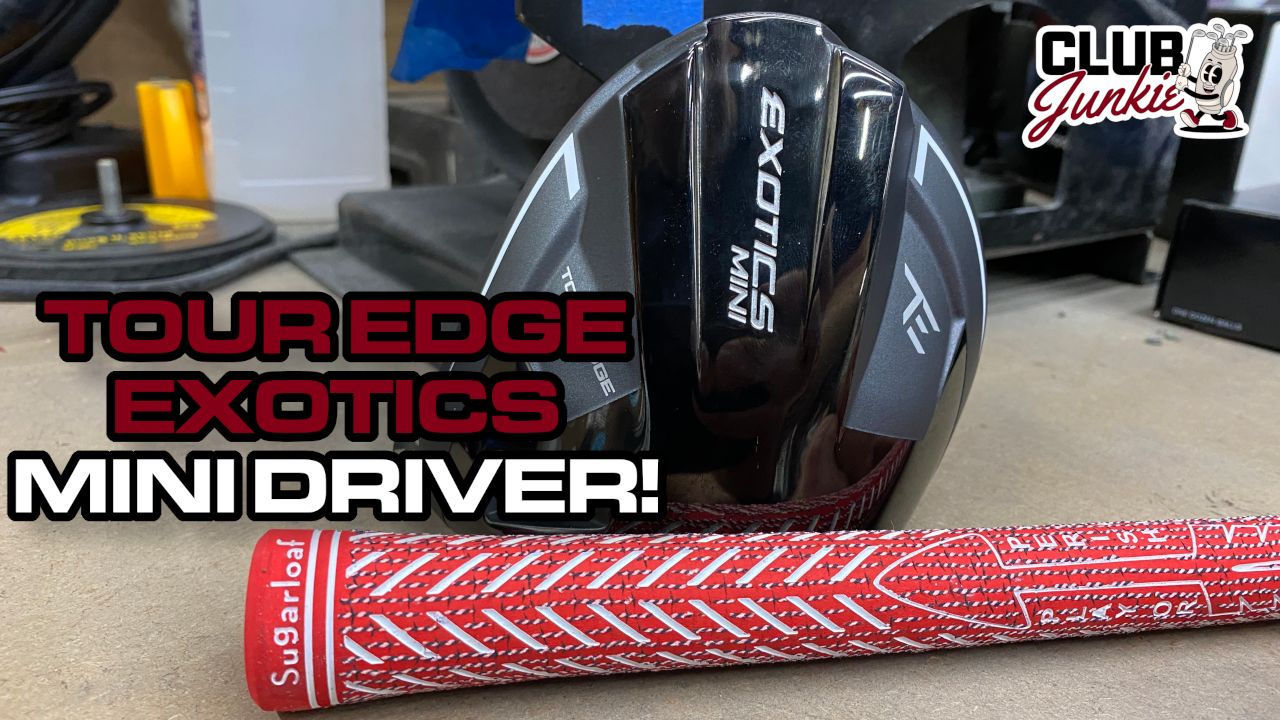
On this episode of Club Junkie, I put the new Tour Edge Exotics Mini Driver to the test and break down the performance, forgiveness, distance, and where it fits compared to a traditional driver or strong fairway wood. If you have been curious about adding a mini driver to the bag, this one is worth a look.
I also dive into the new TaylorMade Spider ZT Max putter that was recently spotted and discuss the growing zero torque putter trend. Plus, there is a closer look at the new Project X Titan Yellow shaft showing up on the PGA Tour and what makes it different from other profiles currently out there.

Justin Rose WITB 2026 (April): Full WITB breakdown with new McLaren irons

What’s the story behind Webb Simpson’s custom-stamped irons?

Memorial Tournament Tour Report: Rory McIlroy, Cameron Young switch up drivers, and more

Cadillac Championship Tour Report: Spieth’s sizable changes, McLaren Golf launches, and more

Russell Henley’s winning WITB: 2026 Charles Schwab Challenge

Kristoffer Reitan’s winning WITB: 2026 Truist Championship

Aaron Rai’s winning WITB: 2026 PGA Championship

J.T. Poston’s winning WITB: 2026 Memorial Tournament

Cameron Young’s winning WITB: 2026 Cadillac Championship

Best irons 2026: Best irons overall, most forgiving irons, and more


Bud Cauley WITB 2026 (June)
Bud Cauley had >14 clubs in his bag when photographed prior to the Memorial Tournament. Driver: Titleist GTS2 (8 degrees) Shaft: Fujikura...


Hannah Green WITB 2026 (June)
Driver: Titleist GTS3 (10 degrees, D4 SureFit setting) Shaft: Mitsubishi Chemical Diamana RB 53 S 3-wood: Titleist GT3 (15 degrees,...


Asterisk Talley WITB 2026 (June)
Driver: TaylorMade Qi4D (9 degrees) Shaft: Fujikura Ventus Blue 6 S 3-wood: TaylorMade Qi4D (16.5 degrees) Shaft: Fujikura Ventus Blue...

Brianna Do WITB 2026 (June)
Driver: Callaway Quantum Triple Diamond (9 degrees) Shaft: KBS PGW 3-wood: Callaway Elyte Titanium (15 degrees) Shaft: KBS PGW 5-wood:...
-
 Equipment6 days ago
Memorial Tournament Tour Report: Rory McIlroy, Cameron Young switch up drivers, and more
-
 News1 week ago
Russell Henley’s winning WITB: 2026 Charles Schwab Challenge
-
 Whats in the Bag3 days ago
J.T. Poston’s winning WITB: 2026 Memorial Tournament
-
 Equipment3 days ago
Best irons 2026: Best irons overall, most forgiving irons, and more
-
 Equipment1 week ago
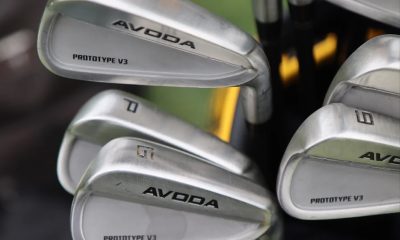
Details on Jason Day’s latest prototype Avoda iron setup
-
 Equipment3 weeks ago
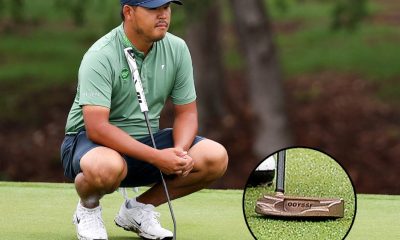
CJ Cup Byron Nelson Tour Report: Koepka and Kim’s newest putters finally get hot
-

 News2 weeks ago
Charles Schwab Challenge Tour Report: MacIntyre, Åberg and Spaun all switch putters, TaylorMade launches new Spider
-
 Equipment2 weeks ago
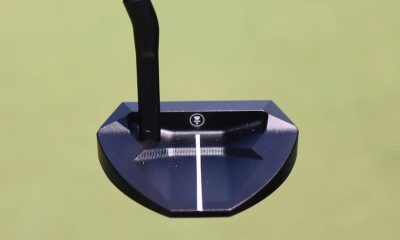
Details on J.J. Spaun’s surprise putter switch


Pingback: The Wedge Guy: Hard 8-iron or easy 7? (The SCor Method) – GolfWRX
JR
May 20, 2022 at 5:33 pm
The set gap wedge is the new P wedge.
ChipNRun
May 20, 2022 at 1:29 pm
As Terry noted:
“I see WedgeFit profiles now with “P-clubs” as low as 42-43 degrees and 9-irons five degrees less than that – 37-38 degrees. The big companies are getting there by incorporating mid-iron technologies – i.e. fast faces, multi-material, ultra-low CG, etc. – into the clubs where precision distance control is imperative.”
—————–
Circa 2014, TM and other iron manufacturers designed Game Improvement and some PD models with a splitout in head design. The 3i-7i heads had launch-boosting inserts and slots, while the 8i on up had more traditional single-piece cavity back head. Case in point is SLDR, Rocketbladz and RSi models by TM.
This draws on findings on loft effectiveness by various wedge specialists:clubs with lofts above 38-40* do NOT benefit from the “mid-iron technologies.” Due to higher loft, the technologies are not needed, and if anything can destabilize ball flight.
As for irons in general, many golfers bump into Tom Wishon’s 24/38 RULE: the average golfer can’t consistently hit a numbered iron with loft less than 24* or length greater than 38″.
(Does anyone know if 24/38 has been tweaked due to tech “wonderments” of the last decade?)
Rich
May 20, 2022 at 1:18 pm
Irons: Predictability, precision, and repetition.
The number on the bottom is just a name, like Richard.
Gerry Sampson
May 20, 2022 at 7:54 am
The writer made his point very well. I would love to hear club fitters give opinions on the longer irons, and more useful yet breaking down that info based on broad categories of swing speed/driver distance off the tee. After all the entire range of clubs in the bag need to live together harmoniously…I find that navigating through the range of hybrid offerings is particularly difficult.
Matts
May 20, 2022 at 3:27 am
Yes, and hybrids are recommended over the longer irons for the average golfer. So one lands up with 5 irons (6 iron through PW) and four specialist wedges in the bag.
ChipNRun
May 20, 2022 at 1:38 pm
Given the push to ever “hotter faces” in the Players Distance category, does this mean the Game Improvement irons tend to be shorter in distance, but MORE ACCURATE? (deliver tighter yardsticks)
James
May 19, 2022 at 8:44 am
This is a conspiracy of “Big Wedge” to sell you more $200 wedges that wear out every season.
Seriously, the irony of this article is that the exact opposite of what you describe is what’s happening. If you just rename the strong-lofted sets’ gap wedge to PW and carry that shift through the set, these game improvement clubs are actually 1/2″ short. Manufacturers have massaged golfers’ egos by rebranding a 1/2″ short, 28-30 degree 6-iron as a 7-iron.
Club champ
May 18, 2022 at 9:46 pm
But if my p club is 42 degrees I can get 4 really cool specialty wedges that really make my bag pop. I’m all about aesthetics and have recently just put 3 drivers of various lengths from 3 different companies none the less. I have 6wedges now and filled the rest with hybrids. I don’t even need a putter bc I can just use a hybrid.
Steve
May 18, 2022 at 5:00 pm
It would be nice if Golf WRX can help share length/lie specs of some players to shed more insight into this topic. I think it would better illustrate that a fitting is not just about clubhead and shaft.
Bob
May 18, 2022 at 3:59 pm
If one is an ego monkey lacking in the manhood and incapable of critical thinking, yes.
Bruce Helbig
May 18, 2022 at 1:25 pm
All that matters is that one knows how far each club flies in the air and does it stop within 2 bounces. Longer has always been the selling point to consumers but better players have always known repeatable distances are the key to good scoring. Now, if I could only hit the driver 30 more yards! Or be 30 year’s younger! Cheers, Bruce
pi
May 18, 2022 at 3:37 pm
Yep, and buy a 48o wedge to bridge the gap you may have to the next wedge in your bag