
Opinion & Analysis
Korea’s answer to help grow the game


When the golfing world was first introduced to Mark Broadie’s Strokes Gained Index (SGI) in 2011, it forever changed the way we look at the game. In direct contrast to legendary Bobby Locke’s iconic phrase “drive for show, putt for dough,” the new method showed that driving the ball well was actually the bigger factor in lowering scores.
At first, I recall thinking that it couldn’t be right. After all, the longest drive and the shortest putt each count the same one stroke, right? But then again, where are you more likely to make a birdie from if your ball is 50 yards and 150 yards from the pin, respectively?

Should the new saying be “Putt for show, Drive for dough?”
Even before Broadie’s method showed the advantages of longer drives, nearly all club and ball manufacturers have been focused on marketing distance. In response, many golf courses tried to lengthen the course to keep the game challenging. But no matter how long golf courses became, long bombers like Bryson and Dustin continued to make short work of them reaching “monstrous” par 5s in two with an 8- iron. It was only a matter of time before golf’s governing bodies declared that things had gone too far.
- Related: Golf in Korea during COVID-19
I understand where the USGA is coming from. But surely there are other ways to make professional golf more challenging than limiting golf ball distance for everyone. After all, why penalize average Joes like me who can barely drive 250? Instead, let’s make the course set up more difficult for professional tournaments and let the rest of us continue our valiant struggle with all the help we can get.
With all the heated online arguments for and against USGA’s stance on distance, however, I found it odd that it has never been an issue here in Korea. In fact, whenever I tried to discuss the topic and how it's dividing golfers in the West, no one here seemed to bat an eye. I too soon came to dismiss it as a non-issue, but after subconsciously mulling about it for a while, I came up with an interesting theory.
Could it be that the courses here are already hard enough without having to add extra sandbags around our ankles?

Flat land for building a golf course is rare in Korea
To be sure, I’m not trying to compare Korean courses to beasts like Bethpage Black or Whistling straits. However, it is my contention that most Korean courses have very narrow fairways and an over-abundance of penalty areas in comparison to their Western counterparts. As such, Korean courses support my claim that difficult setups can make the game plenty challenging without limiting equipment distance. Plus, some of the course features and local rules here also act to help grow the game by speeding up play considerably.
Size Matters
To give you some perspective on size, South Korea is a small peninsula about the size of Indiana with mountains covering 70 percent of the country. As a result, the majority of 550+ golf courses here are carved out on top or steep sides of mountains. A typical golf hole here features a hill along one side of the hole and a steep drop-off on the other side. So if a tee shot happens to stray a little off the narrow fairway, the ball is usually declared to be out of bounds or lost.
When I first began playing here in 2001, my first impression was that the courses seemed relatively short and easy. Back in Canada, if a tee shot strays onto the adjacent hole or under a tree, it would simply make for a fun and challenging attempt to scramble for par, right? Nope. Not here. Uh-uh. With almost every hole lined on both sides with OB or hazard stakes, I realized quickly that golf here required a very different approach than what I was used to.

Most of Korea’s 550+ golf courses are carved on top or sides of mountains.
At first, there seemed to be no reason or rhyme as to why the courses had so many penalty areas. In particular, what frustrated me most was having an easy wedge over relatively short trees from an adjacent hole; only to be told it was out of bounds. What good is the ability to pull off amazing Seve-esque recovery shots if I’m not even given a chance to attempt them in the first place?

Easy 9 iron to the green? Nope. OB for D-bogey or worse.
Inevitably, I soon developed a severe case of the driver yips in trying to keep my ball in play. No matter how I tried, every round would have at least two or three balls out of bounds. My handicap quickly grew from being a toddler to the legal drinking age, and my foursome began to doubt I had ever broken 80 before. Likewise, my preference for long-distance quickly took a backseat in favor of accurate shot-making.
To be sure, I’m not suggesting a dozen new penalty areas be added or your golf courses are built on the sides of mountains. I’m just saying that before any definitive decision is made on the equipment side of golf, I hope the powers that be can first explore diverse course setups at iconic tournament courses to challenge the best players in the world. After all, there are so many more amateur golfers than professionals, and we certainly need all the help we can get.

Just your typical tee shot with 90 meter drop, OB on both sides to a sloping fairway. No pressure.
Course setup to grow the game?
Aside from an abundance of OB stakes, Korean courses also have several features and local rules which may baffle newcomers. Even though some of them may not be welcomed in all parts of the world, and are certainly not practiced for pro tournament play here, they have undeniably helped the game grow in Korea by speeding up play immensely.

OB tees to save time and ego.
Your home course probably has a drop area on par 3s where hazards come into play. The same applies here but with one big difference in that, we also have a designated drop area for par 4s and par 5s. You see, when a tee shot’s fate is in question, amateur golfers are urged to play from a special set of tees 220~250 yards ahead. So, rather than playing a provisional ball, the golfer would be playing their 3rd or 4th shot from these forward tees, depending on whether the ball landed in a
hazard or out of bounds.
Although it took a bit of getting used to, I have found this common local rule to help in two ways here. One, it speeds up the pace of play considerably; and two, it helps to preserve the sanity of golfers from having to re-tee with the potential to hit multiple balls out of bounds.

Not gonna lie. These look great with hard breaking downhill putts.
I can’t recall if I’ve ever encountered an actual gimme circle back when growing up in Canada, but more often than not, golfers here will see a circle drawn around the hole cup ranging in radius from 1~1.5m. The obvious intent is that if the ball ends up inside the circle, the next putt is considered a gimme, and the golfer can pick up the ball. At the start of a round, the foursome can decide whether they will put the circle in play or hole out each time.
For the purist, the length of the gimme circle may seem absurd, but I can attest that it does wonders for one’s ego and score, and keeps arguments to a minimum. Of course, it also helps to speed up play.

Notice something with the first and last holes too? That’s for another time.
Another aspect of golf that may raise some eyebrows out there is our concept of “double par”. It is common practice here for strokes to be counted only up to double the par of the hole played. For example, the maximum score on a par 3 would be a triple, a quadruple for a par 4, and a quintuple bogey for a par 5.
So even if you were to dunk three balls at the treacherous 17th hole at Sawgrass, the maximum score would be a six (provided that the course was in Korea). Wild stuff, huh? Can you imagine how many pros would love to settle for a triple at that hole during the Players Championship this year?
Again, the main idea for this practice is to speed up play, save some golf balls, and keep one’s handicap comfortably vague for sandbagging purposes.

Carts prevent cardiac arrest.
Last but not least, over 90% of Korea’s public and private courses require golfers to ride a 5-person power cart and employ a caddie with the cost shared among the foursome. What if one doesn't want to ride a cart, or use the services of a caddie?
Unfortunately, it is not a choice at these courses but there are some darn good reasons too.
First, the mountainous topography of Korean courses makes it incredibly hard to walk and play18 holes. The distance between holes can literally be a mile over incredibly steep hills or winding paths down a side of a mountain. So unless you are training for the Iron Man triathlon, there is no shame in riding the cart here. Even for a professional tournament, I understand that special measures are taken to protect the players and caddies in case such a course is played.

Super caddie in action. Not only does she memorize who uses which clubs and wedges for what
shots, she carries up to 12 clubs at a time for your convenience. Bravo.
Caddies also play a pivotal role in Korean golf culture. Usually, a lone caddie is assigned to a foursome at the start of the round. They driving the cart, cleaning and fetching clubs for all four players, explaining the layout and potential dangers at each hole, and providing yardages, and reading the greens.
It is not an easy task to say the least, but that’s not nearly all. The caddies are also responsible for the safety of the golfers while on the course, and to ensure that the pace of play is maintained in a polite and professional manner (I’m sure they were the most ecstatic when the rule to tend the pin was eliminated). Without a doubt, the caddies here are the true unsung heroes behind the recent growth spurt of golf in Korea. If it were not for them, I know that most of us would be either lost on course
or stuck behind first-timers struggling to play 18 under 6-hours. They deserve every penny they earn.
So there you have it. If speeding up play really helps to grow the game of golf, then the local rules that I have described above will definitely make a difference.
Which one would you be willing to try? Which ones will you fight to your dying breath as a golfer? Please comment below!
For a detailed look at a round of Korean style golf, check out my previous article: “A typical day of Korean golf, Gangnam style”










This past Monday, I played in the U.S. Amateur local qualifier at Rock Creek Country Club in Portland, Oregon. A full tee sheet from 7:30 a.m. to 1:55 p.m., the top 11 scores would make it to the U.S. Amateur final qualifying.
I teed off at 10:48 a.m.. With the 7:30 am tee time, you can get a feel for the leaders’ pace, and they were off and running on the challenging setup at Rock Creek.
View this post on Instagram
Getting to the highlight of the round on the par five 17th, a drive up the left side and 212 yards left to the front hole location. I took out a 5-iron with plans of middle of the green. The ball ended up 8 feet left of the hole, pin high. A slight downhill putt dropped in for an eagle 3 on the 17th. With the cut line looking to be anywhere from -2 to even par. This was the boost I had been waiting for all day.
With making par from the trees on 18, it was time to wait for a potential playoff with a posted score of one under par 71.
Three hours later, it was playoff time. 8 players for 6 spots. I made par on the playoff hole, which was good enough to advance to the U.S. Amateur final qualifying in July. USGA qualifiers sure deliver on all of the emotions in golf!
Club Junkie
Building my 2026 gamer WITB: Ranking the contenders and new putter projects – Club Junkie Podcast


The annual What’s In The Bag build is underway, and on this episode of Club Junkie, Brian breaks down the clubs currently leading the race for a spot in his 2026 gamer setup. From drivers and fairway woods to irons, wedges, and shafts, he ranks the equipment that’s performing best and explains what’s separating the front runners from the rest of the field.
Brian also heads into the workshop to discuss several putter projects currently on the bench. From head options and shaft choices to build ideas and testing plans, he shares what he’s working on and which putters could become serious contenders for the bag this season.
If you’re a gear junkie who loves equipment testing, club building, and the never-ending pursuit of the perfect setup, this episode is for you.
Follow Club Junkie:
Instagram: @clubjunkiepod
TikTok: @clubjunkiepod
Threads: @clubjunkiepod
X: @ClubJunkiePod
Club Junkie
Tour Edge Exotics mini driver review + TaylorMade Spider ZT Max first look – Club Junkie

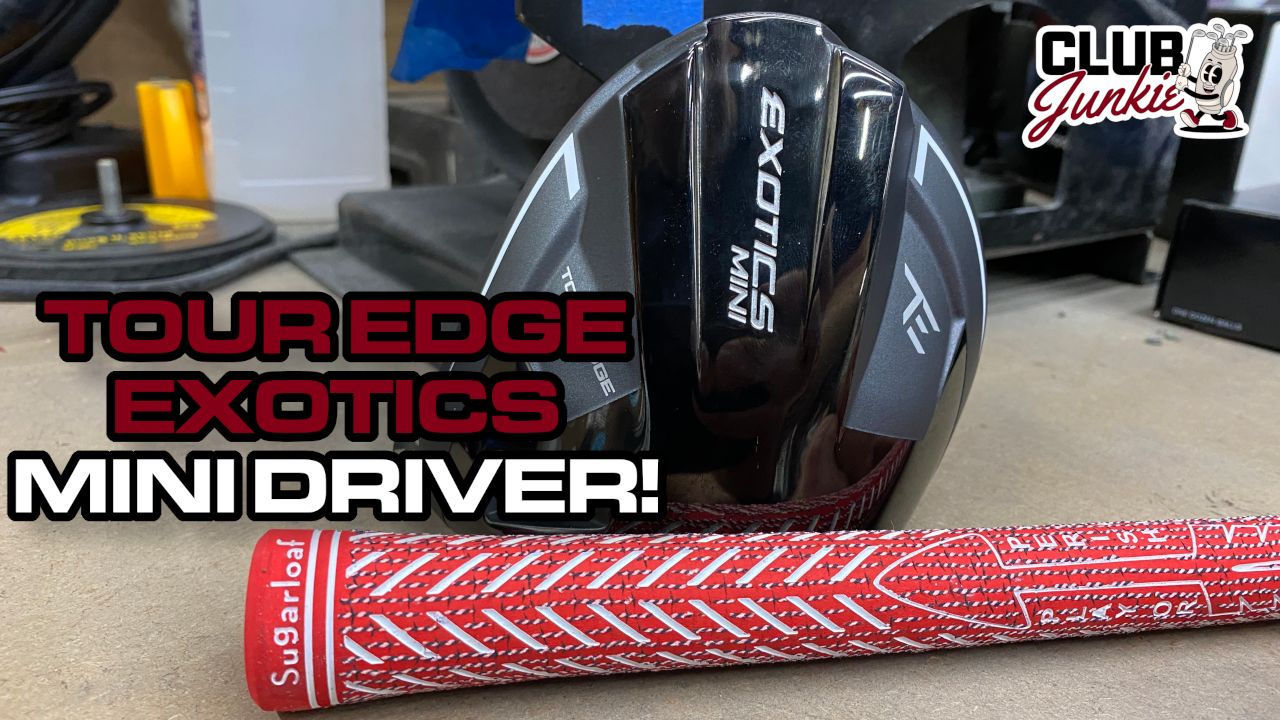
On this episode of Club Junkie, I put the new Tour Edge Exotics Mini Driver to the test and break down the performance, forgiveness, distance, and where it fits compared to a traditional driver or strong fairway wood. If you have been curious about adding a mini driver to the bag, this one is worth a look.
I also dive into the new TaylorMade Spider ZT Max putter that was recently spotted and discuss the growing zero torque putter trend. Plus, there is a closer look at the new Project X Titan Yellow shaft showing up on the PGA Tour and what makes it different from other profiles currently out there.

Justin Rose WITB 2026 (April): Full WITB breakdown with new McLaren irons

What’s the story behind Webb Simpson’s custom-stamped irons?

Memorial Tournament Tour Report: Rory McIlroy, Cameron Young switch up drivers, and more

Cadillac Championship Tour Report: Spieth’s sizable changes, McLaren Golf launches, and more

Russell Henley’s winning WITB: 2026 Charles Schwab Challenge

Kristoffer Reitan’s winning WITB: 2026 Truist Championship

J.T. Poston’s winning WITB: 2026 Memorial Tournament

Aaron Rai’s winning WITB: 2026 PGA Championship

Best irons 2026: Best irons overall, most forgiving irons, and more

Cameron Young’s winning WITB: 2026 Cadillac Championship


Bud Cauley WITB 2026 (June)
Bud Cauley had >14 clubs in his bag when photographed prior to the Memorial Tournament. Driver: Titleist GTS2 (8 degrees) Shaft: Fujikura...


Hannah Green WITB 2026 (June)
Driver: Titleist GTS3 (10 degrees, D4 SureFit setting) Shaft: Mitsubishi Chemical Diamana RB 53 S 3-wood: Titleist GT3 (15 degrees,...


Asterisk Talley WITB 2026 (June)
Driver: TaylorMade Qi4D (9 degrees) Shaft: Fujikura Ventus Blue 6 S 3-wood: TaylorMade Qi4D (16.5 degrees) Shaft: Fujikura Ventus Blue...


Brianna Do WITB 2026 (June)
Driver: Callaway Quantum Triple Diamond (9 degrees) Shaft: KBS PGW 3-wood: Callaway Elyte Titanium (15 degrees) Shaft: KBS PGW 5-wood:...
-
 Equipment6 days ago
Memorial Tournament Tour Report: Rory McIlroy, Cameron Young switch up drivers, and more
-
 News1 week ago
Russell Henley’s winning WITB: 2026 Charles Schwab Challenge
-
 Whats in the Bag3 days ago
J.T. Poston’s winning WITB: 2026 Memorial Tournament
-
 Equipment3 days ago
Best irons 2026: Best irons overall, most forgiving irons, and more
-

 Equipment1 week ago
Details on Jason Day’s latest prototype Avoda iron setup
-
 Equipment3 weeks ago
CJ Cup Byron Nelson Tour Report: Koepka and Kim’s newest putters finally get hot
-

 News2 weeks ago
Charles Schwab Challenge Tour Report: MacIntyre, Åberg and Spaun all switch putters, TaylorMade launches new Spider
-
 Equipment2 weeks ago
Details on J.J. Spaun’s surprise putter switch


Daddygreen
Apr 24, 2022 at 5:28 pm
Grow the game=make more money. That’s all you care about…even if it’s watered down.
L
Apr 22, 2022 at 3:54 pm
Keep that game there, don’t let them export to the rest of the world. Gimme circle? Ridiculous. Can’t walk in a reasonable amount of time? Don’t build courses there. Sheesh
JL
Apr 22, 2022 at 3:52 pm
Everything at the Korean golf courses were copied from Japan, practically. Same mountain terrains, multi-person cart. Wicked OBs and tight fairways. The gimme circle was tested but scrapped because people wanted to get better at actually playing than be given something. Though it’s a great idea for pace of play, especially when the greens have wicked slopes and can lead to multiple putts, but people need to be allowed to play the game too.
Growing the game? Not like this, just to pump people out there with quick pace just so that the club and industry can make money? No way! Ridiculous.
But yeah accuracy of your shots is important and should be encouraged. lol
geohogan
Apr 21, 2022 at 12:36 pm
If these are the types of golf courses Korean pros grew up playing, then
maybe this help explains oeverwhelming dominance /success on the LPGA tour.
blackbd
Apr 20, 2022 at 2:53 pm
I found this article interesting but not sure if the author is trying to address the distance debate, speed of play or growing the game or all 3? I presume all 3 but not sure how it was all tied together? Also, that kind of super narrow and penal golf seems not fun. Not even sure I want to watch pros play that style other than once or twice a year.
CrashTestDummy
Apr 20, 2022 at 10:25 am
Interesting article. It always interests me how other countries play golf differently. I have played a few times in Asia before and the experience is totally different than the US.
From what I have seen, Korean golf courses look very tough and narrow. I watch a lot of Korean golf shows and you can tell the good player’s ball striking is very accurate, but you have to in order to score on Korean courses. Not like most of the “grip it and rip” it type courses in the US. The gimme circle makes up a little for the toughness of the courses. But definitely not enough. Lol.
neil
Apr 20, 2022 at 12:31 pm
lived in Korea 4 years
weather is great at least for a scotsman.basically 2 seasons warm and cold
Can be 40f one day 70 or higher the next until November then cold again..
we played through the winter down south near Busan.cold but comfortable miles better than a scottish winter
DaeGunn
Apr 20, 2022 at 10:10 am
Golf becomes No.1 sport in Korea. People in general can actually play (not just watch) and enjoy golf, compared with other watching-only sports. Fast growing golf related businesses in Korea may affect the acquisition of big name golf companies by Korean related funds or companies.
As a Korean-American, I heard a lot about Korean’s unique golf course settings nicely summarized in this article. At first, I thought those are very absurd. But as this article explained, I now understand that those are understandable and necessary.
It would be good to know each region’s or country’s different or unique golf cultures.
JungleJimbo
Apr 20, 2022 at 9:28 am
Hi James Chang: Thank you, for your Fabulously-written article that i enjoyed immensely! The Korean approach to golf is intriguing, and GolfWRX is all the better for your series of articles (and unique, i.e. i don’t see this Korean perspective on many other mainstream golf publications). “?????”!
James
Feb 11, 2025 at 12:34 am
Thanks for the encouraging comment!!
Jub
Apr 20, 2022 at 8:55 am
No! Stop growing the game!
MhtLion
Apr 20, 2022 at 12:51 pm
That’s what I’m saying.
Garrett
Apr 22, 2022 at 12:48 pm
Im with you on that. not enough golf courses or CC around me to even get decent times. STOP GROWING THE GAME
Rascal
Apr 22, 2022 at 1:49 pm
Me! Me! Me!!!!
Waaaaaahh!