
Opinion & Analysis
GolfWRX Interview: Jeff Brauer, first director of outreach for ASGCA

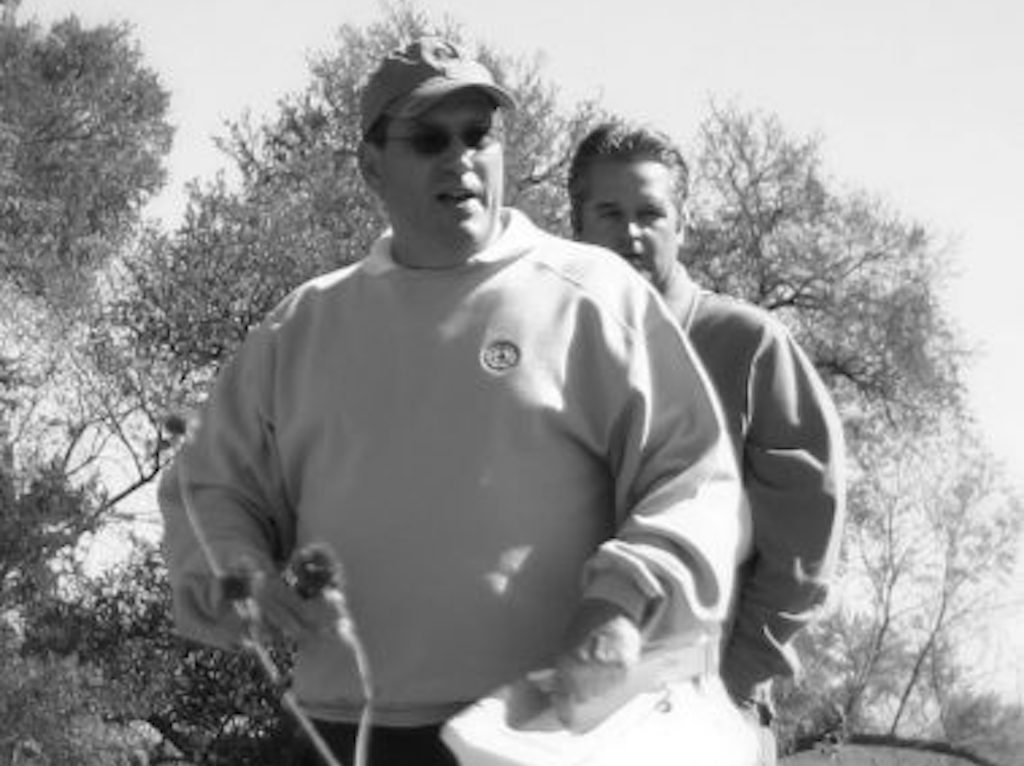
The term “outreach” has the general American lexicon with verve over the past decade. Nearly every organization has appointed a person or team to spread not only its mission, but also its availability for assistance and support. The American Society of Golf Course Architects interviewed candidates for a new position, the director of outreach, in 2021.
Jeff Brauer was named to the position, and it is no surprise to this interviewer. I’ve had the fortune to engage with Mr. Brauer on the Golf Club Atlas discussion group for over a decade, and his availability and enthusiasm fit the position perfectly. Mr. Brauer was kind to answer my nine questions, and I’m happy to present them to you.
Ron Montesano: Introduce yourself and give us some background into how you got involved in golf, and what your involvement was until 2022.
Jeff Brauer: My next door neighbors were members at Medinah, in suburban Chicago where I grew up. My first round was on Medinah No. 2 at age 12, but we soon played no. 1 and 3. I went home after that first round and told my parents I was going to be a Golf Course Architect. (They told me to do something “where I would use my brain” )
In 1970, when I was 15, my Dad saw a blurb in the Tribune business section about the ASGCA moving its HQ to Chicago. He brought home a large envelope of ASGCA and National Golf Foundation articles and booklets on golf design. I noticed from the ASGCA membership list that Killian and Nugent were in the next suburb and arranged to visit their office. They told me to take drafting in high school, work for landscapers or on a golf maintenance crew, and then to take landscape architecture in college, with side classes of aerial photography, turf management, business, soils, and surveying, which I did.
When I came out of University of Illinois, they felt obligated to hire me, since I had followed their advice, despite a low workload. I apprenticed there for seven years until, including the last year with Ken Killian, after they broke up. I was always going to go on my own, and walked into Ken’s office on my 29th birthday, wanting to start before I was 30. I wanted to move south. I went to the local library to look at phone books, and Dallas was the only major city without a yellow page listing for Golf Course Architects, so Dallas it was. I moved without a single client in the wings and not really knowing anyone in Texas. What could possibly go wrong?
Not long after I moved, Jim Colbert called me to help him in the renovation of a Dick Wilson design in Vegas, which I had started under Killian. Other early jobs included a nine hole expansion in La., when the selection committee was headed by man who had also just started his own business and was sympathetic to “the new guy.” On the same day, I signed a renovation near Dallas and I went from virtually nothing to a real business in a hurry. A year later, Larry Nelson’s agent, who was in Dallas, called with some questions about design, and I ended up teaming with him on several projects, including my first 18 hole design, Brookstone Golf and Country Club NW of Atlanta.

Ron Montesano: You are the new and first director of outreach for the American Society of Golf Course Architects. What are the origin, role and purpose of the ASCGA?
Jeff Brauer: The basic mission of ASGCA is the same as when it was founded 75 years ago. Mainly, we help our members design good golf courses for a variety of clients and needs. Our mission has expanded as the world gets more complicated, with increasing technical, economic, community and environmental requirements found in modern golf courses.
We try to help members create better designs by fostering professionalism and fellowship among golf course architects, knowledge sharing, and continuing education that allows members to increase their skills and understanding of modern issues.
My new position is about engaging and connecting people in the profession and related fields, including both member and non-member golf course architects, builders, owner groups, suppliers, allied associations, and other consultants, making sure we personally stay in touch, especially on issues that affect us all. We believe there are initiatives and projects out there where we are better working together.
Perhaps even more than other professional societies, given the uniqueness, diversity of backgrounds (a trend which appears to be accelerating) and small size of the field, ASGCA is in the best position to create education offerings targeted specifically to modern issues in golf course design. ASGCA members have always shown willingness to share knowledge, and we will continue to foster that knowledge sharing at all our get together.
Ron Montesano: What do you anticipate will be your first duties as director of outreach?
Jeff Brauer: My first tasks will be to reach out – it’s in the job title – with a focus on finding out ways in which ASGCA can be better for the constituencies I listed above. In just my early calls, I have heard several “new to me” ideas to create more tangible value from ASGCA for those within the golf course design and building profession in general.
Of course, phase 2 will be implementing the best ideas we get. My calls will help me develop programs, but initially, I envision that new value will be created via more education for golf course architects, using both in person and web-based technology for learning and open discussion on important topics. I think the profession needs more than we can provide at our two annual meetings, and COVID showed us how useful Zoom and Webinars can be. I believe we will be expanding those types of learning events, but also organize more architecture oriented on course events.
Ron Montesano: If you could go back in history and choose three international architects, who were not able to join the ASGCA, who would they be and why?
Jeff Brauer: We’ve always required our members be a part of a North American based organization, even if living abroad. I suspect the European Institute of Golf Course Architects is similar and would want to lay claim to most of their own for memberships for guys like Colt, MacKenzie, etc.
As a post WWII organization, it was impossible for most of the Golden Age greats to be included, and I think all of them would have brought some interesting discussion. ASGCA is about passing on knowledge between architects and from generation to generation, and we can only speculate what knowledge may have fallen through the cracks due to the 15 year lull or stoppage of active golf design from 1930-1945.

Ron Montesano: What elements (five at most) are misunderstood or missed by the majority of golfers, amateur and professional?
Jeff Brauer: Golf course architecture is about taking the great strategic, playability and artistic ideas many of us think we have and getting them efficiently built to make the course functional. Otherwise, you are just playing in the sand box.
Few golfers consider how much drainage, air, soil, safety concerns, and golfer circulation, just to name a few affects design. And, that a professional golf course architect weaves all of those into every design. The best ones make it look easy, but it usually isn’t.
Ron Montesano: As an architect, you have been involved in many courses. Which was the most satisfying, and for which reasons?
Jeff Brauer: In general, the best projects have both great sites and a great working relationship between the Owner or Owner’s Representative and the Golf Course Architect. I was fortunate to have had those combinations on several occasions. As to the most satisfying projects I ever had, I go back to the four courses I did in northern Minnesota. In addition to great owners and sites, they were all an opportunity to get out of 100-degree Texas summer heat and go where it was much cooler. I put in a lot more field time than normal, just for the weather and scenery, and I think it showed in the final products. I think of myself as an honorary Minnesotan.
Ron Montesano: Which do you consider to be the most important project in the USA, past, present, or future, for the permanence of golf in this country?
Jeff Brauer: There were several watermark courses that contributed to golf as we know it today in the US. Certainly, early great courses like Myopia Hunt set a bar. But the early public courses like Van Cortlandt Park had to be almost equally influential. The first courses of any type, like residential, mountain, desert, and quarry courses, etc. also expanded the game and made it more permanent.
As to the future, it will probably be the course that maintain great design interest while using less water and resources.
Ron Montesano: How is your golf game these days? Which are your strengths and weaknesses?
Next question, please. (editor’s note: LOL and an oldie but goodie, ROFLcopter)
Ron Montesano: Which question haven’t we asked, that we should have? Ask it and answer it, please.
Jeff Brauer: I have been asked by my fellow architects why I am so excited about this position and how difficult it was to give up design. As with most things in life, timing plays a part. At the time this position was created, I was comparing my career to Broadway plays and wondered what the best script for the final act of a golf course architecture career might be. After 44 years of being in the profession, I am excited to spend years 45-50 helping set it up for a better future.



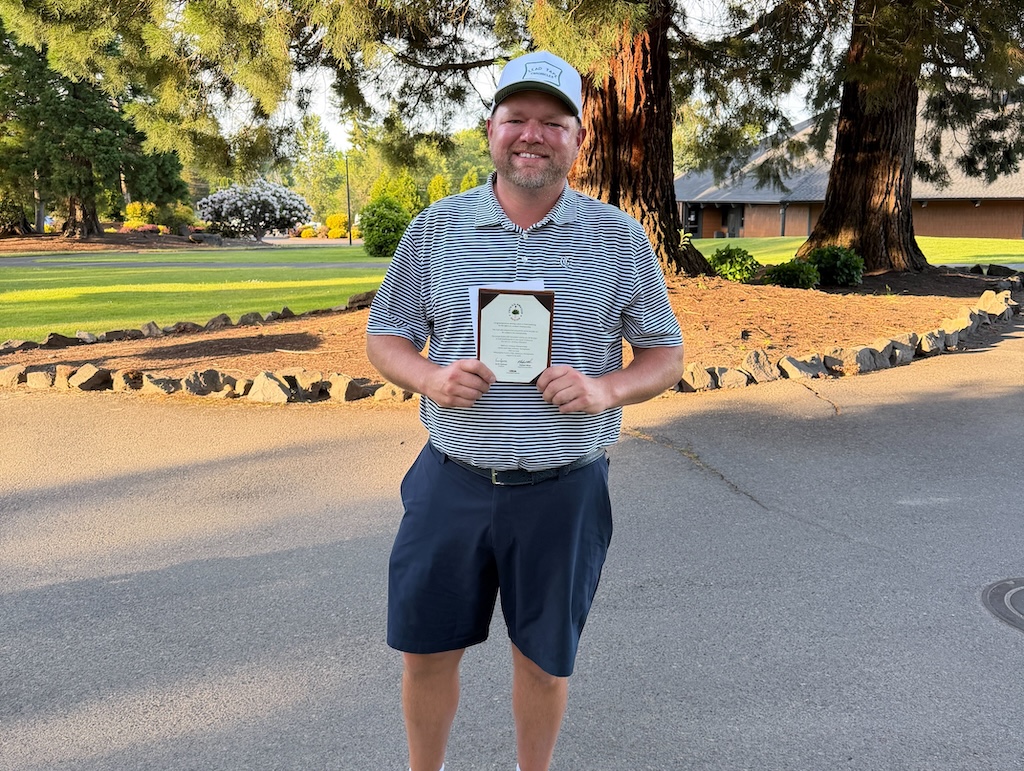
This past Monday, I played in the U.S. Amateur local qualifier at Rock Creek Country Club in Portland, Oregon. A full tee sheet from 7:30 a.m. to 1:55 p.m., the top 11 scores would make it to the U.S. Amateur final qualifying.
I teed off at 10:48 a.m.. With the 7:30 am tee time, you can get a feel for the leaders’ pace, and they were off and running on the challenging setup at Rock Creek.
View this post on Instagram
Getting to the highlight of the round on the par five 17th, a drive up the left side and 212 yards left to the front hole location. I took out a 5-iron with plans of middle of the green. The ball ended up 8 feet left of the hole, pin high. A slight downhill putt dropped in for an eagle 3 on the 17th. With the cut line looking to be anywhere from -2 to even par. This was the boost I had been waiting for all day.
With making par from the trees on 18, it was time to wait for a potential playoff with a posted score of one under par 71.
Three hours later, it was playoff time. 8 players for 6 spots. I made par on the playoff hole, which was good enough to advance to the U.S. Amateur final qualifying in July. USGA qualifiers sure deliver on all of the emotions in golf!
Club Junkie
Building my 2026 gamer WITB: Ranking the contenders and new putter projects – Club Junkie Podcast


The annual What’s In The Bag build is underway, and on this episode of Club Junkie, Brian breaks down the clubs currently leading the race for a spot in his 2026 gamer setup. From drivers and fairway woods to irons, wedges, and shafts, he ranks the equipment that’s performing best and explains what’s separating the front runners from the rest of the field.
Brian also heads into the workshop to discuss several putter projects currently on the bench. From head options and shaft choices to build ideas and testing plans, he shares what he’s working on and which putters could become serious contenders for the bag this season.
If you’re a gear junkie who loves equipment testing, club building, and the never-ending pursuit of the perfect setup, this episode is for you.
Follow Club Junkie:
Instagram: @clubjunkiepod
TikTok: @clubjunkiepod
Threads: @clubjunkiepod
X: @ClubJunkiePod
Club Junkie
Tour Edge Exotics mini driver review + TaylorMade Spider ZT Max first look – Club Junkie


On this episode of Club Junkie, I put the new Tour Edge Exotics Mini Driver to the test and break down the performance, forgiveness, distance, and where it fits compared to a traditional driver or strong fairway wood. If you have been curious about adding a mini driver to the bag, this one is worth a look.
I also dive into the new TaylorMade Spider ZT Max putter that was recently spotted and discuss the growing zero torque putter trend. Plus, there is a closer look at the new Project X Titan Yellow shaft showing up on the PGA Tour and what makes it different from other profiles currently out there.

What’s the story behind Webb Simpson’s custom-stamped irons?

Memorial Tournament Tour Report: Rory McIlroy, Cameron Young switch up drivers, and more

Cadillac Championship Tour Report: Spieth’s sizable changes, McLaren Golf launches, and more

Russell Henley’s winning WITB: 2026 Charles Schwab Challenge

Kristoffer Reitan’s winning WITB: 2026 Truist Championship

Best irons 2026: Best irons overall, most forgiving irons, and more

J.T. Poston’s winning WITB: 2026 Memorial Tournament

Aaron Rai’s winning WITB: 2026 PGA Championship

Cameron Young’s winning WITB: 2026 Cadillac Championship

Details on Jason Day’s latest prototype Avoda iron setup


Christiaan Maas WITB 2026 (June)
Driver: TaylorMade Qi4D LS (8 degrees) Shaft: Fujikura Ventus TR Blue 6 X 3-wood: TaylorMade Qi10 (15 degrees) Shaft: Fujikura Ventus Black...


Ryan Palmer WITB 2026 (June)
Driver: Callaway Quantum Triple Diamond (9 degrees) Shaft: Project X HZRDUS Smoke Blue RDX 60 TX 3-wood: TaylorMade Qi10 (15 degrees) Shaft:...


Bud Cauley WITB 2026 (June)
Bud Cauley had >14 clubs in his bag when photographed prior to the Memorial Tournament. Driver: Titleist GTS2 (8 degrees) Shaft: Fujikura...


Hannah Green WITB 2026 (June)
Driver: Titleist GTS3 (10 degrees, D4 SureFit setting) Shaft: Mitsubishi Chemical Diamana RB 53 S 3-wood: Titleist GT3 (15 degrees,...
-
 Equipment7 days ago
Memorial Tournament Tour Report: Rory McIlroy, Cameron Young switch up drivers, and more
-
 News2 weeks ago
Russell Henley’s winning WITB: 2026 Charles Schwab Challenge
-
 Equipment4 days ago
Best irons 2026: Best irons overall, most forgiving irons, and more
-
 Whats in the Bag4 days ago
J.T. Poston’s winning WITB: 2026 Memorial Tournament
-
 Equipment1 week ago
Details on Jason Day’s latest prototype Avoda iron setup
-
 Equipment3 weeks ago
CJ Cup Byron Nelson Tour Report: Koepka and Kim’s newest putters finally get hot
-

 News2 weeks ago
Charles Schwab Challenge Tour Report: MacIntyre, Åberg and Spaun all switch putters, TaylorMade launches new Spider
-

 Equipment2 weeks ago
Details on J.J. Spaun’s surprise putter switch

