
Opinion & Analysis
The Wedge Guy: A shot to a spot


Over the past few years, golf has entered the statistical era, with the help of ShotLink, launch monitors, and “strokes gained.” As more and more data is analyzed, much is being written about which parts of the game are most important to scoring and winning out on tour.
It started out with “strokes gained-putting” as maybe the best indicator, but of late, we are reading more and more about ‘strokes gained-shotmaking’, which is the measure of a golfer’s ability to keep it in play and hit greens in regulation.
However, the statistics on strokes gained on tour are very different from the game most recreational golfers play. Realize that “out there”, all these guys are extraordinarily skilled in every aspect of the game, so what separates the winner from the “also-rans” in any given week drills down to a very few specific things. That is a far cry from the game you play week in and week out.
So, what about your game?
From my observation, for almost any recreational golfer, hitting 2-3 more greens per round does two things for you. 1) It gives you that many more birdie tries, and you’ll just have to make some of them. And 2) it takes that much heat off your scrambling. For the average golfer, a missed green leads to a bogey or worse more often than not. Very few recreational golfers can come close to an up-and-down percentage of anywhere near 50%, and most are around 20% at best. Think about that.
So, here’s one way to look at how you might be able to hit more greens in regulation. On the PGA Tour, greens-in-regulation percentage drops by almost half on shots from the rough over shots from the fairway. If that doesn’t hammer home the importance of hitting fairways, I don’t know what will.
Growing up in the era of persimmon drivers – which I’m sure many of you completely missed – the driver was for positioning the ball in the right part of the fairway for an approach shot, not for just blasting as far “that way” as possible. The top players of the era hit their drives to particular spots that allowed for the best approach to the green, and they didn’t let it “all out” all that often.
In his 1949 book “Power Golf” Ben Hogan, listed his ‘regular’ distance with a driver as 265, but his ‘maximum’ as 300. Who keeps 35 yards in reserve for only those times when you really need it?
So, here’s a little experiment for you the next time you can get out for a “practice nine” in the afternoon or early morning.
Each time you hit a drive in the rough, walk it out to the fairway and then back 10 to 15 yards. My bet is that you’ll find that the hole plays a bit easier, even though you have a longer club in your hands for your approach shot.
Then think about how much better you might score if you thought of each drive as a comfortably controlled shot to a spot, rather than just “hit it that way as far as I can.”
Just something to change the game a bit and keep it interesting.









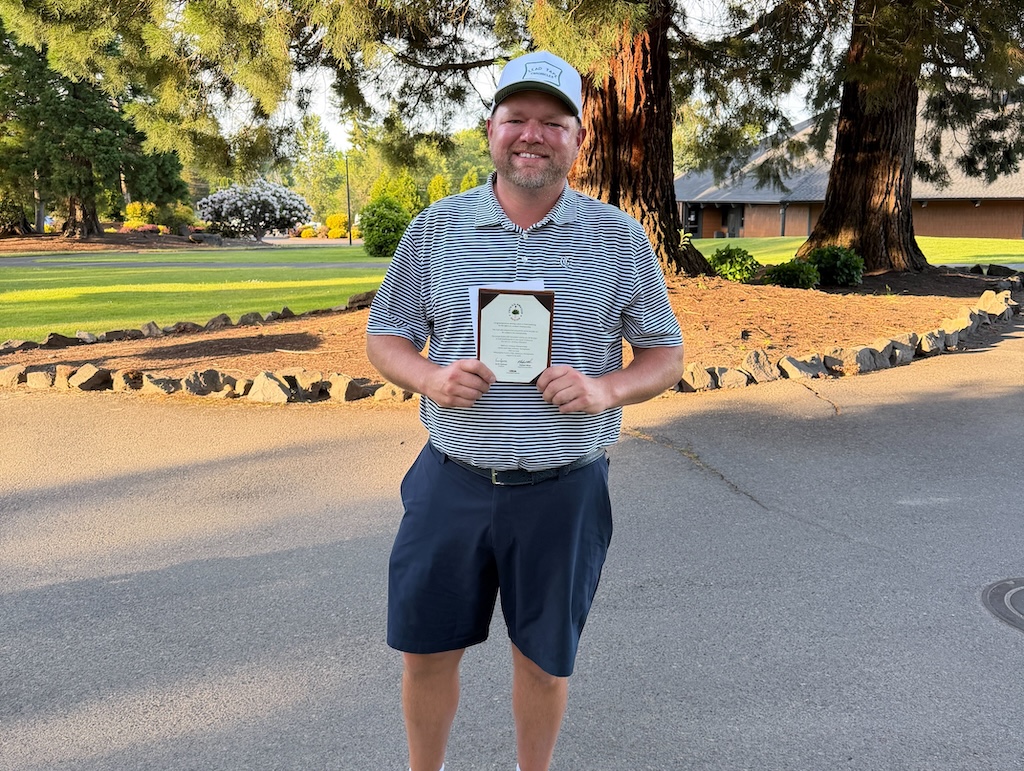
This past Monday, I played in the U.S. Amateur local qualifier at Rock Creek Country Club in Portland, Oregon. A full tee sheet from 7:30 a.m. to 1:55 p.m., the top 11 scores would make it to the U.S. Amateur final qualifying.
I teed off at 10:48 a.m.. With the 7:30 am tee time, you can get a feel for the leaders’ pace, and they were off and running on the challenging setup at Rock Creek.
View this post on Instagram
Getting to the highlight of the round on the par five 17th, a drive up the left side and 212 yards left to the front hole location. I took out a 5-iron with plans of middle of the green. The ball ended up 8 feet left of the hole, pin high. A slight downhill putt dropped in for an eagle 3 on the 17th. With the cut line looking to be anywhere from -2 to even par. This was the boost I had been waiting for all day.
With making par from the trees on 18, it was time to wait for a potential playoff with a posted score of one under par 71.
Three hours later, it was playoff time. 8 players for 6 spots. I made par on the playoff hole, which was good enough to advance to the U.S. Amateur final qualifying in July. USGA qualifiers sure deliver on all of the emotions in golf!
Club Junkie
Building my 2026 gamer WITB: Ranking the contenders and new putter projects – Club Junkie Podcast

The annual What’s In The Bag build is underway, and on this episode of Club Junkie, Brian breaks down the clubs currently leading the race for a spot in his 2026 gamer setup. From drivers and fairway woods to irons, wedges, and shafts, he ranks the equipment that’s performing best and explains what’s separating the front runners from the rest of the field.
Brian also heads into the workshop to discuss several putter projects currently on the bench. From head options and shaft choices to build ideas and testing plans, he shares what he’s working on and which putters could become serious contenders for the bag this season.
If you’re a gear junkie who loves equipment testing, club building, and the never-ending pursuit of the perfect setup, this episode is for you.
Follow Club Junkie:
Instagram: @clubjunkiepod
TikTok: @clubjunkiepod
Threads: @clubjunkiepod
X: @ClubJunkiePod
Club Junkie
Tour Edge Exotics mini driver review + TaylorMade Spider ZT Max first look – Club Junkie

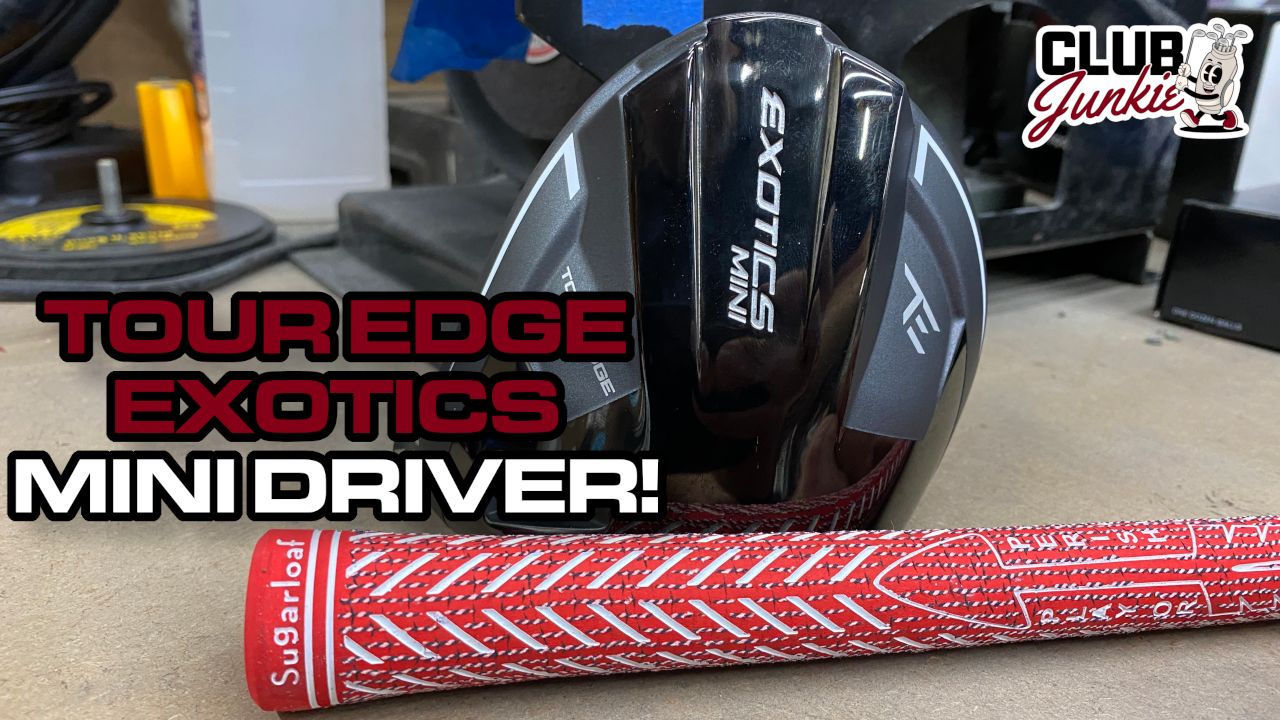
On this episode of Club Junkie, I put the new Tour Edge Exotics Mini Driver to the test and break down the performance, forgiveness, distance, and where it fits compared to a traditional driver or strong fairway wood. If you have been curious about adding a mini driver to the bag, this one is worth a look.
I also dive into the new TaylorMade Spider ZT Max putter that was recently spotted and discuss the growing zero torque putter trend. Plus, there is a closer look at the new Project X Titan Yellow shaft showing up on the PGA Tour and what makes it different from other profiles currently out there.

Justin Rose WITB 2026 (April): Full WITB breakdown with new McLaren irons

What’s the story behind Webb Simpson’s custom-stamped irons?

Memorial Tournament Tour Report: Rory McIlroy, Cameron Young switch up drivers, and more

Cadillac Championship Tour Report: Spieth’s sizable changes, McLaren Golf launches, and more

Russell Henley’s winning WITB: 2026 Charles Schwab Challenge

Kristoffer Reitan’s winning WITB: 2026 Truist Championship

Aaron Rai’s winning WITB: 2026 PGA Championship

J.T. Poston’s winning WITB: 2026 Memorial Tournament

Cameron Young’s winning WITB: 2026 Cadillac Championship

Best irons 2026: Best irons overall, most forgiving irons, and more


Bud Cauley WITB 2026 (June)
Bud Cauley had >14 clubs in his bag when photographed prior to the Memorial Tournament. Driver: Titleist GTS2 (8 degrees) Shaft: Fujikura...


Hannah Green WITB 2026 (June)
Driver: Titleist GTS3 (10 degrees, D4 SureFit setting) Shaft: Mitsubishi Chemical Diamana RB 53 S 3-wood: Titleist GT3 (15 degrees,...


Asterisk Talley WITB 2026 (June)
Driver: TaylorMade Qi4D (9 degrees) Shaft: Fujikura Ventus Blue 6 S 3-wood: TaylorMade Qi4D (16.5 degrees) Shaft: Fujikura Ventus Blue...


Brianna Do WITB 2026 (June)
Driver: Callaway Quantum Triple Diamond (9 degrees) Shaft: KBS PGW 3-wood: Callaway Elyte Titanium (15 degrees) Shaft: KBS PGW 5-wood:...
-
 Equipment6 days ago
Memorial Tournament Tour Report: Rory McIlroy, Cameron Young switch up drivers, and more
-
 News1 week ago
Russell Henley’s winning WITB: 2026 Charles Schwab Challenge
-
 Whats in the Bag3 days ago
J.T. Poston’s winning WITB: 2026 Memorial Tournament
-
 Equipment3 days ago
Best irons 2026: Best irons overall, most forgiving irons, and more
-

 Equipment1 week ago
Details on Jason Day’s latest prototype Avoda iron setup
-
 Equipment3 weeks ago
CJ Cup Byron Nelson Tour Report: Koepka and Kim’s newest putters finally get hot
-

 News2 weeks ago
Charles Schwab Challenge Tour Report: MacIntyre, Åberg and Spaun all switch putters, TaylorMade launches new Spider
-

 Equipment2 weeks ago
Details on J.J. Spaun’s surprise putter switch


Jeff
Dec 3, 2021 at 8:03 pm
Better chance of getting to make a birdie hitting a 7-PW to the green from the rough, than hitting a 4-6 iron from the center of the fairway!!
A golfer
Dec 3, 2021 at 9:57 am
I think even more important than not being in the rough, depending on the course, is not being blocked out by trees, OB, or lost in the woods or a hazard. Thoughtful article nonetheless. Terry is right to point out that the strokes gained stats analysis done from pros’ games may not apply exactly to average golfers.
geohogan
Dec 1, 2021 at 8:05 pm
No course management “rules” apply in all situations.
Good to keep, “shot to a spot” in mind on those holes where
long rough and hazards can be very penal.
l
Dec 1, 2021 at 6:05 pm
Who hurt “E”? ^^^^^^^^^ Jeez man relax.
E
Dec 1, 2021 at 1:43 pm
Multiple flaws with this. First, the rough on Tour is significantly more penal than rough on most courses that amateurs play, so the “advantage” of playing in the fairway is smaller for amateurs. Also, hitting “comfortably controlled” drivers are not likely to increase your fairways hit by a measurable amount. Even if you increase your FIR % by 20%, that’s only an additional 3 fairways a round. What it definitely will do is increase the distance of your approach shots by 15 yards every single hole, which is going to negatively affect your scoring more than the additional 3 fairways hit will positively help.
Once again a low quality article from Terry that is not rooted in facts, but merely an old school thought and mindset that golf was better “back in the day”, and the best golfers back in the day knew better just because they were the best. Follow Lou Stagner and Scott Fawcett on Twitter to learn about how to actually improve your game through an understanding of the statistics, as opposed to reading this garbage.
birdieman12
Dec 3, 2021 at 9:48 am
Really Pro? what game are you watching, the tour pros play 2 tournaments a year with tough rough, the US Open and sometimes the PGA. If that wasn’t the case the bomb and gouge wouldn’t work the way it does at every other tournament.
John
Dec 3, 2021 at 10:30 am
You have some serious Anger management issues hiding under the surface me thinks..