
Opinion & Analysis
Growing Up Golf Part 8: Deliberate Practice

Up to this point, I have been writing on topics that are geared towards the early stages of golf introduction and development for children. I would like to switch gears on this installment and discuss some interesting information that is more focused on juniors. For those of you parents with pre-junior golfers stick around, what I am about to share with you is some very interesting information.
As an instructor, I spent a lot of time trying to come up with practice routines or training aids that isolate swing mechanics or body movements. I found in my own experience that dissecting the swing into separate parts made it easier for the student to learn and duplicate what I was trying to teach them. One of my favorite aids was a bat handle with a piece of rope secured to it with a ball at the other end of it. The length of the rope was long enough to place the ball (which was at the end of the rope) right at the sweet spot of a bat. The player was then required to swing the handle and keep the rope taut all the way through the swing. The only way you can achieve this is to turn your body through the swing without breaking the wrists. This drill would help those players who had too much wrist in their swing. This swing fault causes a major loss of power and promotes weak ground balls to the infield. Taking swings with that training aid is known as “deliberate practice.” I had never heard of that term until just recently.
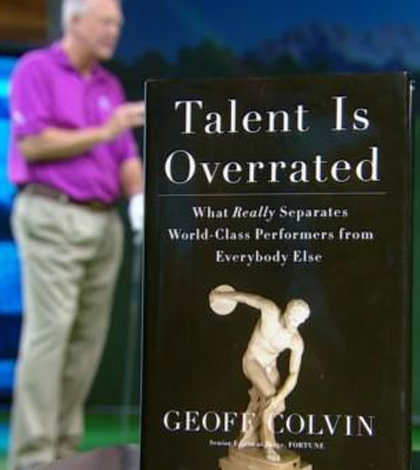
Like I stated in my first article, I watch a lot of golf on TV. If it’s not a tournament then I watch instruction. I enjoy watching and learning as much as I can. I am a true believer that knowledge is power (Yes, it’s the phrase from School House Rock commercials). If I am not watching golf, I am reading about golf. One of the shows I enjoy watching is “School Of Golf” with Martin Hall on the Golf Channel. Hall has a segment on his show where he suggests reading material that will help your golf game. During his episode on “deliberate practice,” he recommends a book called “Talent Is Overrated” by Geoff Colvin.
Colvin believes you don’t need a one-in-a-million natural gift. Better performance, and maybe even world-class performance, is attainable through deliberate practice. Colvin believes there is no such thing as “he was born to play _____.” In other words, he doesn’t believe people are born with natural talent and are destined to achieve greatness. That greatness or mastery is achieved through years of deliberate practice.
“Talent Is Overrated” is not a golf specific book, it’s not an instructional book by any means. What the book discusses are numerous examples and studies of how deliberate practice has played a roll in all of the masters of their trade or the greatest players who have ever played or are playing the game.
Colvin speaks about the anti-talent theory counterarguments, the most common names that are brought up when Colvin states that there is no such thing as divine spark and greatness can only be achieved by hard work. These two examples are brought up the most: Mozart and Tiger Woods. The similarities between these two masters of their trades are extraordinary. Both of their fathers were accomplished at their given trades. They had experience working with children and they started working with their sons at a very early age. When asked, Earl Woods stated that Tiger’s accomplishments were a result of very hard work (deliberate practice).
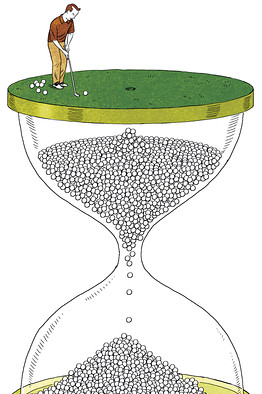
How long does one have to practice in order to become a master? Studies have shown that it takes 10,000 hours of deliberate practice to become a master. So if we practiced three hours a day, it would take 10 years to become a master. It has also been noted that at the age of 6 is when the brain will be able to understand and absorb the information and feedback from deliberate practice. Colvin believes this is why mastery is revealed around the age of 16.
So now we know that it takes 10,000 hours, we need to take a closer look at what deliberate practice is. Notice that the statement is “10,000 hours of deliberate practice” and not “10,000 hours of practice.” If it was solely 10,000 hours of practice and that’s only three hours a day, we would see more and more athletes mastering or reaching greatness in their chosen sport. Knowing that it takes deliberate practice, why don’t more athletes pursue this? The answer is in the definition of the term itself. Lets take a look at what deliberate practice really is.
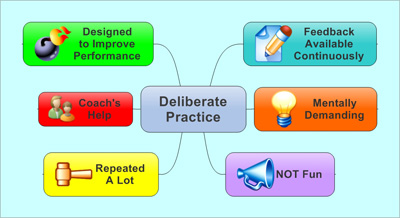
Deliberate practice is characterized by several elements. It is activity designed specifically to improve performance, often with an instructors help; it can be repeated often; feedback on results is continuously available; it’s a high-demanding mentally, whether the activity is purely intellectual, such as chess or heavily physical like sports and it isn’t much fun.
By definition alone, deliberate practice is very stressful, tiring and monotonous. At the same time you are receiving feedback and ingraining positives in your chosen activity. Going to the driving range and hitting a bucket of balls at specified target is not deliberate practice. Going to the same range with the same bucket of balls and taking a very short back swing and working on contact and contact only is a better example of deliberate practice. Another way to look at deliberate practice is working on one specified element of the swing that you the desired skill. You need to work outside of your comfort zone to make progress. Most younger athletes I know of do not want to put time into something that isn’t fun. Remember, the key element of keeping kids interested in golf is by making it fun. Deliberate practice is just the opposite. It takes extreme dedication to put time into something that is stressful and exhausting.
For you juniors seeking greatness, deliberate practice is the first step toward the 10,000 hour mark. What should you be practicing? Well, that’s up to you and your coach/instructor to decide. I simply can’t say you need to work on this or that, nor can I map out a routine for you. The routine of deliberate practice is going to be different for each player. Does this mean that you won’t be good or great at golf if you don‘t incorporate deliberate practice into a 10,000 hour routine? No, not at all. I wanted to share what it takes to become a world class athlete. If you have dreams of becoming one of the best in the world, it starts with deliberate practice.
“Talent Is Overrated” is a must read for every parent or athlete who have the desire to become great at something. It will give you a real good look at what it takes to reach the highest level of achievement.



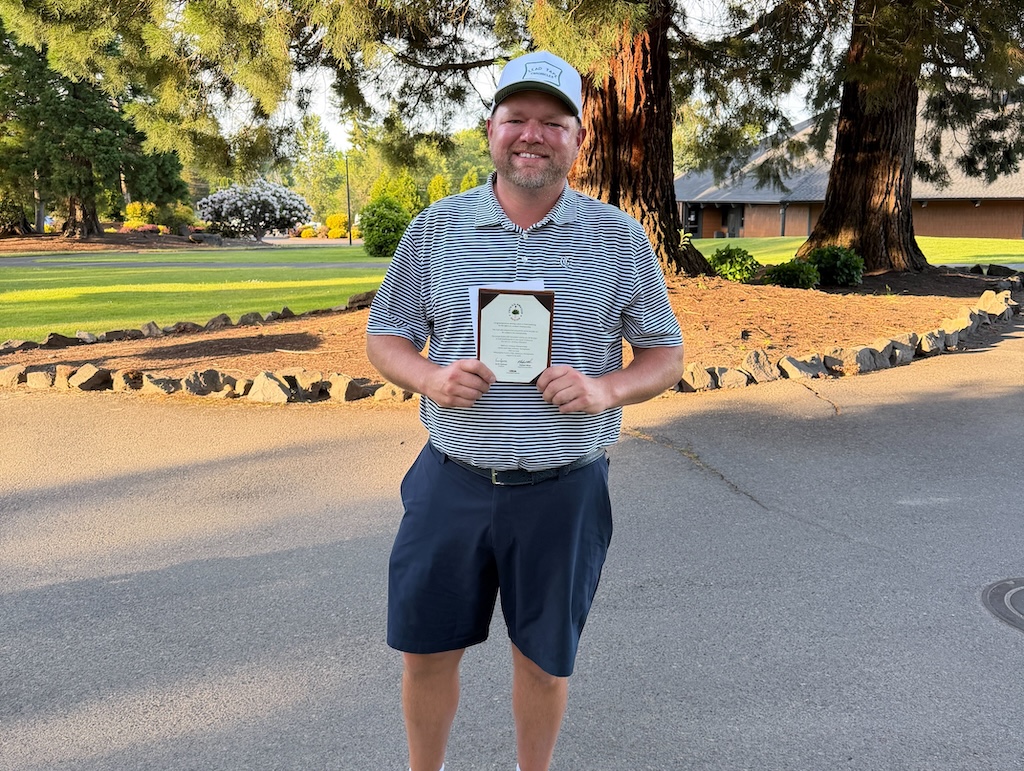
This past Monday, I played in the U.S. Amateur local qualifier at Rock Creek Country Club in Portland, Oregon. A full tee sheet from 7:30 a.m. to 1:55 p.m., the top 11 scores would make it to the U.S. Amateur final qualifying.
I teed off at 10:48 a.m.. With the 7:30 am tee time, you can get a feel for the leaders’ pace, and they were off and running on the challenging setup at Rock Creek.
View this post on Instagram
Getting to the highlight of the round on the par five 17th, a drive up the left side and 212 yards left to the front hole location. I took out a 5-iron with plans of middle of the green. The ball ended up 8 feet left of the hole, pin high. A slight downhill putt dropped in for an eagle 3 on the 17th. With the cut line looking to be anywhere from -2 to even par. This was the boost I had been waiting for all day.
With making par from the trees on 18, it was time to wait for a potential playoff with a posted score of one under par 71.
Three hours later, it was playoff time. 8 players for 6 spots. I made par on the playoff hole, which was good enough to advance to the U.S. Amateur final qualifying in July. USGA qualifiers sure deliver on all of the emotions in golf!
Club Junkie
Building my 2026 gamer WITB: Ranking the contenders and new putter projects – Club Junkie Podcast

The annual What’s In The Bag build is underway, and on this episode of Club Junkie, Brian breaks down the clubs currently leading the race for a spot in his 2026 gamer setup. From drivers and fairway woods to irons, wedges, and shafts, he ranks the equipment that’s performing best and explains what’s separating the front runners from the rest of the field.
Brian also heads into the workshop to discuss several putter projects currently on the bench. From head options and shaft choices to build ideas and testing plans, he shares what he’s working on and which putters could become serious contenders for the bag this season.
If you’re a gear junkie who loves equipment testing, club building, and the never-ending pursuit of the perfect setup, this episode is for you.
Follow Club Junkie:
Instagram: @clubjunkiepod
TikTok: @clubjunkiepod
Threads: @clubjunkiepod
X: @ClubJunkiePod
Club Junkie
Tour Edge Exotics mini driver review + TaylorMade Spider ZT Max first look – Club Junkie

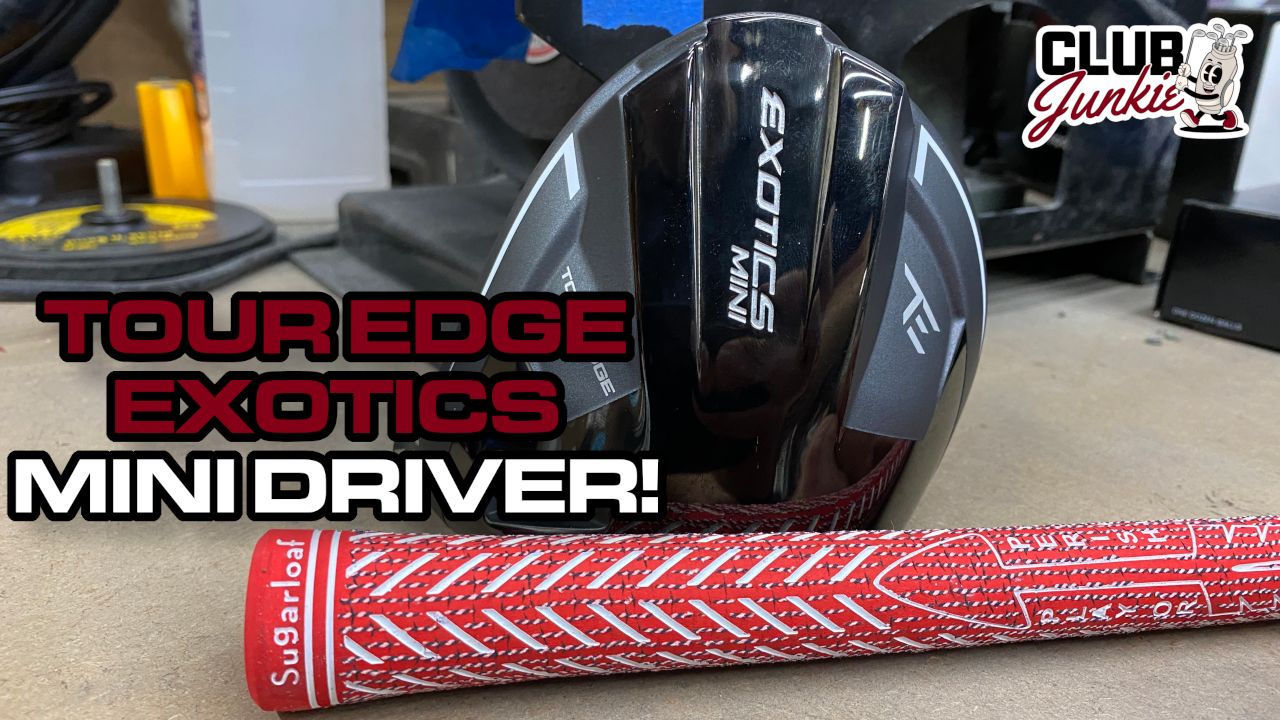
On this episode of Club Junkie, I put the new Tour Edge Exotics Mini Driver to the test and break down the performance, forgiveness, distance, and where it fits compared to a traditional driver or strong fairway wood. If you have been curious about adding a mini driver to the bag, this one is worth a look.
I also dive into the new TaylorMade Spider ZT Max putter that was recently spotted and discuss the growing zero torque putter trend. Plus, there is a closer look at the new Project X Titan Yellow shaft showing up on the PGA Tour and what makes it different from other profiles currently out there.

Justin Rose WITB 2026 (April): Full WITB breakdown with new McLaren irons

What’s the story behind Webb Simpson’s custom-stamped irons?

Cadillac Championship Tour Report: Spieth’s sizable changes, McLaren Golf launches, and more

Memorial Tournament Tour Report: Rory McIlroy, Cameron Young switch up drivers, and more

Russell Henley’s winning WITB: 2026 Charles Schwab Challenge

Kristoffer Reitan’s winning WITB: 2026 Truist Championship

Aaron Rai’s winning WITB: 2026 PGA Championship

Cameron Young’s winning WITB: 2026 Cadillac Championship

J.T. Poston’s winning WITB: 2026 Memorial Tournament

Best irons 2026: Best irons overall, most forgiving irons, and more


Bud Cauley WITB 2026 (June)
Bud Cauley had >14 clubs in his bag when photographed prior to the Memorial Tournament. Driver: Titleist GTS2 (8 degrees) Shaft: Fujikura...


Hannah Green WITB 2026 (June)
Driver: Titleist GTS3 (10 degrees, D4 SureFit setting) Shaft: Mitsubishi Chemical Diamana RB 53 S 3-wood: Titleist GT3 (15 degrees,...


Asterisk Talley WITB 2026 (June)
Driver: TaylorMade Qi4D (9 degrees) Shaft: Fujikura Ventus Blue 6 S 3-wood: TaylorMade Qi4D (16.5 degrees) Shaft: Fujikura Ventus Blue...


Brianna Do WITB 2026 (June)
Driver: Callaway Quantum Triple Diamond (9 degrees) Shaft: KBS PGW 3-wood: Callaway Elyte Titanium (15 degrees) Shaft: KBS PGW 5-wood:...
-
 Equipment5 days ago
Memorial Tournament Tour Report: Rory McIlroy, Cameron Young switch up drivers, and more
-
 News1 week ago
Russell Henley’s winning WITB: 2026 Charles Schwab Challenge
-
 Whats in the Bag3 days ago
J.T. Poston’s winning WITB: 2026 Memorial Tournament
-
 Equipment2 days ago
Best irons 2026: Best irons overall, most forgiving irons, and more
-

 Equipment1 week ago
Details on Jason Day’s latest prototype Avoda iron setup
-
 Equipment3 weeks ago
CJ Cup Byron Nelson Tour Report: Koepka and Kim’s newest putters finally get hot
-

 News2 weeks ago
Charles Schwab Challenge Tour Report: MacIntyre, Åberg and Spaun all switch putters, TaylorMade launches new Spider
-

 Equipment2 weeks ago
Details on J.J. Spaun’s surprise putter switch


Mike Drysdale
Feb 15, 2014 at 4:20 pm
I’ve been looking into the realm of gamification a bit lately and it seems that some of the concepts & principles could maybe be incorporated to lighten up the “not fun” aspect of deliberate practice a bit. I mean, fun usually keeps people more engaged, couldn’t it be incorporated a little into deliberate practice?
What do you all think?
Pingback: Perfect Golf Practice - Not a Good Idea Play Golf Home
Chris
Jan 31, 2013 at 12:08 pm
And here I thought my practice habits were pretty good. Thanks for the new perspective. Would love to hear some “common” deliberate practice ideas, especially in the short game.
Kadin Mahmet
Apr 7, 2013 at 8:45 am
Chris if you visit The Golf Channels web page and click on “School of Golf” Martin Hall has several “deliberate practice” drills to follow.
Ben Alberstadt
Jan 31, 2013 at 9:34 am
Glad to see this invaluable topic and seminal book featured in your article. Fine work (& excellent series, too)!
Sometimes, I feel like any new student approaching a teaching for a lesson should be sent home with this book to ingrain the appropriate mental framework, and as a gauge of the sincerity of the student…of course, this would be a governor on a pros’ earnings, as the average student is probably just looking to get off the first tee without embarrassment, or advice on how not to skull chips across the green…
Kadin Mahmet
Apr 7, 2013 at 8:41 am
Thanks Ben I appreciate the kind words. I agree this book is at the top of my “Must Read” list, no matter what the activity may be.
Kadin Mahmet
Jan 30, 2013 at 3:23 pm
Thanks G…It’s a love, hate relationship for sure.
See ya on thte green…Kadin
G
Jan 30, 2013 at 1:13 pm
Yeah. Deliberate practice is THE only way. You have to love the process, as it is said. And learning to love the process is a part of deliberate practice too.
Great article.. Love this stuff.
Kadin Mahmet
Jan 29, 2013 at 3:34 pm
Thank you for taking the time to read my article and for the kind words Lawrence! Good luck to you as well!
See ya on the green…..Kadin
Lawrence Montague
Jan 29, 2013 at 2:32 am
Thanks so much for writing your article on deliberate practice methodology. I am a great fan of Professor Karl Anders Ericsson and his theory of deliberate practice. I read his first paper he published on it in 1993 and to this day it has had a huge impact on my coaching. At our golf college deliberate practice underpins ever aspect of our elite player development program and we constantly remind our students of the 10,000 hour rule. Thanks for posting and the best of luck with your coaching.