
Opinion & Analysis
The Wedge Guy: Your wedge shafts DO make a difference


Over the past few decades, golf shafts have come to represent an extremely broad and deep segment of the golf equipment marketplace. And the major manufacturers spend countless hours evaluating shafts – within an acceptable cost range, of course – for their product offerings in irons, drivers, fairways, and hybrids. As a result, the custom-fitting layer of golf club retailing is myopically focused on shaft selection — often at a premium price.
Special shaft technologies are even finally working their way into some of the newer putters — but not your wedges.
Take a stroll down the seemingly endless display of wedges in any big store, and you’ll see numerous brands, models, lofts, finishes and sole grinds — but nearly every one of them has been fitted with the same type of heavy, stiff steel shaft. I’ve always thought that was really shorting golfers where feel and performance need to be pinpoint perfect.
I have learned from countless observations of golfers of all skill levels that getting the right shaft in these super-important scoring clubs can reap huge rewards in performance. Just like in your driver, the material, weight, and flex of your wedge shafts have to be exactly right for you to optimize your scoring range skill set — whatever that might be.
Stop to realize that, when it comes to the shaft in your wedges, you’re asking a lot. They have to stabilize the heaviest clubheads in the bag at full swing speed, in order to give you full shot trajectory control so that your distances are consistent. But they also have to give you precise feel and control of those touch shots around the greens where clubhead speed is only a few miles per hour. That requires the shaft to have the ability to flex or move a bit in order to give you optimum motion feedback — the sensation back to your hands of exactly where the clubhead is and what it is doing.
I think it is very important that wedge shafts should be fitted to the individual golfer’s strength profile.
Every week on television, we see the tour professionals exhibit an unbelievable display of short game mastery, hitting greenside wedge shots with absolute control of trajectory, spin, and distance. And while most all of them play a steel shaft that is the same weight as that in their irons, most all also opt for a bit softer in flex than the shaft in their irons.
But you have to also realize that these guys are top-level athletes who are extremely strong in the forearms and hands, so they can do things with a wedge of that overall weight that very few recreational golfers can even dream about – simply because you do not have the arm and hand strength to allow that level of precise manipulation of the club.
To solve this dilemma, I strongly advocate the following: Select a shaft for your wedges that closely approximates the weight of your short iron shafts. If you play lightweight steel or graphite shafts in your irons, by all means, demand the same in your wedges. This, of course, means you need to retrofit the wedges you have, or buy from a company that will accommodate your needs.
Your wedge shafts, however, should be a bit softer overall than your iron flexes to give you the feel you need around the greens. One way to achieve that is to select the same type of shaft as your irons, but in a softer flex, then cut back some of the tip section if you can.
And finally: test everything! Trying new things is one of the fun aspects of playing golf, and wedges are no different. You can experiment with different shafts in your wedges at a pretty low cost, so do it! I think you’ll have fun, and you’re likely to stumble on a formula that really improves your scoring.









This past Monday, I played in the U.S. Amateur local qualifier at Rock Creek Country Club in Portland, Oregon. A full tee sheet from 7:30 a.m. to 1:55 p.m., the top 11 scores would make it to the U.S. Amateur final qualifying.
I teed off at 10:48 a.m.. With the 7:30 am tee time, you can get a feel for the leaders’ pace, and they were off and running on the challenging setup at Rock Creek.
View this post on Instagram
Getting to the highlight of the round on the par five 17th, a drive up the left side and 212 yards left to the front hole location. I took out a 5-iron with plans of middle of the green. The ball ended up 8 feet left of the hole, pin high. A slight downhill putt dropped in for an eagle 3 on the 17th. With the cut line looking to be anywhere from -2 to even par. This was the boost I had been waiting for all day.
With making par from the trees on 18, it was time to wait for a potential playoff with a posted score of one under par 71.
Three hours later, it was playoff time. 8 players for 6 spots. I made par on the playoff hole, which was good enough to advance to the U.S. Amateur final qualifying in July. USGA qualifiers sure deliver on all of the emotions in golf!
Club Junkie
Building my 2026 gamer WITB: Ranking the contenders and new putter projects – Club Junkie Podcast

The annual What’s In The Bag build is underway, and on this episode of Club Junkie, Brian breaks down the clubs currently leading the race for a spot in his 2026 gamer setup. From drivers and fairway woods to irons, wedges, and shafts, he ranks the equipment that’s performing best and explains what’s separating the front runners from the rest of the field.
Brian also heads into the workshop to discuss several putter projects currently on the bench. From head options and shaft choices to build ideas and testing plans, he shares what he’s working on and which putters could become serious contenders for the bag this season.
If you’re a gear junkie who loves equipment testing, club building, and the never-ending pursuit of the perfect setup, this episode is for you.
Follow Club Junkie:
Instagram: @clubjunkiepod
TikTok: @clubjunkiepod
Threads: @clubjunkiepod
X: @ClubJunkiePod
Club Junkie
Tour Edge Exotics mini driver review + TaylorMade Spider ZT Max first look – Club Junkie

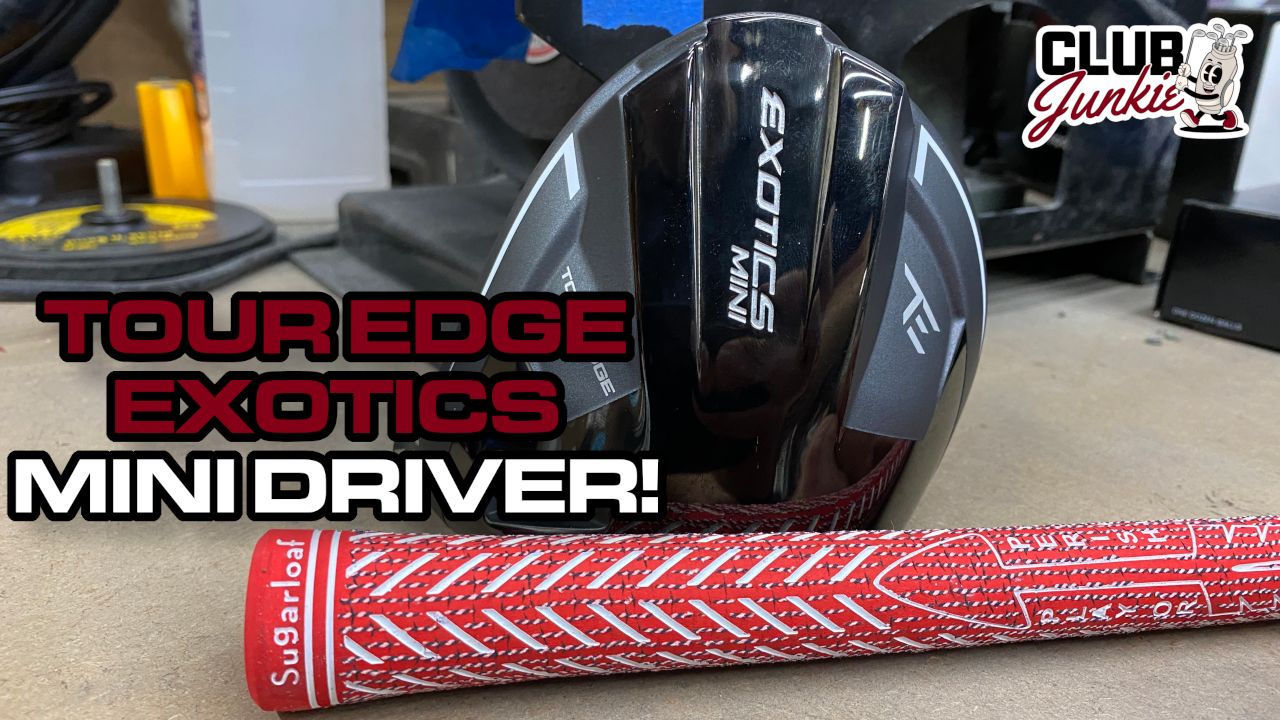
On this episode of Club Junkie, I put the new Tour Edge Exotics Mini Driver to the test and break down the performance, forgiveness, distance, and where it fits compared to a traditional driver or strong fairway wood. If you have been curious about adding a mini driver to the bag, this one is worth a look.
I also dive into the new TaylorMade Spider ZT Max putter that was recently spotted and discuss the growing zero torque putter trend. Plus, there is a closer look at the new Project X Titan Yellow shaft showing up on the PGA Tour and what makes it different from other profiles currently out there.

Justin Rose WITB 2026 (April): Full WITB breakdown with new McLaren irons

What’s the story behind Webb Simpson’s custom-stamped irons?

Memorial Tournament Tour Report: Rory McIlroy, Cameron Young switch up drivers, and more

Cadillac Championship Tour Report: Spieth’s sizable changes, McLaren Golf launches, and more

Russell Henley’s winning WITB: 2026 Charles Schwab Challenge

Kristoffer Reitan’s winning WITB: 2026 Truist Championship

Aaron Rai’s winning WITB: 2026 PGA Championship

Cameron Young’s winning WITB: 2026 Cadillac Championship

J.T. Poston’s winning WITB: 2026 Memorial Tournament

Best irons 2026: Best irons overall, most forgiving irons, and more


Bud Cauley WITB 2026 (June)
Bud Cauley had >14 clubs in his bag when photographed prior to the Memorial Tournament. Driver: Titleist GTS2 (8 degrees) Shaft: Fujikura...


Hannah Green WITB 2026 (June)
Driver: Titleist GTS3 (10 degrees, D4 SureFit setting) Shaft: Mitsubishi Chemical Diamana RB 53 S 3-wood: Titleist GT3 (15 degrees,...


Asterisk Talley WITB 2026 (June)
Driver: TaylorMade Qi4D (9 degrees) Shaft: Fujikura Ventus Blue 6 S 3-wood: TaylorMade Qi4D (16.5 degrees) Shaft: Fujikura Ventus Blue...
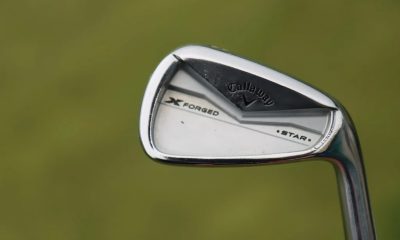

Brianna Do WITB 2026 (June)
Driver: Callaway Quantum Triple Diamond (9 degrees) Shaft: KBS PGW 3-wood: Callaway Elyte Titanium (15 degrees) Shaft: KBS PGW 5-wood:...
-
 Equipment5 days ago
Memorial Tournament Tour Report: Rory McIlroy, Cameron Young switch up drivers, and more
-
 News1 week ago
Russell Henley’s winning WITB: 2026 Charles Schwab Challenge
-
 Whats in the Bag3 days ago
J.T. Poston’s winning WITB: 2026 Memorial Tournament
-
 Equipment2 days ago
Best irons 2026: Best irons overall, most forgiving irons, and more
-

 Equipment1 week ago
Details on Jason Day’s latest prototype Avoda iron setup
-

 Equipment3 weeks ago
CJ Cup Byron Nelson Tour Report: Koepka and Kim’s newest putters finally get hot
-

 News2 weeks ago
Charles Schwab Challenge Tour Report: MacIntyre, Åberg and Spaun all switch putters, TaylorMade launches new Spider
-

 Equipment2 weeks ago
Details on J.J. Spaun’s surprise putter switch


Todd
May 29, 2021 at 11:50 am
I’m on the journey to experiment with a set of Callaway TCB’s with the Mitsubishi MMT 105tx in the irons and teh 50* gap wedge. For the SW & LW wedges I decided to give the MMT 95s a chance.
B_of_H
May 28, 2021 at 9:44 am
I switched from x100 to kbs tour 130 on my irons a few years ago and spent tons of time and money trying to find the right wedge shafts. I didn’t like the kbs tours or $ tapers in wedges as they felt odd on partial shots to me. x100s and s400s were just too drastic a difference in feel compared to my irons. I finally ended up with $ taper HT in 125 S+ and couldn’t be happier. they feel soft but play stiff on fuller swings. very happy now.
DB
May 27, 2021 at 8:46 am
Really like what Nippon did with their Modus wedge shafts – Having them available in 105, 115, and 125. Actually 111 grams, 122, and 133 but whatever. 3 different weight options. That’s the way to do it.
Paul Runyan
May 26, 2021 at 11:42 am
Nice article!
Finding the perfect match for a wedge is very difficult. We have thousands of driver shafts, iron shafts and now a few putter shafts but not a lot of choices for wedges. Hard to actually see any discernible advantage or difference spending $250 on a putter shaft!
I play the Hogan Apex shafts in all my irons. I replace the factory irons with the Apex. I do not like the Apex shafts in the wedges. A little too soft for the heavier heads. Tried the Modus, Shimada and now going to look at soft stepping an X 100 6,7 or 8 iron soft stepped down into the wedges. Shimada is probably the most accurate shaft for a wedge I have ever used but only two choices, 110 and 123 grams.
I don’t want to give up accuracy on a wedge but not wanting to over-swing to get it to work either.