
Opinion & Analysis
Book Review: A Course Called America

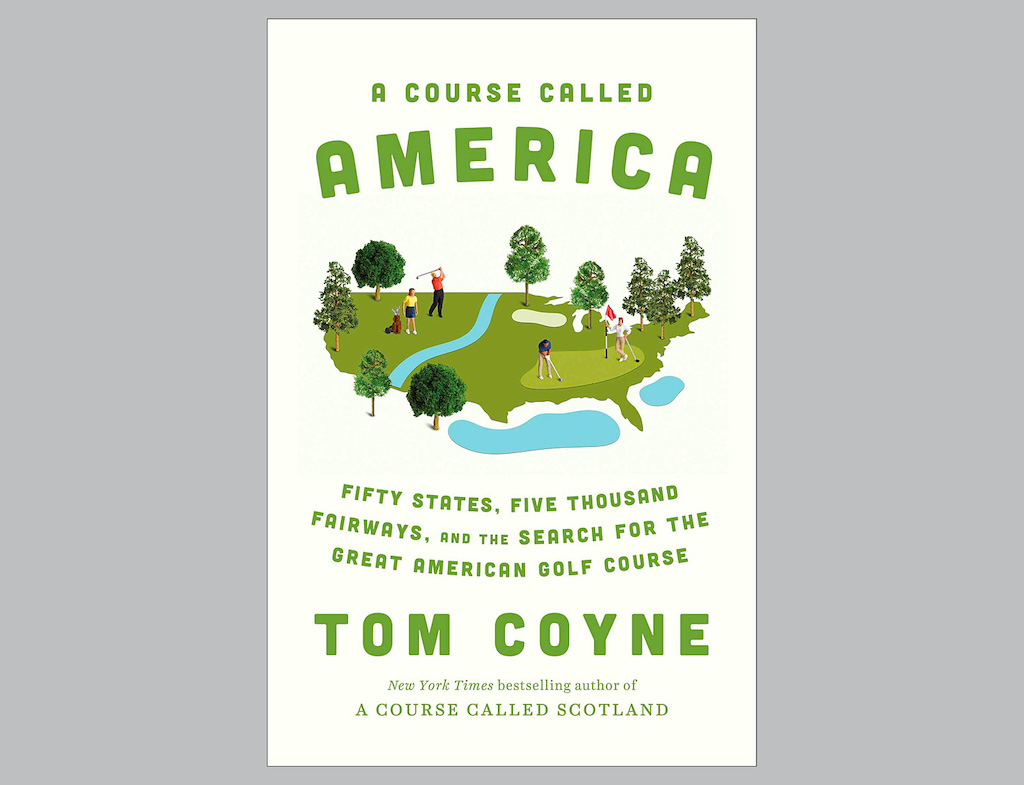
“My dad’s America was exceptional, but there seemed nothing exceptional about another country that traded in the easy currency of fear” — Tom Coyne
It’s an ominous quote to begin a review, for sure, but now that our attention is focused, it’s an important one to consider as we revisit the micro and the macro of the journey that led to A Course Called America. Golf in the USA could be assigned any number of crossroads junctions, all of which will help to determine its paths as we move past the first 20 percent of this century. It shall not return to the America of the 20th century, but it can learn from the mistakes and successes of its past. The Robert Thomas “Tom” Coyne who penned this novel is not the one we know from his earlier fiction, experiential, and travel works. The currency that he doles out, and the only one that he accepts, is a bitcoin of benevolence and beneficence.
The hilarity and chicanery of alcohol-infused transgressions sit deep in his youthful, pre-recovery past. In their place, the hilarity and chicanery of middle-aged men figuring out their place in the world are introduced, and the unplanned buffoonery of golfers being golfers is often in the spotlight, thanks to Tom Coyne’s set of ears.
“Let’s sit by the fire and make grand statements,” he said as we grabbed two seats in a booth, and he caught me up on his latest golf travels. “So, enough about me,” he said. “Let’s talk about you. What do you think about me?”
That’s right: Tom Coyne listens well. After completing the third of his A Course Called volumes, it occurred to me that listening is what a great storyteller does best. The subsequent construction and telling of the story is the result of the hearing + processing = listening formula. In both Ireland and Scotland, Coyne listened with the ear of a visitor, of one curious to learn about the customs, culture, and creativity of countries not his own. In America, the task was more daunting. The USA is his country, a status that experience and intimacy, as well as baggage.
Leaving one’s own enclave in this largest nation reveals how little we know about our own state, the other 49 states, their residents, customs and culture. We think of the USA as one nation, but how can it possibly be one of anything? That is the subtext of Coyne’s third and final installment in the series. As with all fine writers, there are multiple layers of text to consider.
“… I felt moved by the notion that there were people who were willing to do impossible things, and if you were like me, you took them largely for granted. And now I was linked to one of them — the proof was here in my hand — and suddenly, my being American felt less like a happy accident.”
Before he met Ryan and knew all of this, Tom Coyne had laid out plans for A Course Called America, and framed the trip around two asterisms: a visit to every state for golf, and a round on every US Open venue still in existence. In the back of his mind was a search for what he termed the great American golf course. Under the assumption that he would fin it, Coyne left his Philadelphia-area home in the spring of 2019 for the first time. Nine or so months later, he returned home for the last. Never anticipated was the arrival of a virus that would cause the world to shut down. It was Coyne’s great fortune to conclude his trip just as the global pandemic began its globalization.
The aforementioned dual structure allowed a build-out of the important macro themes present in our world today, and how they interlace with golf. Climate change, gender and race relationships, equitable access, addiction and recovery, and communal support all received scrutiny from Coyne.
“I’d been pissed at DB for lumping me in with the rest of the wankers; now I was pissed at myself for lowering my head and staying quiet. Part of me was curious about what he’s say next.”
Before he travelled the roads and skies of North America, Coyne utilized his various social media accounts and contacts to determine which courses and clubs merited a visit. Anticipating just enough to fill his time, he was compelled to cull an enormous number of venues, paring his list to a manageable number that often involved seven-hour drives after full days on the course. The vagaries of club schedules necessitated more than one revisal of his itinerary.
A Course Called America is about people. It’s about human relationships, competition, support structures, and opportunity. This brings us back to the notion of Coyne as listener. It’s easy to begin a sentence with “I.” One letter, whose subject is the one we all know best. What Coyne did throughout ACC America is ask about his playing partners, his venues, his food, his accommodations, and any other aspect of the trip that should interest his readers.
What all those people and places did was answer, in loud and grateful voices. It wasn’t always the anticipated response; it was usually better and deeper and more satisfying. It might not have been the palatable reply, but it was an honest and sincere and transparent one. As much as we need a short-game lesson, we need a listening one even more. The lesson plans on how to listen, recall, and learn are presented here by Professor Coyne.
If we listen to Tom Coyne, we learn a lot about what he likes. We learn the architects that he prefers, although there is one contemporary architect who appears to fall under the jury still out heading. I’ll let you guess which one. We learn the types of topography, grass, and terrain that make golf a pleasure or a nuisance for him, and he finds more than anyone’s fair share of each, from sea to shining sea and beyond.
At the beginning of A Course Called America, we suspected that yet another layer lies beneath: the song of Family Coyne, or at least the part that relates to golf. Throughout the 400 pages of this final journey, Tom Coyne connects the dots of his parents’ cross-country journey, their cross-decade journey, and his journey through life and golf. The magic is in the telling, and we are well-served by his efforts.
The verdict is this: jump on social media and ask @CoyneWriter (Twitter and Instagram) if he’d consider a three-pack of the books, if you haven’t read them. If, like me, you’ve read and enjoyed the first two, head over to his website and place an order for A Course Called America. You’ll find yourself and your course amid the pages, even if the names and faces are different.
“Kathy, I’m lost”, I said, though I knew she was sleeping
I’m empty and aching and I don’t know why
Counting the cars on the New Jersey Turnpike
They’ve all come to look for America –Paul Simon




This past Monday, I played in the U.S. Amateur local qualifier at Rock Creek Country Club in Portland, Oregon. A full tee sheet from 7:30 a.m. to 1:55 p.m., the top 11 scores would make it to the U.S. Amateur final qualifying.
I teed off at 10:48 a.m.. With the 7:30 am tee time, you can get a feel for the leaders’ pace, and they were off and running on the challenging setup at Rock Creek.
View this post on Instagram
Getting to the highlight of the round on the par five 17th, a drive up the left side and 212 yards left to the front hole location. I took out a 5-iron with plans of middle of the green. The ball ended up 8 feet left of the hole, pin high. A slight downhill putt dropped in for an eagle 3 on the 17th. With the cut line looking to be anywhere from -2 to even par. This was the boost I had been waiting for all day.
With making par from the trees on 18, it was time to wait for a potential playoff with a posted score of one under par 71.
Three hours later, it was playoff time. 8 players for 6 spots. I made par on the playoff hole, which was good enough to advance to the U.S. Amateur final qualifying in July. USGA qualifiers sure deliver on all of the emotions in golf!
Club Junkie
Building my 2026 gamer WITB: Ranking the contenders and new putter projects – Club Junkie Podcast

The annual What’s In The Bag build is underway, and on this episode of Club Junkie, Brian breaks down the clubs currently leading the race for a spot in his 2026 gamer setup. From drivers and fairway woods to irons, wedges, and shafts, he ranks the equipment that’s performing best and explains what’s separating the front runners from the rest of the field.
Brian also heads into the workshop to discuss several putter projects currently on the bench. From head options and shaft choices to build ideas and testing plans, he shares what he’s working on and which putters could become serious contenders for the bag this season.
If you’re a gear junkie who loves equipment testing, club building, and the never-ending pursuit of the perfect setup, this episode is for you.
Follow Club Junkie:
Instagram: @clubjunkiepod
TikTok: @clubjunkiepod
Threads: @clubjunkiepod
X: @ClubJunkiePod
Club Junkie
Tour Edge Exotics mini driver review + TaylorMade Spider ZT Max first look – Club Junkie


On this episode of Club Junkie, I put the new Tour Edge Exotics Mini Driver to the test and break down the performance, forgiveness, distance, and where it fits compared to a traditional driver or strong fairway wood. If you have been curious about adding a mini driver to the bag, this one is worth a look.
I also dive into the new TaylorMade Spider ZT Max putter that was recently spotted and discuss the growing zero torque putter trend. Plus, there is a closer look at the new Project X Titan Yellow shaft showing up on the PGA Tour and what makes it different from other profiles currently out there.

Justin Rose WITB 2026 (April): Full WITB breakdown with new McLaren irons

What’s the story behind Webb Simpson’s custom-stamped irons?

Memorial Tournament Tour Report: Rory McIlroy, Cameron Young switch up drivers, and more

Cadillac Championship Tour Report: Spieth’s sizable changes, McLaren Golf launches, and more

Russell Henley’s winning WITB: 2026 Charles Schwab Challenge

Kristoffer Reitan’s winning WITB: 2026 Truist Championship

Aaron Rai’s winning WITB: 2026 PGA Championship

Cameron Young’s winning WITB: 2026 Cadillac Championship

J.T. Poston’s winning WITB: 2026 Memorial Tournament

Best irons 2026: Best irons overall, most forgiving irons, and more


Bud Cauley WITB 2026 (June)
Bud Cauley had >14 clubs in his bag when photographed prior to the Memorial Tournament. Driver: Titleist GTS2 (8 degrees) Shaft: Fujikura...


Hannah Green WITB 2026 (June)
Driver: Titleist GTS3 (10 degrees, D4 SureFit setting) Shaft: Mitsubishi Chemical Diamana RB 53 S 3-wood: Titleist GT3 (15 degrees,...


Asterisk Talley WITB 2026 (June)
Driver: TaylorMade Qi4D (9 degrees) Shaft: Fujikura Ventus Blue 6 S 3-wood: TaylorMade Qi4D (16.5 degrees) Shaft: Fujikura Ventus Blue...


Brianna Do WITB 2026 (June)
Driver: Callaway Quantum Triple Diamond (9 degrees) Shaft: KBS PGW 3-wood: Callaway Elyte Titanium (15 degrees) Shaft: KBS PGW 5-wood:...
-
 Equipment5 days ago
Memorial Tournament Tour Report: Rory McIlroy, Cameron Young switch up drivers, and more
-
 News1 week ago
Russell Henley’s winning WITB: 2026 Charles Schwab Challenge
-
 Whats in the Bag3 days ago
J.T. Poston’s winning WITB: 2026 Memorial Tournament
-
 Equipment3 days ago
Best irons 2026: Best irons overall, most forgiving irons, and more
-

 Equipment1 week ago
Details on Jason Day’s latest prototype Avoda iron setup
-

 Equipment3 weeks ago
CJ Cup Byron Nelson Tour Report: Koepka and Kim’s newest putters finally get hot
-

 News2 weeks ago
Charles Schwab Challenge Tour Report: MacIntyre, Åberg and Spaun all switch putters, TaylorMade launches new Spider
-

 Equipment2 weeks ago
Details on J.J. Spaun’s surprise putter switch

