
Opinion & Analysis
The Wedge Guy: Understanding CG

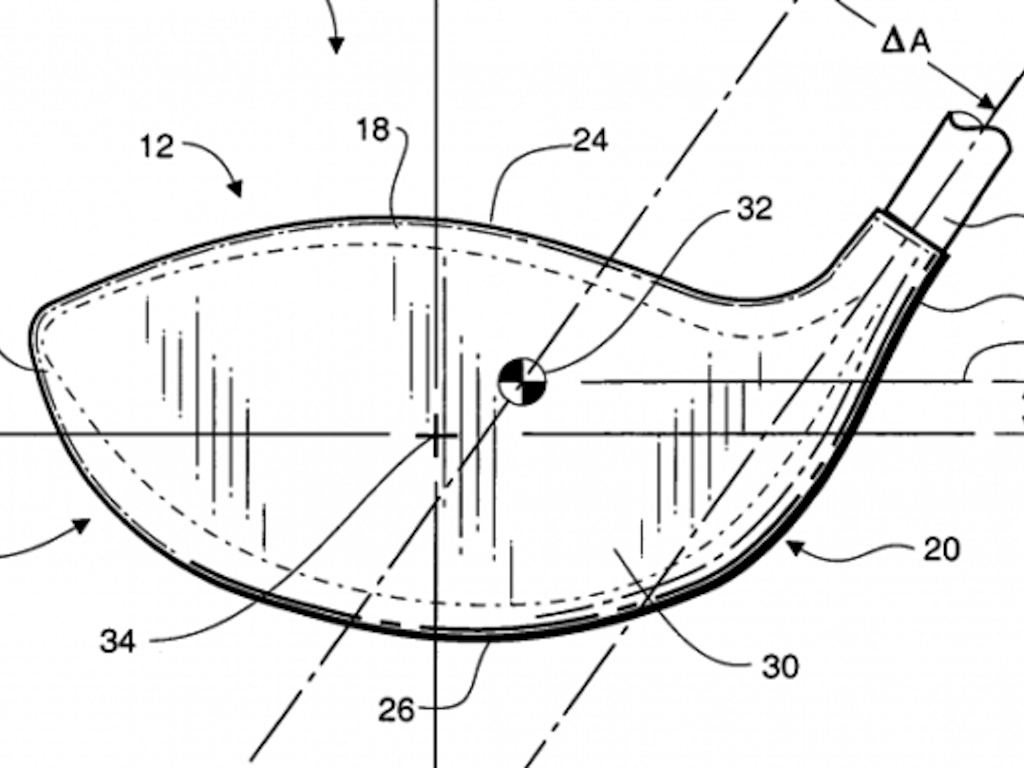
One of the most misunderstood concepts involved in golf club design is that of “CG,” or “center of gravity,” also “center of mass.” While this particular measurement of any golf club head can certainly offer insight into its probable performance, it is not the “be all, end all” with regard to any club’s specific launch or forgiveness attributes.
What “CG” specifically refers to is the exact center location of a club’s distribution of mass, which will generally coincide with that club’s “sweet spot”—but that’s not always true. There are lots of ways to manipulate or manage any club’s exact CG location, and therein lies a “Pandora’s Box” of misunderstanding.
Let’s start back in the very old days, when irons were single pieces of forged steel and woods were made of persimmon. Since there was no science inside the club, CG was essentially a result of how the clubhead is formed—its essential shape.
A typical persimmon driver head, for example, was sized to deliver its ideal weight without any additional weights added. The solid block of persimmon, with some kind of face insert and an aluminum soleplate was all you had to work with. So, the CG was located pretty close to the center of the clubhead from all three axes – vertical, front-go-back and heel-to-toe. If you remember, persimmon fairway woods were smaller and had a brass sole plate to add mass lower in the head and often a lead weight under the sole plate to move the CG even lower to help produce higher ball flights on shots hit from the turf, rather than off a tee.

Traditional forged irons up to the 1960s-70s typically had a CG very close to the hosel, a result of the mass of the hosel itself and the typical design that put “muscle” behind the impact area, and very little mass out toward the toe. An examination of worn faces on those old irons would reveal the wear very much toward the heel. I distinctly remember fighting the shanks back in those days, and that ugly shot usually felt very close to a perfectly struck one, rather than feeling as awful as it looked.
As metal woods and cavity-back irons became the norm, designers were able to move the CG ever lower in order to produce higher ball flight, and more toward the center of the face to put the CG further from the hosel. As technology has continued to be refined, the use of tungsten inserts has further allowed designers to position the CG exactly where they want it – typically lower in the club and more toward the center or even the toe of the golf club.
And therein lies a problem with pushing this insert technology too far.
There is no question that in addition to making contact somewhere close to the CG of the clubhead, ball performance is also a product of how much mass is directly behind the impact point. Let me offer this example of how important that can be.

Let’s assume two identically shaped cavity-back 7-irons – same size, face thickness, overall weight and a design that places the CG in the exact same spot in the scoring pattern. The only difference between the two is that one is a single piece forged or cast steel head, with the other being cast of aluminum, with heavy tungsten inserts in the hosel and toe areas to achieve the same overall weight and CG location.
Which do you think would deliver the more solid feel of impact and better transfer of energy to the ball?
Now, we could take that even further by cutting out the entire center of both clubheads and increase the mass or the weight of tungsten in the hosel and toe to bring each back up to weight. The CG location would not change, but there would be absolutely no mass at all where the ball impact location would be. That would not work at all, would it?
I’ve learned long ago that it’s not just about the location of the CG that makes a golf club perform, but also the amount of mass that is placed directly behind the spot on the face where impact with the ball is made.
Here’s a fun, “non-golf” way to embrace this concept.
Suppose we had a two-pound sledgehammer and another 2 lb piece of steel hammered into a large circular sheet 1/16” thick. And then suppose someone hit you on the head with the exact CG of each one – which do you think would hurt the most?










This past Monday, I played in the U.S. Amateur local qualifier at Rock Creek Country Club in Portland, Oregon. A full tee sheet from 7:30 a.m. to 1:55 p.m., the top 11 scores would make it to the U.S. Amateur final qualifying.
I teed off at 10:48 a.m.. With the 7:30 am tee time, you can get a feel for the leaders’ pace, and they were off and running on the challenging setup at Rock Creek.
View this post on Instagram
Getting to the highlight of the round on the par five 17th, a drive up the left side and 212 yards left to the front hole location. I took out a 5-iron with plans of middle of the green. The ball ended up 8 feet left of the hole, pin high. A slight downhill putt dropped in for an eagle 3 on the 17th. With the cut line looking to be anywhere from -2 to even par. This was the boost I had been waiting for all day.
With making par from the trees on 18, it was time to wait for a potential playoff with a posted score of one under par 71.
Three hours later, it was playoff time. 8 players for 6 spots. I made par on the playoff hole, which was good enough to advance to the U.S. Amateur final qualifying in July. USGA qualifiers sure deliver on all of the emotions in golf!
Club Junkie
Building my 2026 gamer WITB: Ranking the contenders and new putter projects – Club Junkie Podcast

The annual What’s In The Bag build is underway, and on this episode of Club Junkie, Brian breaks down the clubs currently leading the race for a spot in his 2026 gamer setup. From drivers and fairway woods to irons, wedges, and shafts, he ranks the equipment that’s performing best and explains what’s separating the front runners from the rest of the field.
Brian also heads into the workshop to discuss several putter projects currently on the bench. From head options and shaft choices to build ideas and testing plans, he shares what he’s working on and which putters could become serious contenders for the bag this season.
If you’re a gear junkie who loves equipment testing, club building, and the never-ending pursuit of the perfect setup, this episode is for you.
Follow Club Junkie:
Instagram: @clubjunkiepod
TikTok: @clubjunkiepod
Threads: @clubjunkiepod
X: @ClubJunkiePod
Club Junkie
Tour Edge Exotics mini driver review + TaylorMade Spider ZT Max first look – Club Junkie

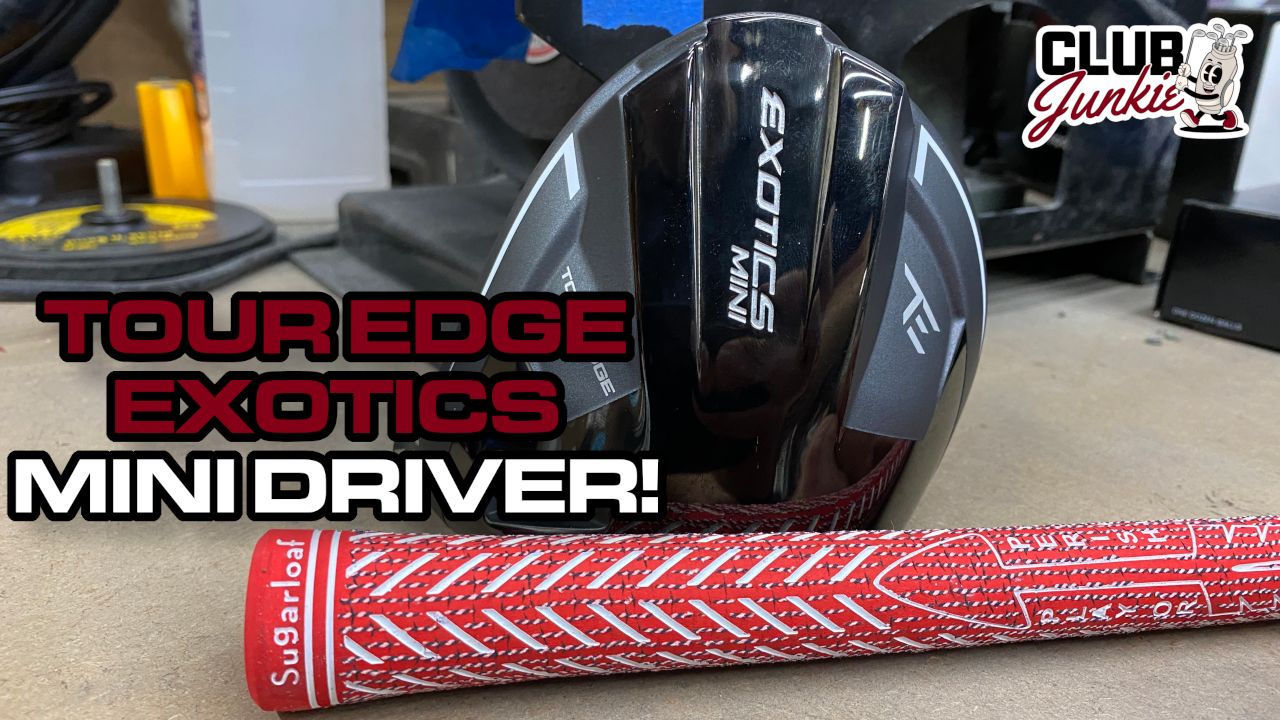
On this episode of Club Junkie, I put the new Tour Edge Exotics Mini Driver to the test and break down the performance, forgiveness, distance, and where it fits compared to a traditional driver or strong fairway wood. If you have been curious about adding a mini driver to the bag, this one is worth a look.
I also dive into the new TaylorMade Spider ZT Max putter that was recently spotted and discuss the growing zero torque putter trend. Plus, there is a closer look at the new Project X Titan Yellow shaft showing up on the PGA Tour and what makes it different from other profiles currently out there.

Justin Rose WITB 2026 (April): Full WITB breakdown with new McLaren irons

What’s the story behind Webb Simpson’s custom-stamped irons?

Memorial Tournament Tour Report: Rory McIlroy, Cameron Young switch up drivers, and more

Cadillac Championship Tour Report: Spieth’s sizable changes, McLaren Golf launches, and more

Russell Henley’s winning WITB: 2026 Charles Schwab Challenge

Kristoffer Reitan’s winning WITB: 2026 Truist Championship

Aaron Rai’s winning WITB: 2026 PGA Championship

Cameron Young’s winning WITB: 2026 Cadillac Championship

J.T. Poston’s winning WITB: 2026 Memorial Tournament

Best irons 2026: Best irons overall, most forgiving irons, and more


Bud Cauley WITB 2026 (June)
Bud Cauley had >14 clubs in his bag when photographed prior to the Memorial Tournament. Driver: Titleist GTS2 (8 degrees) Shaft: Fujikura...


Hannah Green WITB 2026 (June)
Driver: Titleist GTS3 (10 degrees, D4 SureFit setting) Shaft: Mitsubishi Chemical Diamana RB 53 S 3-wood: Titleist GT3 (15 degrees,...


Asterisk Talley WITB 2026 (June)
Driver: TaylorMade Qi4D (9 degrees) Shaft: Fujikura Ventus Blue 6 S 3-wood: TaylorMade Qi4D (16.5 degrees) Shaft: Fujikura Ventus Blue...

Brianna Do WITB 2026 (June)
Driver: Callaway Quantum Triple Diamond (9 degrees) Shaft: KBS PGW 3-wood: Callaway Elyte Titanium (15 degrees) Shaft: KBS PGW 5-wood:...
-
 Equipment5 days ago
Memorial Tournament Tour Report: Rory McIlroy, Cameron Young switch up drivers, and more
-
 News1 week ago
Russell Henley’s winning WITB: 2026 Charles Schwab Challenge
-
 Whats in the Bag3 days ago
J.T. Poston’s winning WITB: 2026 Memorial Tournament
-
 Equipment3 days ago
Best irons 2026: Best irons overall, most forgiving irons, and more
-

 Equipment1 week ago
Details on Jason Day’s latest prototype Avoda iron setup
-
 Equipment3 weeks ago
CJ Cup Byron Nelson Tour Report: Koepka and Kim’s newest putters finally get hot
-

 News2 weeks ago
Charles Schwab Challenge Tour Report: MacIntyre, Åberg and Spaun all switch putters, TaylorMade launches new Spider
-
 Equipment2 weeks ago
Details on J.J. Spaun’s surprise putter switch


Reid Thompson
Mar 4, 2021 at 12:51 pm
I was kind of looking for if low CG creates low spin or the opposite.
Terry Koehler
Mar 7, 2021 at 2:50 pm
A low CG will tend to reduce spin and elevate ball flight.
Jon
Mar 4, 2021 at 7:19 am
You’re correct… I believe they’ve gone from extreme perimeter weighting , thinking forgiveness to understanding that if you create more back spin with a lower center of gravity, you create less side spin. .. Therefore, more forgiveness than perimeter weighting.
Martien Schwencke
Mar 4, 2021 at 6:45 am
The point of percusion is not always where the centre of grafety is.
A good desined club the point of percusion is locaed in the middel of the face.
T Carter
Mar 3, 2021 at 1:12 pm
Not saying any of these comparisons are wrong, they are just not porportional to the game of golf. Another comparison you could make is pounding fence posts. You could use a sledge hammer to hit the top of a post or you could use a post pounder which provides consistent results due to innovative shaping of metal. A sledge hammer could be more effective in the use of very skilled hands, but the pounder is much much much more user friendly and even professionals use them too for consistency.
Also keep in mind that we are swinging golf clubs at a very high speed and everyone could use some forgiveness even though a perfect shot may not perform like a perfect shot with blades.
Joe
Mar 3, 2021 at 11:00 am
The last comment in this article proves this guy has no understanding of engineering. This literally just reads like a marketing piece to explain why his wedges are better.
Raj lp
Mar 3, 2021 at 11:12 am
Care to explain?
Engineer
Mar 3, 2021 at 5:39 pm
Agree. This makes no sense. If that 1/16″ thick metal hit you in the back of the head it would feel the same, except that the metal flexes and the load is distributed. Look at track man if you think there’s some kind of difference. Track man doesn’t ask you if you’re playing a cavity back iron or a muscle back blade. It simply says, path + face angle = ball flight.
Very little of this article is about cg.