
Opinion & Analysis
The Wedge Guy: A dissection of feel


I want to thank so many of you who have sent me emails with suggestions for topics I might dive into in future columns – please keep ‘em coming. Those emails and your ratings and comments each week keep me energized and focused with this effort.
Today, I want to dive into that elusive topic of “feel” that we talk about when we are discussing golf clubs, or more specifically as we compare one club to another. Unlike almost all the other aspects of measuring a golf club, there just is not a way to quantify this most necessary quality of a club. What one player considers “solid” another might say is “dull”. The number of adjectives is almost unlimited – it’s too bad feel cannot just be measured like length or swingweight.
For the purpose of today’s discussion of “feel”, I’m going to contain it to talking about wedges, as that is my specific area of focus for the past 30 years.

To start with, we in the industry have learned that golfers’ perception of “feel” is highly influenced by the sound of impact. In tests, it has been proven that what you say you feel is closely connected by what you hear. But even that is completely subjective to and by each individual golfer. In my own experience, for example, I began wearing hearing aids about a year ago. It’s amazing what all I had been missing as my hearing deteriorated over the years, probably due to all that shooting I did in my youth without hearing protection, along with many hours spent in concerts and live music dance halls.
When I first hit a golf ball with the hearing aids on, the sound was simply awful, being very “click-y” for lack of a better word. It was so unsatisfying and disconcerting to me, that I just take the hearing aids off when I play golf.
Then there is the contribution to “feel” by the golf ball you play. A harder distance ball definitely feels and sounds different from a softer cover ball that emphasizes spin. But for today, let’s contain this discussion of feel to the golf club only, and more specifically, to the “feel” of impact with your wedges that you sense through your hands.
The quality of feel that a wedge can deliver is affected by all the factors involved in the making of that wedge, along with the quality of impact. But I also believe there are two aspects to “feel” as it applies to a wedge – the sensation of impact AND the “motion feedback” of how the club is moving through the takeaway to transition to impact. Let’s tackle the first one first.
Whether it is better to cast or forge the clubhead has always been a topic of discussion, but most agree that forged wedges have a softer, more solid feel than those that are cast; that is as much because of the materials used as the process in making the head. I have long been a proponent of forging for wedges, as I believe the quality is worth the few extra dollars a good forged wedge costs.
I can also tell you that way the head is shaped is much more influential on “feel” than the way it is made. Essentially all mainstream ‘tour design’ wedges, for example, have the majority of the mass at the extreme bottom of the clubhead. So, if impact is made on the 3rd to 4th groove, there is much more mass behind the ball than if impact is just 3-4 grooves higher, where there is very little mass behind the ball. That’s why we can immediately detect a shot hit a bit thin or a bit high in the face. [That’s also why those shots behave entirely different . . . because of the variance in smash factor.]
A golfer who consistently makes contact low in the face is going to experience a totally different feel than the golfer who might play fluffier fairways and routinely makes contact even a bit higher on the face.

Another big influence on the feel that gets to your hands is the shaft and grip. Starting with the latter, the old, wrapped leather grips presented a much more direct and some say “harsh” feel than slip-on rubber grips. The more recent trend to mid-size and oversize grips puts more rubber compound between the shaft and your hands, which has to mitigate vibrations from impact, i.e. a different “feel”.
I’ve long been a proponent of giving more attention to the shafts in your wedges, because I do think it is THAT important. Most mainstream wedges are sold with a heavy and stiff steel shaft, which presents a totally different sensation of impact than either lighter weight steel or graphite. I tend to prefer the latter, because of the outstanding qualities of carbon fiber in moderating vibration, but just as important, in the “motion feedback” carbon fiber in the right flex can provide.
As this is getting long, why don’t I dive into that part of the feel equation next week, because “motion feedback” is just too important to your wedge play to leave to a closing paragraph.
I hope this helped you understand more about “feel”, and I look forward to delivering “Part 2” of the Dissection of Feel next week.








This past Monday, I played in the U.S. Amateur local qualifier at Rock Creek Country Club in Portland, Oregon. A full tee sheet from 7:30 a.m. to 1:55 p.m., the top 11 scores would make it to the U.S. Amateur final qualifying.
I teed off at 10:48 a.m.. With the 7:30 am tee time, you can get a feel for the leaders’ pace, and they were off and running on the challenging setup at Rock Creek.
View this post on Instagram
Getting to the highlight of the round on the par five 17th, a drive up the left side and 212 yards left to the front hole location. I took out a 5-iron with plans of middle of the green. The ball ended up 8 feet left of the hole, pin high. A slight downhill putt dropped in for an eagle 3 on the 17th. With the cut line looking to be anywhere from -2 to even par. This was the boost I had been waiting for all day.
With making par from the trees on 18, it was time to wait for a potential playoff with a posted score of one under par 71.
Three hours later, it was playoff time. 8 players for 6 spots. I made par on the playoff hole, which was good enough to advance to the U.S. Amateur final qualifying in July. USGA qualifiers sure deliver on all of the emotions in golf!
Club Junkie
Building my 2026 gamer WITB: Ranking the contenders and new putter projects – Club Junkie Podcast

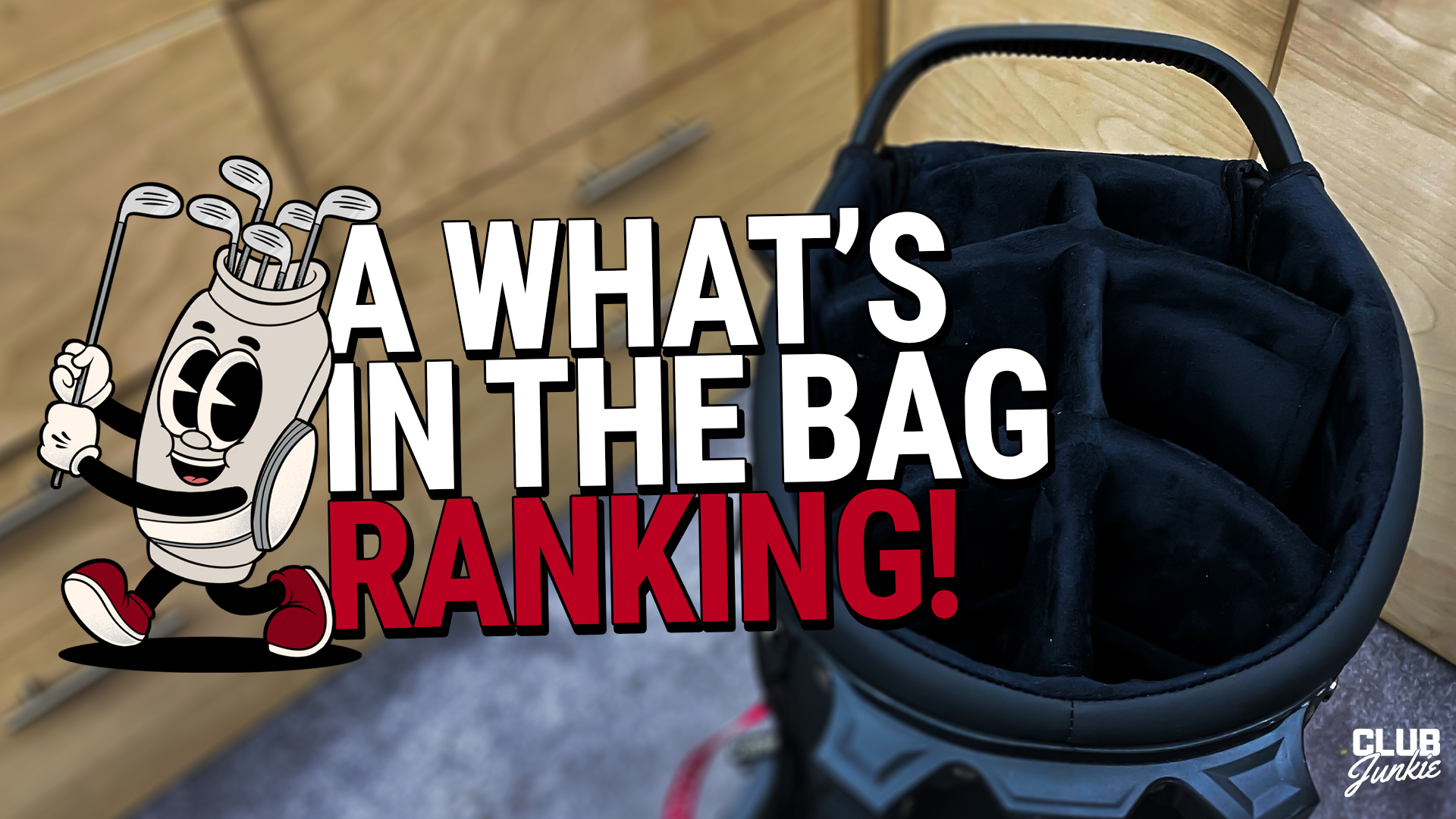
The annual What’s In The Bag build is underway, and on this episode of Club Junkie, Brian breaks down the clubs currently leading the race for a spot in his 2026 gamer setup. From drivers and fairway woods to irons, wedges, and shafts, he ranks the equipment that’s performing best and explains what’s separating the front runners from the rest of the field.
Brian also heads into the workshop to discuss several putter projects currently on the bench. From head options and shaft choices to build ideas and testing plans, he shares what he’s working on and which putters could become serious contenders for the bag this season.
If you’re a gear junkie who loves equipment testing, club building, and the never-ending pursuit of the perfect setup, this episode is for you.
Follow Club Junkie:
Instagram: @clubjunkiepod
TikTok: @clubjunkiepod
Threads: @clubjunkiepod
X: @ClubJunkiePod
Club Junkie
Tour Edge Exotics mini driver review + TaylorMade Spider ZT Max first look – Club Junkie

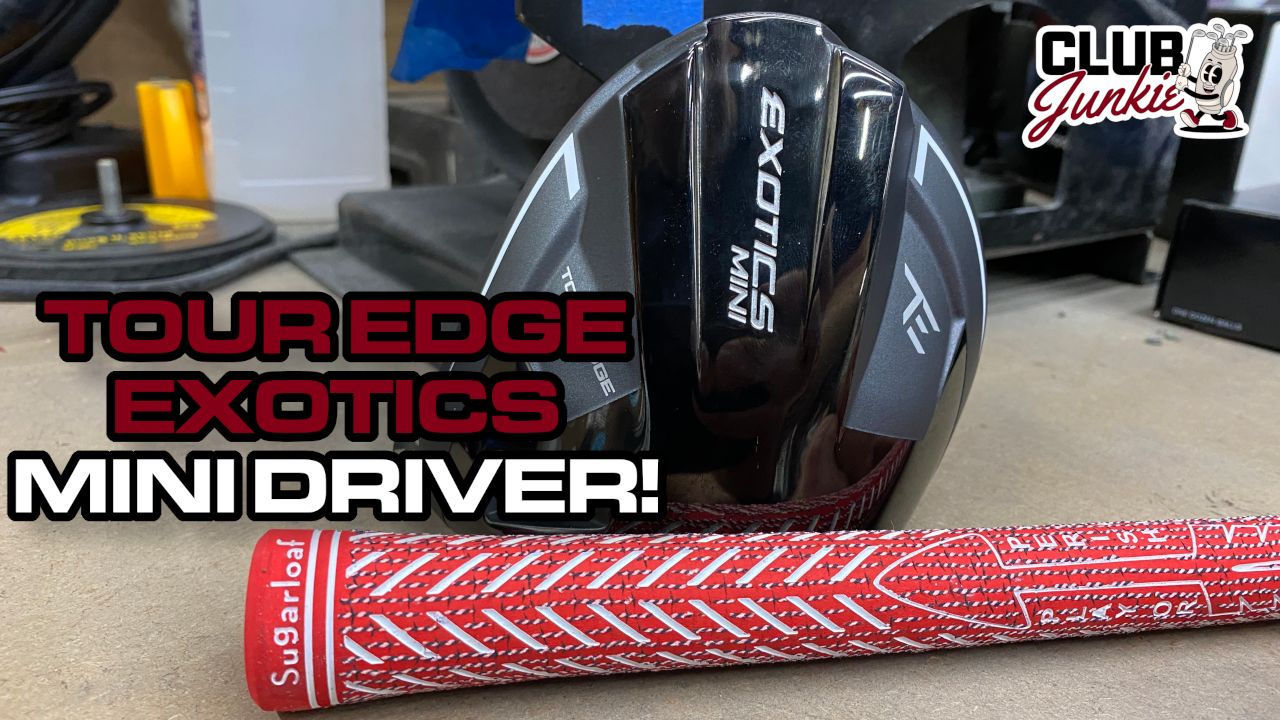
On this episode of Club Junkie, I put the new Tour Edge Exotics Mini Driver to the test and break down the performance, forgiveness, distance, and where it fits compared to a traditional driver or strong fairway wood. If you have been curious about adding a mini driver to the bag, this one is worth a look.
I also dive into the new TaylorMade Spider ZT Max putter that was recently spotted and discuss the growing zero torque putter trend. Plus, there is a closer look at the new Project X Titan Yellow shaft showing up on the PGA Tour and what makes it different from other profiles currently out there.

Justin Rose WITB 2026 (April): Full WITB breakdown with new McLaren irons

What’s the story behind Webb Simpson’s custom-stamped irons?

Memorial Tournament Tour Report: Rory McIlroy, Cameron Young switch up drivers, and more

Cadillac Championship Tour Report: Spieth’s sizable changes, McLaren Golf launches, and more

Russell Henley’s winning WITB: 2026 Charles Schwab Challenge

Kristoffer Reitan’s winning WITB: 2026 Truist Championship

Aaron Rai’s winning WITB: 2026 PGA Championship

Cameron Young’s winning WITB: 2026 Cadillac Championship

J.T. Poston’s winning WITB: 2026 Memorial Tournament

Best irons 2026: Best irons overall, most forgiving irons, and more


Bud Cauley WITB 2026 (June)
Bud Cauley had >14 clubs in his bag when photographed prior to the Memorial Tournament. Driver: Titleist GTS2 (8 degrees) Shaft: Fujikura...


Hannah Green WITB 2026 (June)
Driver: Titleist GTS3 (10 degrees, D4 SureFit setting) Shaft: Mitsubishi Chemical Diamana RB 53 S 3-wood: Titleist GT3 (15 degrees,...


Asterisk Talley WITB 2026 (June)
Driver: TaylorMade Qi4D (9 degrees) Shaft: Fujikura Ventus Blue 6 S 3-wood: TaylorMade Qi4D (16.5 degrees) Shaft: Fujikura Ventus Blue...
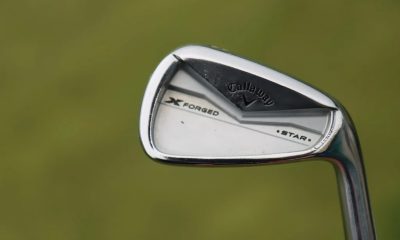

Brianna Do WITB 2026 (June)
Driver: Callaway Quantum Triple Diamond (9 degrees) Shaft: KBS PGW 3-wood: Callaway Elyte Titanium (15 degrees) Shaft: KBS PGW 5-wood:...
-
 Equipment5 days ago
Memorial Tournament Tour Report: Rory McIlroy, Cameron Young switch up drivers, and more
-
 News1 week ago
Russell Henley’s winning WITB: 2026 Charles Schwab Challenge
-
 Whats in the Bag3 days ago
J.T. Poston’s winning WITB: 2026 Memorial Tournament
-
 Equipment2 days ago
Best irons 2026: Best irons overall, most forgiving irons, and more
-
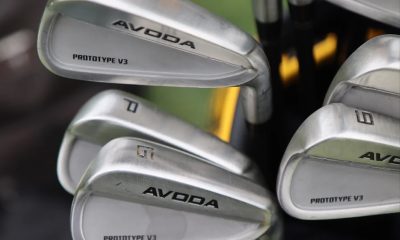
 Equipment1 week ago
Details on Jason Day’s latest prototype Avoda iron setup
-
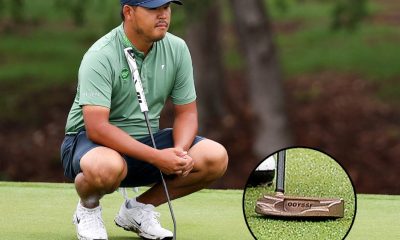
 Equipment3 weeks ago
CJ Cup Byron Nelson Tour Report: Koepka and Kim’s newest putters finally get hot
-

 News2 weeks ago
Charles Schwab Challenge Tour Report: MacIntyre, Åberg and Spaun all switch putters, TaylorMade launches new Spider
-
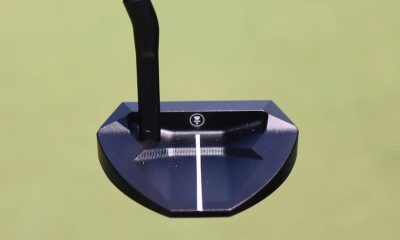
 Equipment2 weeks ago
Details on J.J. Spaun’s surprise putter switch


Pingback: Wedge Guy: The “feel” no one talks about – GolfWRX