
Opinion & Analysis
The Wedge Guy: Is lighter always longer?


One of the continuing trends in golf clubs – particularly drivers – is the pursuit of increasingly lighter shafts; this obsessive goal has given us the premise that the lighter the club, the faster you can swing it. And that idea is driven by the relentless pursuit of distance at all levels, and for all golfers.
But as long as he is, for example, Dustin Johnson ran away with the Masters because he was exactly that – a “master” at ball control and precision. DJ outperformed almost everyone in the field in terms of fairways and greens. That gave him more birdie putts, better looks because of his precise approach shots, and many fewer tough par saves.
But my topic today is to pose the question: “Is lighter really the key to being longer for all of us “recreational” golfers?”
Let me begin by saying that “recreational” doesn’t mean any lack of seriousness or dedication to the game. Hitting better shots and shooting lower scores is the goal for all of us who care about our golf games, right? What I mean is that we do not make our living playing the game. We do not practice incessantly. We do not spend hours at the gym every day specifically preparing our bodies to optimize our golf skills.
Today I’m going to put on my “contrarian” cap and challenge this assumption of “lighter is longer” on a couple of bases.
First, if you watch every accomplished player, you will see that the body core rotation is fast enough to “beat” the hands and clubhead to the ball. All instructors agree that the big muscles of the legs and body core are the key to power and repeatability in the golf swing. The faster you can rotate your body through impact, the more power you generate, which flows down the arms, through the hands and shaft and to the clubhead. This is a basic law of “golf swing physics”.
The simple fact is, the speed at which you can fire these big muscles is not going to be measurably impacted by removing another half ounce or less of weight from your driver. But what that removal of weight can do is to possibly allow for your hands to be faster, which would aggravate the problem I see in most mid- to high-handicap players. That problem is that their body core is not leading the swing, but rather it is following the arms and hands through impact.
Secondly, speed without precision is essentially worthless to you, and likely even counter-productive to your goal of playing better golf. Even with the big 460cc drivers, a miss of the sweet spot by just a half inch can cost you 8-12% of your optimum distance. You could never remove enough weight from the driver to increase your club speed by that amount. So, the key to consistently longer drives is to figure out how to make consistently more precise impact with the ball.
No golf adage is always true, but my experience and observation of thousands of golfers indicates to me that the fastest route to better driver distance is to get more precise with your impact and swing path, and not necessarily increasing your clubhead speed. And that may well be served by moving to a slightly heavier driver, not a lighter one.
I’ll end this by offering that this is not an experiment to conduct in a hitting bay with a launch monitor, but rather by playing a few rounds with a driver that is heavier than your current “gamer”.
Continuing with my “contrarian” outlook on many aspects of golf equipment, the typical driver “fitting” is built around an intense session on a launch monitor, where you might hit 30-40 or more drives in an hour or so. But the reality of golf is that your typical round of golf involves only 12-13 drives hit over a four-hour period, each one affected by a number of outside influences. But that’s an article for another time.
For this week, think about pulling an older, heavier driver from your closet or garage and giving it a go for a round or two and see what happens.
I would like to end today’s post by wishing you all a very Happy Thanksgiving. It’s been a helluva year for all of us, so let’s take some time this week to count our individual and collective blessings.




This past Monday, I played in the U.S. Amateur local qualifier at Rock Creek Country Club in Portland, Oregon. A full tee sheet from 7:30 a.m. to 1:55 p.m., the top 11 scores would make it to the U.S. Amateur final qualifying.
I teed off at 10:48 a.m.. With the 7:30 am tee time, you can get a feel for the leaders’ pace, and they were off and running on the challenging setup at Rock Creek.
View this post on Instagram
Getting to the highlight of the round on the par five 17th, a drive up the left side and 212 yards left to the front hole location. I took out a 5-iron with plans of middle of the green. The ball ended up 8 feet left of the hole, pin high. A slight downhill putt dropped in for an eagle 3 on the 17th. With the cut line looking to be anywhere from -2 to even par. This was the boost I had been waiting for all day.
With making par from the trees on 18, it was time to wait for a potential playoff with a posted score of one under par 71.
Three hours later, it was playoff time. 8 players for 6 spots. I made par on the playoff hole, which was good enough to advance to the U.S. Amateur final qualifying in July. USGA qualifiers sure deliver on all of the emotions in golf!
Club Junkie
Building my 2026 gamer WITB: Ranking the contenders and new putter projects – Club Junkie Podcast

The annual What’s In The Bag build is underway, and on this episode of Club Junkie, Brian breaks down the clubs currently leading the race for a spot in his 2026 gamer setup. From drivers and fairway woods to irons, wedges, and shafts, he ranks the equipment that’s performing best and explains what’s separating the front runners from the rest of the field.
Brian also heads into the workshop to discuss several putter projects currently on the bench. From head options and shaft choices to build ideas and testing plans, he shares what he’s working on and which putters could become serious contenders for the bag this season.
If you’re a gear junkie who loves equipment testing, club building, and the never-ending pursuit of the perfect setup, this episode is for you.
Follow Club Junkie:
Instagram: @clubjunkiepod
TikTok: @clubjunkiepod
Threads: @clubjunkiepod
X: @ClubJunkiePod
Club Junkie
Tour Edge Exotics mini driver review + TaylorMade Spider ZT Max first look – Club Junkie

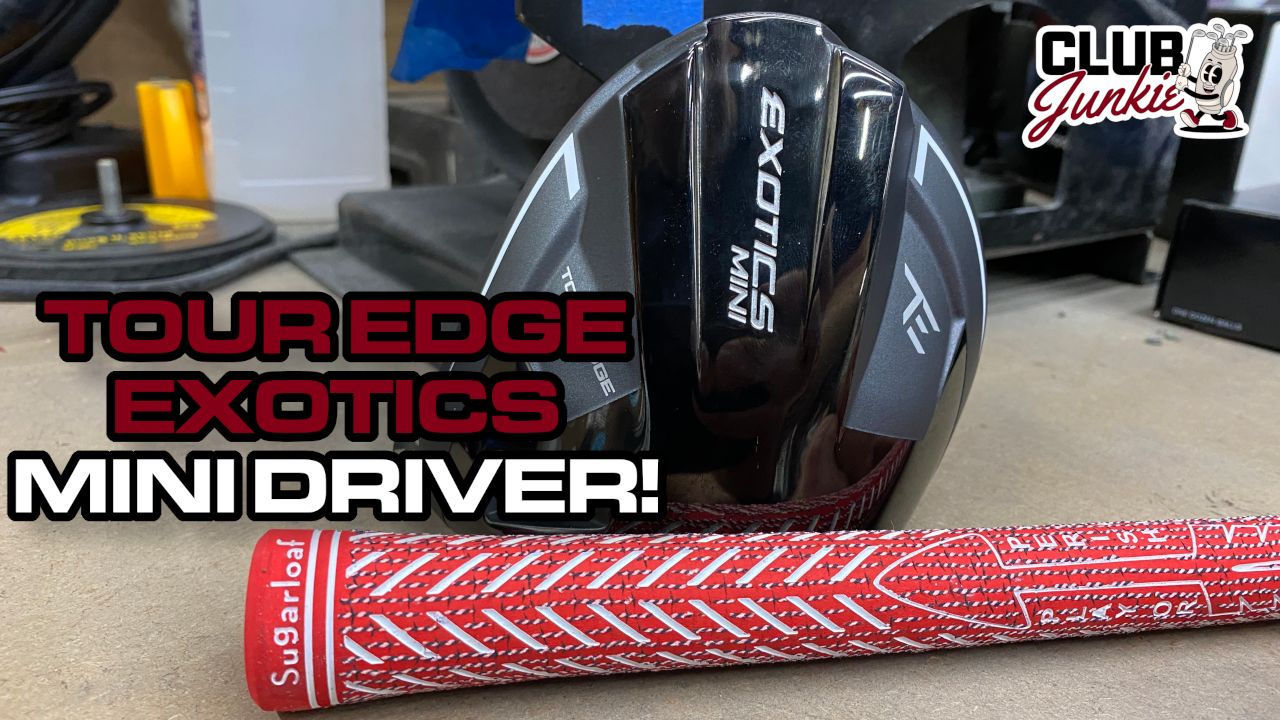
On this episode of Club Junkie, I put the new Tour Edge Exotics Mini Driver to the test and break down the performance, forgiveness, distance, and where it fits compared to a traditional driver or strong fairway wood. If you have been curious about adding a mini driver to the bag, this one is worth a look.
I also dive into the new TaylorMade Spider ZT Max putter that was recently spotted and discuss the growing zero torque putter trend. Plus, there is a closer look at the new Project X Titan Yellow shaft showing up on the PGA Tour and what makes it different from other profiles currently out there.

Justin Rose WITB 2026 (April): Full WITB breakdown with new McLaren irons

What’s the story behind Webb Simpson’s custom-stamped irons?

Memorial Tournament Tour Report: Rory McIlroy, Cameron Young switch up drivers, and more

Cadillac Championship Tour Report: Spieth’s sizable changes, McLaren Golf launches, and more

Russell Henley’s winning WITB: 2026 Charles Schwab Challenge

Kristoffer Reitan’s winning WITB: 2026 Truist Championship

Best irons 2026: Best irons overall, most forgiving irons, and more

J.T. Poston’s winning WITB: 2026 Memorial Tournament

Aaron Rai’s winning WITB: 2026 PGA Championship

Cameron Young’s winning WITB: 2026 Cadillac Championship


Bud Cauley WITB 2026 (June)
Bud Cauley had >14 clubs in his bag when photographed prior to the Memorial Tournament. Driver: Titleist GTS2 (8 degrees) Shaft: Fujikura...


Hannah Green WITB 2026 (June)
Driver: Titleist GTS3 (10 degrees, D4 SureFit setting) Shaft: Mitsubishi Chemical Diamana RB 53 S 3-wood: Titleist GT3 (15 degrees,...


Asterisk Talley WITB 2026 (June)
Driver: TaylorMade Qi4D (9 degrees) Shaft: Fujikura Ventus Blue 6 S 3-wood: TaylorMade Qi4D (16.5 degrees) Shaft: Fujikura Ventus Blue...

Brianna Do WITB 2026 (June)
Driver: Callaway Quantum Triple Diamond (9 degrees) Shaft: KBS PGW 3-wood: Callaway Elyte Titanium (15 degrees) Shaft: KBS PGW 5-wood:...
-
 Equipment6 days ago
Memorial Tournament Tour Report: Rory McIlroy, Cameron Young switch up drivers, and more
-
 News2 weeks ago
Russell Henley’s winning WITB: 2026 Charles Schwab Challenge
-
 Equipment3 days ago
Best irons 2026: Best irons overall, most forgiving irons, and more
-
 Whats in the Bag4 days ago
J.T. Poston’s winning WITB: 2026 Memorial Tournament
-

 Equipment1 week ago
Details on Jason Day’s latest prototype Avoda iron setup
-
 Equipment3 weeks ago
CJ Cup Byron Nelson Tour Report: Koepka and Kim’s newest putters finally get hot
-

 News2 weeks ago
Charles Schwab Challenge Tour Report: MacIntyre, Åberg and Spaun all switch putters, TaylorMade launches new Spider
-
 Equipment2 weeks ago
Details on J.J. Spaun’s surprise putter switch


Kyle EricSon
Nov 25, 2020 at 3:34 pm
I agree whole-heartily agree and also tell my playing partners to; (a)drop the long irons in favor of hybrids (even most Tour Pro’s are no longer carrying 2 & 3 irons), (b) get into more appropriate shafts (if you’re shooting in the 80-90’s I doubt that you need stiff or extra-stiff shafts) and (c) although we all like the looks of shiny, chrome blades, most of us need the forgiveness of a nice cavity back.
P.S. Quit telling me how you like to “work the ball” and just try and hit it straight!
A. Commoner
Nov 26, 2020 at 8:07 am
As always there are qualifiers to one’s comments and observations, but KE’s points are very valid and should be practiced by most amateurs I’ve seen.