
Opinion & Analysis
From the GolfWRX Vault: Municipal golf and its long term sustainability


This piece was originally published in April 2019. Since then, the golf landscape, as well as participation numbers, have changed dramatically, and through this period of growth, the one thing that hasn’t changed is golf’s larger issues with access and affordability.
With a newfound focus on how to retain the many new golfers who have chosen to take up the game, municipal golf will have a huge roll to play, especially in larger urban centers where it can be more difficult to access golf facilities. We are republishing this piece as a way to continue to help promote municipal and affordable golf.
_______________________________________________________________
With another golf season quickly approaching, it’s time for many to consider the options for how and where they plan to play. Some have already started paying dues towards their club memberships, others are waiting to buy prepaid passes for their local course, and like many, I’m eagerly awaiting the opening of my local municipal golf course – my muni.

The gateway
Growing up, my friends and I were what you would call course rats: kids who would be there when the sun came up and there on the putting green as the sun went down. We would spend hours on the range, often times picking our own balls to avoid paying for another bucket since that meant an extra burger after we were burnt out from hitting balls. The golf course was the best “babysitter” our parents could have asked for – endless hours spent outside day after day and for the low price of just $350 for the season — plus $5 a day for that burger I was talking about. We all ended up loving the game and becoming pretty decent players along the way without much instruction, based on the simple truth that we were given the opportunity to play.
Living outside of the city in a smaller town, this was a “mom and pop” course that is still around today and busy, but I often wonder now as an adult if other kids that loved golf got to share in the same experience. Looking back, I don’t think I could have gotten a better education in being polite, responsible, honest, and confident, this was The First Tee before The First Tee even existed.
The memories from those summers are some of the fondest I have from growing up, and with so many young families living in cities, along with the high cost of organized sports, and the closing of golf courses, government-subsidized municipal golf is one of the last places where this type of opportunity is available to juniors and adults alike at an affordable price.

The modern muni dilemma
Municipal golf has been around for a long time, and recently for some cities, has become a lightning rod for budget cuts along with concerns about tax dollars being spent to fund an “elite” sport. The issue I have is cities spend a huge amount of money to subsidize other sports fields and recreation facilities including swimming pools, ice ricks, soccer and baseball fields yet none of these sports have the “elite” tag attached to them like golf.
This will sound like a blasphemous statement from a Canadian, but hockey, has become a much more elite and expensive sport as far as access and barrier to entry when you factor in equipment and cost of ice-time, yet a lot of non-hockey playing citizens would chain themselves to an arena to prevent it from closing its doors.
When recently, speaking to one of the golf professionals at a city-owned course near me, I was informed they are one of the few city recreational facilities that actually turn a profit thanks to the high traffic the course sees, along with the efficient use of the clubhouse facilities for events during the season, and in the offseason.

Municipal golf through history
What I love about “muni” golf is that it’s for the people. The Old Course along with the others in and around St Andrews Scotland, for example, are by definition public golf courses. The courses themselves and the “R & A Club” are separate entities, and if you can show a handicap card you can book a tee time to play one of the many courses located in the town.

The municipal courses I play the most are Kings Forest Golf Course and the Chedoke Civic Golf Courses in the city of Hamilton Ontario. The Chedoke courses are in no way a “Championship Test” with the shorter Martin Course topping out at just over 5,700 yards, but much like the Old Course at St. Andrews, it’s home to more than just golfers. Early morning and late afternoon you will find people strolling the paths, walking their dogs, and simply enjoying the green space — something that as cities continue to grow will be needed even more. It’s not closed on Sundays and doesn’t become a park like St Andrews, but even during winter, you will find dog walkers, cross country skiers, and people sledding down hills. That seems pretty multipurpose if you ask me.
As much as I pick on, and use my local Chedoke as my example, I do it out of love. The Martin course is an untouched Stanley Thompson design packed with interesting holes built into the Niagara Escarpment. It’s endless fun to play.
It’s about access
Municipal golf is accessible because it is affordable.
Understandably, the conditions might leave something to be desired on a day-to-day basis, but when a course only has 5-6 staff members on the grounds crew compared to more than a dozen like at high-end facilities, only so much can be done. At the end of the day, it’s 18 tees with 18 greens and the company you are with that makes a round of golf, not the height of the fairways or rough or the occasional bunker in need of a good raking.

For myself locally, junior memberships are priced around $500, allowing access to unlimited golf with no tee time restrictions. It’s a pretty nice deal if you ask me. What makes golf different from other individual activities and team sports is it can be played at any time, and you can be paired up with three other random people to play, regardless of gender, age, or skill. When you add in the fact that at the recreational level, there is no scheduled practice or game days like other sports, golf offers seven days a week access, which can’t be said for other activities.
If we look at the bigger picture and data from the National Golf Foundation (2017), there are just over 11,000 PUBLIC golf facilities in the United States with the average price paid for an 18 hole round of golf averaging out to only $34. If the “average” golfer plays 10 times a year, that’s only $340, and with the buyers’ market in the used equipment space, even if you need a full set up of clubs to get started it can easily be had for less than $400.
I may be an outlier but if given the opportunity to volunteer at my course for a few hours once a week to help fix a bunker, clean up fallen branches, or just help with general course maintenance in exchange for the ability to golf I would be first to sign up.
It’s a program like this that could also work for juniors (within a reasonable age obviously) to not only help grant more access to golf but teach about agronomy and respect for the course itself. I can only imagine this type of “education” and team environment would help foster more life-long golfers. **Please remember this would be 100 percent voluntary and open to both kids and adults alike. I’m not asking or suggesting free hard labor.**
Looking towards the future

With so much worry around the future, there are recent examples of municipal and small privately-owned golf courses making big comebacks thanks to passionate individuals and cities willing to appreciate the value a golf course has to the community.
The best two examples are Goat Hill Park and the Winter Park 9 – I’ll let Andy Johnson from The Fried Egg give you the rundown: The Fried Egg Profiles Winter Park. Two courses on opposite sides of the country achieving success by offering affordably priced, fun golf to boot. It’s the sense of community these places created that make them beacons in the landscape.
At this point, I think it’s important to state that I am NOT anti-country club; I love private courses too! Conditions are top-notch, the architecture is in most cases interesting, the pace of play is quick, I could go on and on. I have friends that are members at clubs, and thanks to working in golf, I know a lot of pros that are happy to grant the occasional access on slower days to “friends in the industry”.
I love playing golf one way or the other, but at heart, I’m a muni kid that has a huge amount of respect for the game on both sides of the fence. Regardless of where someone started, or where you choose to play now, we’re all playing golf, and that’s the most important thing.
Sure the pros on T.V. play at high-end and expensive private courses, which is great for entertainment and corporate hospitality, but municipal golf where you are going to find the golfers who are the real heart and soul of the game. If we want to #GrowTheGame – an overused hollow phrase, and maintain some semblance of accessibility for the next generation of golfers, having municipal golf is a critical part of that.



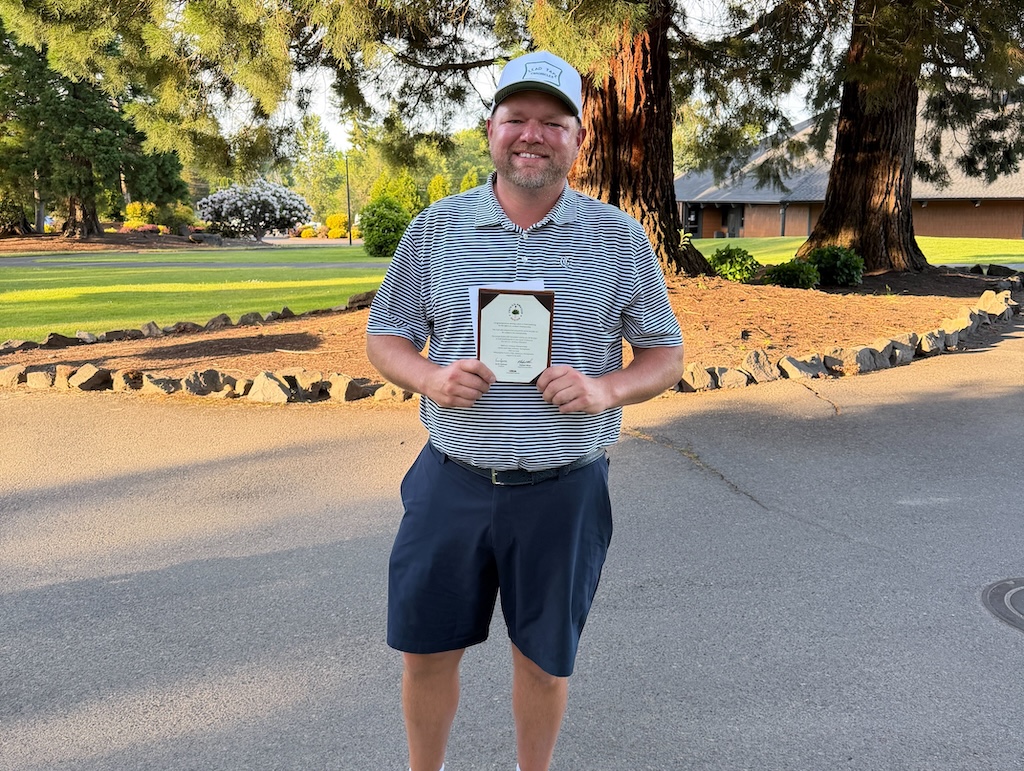
This past Monday, I played in the U.S. Amateur local qualifier at Rock Creek Country Club in Portland, Oregon. A full tee sheet from 7:30 a.m. to 1:55 p.m., the top 11 scores would make it to the U.S. Amateur final qualifying.
I teed off at 10:48 a.m.. With the 7:30 am tee time, you can get a feel for the leaders’ pace, and they were off and running on the challenging setup at Rock Creek.
View this post on Instagram
Getting to the highlight of the round on the par five 17th, a drive up the left side and 212 yards left to the front hole location. I took out a 5-iron with plans of middle of the green. The ball ended up 8 feet left of the hole, pin high. A slight downhill putt dropped in for an eagle 3 on the 17th. With the cut line looking to be anywhere from -2 to even par. This was the boost I had been waiting for all day.
With making par from the trees on 18, it was time to wait for a potential playoff with a posted score of one under par 71.
Three hours later, it was playoff time. 8 players for 6 spots. I made par on the playoff hole, which was good enough to advance to the U.S. Amateur final qualifying in July. USGA qualifiers sure deliver on all of the emotions in golf!
Club Junkie
Building my 2026 gamer WITB: Ranking the contenders and new putter projects – Club Junkie Podcast

The annual What’s In The Bag build is underway, and on this episode of Club Junkie, Brian breaks down the clubs currently leading the race for a spot in his 2026 gamer setup. From drivers and fairway woods to irons, wedges, and shafts, he ranks the equipment that’s performing best and explains what’s separating the front runners from the rest of the field.
Brian also heads into the workshop to discuss several putter projects currently on the bench. From head options and shaft choices to build ideas and testing plans, he shares what he’s working on and which putters could become serious contenders for the bag this season.
If you’re a gear junkie who loves equipment testing, club building, and the never-ending pursuit of the perfect setup, this episode is for you.
Follow Club Junkie:
Instagram: @clubjunkiepod
TikTok: @clubjunkiepod
Threads: @clubjunkiepod
X: @ClubJunkiePod
Club Junkie
Tour Edge Exotics mini driver review + TaylorMade Spider ZT Max first look – Club Junkie

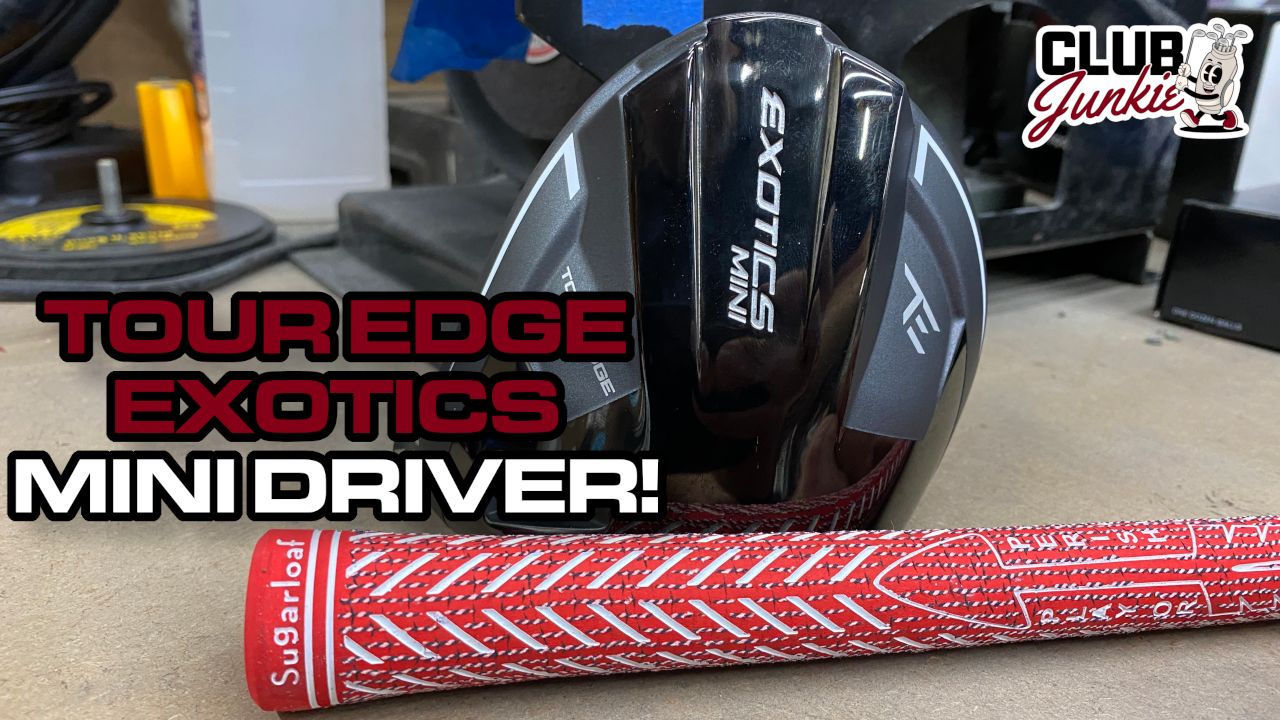
On this episode of Club Junkie, I put the new Tour Edge Exotics Mini Driver to the test and break down the performance, forgiveness, distance, and where it fits compared to a traditional driver or strong fairway wood. If you have been curious about adding a mini driver to the bag, this one is worth a look.
I also dive into the new TaylorMade Spider ZT Max putter that was recently spotted and discuss the growing zero torque putter trend. Plus, there is a closer look at the new Project X Titan Yellow shaft showing up on the PGA Tour and what makes it different from other profiles currently out there.

Justin Rose WITB 2026 (April): Full WITB breakdown with new McLaren irons

What’s the story behind Webb Simpson’s custom-stamped irons?

Memorial Tournament Tour Report: Rory McIlroy, Cameron Young switch up drivers, and more

Cadillac Championship Tour Report: Spieth’s sizable changes, McLaren Golf launches, and more

Russell Henley’s winning WITB: 2026 Charles Schwab Challenge

Kristoffer Reitan’s winning WITB: 2026 Truist Championship

J.T. Poston’s winning WITB: 2026 Memorial Tournament

Best irons 2026: Best irons overall, most forgiving irons, and more

Aaron Rai’s winning WITB: 2026 PGA Championship

Cameron Young’s winning WITB: 2026 Cadillac Championship


Bud Cauley WITB 2026 (June)
Bud Cauley had >14 clubs in his bag when photographed prior to the Memorial Tournament. Driver: Titleist GTS2 (8 degrees) Shaft: Fujikura...


Hannah Green WITB 2026 (June)
Driver: Titleist GTS3 (10 degrees, D4 SureFit setting) Shaft: Mitsubishi Chemical Diamana RB 53 S 3-wood: Titleist GT3 (15 degrees,...


Asterisk Talley WITB 2026 (June)
Driver: TaylorMade Qi4D (9 degrees) Shaft: Fujikura Ventus Blue 6 S 3-wood: TaylorMade Qi4D (16.5 degrees) Shaft: Fujikura Ventus Blue...


Brianna Do WITB 2026 (June)
Driver: Callaway Quantum Triple Diamond (9 degrees) Shaft: KBS PGW 3-wood: Callaway Elyte Titanium (15 degrees) Shaft: KBS PGW 5-wood:...
-
 Equipment6 days ago
Memorial Tournament Tour Report: Rory McIlroy, Cameron Young switch up drivers, and more
-
 News2 weeks ago
Russell Henley’s winning WITB: 2026 Charles Schwab Challenge
-
 Whats in the Bag4 days ago
J.T. Poston’s winning WITB: 2026 Memorial Tournament
-
 Equipment3 days ago
Best irons 2026: Best irons overall, most forgiving irons, and more
-

 Equipment1 week ago
Details on Jason Day’s latest prototype Avoda iron setup
-
 Equipment3 weeks ago
CJ Cup Byron Nelson Tour Report: Koepka and Kim’s newest putters finally get hot
-

 News2 weeks ago
Charles Schwab Challenge Tour Report: MacIntyre, Åberg and Spaun all switch putters, TaylorMade launches new Spider
-

 Equipment2 weeks ago
Details on J.J. Spaun’s surprise putter switch


Brandon
Oct 15, 2020 at 8:43 pm
Muni courses in the Bay Area are charging 80-100 bucks for a morning weekend tee times. For that price I’ll wait until 2 and go play Bayonet or Blackhorse. I love Muni courses, but they need to understand what they offer.
Alex
Oct 15, 2020 at 4:44 pm
Muni golf is awesome. A lot of great players cut their teeth on munis. It’s a great place to learn the game, especially if you grew up and parents couldn’t afford or didn’t want to be members anywhere. It’s also a great place for people that just get the itch to go play golf from time to time and want somewhere to simply play. It’s kind of golf’s purest form. The game can’t grow just on exclusive private courses, and if it does golf will keep the same negative persona. Muni golf is good for the game in all forms.
g daddy
Oct 15, 2020 at 1:39 pm
The public course in our hometown let the members of the high school golf team do just what you’re suggesting. Work one day a week for free golf for the rest of the week. It was really cool, except they gave us horrible jobs – I usually had to sweep the parking lot with a broom (please folks don’t clean off your golf shoes in the parking lot) and once I had to go around to greens and fix ball marks – except they didn’t have any usable/not broken ball mark fixer – so they have me a fork from the dining room, which destroyed my hand.
But it was a great learning experience and got me some free golf.