
Opinion & Analysis
Golfers and distance running


This article isn’t about “should golfers do cardio?”. The answer to that is an unequivocal yes. Cardiovascular fitness is, to simplify, the way in which the body supplies oxygen to working muscles for the energy you need to move (for all you science folks out there, send me a message and we can get deeper into it). The more efficiently and easily this happens, the easier every active activity will be. Even golf. This article is more about how to get good cardio and why longer, slower, distance running is not what I’d choose for high performing golfers almost ever.
Firstly, there are two categories that activities/exercises fall into: anaerobic and aerobic. Anaerobic means that the oxygen supplied to the muscles isn’t sufficient enough to sustain the work for a long period of time (think sprinting, or a max speed driver swing; as much as you might want to you, the intensity will have to lower to perform longer). Aerobic means that the supply is plentiful enough for long sustained activity (think jogging or walking a round of golf).
Obviously, golf has both, leading to the crux of this article. In my experience, golfers tend to focus on the 4+ hours that a round takes, decide that this requires significant stamina (they are absolutely correct), and then go run 3 miles in about 20-30 min.
Here’s my problem with this philosophy: the level of cardio necessary to play a competitive round of golf is low. In other words, no one shoots 90 because they can’t get enough air.
The level needed to play a majority of professional golf is even less because of caddies or carts (mini-tours/senior tour). I liken golf to a mixture of shooting free-throws, kicking field goals, and pitching a baseball. All outrageously pressurized, all highly demanding in skill and the ability to control oneself, but not completely necessary to be in primo shape to do. Therefore, what is truly needed is to be cardiovascularly fit, but only so that the body recovers more quickly and operates more efficiently, to then be an explosive athlete for longer.
In a study conducted by Potteiger et al. (1992), (thanks Eric Cressey and Rob Rabena for finding this one), it was found during simulated baseball games that the Vo2 levels (measured in ml.kg.min) reached ? the levels associated with endurance athletes. Meaning cardiovascular endurance isn’t really a factor in pitching late into a game.
While a real game probably elevates the consumption and expenditure, it obviously doesn’t raise the levels to that of the Tour de France. And while I do not have any reliable data on VO2 for golfers during a round of golf, I have seen data indicating that VO2 max reaches about 35-46 ml.kg.min during a round of golf, indicating that cardio isn’t a major player in finishing a round of golf as strongly as started, or rather, that whatever your cardiovascular fitness level, that the endurance of it will have a major effect on your round.
So yes, cardio is important, because it will make your round easier, and because it will make everything easier. But far more important is your anaerobic system, and your strength and flexibility, for these, are what are responsible for hitting the golf ball, and particularly hitting the golf ball far. There were correlations found in elite player’s ball speeds and even in their proximity to the hole on chip shots based on something as simple as their anterior core endurance. (Wells et al. (2009)). Chip proximity! Due to ab strength! Do your planks and chip it closer, easy right?
Everyone is probably nodding their head right now, “Yep, we get it, being stronger makes the ball go further, and will give me better stability, and help my golf game.” But the original point of the article was to train differently. Because golfers are anaerobic power athletes.
There’s a saying, “What you do is who you become.” Same thing with training, if you train slow, you’ll be slow, and I don’t care if you run 7 minute miles, it’s not that fast. Golf is explosive and should be trained as such. So if you want to be fast, train fast. Train for strength, and explosion. (As a side note, I have seen most of my athlete’s heart rates peak in the 140-160 range or higher during an hour’s strength session, which is around the peak of a pretty solid run anyways.)
So, instead of distance running, I would prefer intervals and explosiveness. Run fast for 20 seconds. Rest for 20 seconds. Run a 50-yard sprint, rest, recover, and then do it again. Bike sprints. Assault Bike sprints. 10 seconds on, 20 seconds rest, etc. The more stuff we can do where we fire every muscle in our body quickly, or at least faster than we did before, the better off we’ll be. Explosively lift weights, perform low rep-high explosion box jumps. There is no limit to how we can get moving faster, and not have our muscles relax into an aerobic 30 minute “slow” workout.
You still will gain cardio, just by working out, and as we’ve seen, it’s not like golfers need to have marathon levels of cardiovascular fitness anyways. But, if you prefer to be that sort of athlete, you can get there with shorter faster runs/bikes, learning to lift weights properly, and using a few circuits to gain some explosiveness with a high heart rate.
In summary, I argue against distance running and would have my golfers get their cardio from strength sessions, or faster interval type training. In-season sprints have been shown to increase lower body strength while long slow distance running has shown to lessen it in baseball players. (Rhea et al. (2008)) If we want to be fast, and I believe that all of us golfers want our swings to be fast, then we have to get serious about training the system that produces that, and spending most of our time in this way.
So spend some time doing some box jumps, or sprints (if you have the form and capability to do so), and definitely some strength building if you actually want to hit the ball further, and even chip it closer.
REFERENCES:
1. Potteiger, J., Blessing, D., & Wilson, G. D. (1992). The Physiological Responses to a Single Game of Baseball Pitching. Journal of Applied Sport Science Research, 6, 11-18.
2. Wells GD, Elmi M., Thomas S. (2009) Physiological Correlates of Golf Performance. J Strength Cond Res. 2009 May;23(3):741-50.
3. Rhea, M., Oliverson, J., Marshall, G., Peterson, M., Kenn, J., & Ayllon, F. (2008). Noncompatibilty of Power and Endurance Training Among College Baseball Players. The Journal of Strength and Conditioning Research , 230-234.



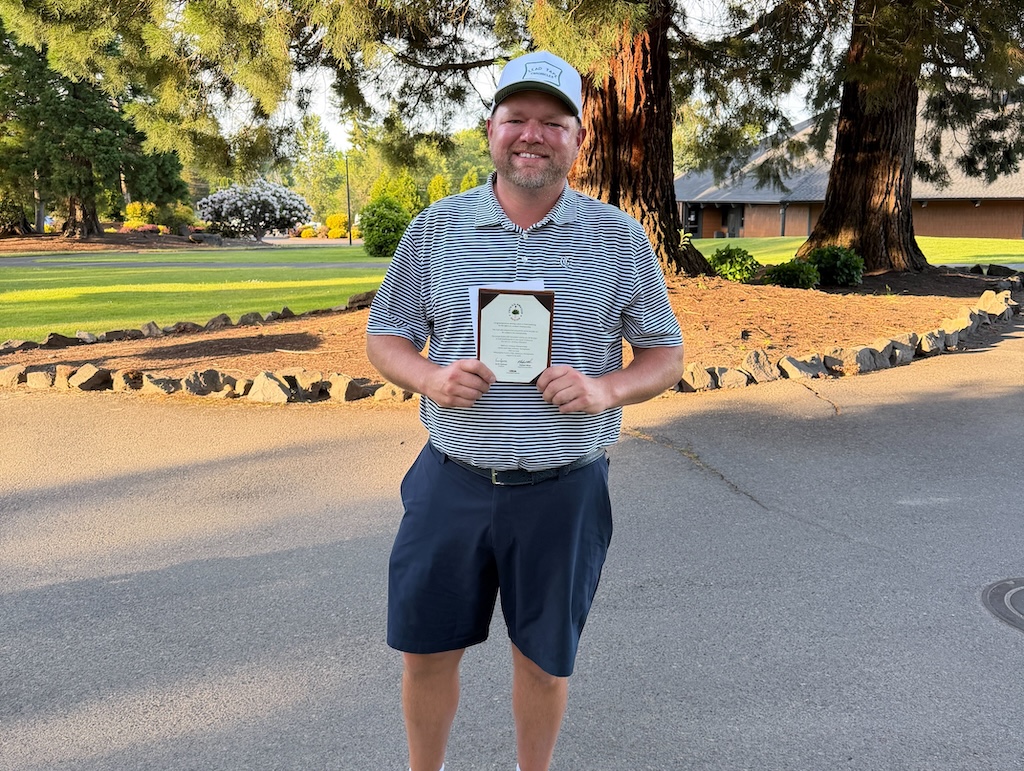
This past Monday, I played in the U.S. Amateur local qualifier at Rock Creek Country Club in Portland, Oregon. A full tee sheet from 7:30 a.m. to 1:55 p.m., the top 11 scores would make it to the U.S. Amateur final qualifying.
I teed off at 10:48 a.m.. With the 7:30 am tee time, you can get a feel for the leaders’ pace, and they were off and running on the challenging setup at Rock Creek.
View this post on Instagram
Getting to the highlight of the round on the par five 17th, a drive up the left side and 212 yards left to the front hole location. I took out a 5-iron with plans of middle of the green. The ball ended up 8 feet left of the hole, pin high. A slight downhill putt dropped in for an eagle 3 on the 17th. With the cut line looking to be anywhere from -2 to even par. This was the boost I had been waiting for all day.
With making par from the trees on 18, it was time to wait for a potential playoff with a posted score of one under par 71.
Three hours later, it was playoff time. 8 players for 6 spots. I made par on the playoff hole, which was good enough to advance to the U.S. Amateur final qualifying in July. USGA qualifiers sure deliver on all of the emotions in golf!
Club Junkie
Building my 2026 gamer WITB: Ranking the contenders and new putter projects – Club Junkie Podcast

The annual What’s In The Bag build is underway, and on this episode of Club Junkie, Brian breaks down the clubs currently leading the race for a spot in his 2026 gamer setup. From drivers and fairway woods to irons, wedges, and shafts, he ranks the equipment that’s performing best and explains what’s separating the front runners from the rest of the field.
Brian also heads into the workshop to discuss several putter projects currently on the bench. From head options and shaft choices to build ideas and testing plans, he shares what he’s working on and which putters could become serious contenders for the bag this season.
If you’re a gear junkie who loves equipment testing, club building, and the never-ending pursuit of the perfect setup, this episode is for you.
Follow Club Junkie:
Instagram: @clubjunkiepod
TikTok: @clubjunkiepod
Threads: @clubjunkiepod
X: @ClubJunkiePod
Club Junkie
Tour Edge Exotics mini driver review + TaylorMade Spider ZT Max first look – Club Junkie

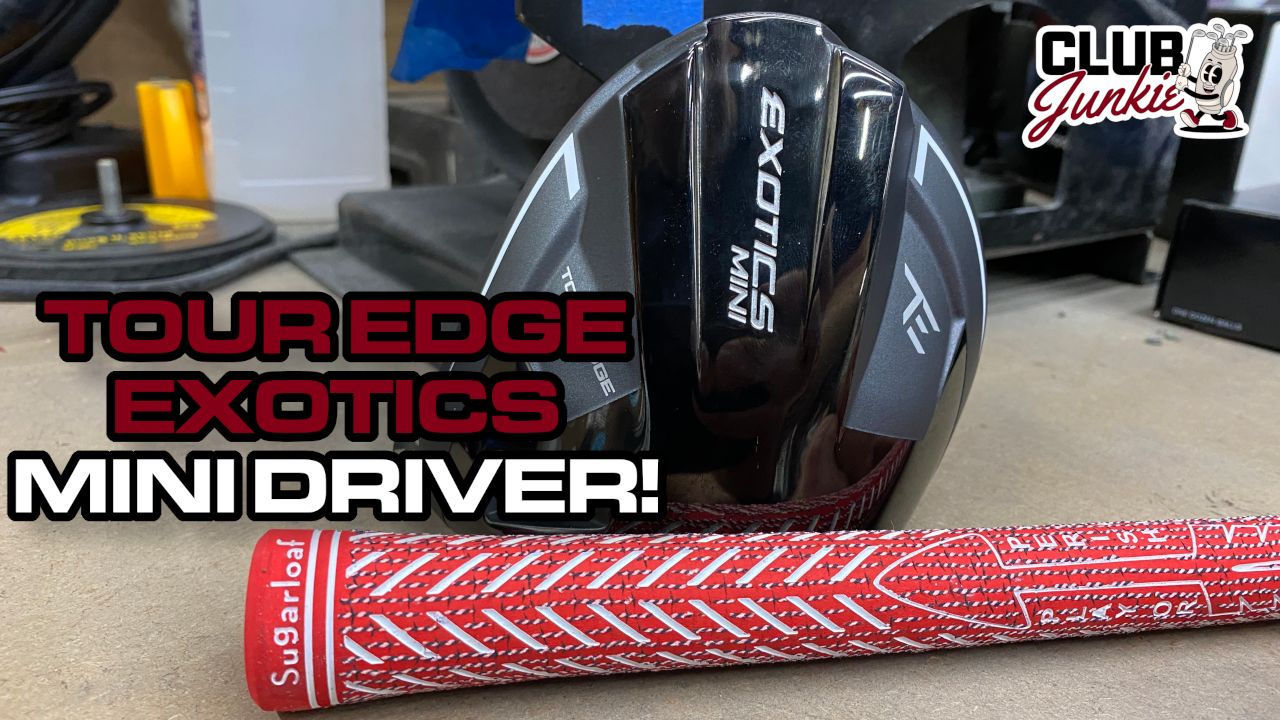
On this episode of Club Junkie, I put the new Tour Edge Exotics Mini Driver to the test and break down the performance, forgiveness, distance, and where it fits compared to a traditional driver or strong fairway wood. If you have been curious about adding a mini driver to the bag, this one is worth a look.
I also dive into the new TaylorMade Spider ZT Max putter that was recently spotted and discuss the growing zero torque putter trend. Plus, there is a closer look at the new Project X Titan Yellow shaft showing up on the PGA Tour and what makes it different from other profiles currently out there.

Justin Rose WITB 2026 (April): Full WITB breakdown with new McLaren irons

What’s the story behind Webb Simpson’s custom-stamped irons?

Memorial Tournament Tour Report: Rory McIlroy, Cameron Young switch up drivers, and more

Cadillac Championship Tour Report: Spieth’s sizable changes, McLaren Golf launches, and more

Russell Henley’s winning WITB: 2026 Charles Schwab Challenge

Kristoffer Reitan’s winning WITB: 2026 Truist Championship

Aaron Rai’s winning WITB: 2026 PGA Championship

Cameron Young’s winning WITB: 2026 Cadillac Championship

J.T. Poston’s winning WITB: 2026 Memorial Tournament

Best irons 2026: Best irons overall, most forgiving irons, and more


Bud Cauley WITB 2026 (June)
Bud Cauley had >14 clubs in his bag when photographed prior to the Memorial Tournament. Driver: Titleist GTS2 (8 degrees) Shaft: Fujikura...


Hannah Green WITB 2026 (June)
Driver: Titleist GTS3 (10 degrees, D4 SureFit setting) Shaft: Mitsubishi Chemical Diamana RB 53 S 3-wood: Titleist GT3 (15 degrees,...


Asterisk Talley WITB 2026 (June)
Driver: TaylorMade Qi4D (9 degrees) Shaft: Fujikura Ventus Blue 6 S 3-wood: TaylorMade Qi4D (16.5 degrees) Shaft: Fujikura Ventus Blue...

Brianna Do WITB 2026 (June)
Driver: Callaway Quantum Triple Diamond (9 degrees) Shaft: KBS PGW 3-wood: Callaway Elyte Titanium (15 degrees) Shaft: KBS PGW 5-wood:...
-
 Equipment6 days ago
Memorial Tournament Tour Report: Rory McIlroy, Cameron Young switch up drivers, and more
-
 News1 week ago
Russell Henley’s winning WITB: 2026 Charles Schwab Challenge
-
 Whats in the Bag3 days ago
J.T. Poston’s winning WITB: 2026 Memorial Tournament
-
 Equipment3 days ago
Best irons 2026: Best irons overall, most forgiving irons, and more
-

 Equipment1 week ago
Details on Jason Day’s latest prototype Avoda iron setup
-
 Equipment3 weeks ago
CJ Cup Byron Nelson Tour Report: Koepka and Kim’s newest putters finally get hot
-

 News2 weeks ago
Charles Schwab Challenge Tour Report: MacIntyre, Åberg and Spaun all switch putters, TaylorMade launches new Spider
-

 Equipment2 weeks ago
Details on J.J. Spaun’s surprise putter switch


Pingback: Fore! Get Fit for the Long Haul on the Greens – Linked Greens
Frank
Sep 12, 2020 at 6:33 pm
Tiger directly said that if he never ran as often as he did, he could have extended his peak for a lot longer than he has. Cycling and/or swimming is much more low-impact on the back than running. Also, if you want to induce golf specific conditioning, why would you run when literally no one runs during a 4 day 72 hole golf tournament; they’re always walking?