
Opinion & Analysis
Checking the fit of your clubs on a budget

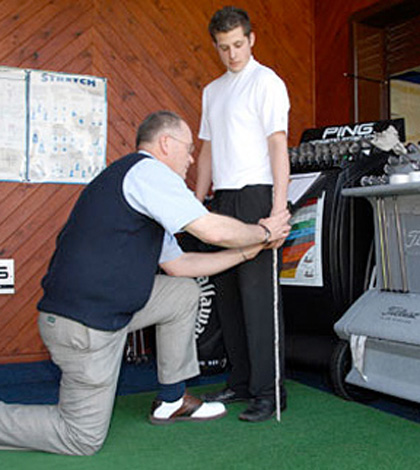
During the last 17 years, I’ve graduated from the simple regripping of golf clubs to creating full blueprints. Today, when I build clubs for friends and family, I try to leave no stone unturned and work to minimize the variables from club to club. For better golfers, this consistency pays off with a predictable ball flight when you are looking at a shot that requires delicate touch. But does a newer golfer need 100 percent blueprinted clubs? Is that expenditure really going to pay off?
I don’t know about the rest of you, but I’m not swimming in cash. My obsession with putters aside, I have to budget and decide where I am going to spend my dollars. For a lot of golfers, the cost of that fitting or repair may not make sense when they can just apply that cost to buy new clubs. But there are a lot of things you can check without having to visit a shop.
GRIPS
I’ve got big hands. Not ROBOPTI big, but they are pretty meaty. One of the first things I learned was that a larger grip fit my hand better and allowed me to keep control of the club during the swing. I’d suspect that a lot of golfers just play with whatever grip came on the club when they bought it.
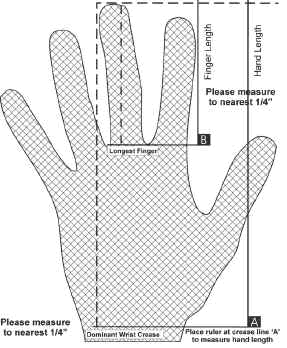
Checking for free: Grip the club and look at your hands. The rule of thumb is the tips of your fingers should be lightly touching your palm. If they are not, the grip may be too large for you. If your fingers are digging into your palm, the grip is probably too small.
If you decide you need a change: Now is the time to have your hands measured. Beyond standard, midsize and jumbo, the repair shop can add extra wraps of masking tape as needed to fine-tune the feel. Take the Goldilocks approach and make sure the fit is just right. Grips have different taper rates, so try different brands to get the right combination of taper, feel and tack for you.
Obsessive-compulsive details for WRX members: Just because you have used .600-inch Golf Pride round grips for the last 10 years, understand that not all shafts are .600-inch anymore. Your driver might have a .605-inch up to a .620-inch butt diameter depending on the model. What used to be a perfect on Dynamic Gold will not be the same with PX or C-Taper because the butt section tapers under the grip.
A top-tier clubfitter will measure your grips in two or three areas to make sure you have consistent sizing for both hands of the grip.
CHECK YOUR LIE ANGLES
OEM Online Fitting programs will get your lie angles in the ballpark if you want to order new clubs. But the final step is verifying the measurements against your swing on a lie board. You can see if you need to be more upright or flat while you are at the driving range.
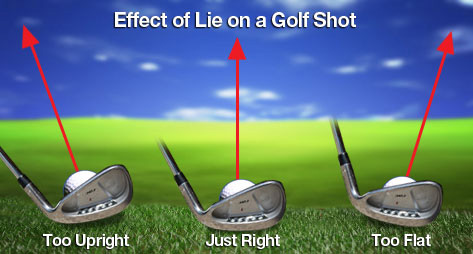
Checking for free: A lot of people hate them, but the range turf mat is your friend in this exercise. I shouldn’t have to state this, but I will anyway: hit off the mat. Don’t hit off the tee! As you hit balls, the green schmutz on the sole of your irons and wedges will tell you if the clubs are too upright or flat for you. Properly struck shots will have the green in the center of the club, or evenly across the entire sole. If you see that the mark is biased towards the heel or toe, it’s time for your clubs to be adjusted.
If you decide you need a change: This is a serious step and you have either an easy choice or a time-consuming choice. The easy way is to let the clubfitter set your lies from a single club, usually a 6- or 7-iron. The clubfitter will see what lie angle you need compared to the reference standard of that set and then adjust the lies accordingly. This is when you will hear people tell you they are “2-degree upright” or “1-degree flat.”
Obsessive-compulsive details for WRX members: The time consuming method is to hit every club on the lie board and adjust each club as needed for your swing. At this point, you will refer to each club by its lie. I have a 61-degree 5-iron, a 64.5-degree 9-iron and a 65-degree sand wedge. My lie progression does not match the factory model and if I just said I was “one-degree up,” my long irons would be too upright.
A good fitter will give you a chart with your lofts/lies when you walk out of the store. You should check these specs against the new clubs you may buy in the future and order your specs accordingly.
Note that loft/length are dependent on each other. The Ping color chart is a good example of this. If your 7-iron is 63 degrees, that lie is based on the length of your current club. If you extend or shorten your clubs, you will want to verify your angles again on the lie board.
CHECK YOUR SWING WEIGHTS
All clubs start their lives as components. Heads, shafts and grips each have specifications and tolerances for angles, lengths and weight. For the majority of the industry, there is a tolerance of plus/minus 2 grams on weights. As a result, the specified swing weight of the club may not match the actual swing weight. One club with a heavy head and light grip can feel radically different compared to the same model with a light head and a heavy grip. Yet both would be “in spec” for a production line built set of clubs.
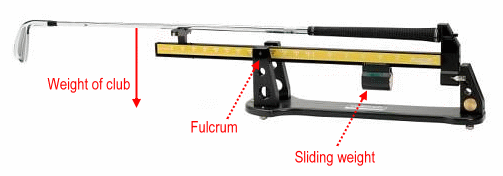
Checking for free: This one is not completely free, unless you can get access to a swing weight scale. Most club repair shops and big box stores with repair centers should have one. Some driving ranges and pro shops may have a scale as well.
Most golfers, when they think about their clubs, usually have two or three clubs in the bag that they always seem to hit well. There are usually some that always seem to be a struggle. A quick check on the swing weight scale will often times show the good clubs to have a similar swing weight and the tough clubs will be significantly lighter or heavier. When having clubs built for you or repaired, make sure you specify the good swing weight to your club fitter so that they get the club to feel right.
If you decide you need a change: Light clubs can be made heavier by adding lead tape to the club head. Applied to the back of the club near the center of the club head, add mass until the swing weight matches the good clubs. Verify the feel on the range. Heavier clubs can be adjusted by having your clubfitter grind away some weight from the club head. Again, adjust until the swing weight matches the good clubs to give a more consistent feel from club to club. You can get a roll of lead tape at your golf shop for a few dollars. One package is usually enough to raise an entire set of clubs by one swing weight point.
Obsessive-compulsive details for WRX members: Swing weight can be affected by length as well. You may want to have your clubfitter check the lengths of your clubs to ensure consistent spacing between each club. You can also have internal tip weights installed by your clubfitter to match the swing weights and avoid lead tape, which is unsightly to some golfers on their pretty new irons. Grip weights can also change swing weight. The Golf Pride NDMC grips are seven or eight grams lighter than the 50-gram Tour Velvet grip found on a lot of factory clubs. This can move the swing weight up to 1.5 points. A .580-inch core Tour Velvet will also weigh two or three grams more than a .600-inch core Tour Velvet. Midsize will weigh even more than the standard sized grips. Ensure you have consistent grips sizes and weights, especially if you are having your set regripped.
Knowing the specifications that work for you will give you, your teacher and your clubfitter an easy reference to ensure you are getting the best, most consistent performance from every club in your bag.




This past Monday, I played in the U.S. Amateur local qualifier at Rock Creek Country Club in Portland, Oregon. A full tee sheet from 7:30 a.m. to 1:55 p.m., the top 11 scores would make it to the U.S. Amateur final qualifying.
I teed off at 10:48 a.m.. With the 7:30 am tee time, you can get a feel for the leaders’ pace, and they were off and running on the challenging setup at Rock Creek.
View this post on Instagram
Getting to the highlight of the round on the par five 17th, a drive up the left side and 212 yards left to the front hole location. I took out a 5-iron with plans of middle of the green. The ball ended up 8 feet left of the hole, pin high. A slight downhill putt dropped in for an eagle 3 on the 17th. With the cut line looking to be anywhere from -2 to even par. This was the boost I had been waiting for all day.
With making par from the trees on 18, it was time to wait for a potential playoff with a posted score of one under par 71.
Three hours later, it was playoff time. 8 players for 6 spots. I made par on the playoff hole, which was good enough to advance to the U.S. Amateur final qualifying in July. USGA qualifiers sure deliver on all of the emotions in golf!
Club Junkie
Building my 2026 gamer WITB: Ranking the contenders and new putter projects – Club Junkie Podcast

The annual What’s In The Bag build is underway, and on this episode of Club Junkie, Brian breaks down the clubs currently leading the race for a spot in his 2026 gamer setup. From drivers and fairway woods to irons, wedges, and shafts, he ranks the equipment that’s performing best and explains what’s separating the front runners from the rest of the field.
Brian also heads into the workshop to discuss several putter projects currently on the bench. From head options and shaft choices to build ideas and testing plans, he shares what he’s working on and which putters could become serious contenders for the bag this season.
If you’re a gear junkie who loves equipment testing, club building, and the never-ending pursuit of the perfect setup, this episode is for you.
Follow Club Junkie:
Instagram: @clubjunkiepod
TikTok: @clubjunkiepod
Threads: @clubjunkiepod
X: @ClubJunkiePod
Club Junkie
Tour Edge Exotics mini driver review + TaylorMade Spider ZT Max first look – Club Junkie

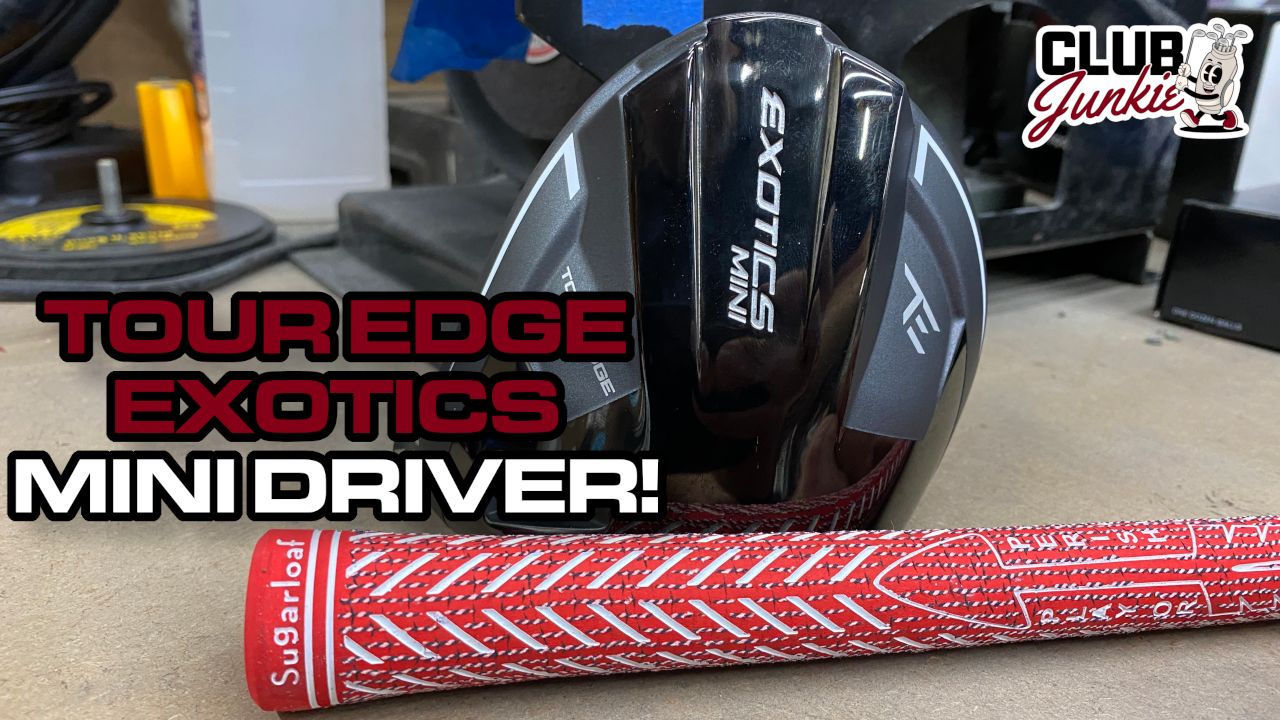
On this episode of Club Junkie, I put the new Tour Edge Exotics Mini Driver to the test and break down the performance, forgiveness, distance, and where it fits compared to a traditional driver or strong fairway wood. If you have been curious about adding a mini driver to the bag, this one is worth a look.
I also dive into the new TaylorMade Spider ZT Max putter that was recently spotted and discuss the growing zero torque putter trend. Plus, there is a closer look at the new Project X Titan Yellow shaft showing up on the PGA Tour and what makes it different from other profiles currently out there.

Justin Rose WITB 2026 (April): Full WITB breakdown with new McLaren irons

What’s the story behind Webb Simpson’s custom-stamped irons?

Memorial Tournament Tour Report: Rory McIlroy, Cameron Young switch up drivers, and more

Cadillac Championship Tour Report: Spieth’s sizable changes, McLaren Golf launches, and more

Russell Henley’s winning WITB: 2026 Charles Schwab Challenge

Kristoffer Reitan’s winning WITB: 2026 Truist Championship

Best irons 2026: Best irons overall, most forgiving irons, and more

J.T. Poston’s winning WITB: 2026 Memorial Tournament

Aaron Rai’s winning WITB: 2026 PGA Championship

Cameron Young’s winning WITB: 2026 Cadillac Championship


Ryan Palmer WITB 2026 (June)
Driver: Callaway Quantum Triple Diamond (9 degrees) Shaft: Project X HZRDUS Smoke Blue RDX 60 TX 3-wood: TaylorMade Qi10 (15 degrees) Shaft:...


Bud Cauley WITB 2026 (June)
Bud Cauley had >14 clubs in his bag when photographed prior to the Memorial Tournament. Driver: Titleist GTS2 (8 degrees) Shaft: Fujikura...


Hannah Green WITB 2026 (June)
Driver: Titleist GTS3 (10 degrees, D4 SureFit setting) Shaft: Mitsubishi Chemical Diamana RB 53 S 3-wood: Titleist GT3 (15 degrees,...


Asterisk Talley WITB 2026 (June)
Driver: TaylorMade Qi4D (9 degrees) Shaft: Fujikura Ventus Blue 6 S 3-wood: TaylorMade Qi4D (16.5 degrees) Shaft: Fujikura Ventus Blue...
-
 Equipment6 days ago
Memorial Tournament Tour Report: Rory McIlroy, Cameron Young switch up drivers, and more
-
 News2 weeks ago
Russell Henley’s winning WITB: 2026 Charles Schwab Challenge
-
 Equipment3 days ago
Best irons 2026: Best irons overall, most forgiving irons, and more
-
 Whats in the Bag4 days ago
J.T. Poston’s winning WITB: 2026 Memorial Tournament
-

 Equipment1 week ago
Details on Jason Day’s latest prototype Avoda iron setup
-
 Equipment3 weeks ago
CJ Cup Byron Nelson Tour Report: Koepka and Kim’s newest putters finally get hot
-

 News2 weeks ago
Charles Schwab Challenge Tour Report: MacIntyre, Åberg and Spaun all switch putters, TaylorMade launches new Spider
-
 Equipment2 weeks ago
Details on J.J. Spaun’s surprise putter switch


Nocklaus
Apr 17, 2017 at 9:19 pm
Actually, different gripweights does not affect playability that much. A swingweight measurer, measures the “balance” 14″ from the butt end. But when you hold the club the balance point is just between your hands, about 3″ down and therefore different gripweight affects the club about the same as if you wear a watch or not.
Craig berry
Feb 7, 2013 at 5:38 pm
Going to get fitted in a few weeks by “world club maker” of the year 2010!!!!!
That’s a hefty title…..can’t wait to see what the doctor is going to prescribe for my swing!
Should be worth it in the end! The way forward!
Pingback: Your Search for Golf Club Ends Here - I Trust My Driver | I Trust My Driver
Troy Vayanos
Jan 19, 2013 at 7:59 pm
Thanks for the post Brad,
I never would have thought before to check the grips to see if they were the right thickness. I think most of us golfers just assume it’s a one size fits all situation.
I’ve always had my lie angles checked and of the course the length of the shafts.
It’s interesting to know that it doesn’t stop there.
Cheers