
Equipment
Professional club builders and chefs have more in common than you think

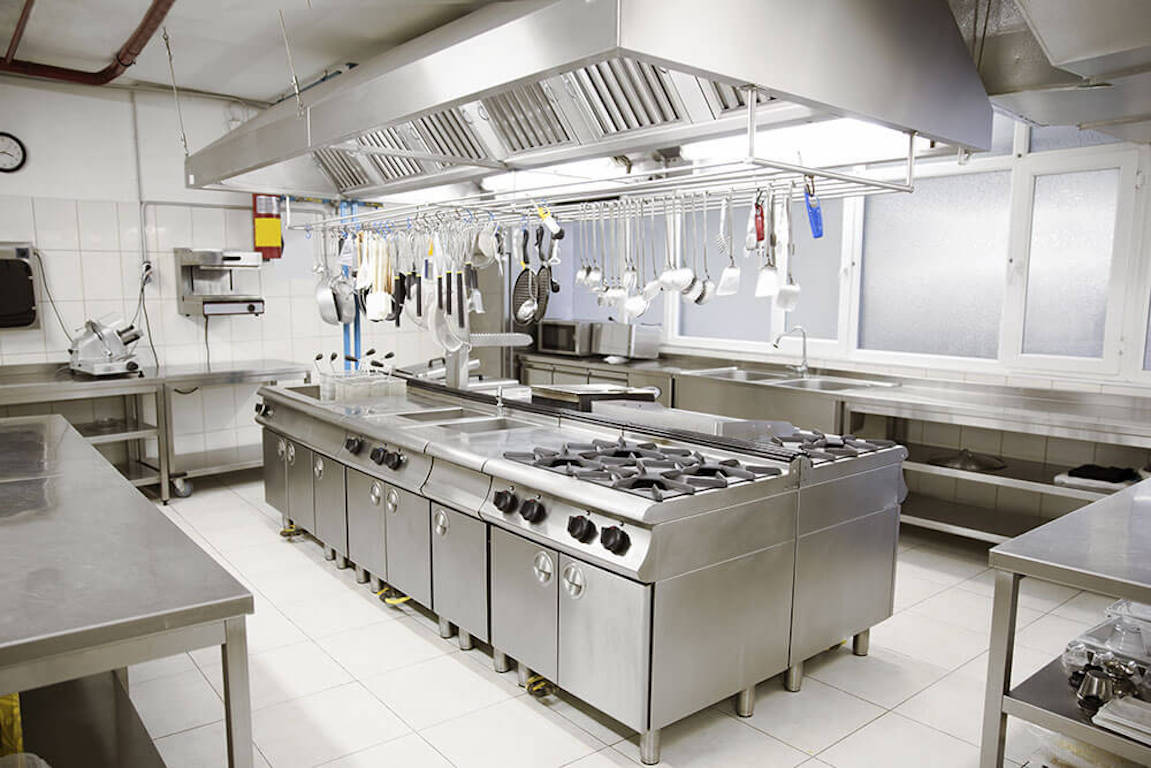
I’ve been building clubs for close to 20 years, and I get a lot of questions about what it means to be a professional club builder and run a build shop. It’s a lot different than being a hobbyist who does a few repairs or has put together a club or two in their garage—similar to how a regular home cook is not a trained chef. But please note, like many, I started off as a hobby builder myself!
Now, it’s not to say that you can’t become a professional chef without proper training. In fact, many of the best chefs I know have worked from the ground up with no formal training but have put many years into their craft to get where they are today.
So how does all this cooking talk relate back to club building? Although the mediums are very different, the processes to create the final products are more similar than you might think, and at the end of the day, the goal is the same—deliver a great product over and over again.
The starting point – Good ingredients


Building a set of clubs and creating a great dish is all about working with raw ingredients, and for golf clubs that means using high-quality components with tight tolerances. Sourcing from manufacturers that offer tight specs and components to properly assemble (if required), is like buying your vegetables from a local farmer. You know where they come from, you know how they were produced, and you know where to go if you have an issue.
Quality will always come with a price—tighter tolerances, and fresh ingredients might be a bit more expensive, but you will always get out of a meal or set of clubs what you put in. If you want an end product you are truly going to enjoy, professional chefs, just like club builders, are going to go to the end of the earth to search out the best ingredients for the dish they plan to create.
Prep work – Knowing your recipe
This is the boring part, always has and always will be. It’s about washing the veggies, chopping to size, organizing into portions, and storing until it’s time to cook.

For club builders, this is the make-or-break time of building a set—it’s making sure you have weighed out all of the components, sorted and organized, and spotted any potential issues with what you are working with and making a correction. For clubheads, that means taking into account the required build specs and adjusting head weight accordingly—no different to making a dish ordered spicy rather than mild—you better get it right or it’s coming back.


Once you have taken all the steps to get your ingredients/components prepped to make your dish according to the recipe/specs, we move onto the next process of putting everything together. If you have followed all the appropriate steps to this point, whether you’re a club builder or a chef, this is one of the fastest parts of the process.
For clubs, once the epoxy has been mixed, it takes as little as 15 minutes to actually assemble a 14-piece set, for a chef it’s similar. The dish comes together in the pan with pre-organized and portioned out ingredients and boom – you have a fully cooked dish in a matter of minutes. No chef starts peeling potatoes when an order is placed.
Work area – cleanliness & organization

This is where I draw a direct comparison, from a chef in their kitchen to a club builder – a clean and organized workspace, to me is the greatest sign of a professional. If you have ever walked into a restaurant with an open kitchen concept, it inspires confidence to see clean counters, organized utensils, and a work area organized and ready for action – if you see a dirty kitchen or a health inspection notice on the door – good chance you’re not stopping to eat.
A build shop should be no different—counters should be tidy, tools should be clean and well maintained for safety as well as precision, and components along with small parts should be organized and quickly accessible at all times. It should be considered a source of pride to maintain a clean workspace as much as it is to deliver a well-built set of clubs or a perfect dish, I have never trusted a messy club builder.
Final preparation
You can do everything right to this point, both as a chef or as a club builder, but if the presentation isn’t right then the customer isn’t likely to be happy—nor should they.
With food that final step means platings—and there is a big difference between a discount $5 buffet and a farm to table chef-inspired tasting menu—it doesn’t take a keen eye to spot the difference.

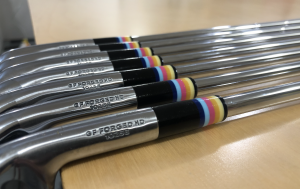
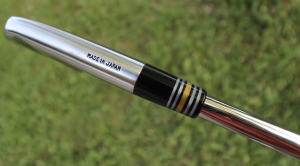
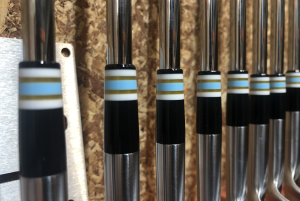
As for clubs, it’s the little things, many of which won’t be noticed by the naked eye or at first glance: lies and lofts, the number of tape wraps under a grip, or swing weight. Those are all things that a golfer must trust was done correctly by their builder. The other part is what can be seen, just like meal plating—no bend marks on hosels, grips on straight, and last but not least, the ferrules turned down properly.

This is my biggest sticking point, because if a club builder isn’t willing to take the time to properly finish one of the most noticeable parts on a club, the ferrules, what else have they potentially skipped out on? Can you trust the lies and loft are right? Can you trust the grips are on correctly with the right amount of tape? Did they even take the time to do the proper prep work?
Any true professional in a skilled trade, whether it be a club builder or chef, should always take pride in their work, and to be considered proper professionals they should also act accordingly, with attention to detail, and the goal of creating a delicious meal or well built set of clubs at the end of the day.
With that in mind, I present to you my finest meal plating…




At GolfWRX, we are a community of like-minded individuals who all experience and express our enjoyment of the game in many ways.
It’s that sense of community that drives day-to-day interactions in the forums on topics that range from best driver to what marker you use to mark your ball. It even allows us to share another thing we all love – buying and selling equipment.
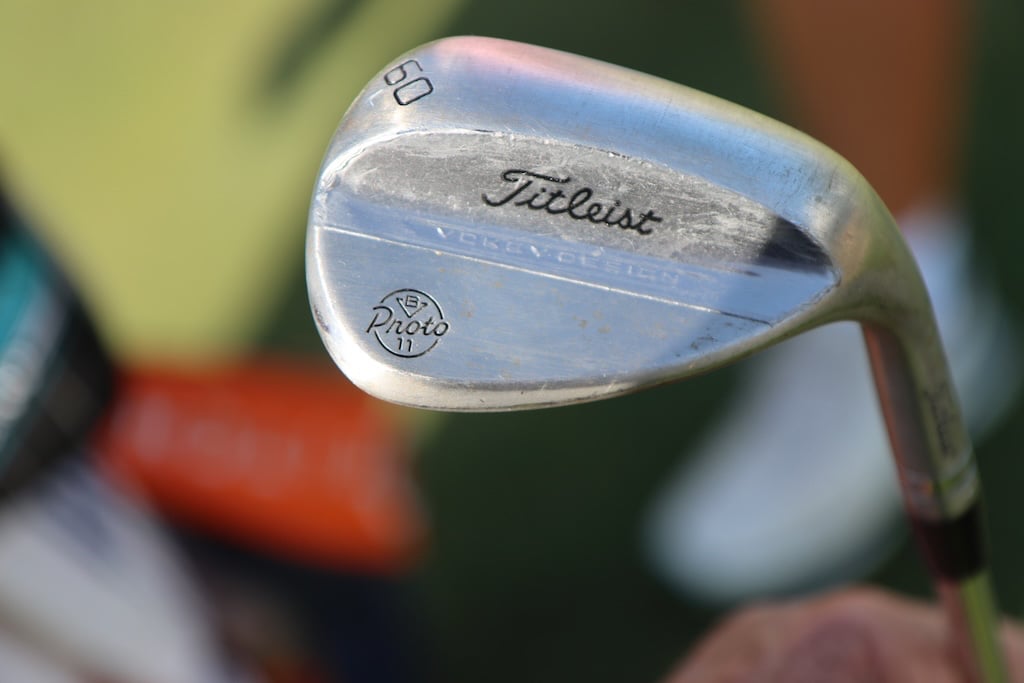
Currently, in our GolfWRX buy/sell/trade (BST) forum, @Putt4Dough is selling some prototype wedges from Vokey Wedgeworks. These include a 54 degree wedge with the M grind and a 60 degree wedge with a T grind.
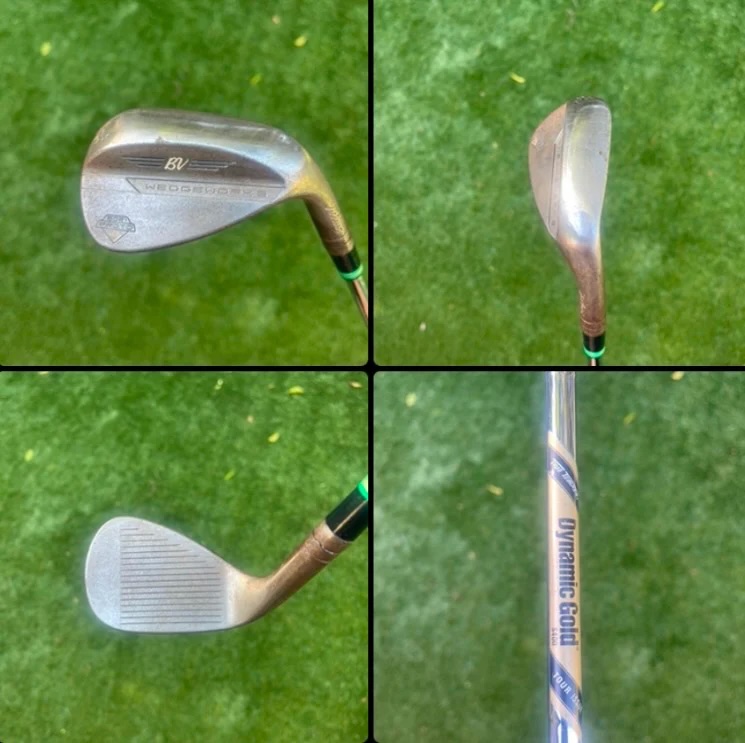
From the listing:
(1) Titleist Vokey Proto Wedge 54M with a Tour Issue DGS400 shaft and Golf Pride Tour Velvet (logo down). Standard length, lie, and loft. BB&F ferrule. Raw wedge in good condition. No initials. Price is $200 shipped. Buy both wedges for $380 shipped.
(2) Titleist Vokey Proto Wedge 60T with a KBS Tour 130X shaft and Golf Pride Tour Velvet. Standard length, lie, and loft. Raw wedge in good condition. No initials. Price is $200 shipped. Buy both wedges for $380 shipped.
To check out the full listing in our BST forum, head through the link. If you are curious about the rules to participate in the BST Forum, you can learn more here: GolfWRX BST Rules.

Driver: Callaway Quantum Triple Diamond (9 degrees)
Shaft: Project X HZRDUS Smoke Blue RDX 60 TX

3-wood: TaylorMade Qi10 (15 degrees)
Shaft: Project X HZRDUS T1100 70 6.5

5-wood: TaylorMade SIM2 Max (18 degrees)
Shaft: Project X HZRDUS Smoke Black RDX 80 TX

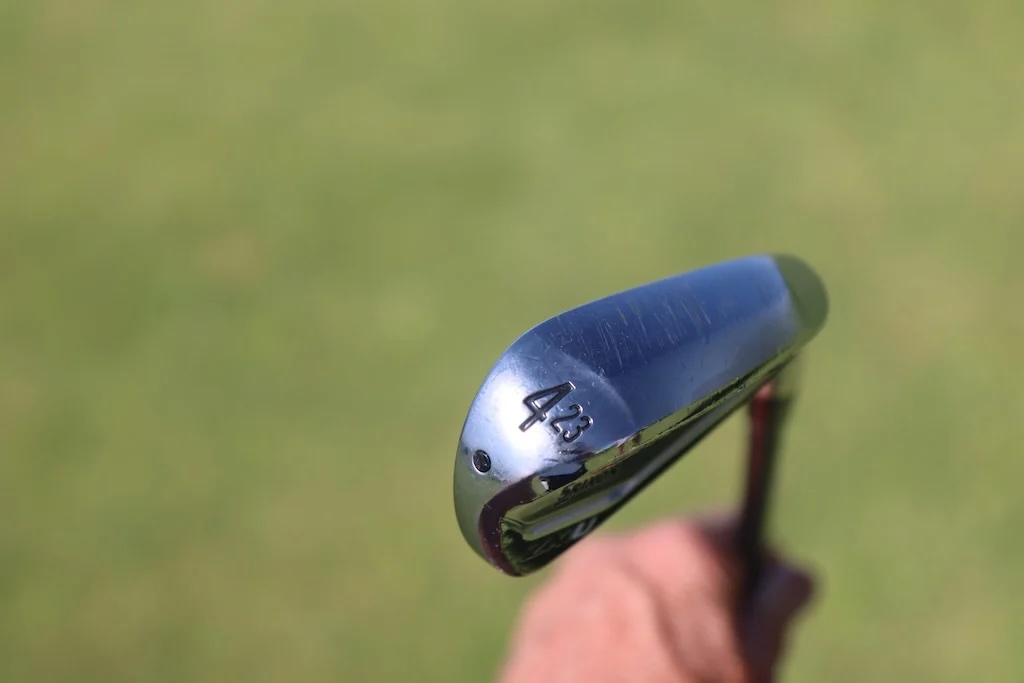
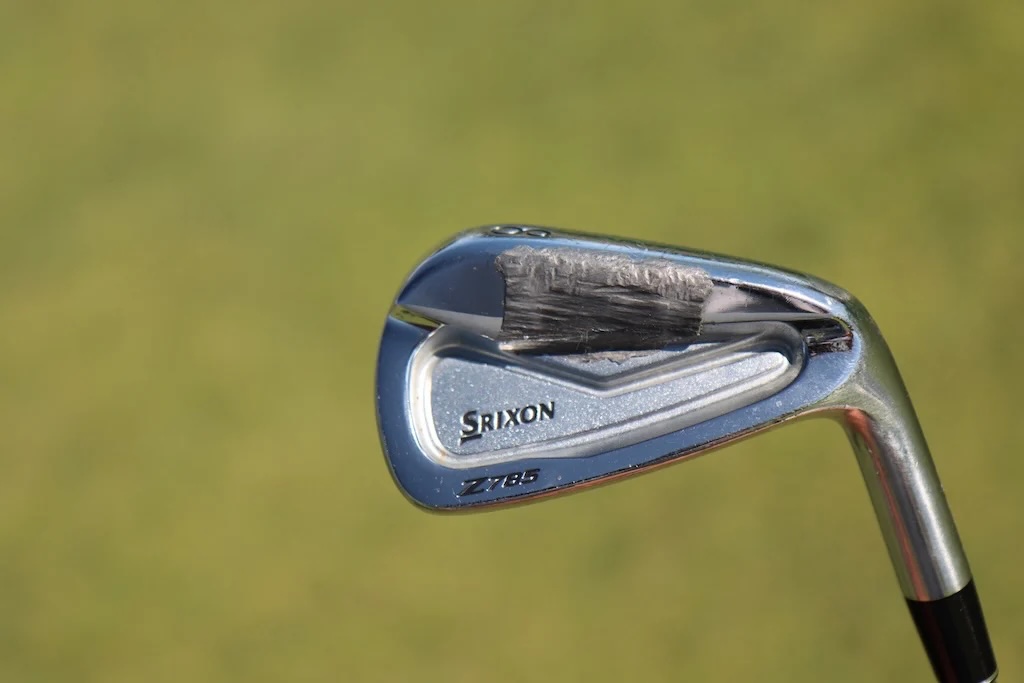
Irons: Srixon ZXiU (23 degrees), Srixon Z785 MB (5-PW)
Shafts: Project X HZRDUS Smoke Black RDX 100 6.5 (4), KBS Tour 130 X
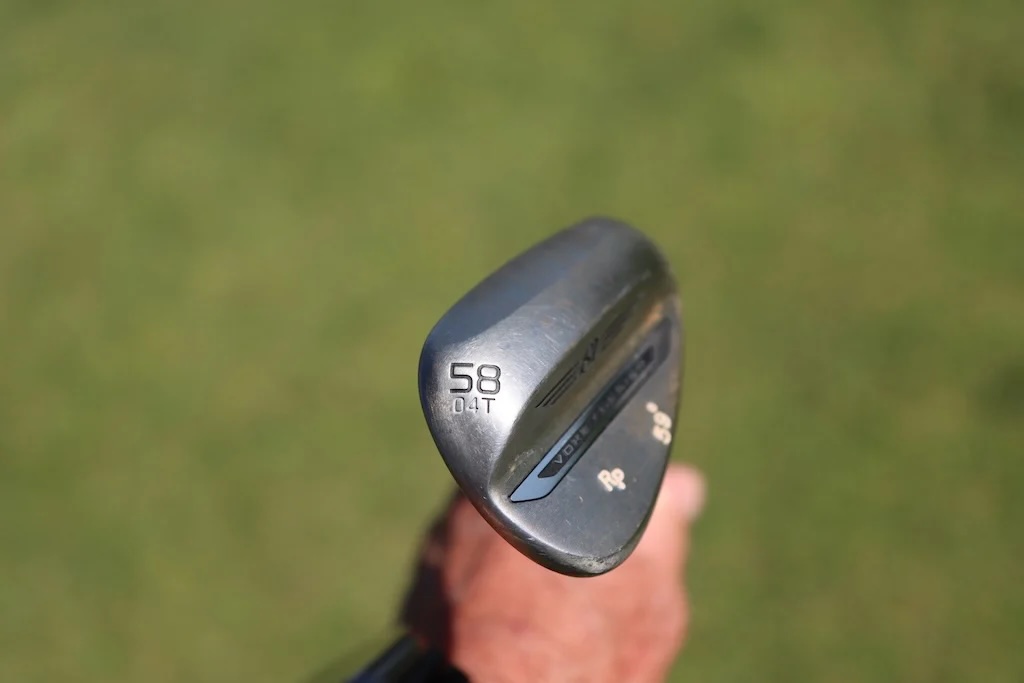
Wedges: Titleist Vokey Design SM11 (50-08F, 54-10S, 58-04T @59)
Shafts: KBS Tour 130 X

Putter: Odyssey Dual Force Rossie II
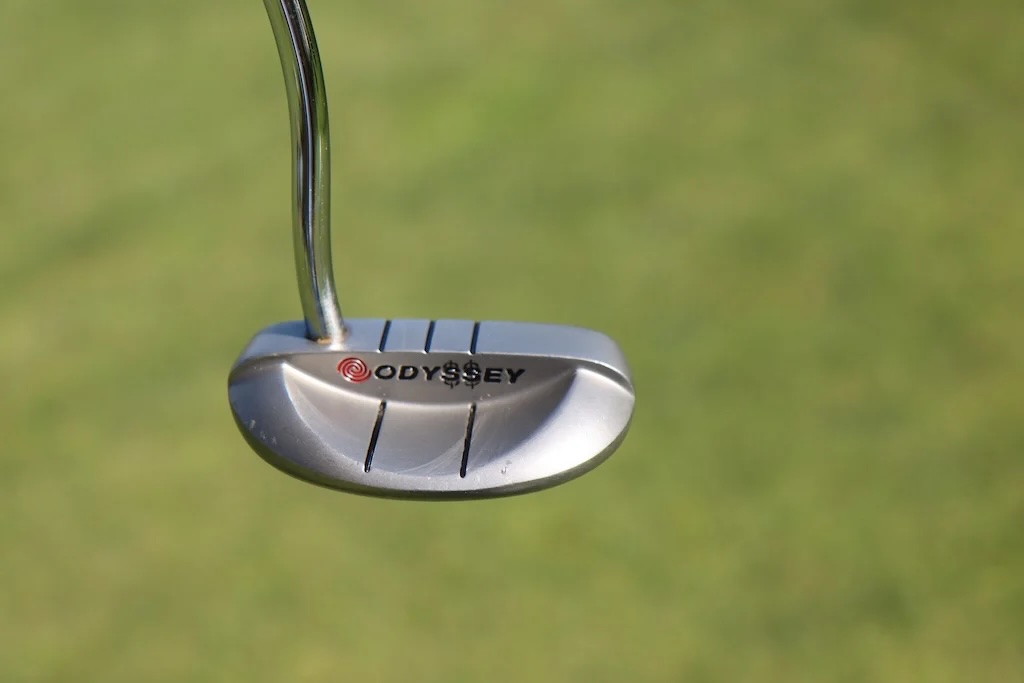

Ball: Titleist Pro V1x
Grips: Golf Pride Tour Velvet


This week, we have our Tour Photographer, Greg Moore, on the ground at the OccuNet Classic at Tascosa Golf Club in Amarillo, Texas, for the 14th event of the 2026 Korn Ferry Tour season. With that, we see some great things in the Lead Tape Report as we roll into Amarillo.
Joel Thelen
Monday Qualifier, Joel Thelen is in the field this week. He has played on the Korn Ferry Tour for a full season in 2023, and he is back in action this week. A couple of clubs caught my eye this week in his bag.
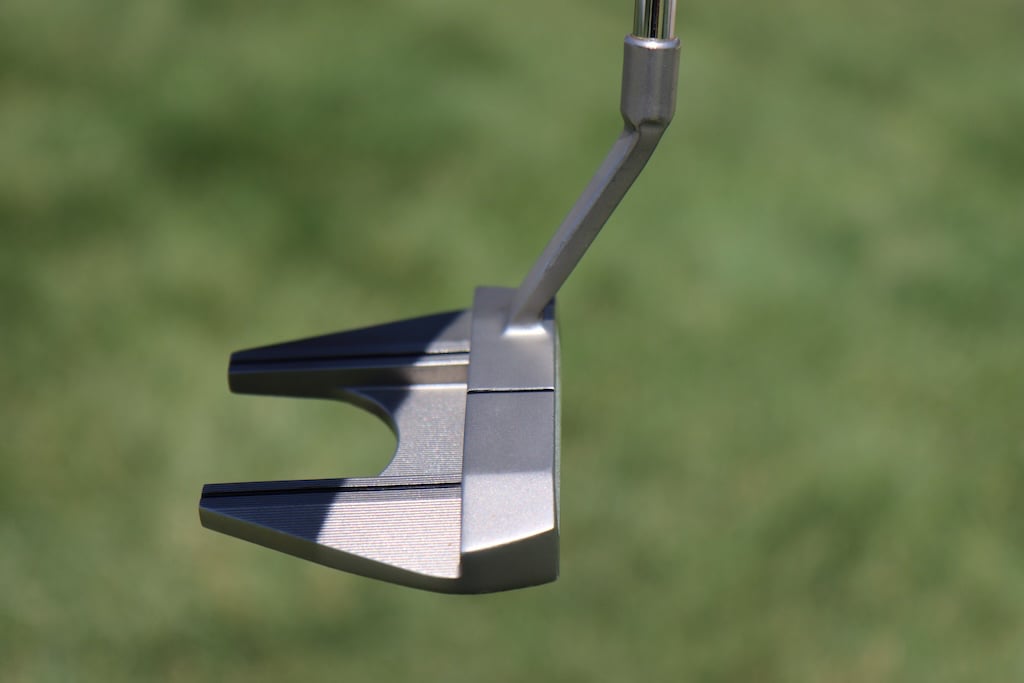
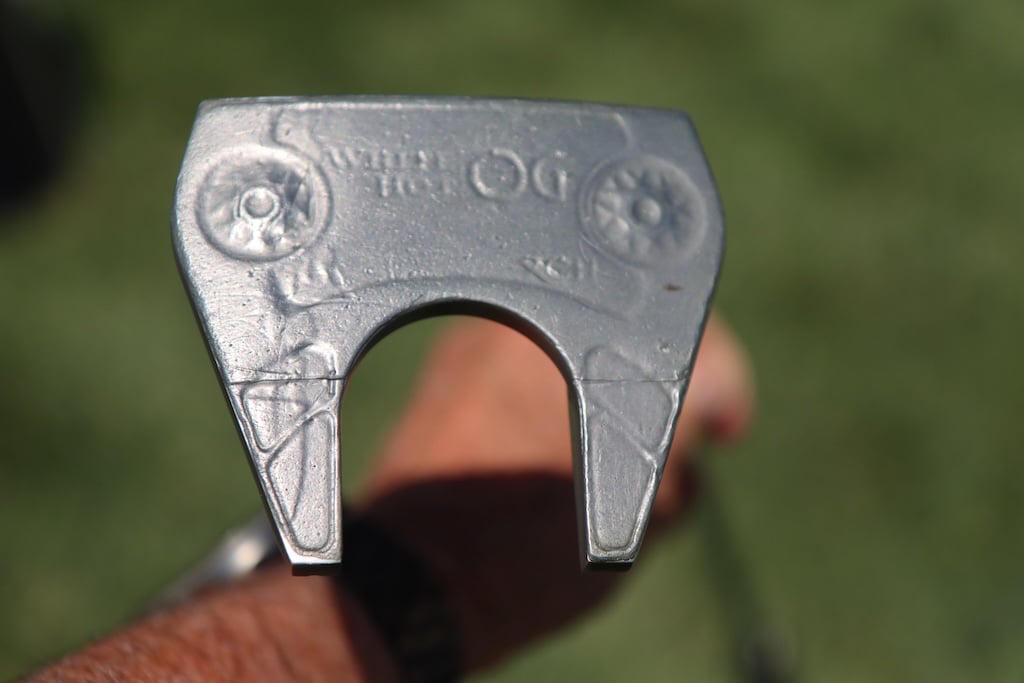
First off: His trusted Titleist 816 H2 hybrid. This club came out in October of 2015, and it still remains strong in the bag. Also, take a look at this Odyssey White Hot OG 7, putting a capital S in the 7S model. This custom neck has some impressive lean for an arm-lock-style putter. The bottom of the putter is covered in tape for optimal weighting.


Mitchell Meissner
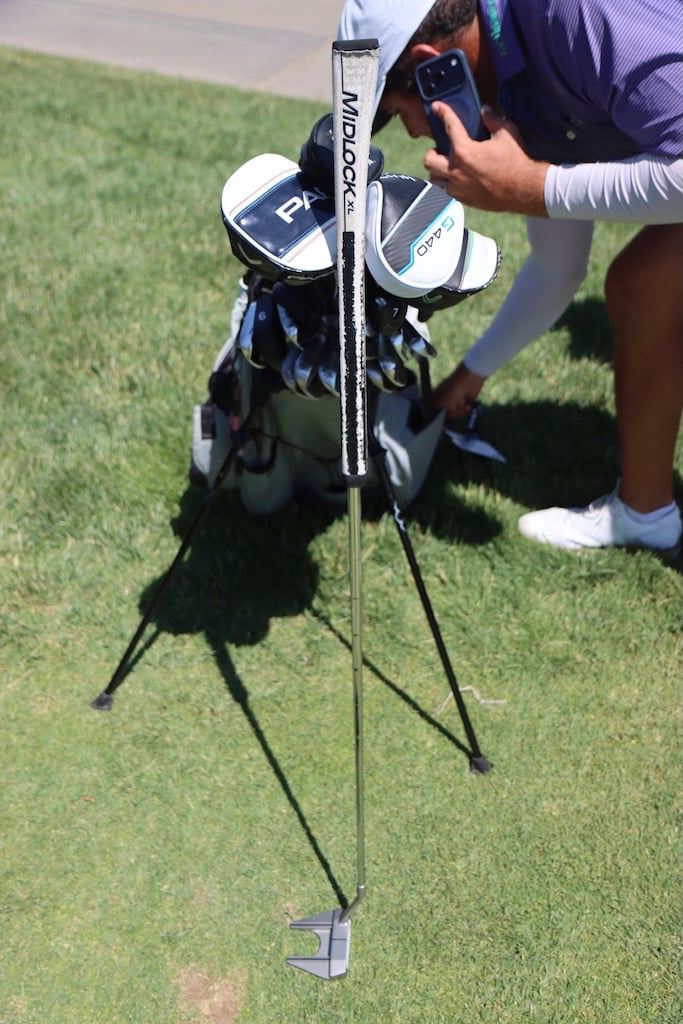
Taking a look at Mitchell Meissner’s bag this week, we have some great lead tape coverage. Top to bottom working from fairway metals, irons, and wedges. We can see on the short irons and wedges that there is tape at the base of the grip, adding a little counterbalance. Along with that, some tape on the short irons and wedges as well. Moving to his putter, he rolls the Odyssey 7 Bird putter. Meissner putts left-handed and strikes the ball right-handed.





Justin Rose WITB 2026 (April): Full WITB breakdown with new McLaren irons

What’s the story behind Webb Simpson’s custom-stamped irons?

Memorial Tournament Tour Report: Rory McIlroy, Cameron Young switch up drivers, and more

Cadillac Championship Tour Report: Spieth’s sizable changes, McLaren Golf launches, and more

Russell Henley’s winning WITB: 2026 Charles Schwab Challenge

Kristoffer Reitan’s winning WITB: 2026 Truist Championship

Best irons 2026: Best irons overall, most forgiving irons, and more

J.T. Poston’s winning WITB: 2026 Memorial Tournament

Aaron Rai’s winning WITB: 2026 PGA Championship

Cameron Young’s winning WITB: 2026 Cadillac Championship


Ryan Palmer WITB 2026 (June)
Driver: Callaway Quantum Triple Diamond (9 degrees) Shaft: Project X HZRDUS Smoke Blue RDX 60 TX 3-wood: TaylorMade Qi10 (15 degrees) Shaft:...


Bud Cauley WITB 2026 (June)
Bud Cauley had >14 clubs in his bag when photographed prior to the Memorial Tournament. Driver: Titleist GTS2 (8 degrees) Shaft: Fujikura...


Hannah Green WITB 2026 (June)
Driver: Titleist GTS3 (10 degrees, D4 SureFit setting) Shaft: Mitsubishi Chemical Diamana RB 53 S 3-wood: Titleist GT3 (15 degrees,...


Asterisk Talley WITB 2026 (June)
Driver: TaylorMade Qi4D (9 degrees) Shaft: Fujikura Ventus Blue 6 S 3-wood: TaylorMade Qi4D (16.5 degrees) Shaft: Fujikura Ventus Blue...
-
 Equipment6 days ago
Memorial Tournament Tour Report: Rory McIlroy, Cameron Young switch up drivers, and more
-
 News2 weeks ago
Russell Henley’s winning WITB: 2026 Charles Schwab Challenge
-
 Equipment3 days ago
Best irons 2026: Best irons overall, most forgiving irons, and more
-
 Whats in the Bag4 days ago
J.T. Poston’s winning WITB: 2026 Memorial Tournament
-

 Equipment1 week ago
Details on Jason Day’s latest prototype Avoda iron setup
-
 Equipment3 weeks ago
CJ Cup Byron Nelson Tour Report: Koepka and Kim’s newest putters finally get hot
-

 News2 weeks ago
Charles Schwab Challenge Tour Report: MacIntyre, Åberg and Spaun all switch putters, TaylorMade launches new Spider
-

 Equipment2 weeks ago
Details on J.J. Spaun’s surprise putter switch


Pingback: From Sunday bags to club fitting: My favorite pieces of 2020 – GolfWRX
Michael
Jul 31, 2020 at 10:23 am
Where is the best place to get foundational education to become a club builder? Thanks for your time and the great article.
Jonathan Weaver
Jul 30, 2020 at 8:14 pm
Someone is loving the Boyd’s!
C
Jul 30, 2020 at 7:14 am
Ferrule. I loathe that word as an amateur club builder.
Veo Robert
Jul 29, 2020 at 4:37 pm
Hi Ryan, I’m a professional chef in Boston and an aspiring club tinkerer, not gonna call myself a club builder, however i would like to be able to do so one day. You speak like someone who’s cooked professionally, i wouldn’t be surprised if you have. How true it is to be organized, meticulous and clean throughout the process of cooking, very well said in this matter. This article gives me great joy and hope that one day i can navigate the wonderful of golf equipment to be able to call myself a club builder. Thank you and keep up the great work. PS: get in touch if you ever in Boston, would love to treat you to a good meal, and maybe play a round.
Ryan Barath
Jul 29, 2020 at 9:58 pm
Thanks for the kind words.
I am by no means a chef but do a lot of home cooking as well as have a number of friends in the industry that are true chefs. I spent a few years in the restaurant business doing craft beer sales and spent a lot of time in restaurants – the absolutely great ones are easy to spot if you’ve walked about a kitchen – clean, organized, and ready for action. It was how I was able to draw such a parallel for this piece.