
Opinion & Analysis
Two more golf books: “Getting to 18” and “One for the Memory Banks”

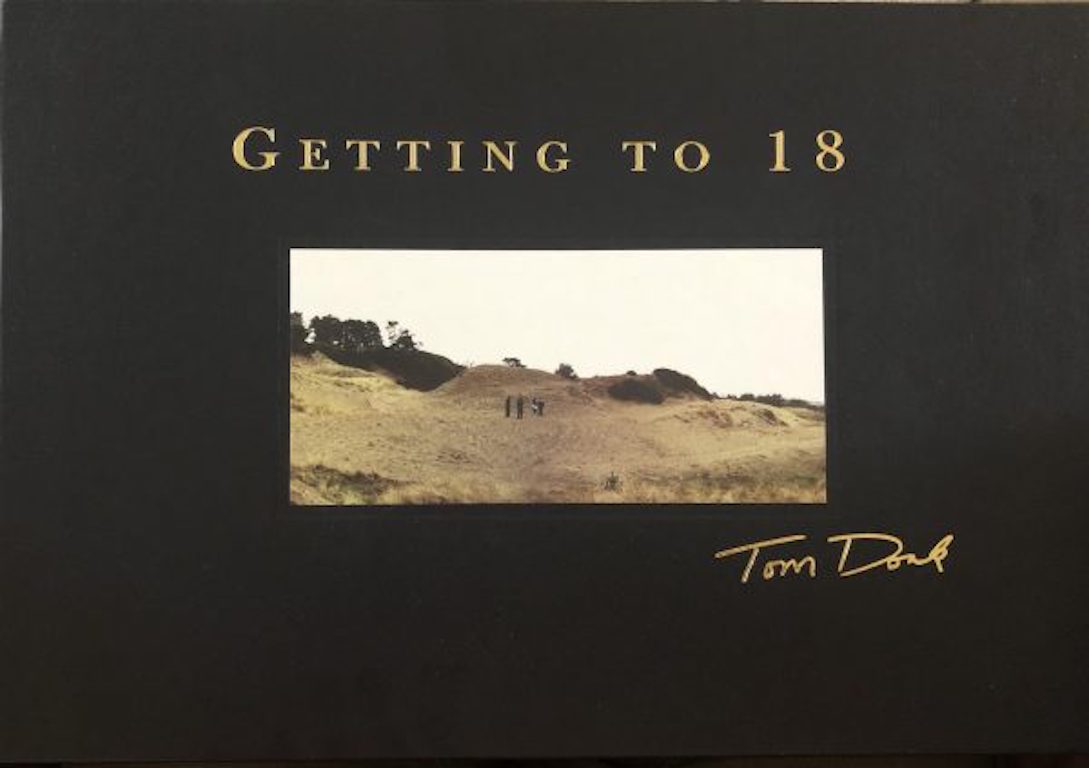
Tom Doak is an accomplished golf course architect, and has proven himself to be a fine writer and researcher over the years. His Confidential Guides have introduced golfers across the world to the courses (and their worth) located around the globe. Luke Reese has written precisely one book, and it is this one. It is a collection of stories, based on his time spent learning the game of golf while in management at Wilson Sporting Goods and other athletic companies, in Europe. Coincidentally, many of his lessons took place on courses that show grandly in Tom Doak’s Guides. In fact, Reese cites the original Confidential Guide as one of his particular field guides. His One For The Memory Banks is a collection of 19 tales, precisely the amount of holes needed for a standard round of golf, plus the requisite and celebratory 19th hole. As for Tom Doak, Getting To 18 is the first in a series of three or so volumes, that details the processes that he and his team have used over the years, to get to 18 holes on a piece of property. Each volume will contain photos, drawings, and description of the process of completing 18 courses. Since Renaissance Golf, his company, has some 50 to 60 original designs, our guess is three volumes.
You’ve heard of coffee-table books? Add legs and Getting To 18 is a coffee table. It is massive, and that is a good thing. It is leather bound, and as a result, carries a hefty price. However, since this is a limited-edition volume, it is a collector’s item and an investment. In other words, it’s worth the purchase price. One For The Memory Banks will not carry the same size nor cost, but should be a worthy purchase. Rumor has it that a second round of chapters might come along, down the line. Both books are in my possession and will not leave it, anytime soon.
Why you chose this book~
You love golf course architecture and you have an idea of who Tom Doak is. If neither is the case, yet you somehow came into possession of it, your conceptualization of both will change forever. To wit, golf course architecture is what makes the playing of golf different from every other sport and game we humans have. The constantly-changing, playing surface keeps our interest. The more practiced the hand that laid it out, the more memorable and challenging the course. Tom Doak is a practiced hand, and also, a practiced writer. A glimpse at the process required to build his first 19 courses (bonus), along with a fleck of photos from each, should wet your appetite to consider golf differently, and seek out his courses, in particular.
Some of what you will find~
You will find courses that no longer exist. Funny to say that about someone who began to build courses in the 1990s, but such is the way of the game. Some gave way for bigger and better things (the original Sheep Ranch) while others ceded space for smaller and lesser things (Beechtree, Charlotte Golf Links.) You will find courses built in far-off places and nearby spaces. You will find honest assessment of one’s own work, of the constraints and freedoms that accompany the finding, designing, and building of a golf course. Don’t believe me? I’ll leave you with this quote from Tom Doak, from the book, about one of his gone-away courses: The sad part is, I don’t miss it at all.
What to take away~
In your hands, is an investment. It is a collector’s volume, for the size, the binding, and the content. It is an investment in your understanding of golf course architecture. It should lead you to other books by Tom Doak and his contemporaries, and then, to books by their predecessors. And farther back, until no more antecedents remain. It will begin your journey to the game’s soul, which touches on people and places, communities and beliefs, for the past five centuries of human existence. That’s a lot for one book.

Why you chose this book~
You DID NOT choose this book because its website says “Part Final Rounds, Part Dewsweepers, Part To The Linksland, Part Rick Reilly.” Making those allusions to other writers is a disservice to Luke Reese and Alan Bond. Alan Bond is not a character that any of the aforementioned books nor writers did create, nor could have created. He would not have been who he was, without having precisely THIS Luke Reese as his boss. You DID choose this book because of what I am about to tell you. I will encourage you to read Lazy Days At Lahinch, either through purchase or library loan, before you read this one. My reasoning is: Lahinch is the telling of stories from the golf soul of humor while parked at one particular course; Memory Banks is the sojourner’s golf soul retelling. They are companion volumes from different authors, but their spirits are identical.
Some of what you will find~
You will find a relationship between a professional superior and his subordinate. You will find trips to Europe’s finest golf courses. You will find competition and collaboration. You will find witty repartee, grandstanding, suffering, and celebration. Most important, you will find the kinship that develops through the human experience that is golf, and you will find yourself on the floor, rolling in laughter (or perhaps, simple leaning back in your chair, to let a sizable guffaw escape your lungs.)
What to take away~
Having never met Luke Reese, I agreed to take a phone call with him. Expecting 15 minutes of shop talk, he had to pull away after nearly 90 minutes. Luke Reese is a born storyteller, with a unique voice (remember what I wrote above?) He is the victim, if such a role ever truly existed, of Alan Bond’s capers, antics, and shenanigans. Reese might be considered the fall guy or the straight man, but every legendary comedian would be nothing without such a cohort. In the end, we come to understand that these two fellows were accomplices in one of the great heists of the late 20th and early 21st century. They enjoyed more camaraderie than any of us deserves, while doing things that their jobs demanded. That’s one lesson to take away, but I guarantee that you’ll find a dozen more.




This past Monday, I played in the U.S. Amateur local qualifier at Rock Creek Country Club in Portland, Oregon. A full tee sheet from 7:30 a.m. to 1:55 p.m., the top 11 scores would make it to the U.S. Amateur final qualifying.
I teed off at 10:48 a.m.. With the 7:30 am tee time, you can get a feel for the leaders’ pace, and they were off and running on the challenging setup at Rock Creek.
View this post on Instagram
Getting to the highlight of the round on the par five 17th, a drive up the left side and 212 yards left to the front hole location. I took out a 5-iron with plans of middle of the green. The ball ended up 8 feet left of the hole, pin high. A slight downhill putt dropped in for an eagle 3 on the 17th. With the cut line looking to be anywhere from -2 to even par. This was the boost I had been waiting for all day.
With making par from the trees on 18, it was time to wait for a potential playoff with a posted score of one under par 71.
Three hours later, it was playoff time. 8 players for 6 spots. I made par on the playoff hole, which was good enough to advance to the U.S. Amateur final qualifying in July. USGA qualifiers sure deliver on all of the emotions in golf!
Club Junkie
Building my 2026 gamer WITB: Ranking the contenders and new putter projects – Club Junkie Podcast

The annual What’s In The Bag build is underway, and on this episode of Club Junkie, Brian breaks down the clubs currently leading the race for a spot in his 2026 gamer setup. From drivers and fairway woods to irons, wedges, and shafts, he ranks the equipment that’s performing best and explains what’s separating the front runners from the rest of the field.
Brian also heads into the workshop to discuss several putter projects currently on the bench. From head options and shaft choices to build ideas and testing plans, he shares what he’s working on and which putters could become serious contenders for the bag this season.
If you’re a gear junkie who loves equipment testing, club building, and the never-ending pursuit of the perfect setup, this episode is for you.
Follow Club Junkie:
Instagram: @clubjunkiepod
TikTok: @clubjunkiepod
Threads: @clubjunkiepod
X: @ClubJunkiePod
Club Junkie
Tour Edge Exotics mini driver review + TaylorMade Spider ZT Max first look – Club Junkie

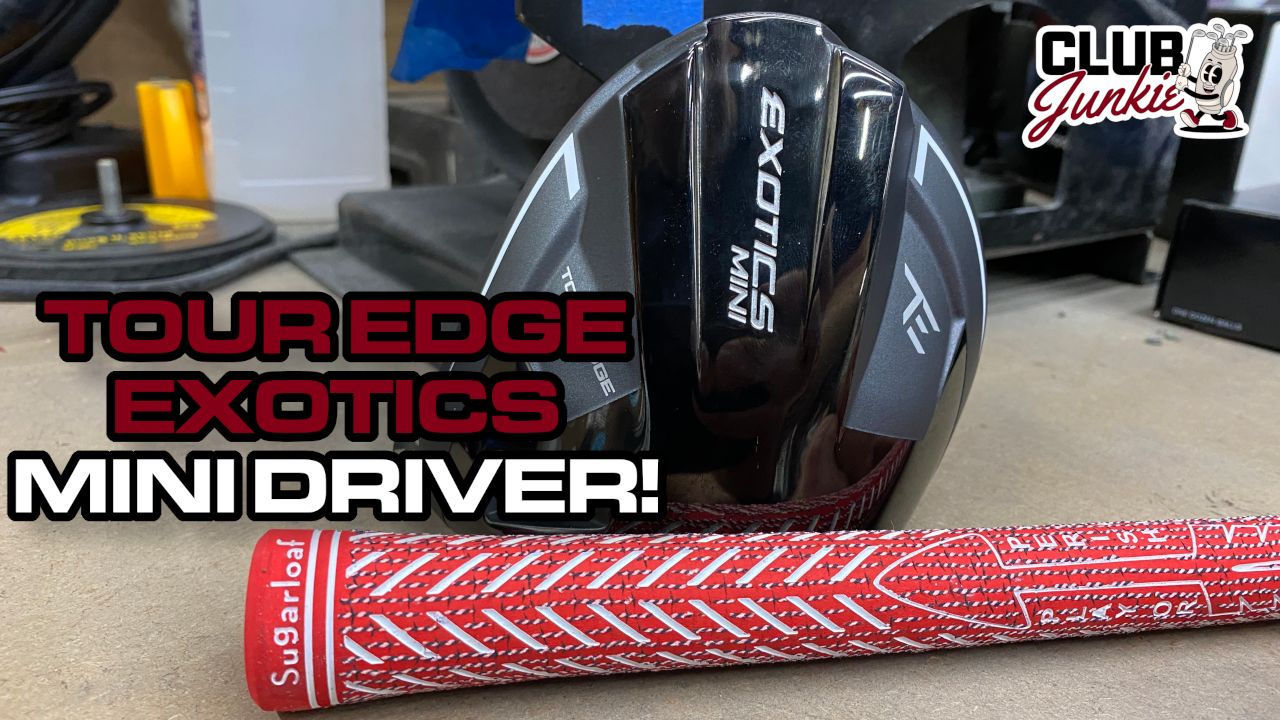
On this episode of Club Junkie, I put the new Tour Edge Exotics Mini Driver to the test and break down the performance, forgiveness, distance, and where it fits compared to a traditional driver or strong fairway wood. If you have been curious about adding a mini driver to the bag, this one is worth a look.
I also dive into the new TaylorMade Spider ZT Max putter that was recently spotted and discuss the growing zero torque putter trend. Plus, there is a closer look at the new Project X Titan Yellow shaft showing up on the PGA Tour and what makes it different from other profiles currently out there.

Justin Rose WITB 2026 (April): Full WITB breakdown with new McLaren irons

What’s the story behind Webb Simpson’s custom-stamped irons?

Memorial Tournament Tour Report: Rory McIlroy, Cameron Young switch up drivers, and more

Cadillac Championship Tour Report: Spieth’s sizable changes, McLaren Golf launches, and more

Russell Henley’s winning WITB: 2026 Charles Schwab Challenge

Kristoffer Reitan’s winning WITB: 2026 Truist Championship

Best irons 2026: Best irons overall, most forgiving irons, and more

J.T. Poston’s winning WITB: 2026 Memorial Tournament

Aaron Rai’s winning WITB: 2026 PGA Championship

Cameron Young’s winning WITB: 2026 Cadillac Championship


Bud Cauley WITB 2026 (June)
Bud Cauley had >14 clubs in his bag when photographed prior to the Memorial Tournament. Driver: Titleist GTS2 (8 degrees) Shaft: Fujikura...


Hannah Green WITB 2026 (June)
Driver: Titleist GTS3 (10 degrees, D4 SureFit setting) Shaft: Mitsubishi Chemical Diamana RB 53 S 3-wood: Titleist GT3 (15 degrees,...


Asterisk Talley WITB 2026 (June)
Driver: TaylorMade Qi4D (9 degrees) Shaft: Fujikura Ventus Blue 6 S 3-wood: TaylorMade Qi4D (16.5 degrees) Shaft: Fujikura Ventus Blue...


Brianna Do WITB 2026 (June)
Driver: Callaway Quantum Triple Diamond (9 degrees) Shaft: KBS PGW 3-wood: Callaway Elyte Titanium (15 degrees) Shaft: KBS PGW 5-wood:...
-
 Equipment6 days ago
Memorial Tournament Tour Report: Rory McIlroy, Cameron Young switch up drivers, and more
-
 News2 weeks ago
Russell Henley’s winning WITB: 2026 Charles Schwab Challenge
-
 Equipment3 days ago
Best irons 2026: Best irons overall, most forgiving irons, and more
-
 Whats in the Bag4 days ago
J.T. Poston’s winning WITB: 2026 Memorial Tournament
-

 Equipment1 week ago
Details on Jason Day’s latest prototype Avoda iron setup
-

 Equipment3 weeks ago
CJ Cup Byron Nelson Tour Report: Koepka and Kim’s newest putters finally get hot
-

 News2 weeks ago
Charles Schwab Challenge Tour Report: MacIntyre, Åberg and Spaun all switch putters, TaylorMade launches new Spider
-

 Equipment2 weeks ago
Details on J.J. Spaun’s surprise putter switch

