
Opinion & Analysis
Fix your golf back pain – Step 4: Building global strength for prevention of future injury


This article is co-written with Marnus Marais. Since 2011, Marnus has worked with some of the world’s best players on both the PGA Tour and European Tour, helping them to maintain optimal health and peak physical performance. His current stable of players includes Dustin Johnson, Patrick Cantlay, and Louis Oosthuizen, amongst others.
You can find more information on Marnus and his work at marnusmarais.com

This article is No.4 in a 4 part series:
Step 1 – The Importance of Assessment
Step 3 – Essential Strength and Golf Movement Patterns
Step 4 – Building global strength for prevention of future injury
Introduction
So far in this series, we have looked at how we can improve our posture, increase our mobility, correct our muscle imbalances, build essential strength, and move more efficiently in our golf swings. If implemented correctly, this combination will hopefully have you clear of back pain and returned to full function on the golf course again.
If you really want to put back pain behind you, then we recommend you take one extra step — build global strength to help ensure prevention of future issues. Here we are aiming to build an overall stronger and more resilient body so we can more efficiently generate clubhead speed and move better in our day-to-day, thereby placing less strain on our lower backs.
There is considerable debate about best practices for getting stronger for golf, and we obviously don’t have the time to cover every angle in this article. So, as per the previous steps in this series, we are going to keep it simple and give you something useful to start with.
Key Movements
A solid principal we use when getting our clients started with a global strengthening routine is to teach the key movements upon which strength and conditioning are based: squat, lunge, push, pull, hinge, rotate, and brace. Once you have learned the principles of technique for each, you then can apply them to pretty much any gym movement with confidence that you’re using correct form.
You can choose a variation from each category below and combine them to form a well-rounded, all-body workout using the recommended training variables for a guide on volume, load, rest, etc.
Training Variables
There are a few variables we need to consider when putting together a workout or training program. Again, in the interest of keeping it simple, those outlined below are fairly stock/standard and a good place to start.
Sets: 2-4
Reps: 8-12
Rest: 60-90 secs
Tempo: 2-0-2 (2 seconds up, no pause, 2 seconds down)
Load /Weight: Close to failure at end of the set, without compromising technique and safety —you must feel balanced and controlled for all reps.
Movement 1 – Squat
Purpose:
Increase strength in the lower body. Provides the opportunity to load the lower body quite heavily due to wide base of support, once appropriate training age and experience have been developed.
Key Technique Tips:
Aim to keep weight centered in feet, knees tracking in line with toes, try to match your shin angle with your back angle throughout the movement.
Examples:
- Knee Band Squat
- Goblet Squat
- Front Squat
- Back Squat
- Overhead Squat
Movement 2 – Lunge
Purpose:
Strengthen the lower body in a single leg dominant movement. Increased focus on stability and balance due to narrow base of support.
Key Technique Tips:
Foot, knee and hip aligned, keep weight centred in your front foot. Keep torso upright (in most lunge movements).
Examples:
- BW Reverse Lunge
- DB Forward Lunge
- DB Lateral Lunge
- BB Split Squat
- DB Bulgarian Split Squat
Movement 3 – Push
Purpose:
Strengthen chest, shoulders and triceps. Increase stability at the shoulder, elbow and wrist joints.
Key Technique Tips:
Aim for full range of motion with shoulder (forward and backward), try to keep hand and elbow aligned throughout movement.
Examples:
- Incline Push Up
- DB Press
- Narrow Stance Push Up
- Dips
- BB Shoulder Press
Movement 4 – Pull
Purpose:
Strengthen back, rear shoulder and bicep muscles. Increase stability at the shoulder, elbow and wrist joints.
Key Technique Tips:
Aim for full range of motion with shoulder (forward and backward), try to keep hand and elbow aligned throughout movement. Avoid hunching shoulders upwards.
Examples:
- Inverted Row
- DB Row
- Straight Arm Pulldown
- DB High Row
- Pull Up
Movement 5 – Hinge
Purpose:
Strengthen posterior chain muscles (hamstrings, glutes, low back).
Key Technique Tips:
Try to keep neutral spine throughout the movement, usually have slight bend at the knees (depending on the movement).
Examples:
- KB Sumo Deadlift
- DB RDL
- BB Sumo Deadlift
- BB Split Stance RDL
- Good Morning
Movement 6 – Rotate
Purpose:
Strengthen the core muscles in rotation.
Key Technique Tips:
Keep arms in front of body, drive rotation from turning the torso, grip the floor with feet (when performing a standing rotation).
Examples:
- Unstable Lying Turn Over
- Seated Russian Twist
- Cable / Band Rotation
- Landmine Turn
- Simultaneous Press and Row
Movement 7 – Brace
Purpose:
Strengthen core muscles in static position – resisting forces from various directions.
Key Technique Tips:
Keep spine neutral, engage glutes in the movement where possible, remember to breathe!
Examples:
- Prone Hold
- Leg Lowers
- Side Bridge
- Pallof Press
- Ab Roll Out
If you would like to see how Marnus can help with your golfing back pain, then check out the resources below:
Marnus Marais – marnusmarais.com
If you would like to access training programs designed for elite and recreational players, then check out the following resources and services from Nick at Golf Fit Pro:




This past Monday, I played in the U.S. Amateur local qualifier at Rock Creek Country Club in Portland, Oregon. A full tee sheet from 7:30 a.m. to 1:55 p.m., the top 11 scores would make it to the U.S. Amateur final qualifying.
I teed off at 10:48 a.m.. With the 7:30 am tee time, you can get a feel for the leaders’ pace, and they were off and running on the challenging setup at Rock Creek.
View this post on Instagram
Getting to the highlight of the round on the par five 17th, a drive up the left side and 212 yards left to the front hole location. I took out a 5-iron with plans of middle of the green. The ball ended up 8 feet left of the hole, pin high. A slight downhill putt dropped in for an eagle 3 on the 17th. With the cut line looking to be anywhere from -2 to even par. This was the boost I had been waiting for all day.
With making par from the trees on 18, it was time to wait for a potential playoff with a posted score of one under par 71.
Three hours later, it was playoff time. 8 players for 6 spots. I made par on the playoff hole, which was good enough to advance to the U.S. Amateur final qualifying in July. USGA qualifiers sure deliver on all of the emotions in golf!
Club Junkie
Building my 2026 gamer WITB: Ranking the contenders and new putter projects – Club Junkie Podcast

The annual What’s In The Bag build is underway, and on this episode of Club Junkie, Brian breaks down the clubs currently leading the race for a spot in his 2026 gamer setup. From drivers and fairway woods to irons, wedges, and shafts, he ranks the equipment that’s performing best and explains what’s separating the front runners from the rest of the field.
Brian also heads into the workshop to discuss several putter projects currently on the bench. From head options and shaft choices to build ideas and testing plans, he shares what he’s working on and which putters could become serious contenders for the bag this season.
If you’re a gear junkie who loves equipment testing, club building, and the never-ending pursuit of the perfect setup, this episode is for you.
Follow Club Junkie:
Instagram: @clubjunkiepod
TikTok: @clubjunkiepod
Threads: @clubjunkiepod
X: @ClubJunkiePod
Club Junkie
Tour Edge Exotics mini driver review + TaylorMade Spider ZT Max first look – Club Junkie

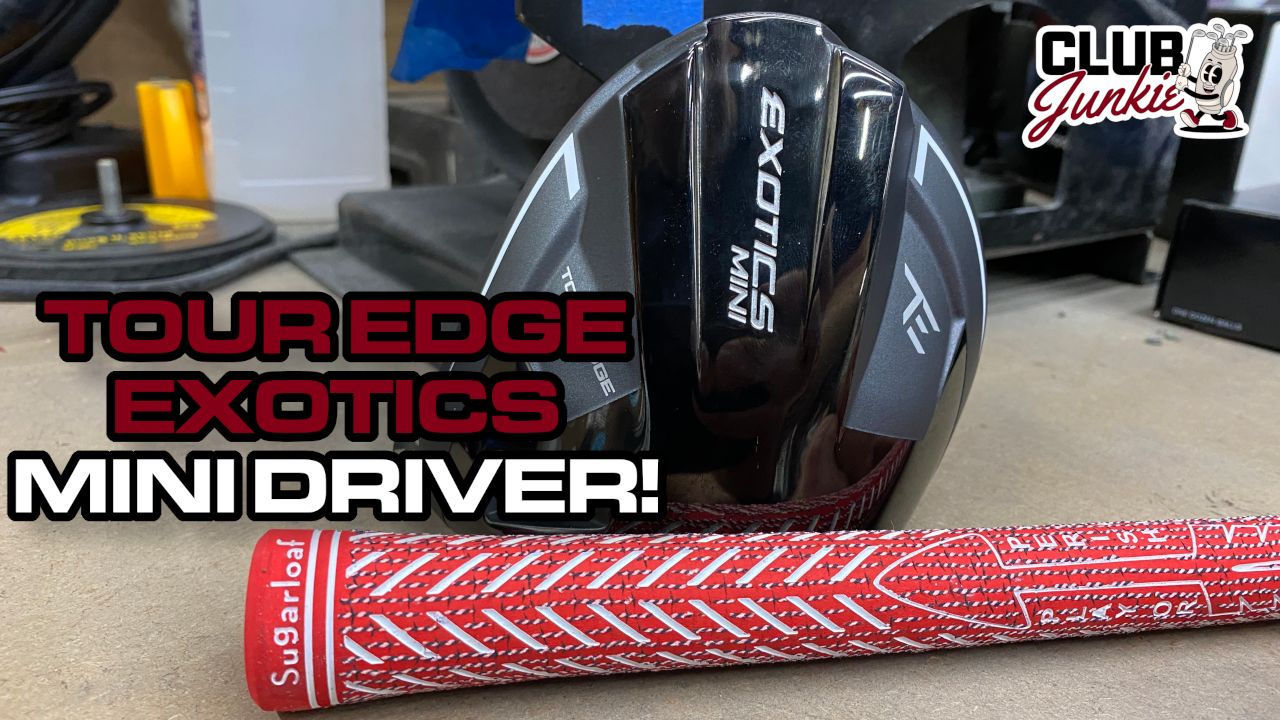
On this episode of Club Junkie, I put the new Tour Edge Exotics Mini Driver to the test and break down the performance, forgiveness, distance, and where it fits compared to a traditional driver or strong fairway wood. If you have been curious about adding a mini driver to the bag, this one is worth a look.
I also dive into the new TaylorMade Spider ZT Max putter that was recently spotted and discuss the growing zero torque putter trend. Plus, there is a closer look at the new Project X Titan Yellow shaft showing up on the PGA Tour and what makes it different from other profiles currently out there.

What’s the story behind Webb Simpson’s custom-stamped irons?

Memorial Tournament Tour Report: Rory McIlroy, Cameron Young switch up drivers, and more

Cadillac Championship Tour Report: Spieth’s sizable changes, McLaren Golf launches, and more

Russell Henley’s winning WITB: 2026 Charles Schwab Challenge

Kristoffer Reitan’s winning WITB: 2026 Truist Championship

Best irons 2026: Best irons overall, most forgiving irons, and more

J.T. Poston’s winning WITB: 2026 Memorial Tournament

Aaron Rai’s winning WITB: 2026 PGA Championship

Cameron Young’s winning WITB: 2026 Cadillac Championship

Details on Jason Day’s latest prototype Avoda iron setup


Christiaan Maas WITB 2026 (June)
Driver: TaylorMade Qi4D LS (8 degrees) Shaft: Fujikura Ventus TR Blue 6 X 3-wood: TaylorMade Qi10 (15 degrees) Shaft: Fujikura Ventus Black...


Ryan Palmer WITB 2026 (June)
Driver: Callaway Quantum Triple Diamond (9 degrees) Shaft: Project X HZRDUS Smoke Blue RDX 60 TX 3-wood: TaylorMade Qi10 (15 degrees) Shaft:...


Bud Cauley WITB 2026 (June)
Bud Cauley had >14 clubs in his bag when photographed prior to the Memorial Tournament. Driver: Titleist GTS2 (8 degrees) Shaft: Fujikura...


Hannah Green WITB 2026 (June)
Driver: Titleist GTS3 (10 degrees, D4 SureFit setting) Shaft: Mitsubishi Chemical Diamana RB 53 S 3-wood: Titleist GT3 (15 degrees,...
-
 Equipment7 days ago
Memorial Tournament Tour Report: Rory McIlroy, Cameron Young switch up drivers, and more
-
 News2 weeks ago
Russell Henley’s winning WITB: 2026 Charles Schwab Challenge
-
 Equipment4 days ago
Best irons 2026: Best irons overall, most forgiving irons, and more
-
 Whats in the Bag4 days ago
J.T. Poston’s winning WITB: 2026 Memorial Tournament
-
 Equipment1 week ago
Details on Jason Day’s latest prototype Avoda iron setup
-
 Equipment3 weeks ago
CJ Cup Byron Nelson Tour Report: Koepka and Kim’s newest putters finally get hot
-

 News2 weeks ago
Charles Schwab Challenge Tour Report: MacIntyre, Åberg and Spaun all switch putters, TaylorMade launches new Spider
-

 Equipment2 weeks ago
Details on J.J. Spaun’s surprise putter switch

