
Opinion & Analysis
Fix Your Golf Back Pain – Step 3: Essential strength and golf movement patterns


This article is co-written with Marnus Marais. Since 2011, Marnus has worked with some of the world’s best players on both the PGA Tour and European Tour, helping them to maintain optimal health and peak physical performance. His current stable of players includes Dustin Johnson, Patrick Cantlay, and Louis Oosthuizen, amongst others.
You can find more information on Marnus and his work at marnusmarais.com

This article is No. 3 in a 4 part series:
Step 1 – The Importance of Assessment
Step 3 – Essential Strength and Golf Movement Patterns
Step 4 – Building global strength for prevention of future injury
Introduction
When it comes to recovering from back injury and working towards prevention of future issues, we believe that there are some key areas of the body that need to be strengthened.
If we do a good job of building strength in these muscle groups, then we will help protect our backs and also lay a solid foundation upon which we can develop overall strength throughout the whole body (more on that in our next article – Step 4).
Area 1 – Glute / Hip Muscles
This is a complex area that contains a combination of large muscles that generate power and small muscles that control and stabilise.

We often see golfers with back pain presenting with weakness in these muscles, which is a problem as they play a major role in stabilising the pelvis and providing support for the lower back.
The glute / hip muscles also control much of the movement in the hips and lower body in the golf swing, so developing strength in this area can help protect our low backs in day to day life and also generate more power and control in the golf swing.
Glute / Hip Circuit
3 rounds – no rest between exercises – repeat 3 times
1 – Lying Hip Clams – 15 reps
2 – Pulsing Glute Bridge – 30 secs
3 – Knee Band Crab Walk – 5 mtrs each side
4 – BW Reverse Lunge – 10 reps each side
Area 2 – Core Muscles
For the purpose of this article, when we refer to core muscles, we mean those located between the pelvis and rib cage, both front and back. For instance rectus abdominis, obliques, transversus abdominis, erector spinae, multifidus etc…

Now well recognised as playing a vital role in stabilising the spine, it’s as important as ever to keep these muscles strong to protect the back and transfer power from the lower to the upper body during our golf swing.
In a golf context, there is a common myth that the core muscles are our main source of power in the swing. In reality, the main role of the core is to provide stiffness and stable support for force / power transfer from our legs to our upper body.
If we can create stiffness and stability in our core, we can help protect our spine and surrounding structures from unnecessary strain whilst also improving swing efficiency—pretty sweet combo!
Due to a combination of perpetual sitting, poor posture and other detrimental lifestyle factors, our cores tend to lose this ability to provide stiffness and stability. We can combat and correct this with a solid core conditioning program. Below are examples of some of our favourite exercises.
Core Circuit
3 rounds – no rest between exercises – repeat 3 times
1 – Dead Bug with Fitball – 10 reps each side
2 – Bird Dog – 6 reps each side
3 – Side Plank Hold – 30 secs each side
4 – High Plank Shoulder Taps – 10 reps each side
Area 3 – Upper Back Muscles
This area is often not included in the golfing low back pain discussion, but we believe the muscles in upper back have a very important role to play in both the golf swing and efficient functional movement.

The muscles of the upper back and shoulder that control shoulder blade have a huge influence on the movement and function of the shoulder, which affects the elbow, the wrist and ultimately the club. We can have fantastic range of motion in the shoulder, but if we are lacking control and strength in this area then it is really difficult to get the club set in the right position and we have to make a compensation somewhere else to make decent contact – often at the cost of safe and efficient movement in the low back.
Upper Back Circuit
3 rounds – no rest between exercises – repeat 3 times
1 – Arm Press – 15 reps
2 – Rotator Cuff Turn Out – 15 reps
3 – Tubing Reverse Fly – 15 reps
4 – Face Pull – 15 reps
Golf Movement Patterns
Let’s not forget the golf swing. One of the most common reasons we see golfers struggle with low back pain is that they are unable to “get to their lead side” and “get stuck” on the downswing. This causes the aforementioned excessive side bend and rotation from the low back, which we need to avoid!

“Getting stuck” on the trail side
Now we aren’t golf coaches and therefore don’t deliver swing advice. However, there are some basic movement patterns that most golfers could benefit from practicing to help learn a more efficient golf swing. The aim is to develop a strong connection between arms and body, using the hips and thorax to rotate, thereby helping to avoid “getting stuck”.
It’s certainly no coincidence that the essential areas for strength (Glutes / Hips, Core, Upper Back) play a large role in being able to learn and then master these movement patterns.
– Efficient Rotation at Hips and Thoracic Spine
– Staying balanced in rotation
– Arms Moving In Front of the Body
The circuit outlined below will give you an idea of what these movement patterns look like, and how they should be performed.
Movement Pattern Circuit
3 rounds – no rest between exercises – repeat 3 times
1 – Split Stance Turn – 10 reps each side
2 – Back Swing to Follow Through – 10 reps
3 – Split Squat Rotate – 10 reps each side
4 – 1 Leg Rotation – 10 reps each side
In the next article in this series; Step 4 – Building global strength for prevention of future injury, we will show you how to transfer the mobility and essential strength improvements to whole body exercises.
If you would like to see how Marnus can help with your golfing back pain, then check out the resources below:
Marnus Marais – marnusmarais.com
If you would like to access training programs designed for elite and recreational players, then check out the following resources and services from Nick at Golf Fit Pro:




This past Monday, I played in the U.S. Amateur local qualifier at Rock Creek Country Club in Portland, Oregon. A full tee sheet from 7:30 a.m. to 1:55 p.m., the top 11 scores would make it to the U.S. Amateur final qualifying.
I teed off at 10:48 a.m.. With the 7:30 am tee time, you can get a feel for the leaders’ pace, and they were off and running on the challenging setup at Rock Creek.
View this post on Instagram
Getting to the highlight of the round on the par five 17th, a drive up the left side and 212 yards left to the front hole location. I took out a 5-iron with plans of middle of the green. The ball ended up 8 feet left of the hole, pin high. A slight downhill putt dropped in for an eagle 3 on the 17th. With the cut line looking to be anywhere from -2 to even par. This was the boost I had been waiting for all day.
With making par from the trees on 18, it was time to wait for a potential playoff with a posted score of one under par 71.
Three hours later, it was playoff time. 8 players for 6 spots. I made par on the playoff hole, which was good enough to advance to the U.S. Amateur final qualifying in July. USGA qualifiers sure deliver on all of the emotions in golf!
Club Junkie
Building my 2026 gamer WITB: Ranking the contenders and new putter projects – Club Junkie Podcast

The annual What’s In The Bag build is underway, and on this episode of Club Junkie, Brian breaks down the clubs currently leading the race for a spot in his 2026 gamer setup. From drivers and fairway woods to irons, wedges, and shafts, he ranks the equipment that’s performing best and explains what’s separating the front runners from the rest of the field.
Brian also heads into the workshop to discuss several putter projects currently on the bench. From head options and shaft choices to build ideas and testing plans, he shares what he’s working on and which putters could become serious contenders for the bag this season.
If you’re a gear junkie who loves equipment testing, club building, and the never-ending pursuit of the perfect setup, this episode is for you.
Follow Club Junkie:
Instagram: @clubjunkiepod
TikTok: @clubjunkiepod
Threads: @clubjunkiepod
X: @ClubJunkiePod
Club Junkie
Tour Edge Exotics mini driver review + TaylorMade Spider ZT Max first look – Club Junkie

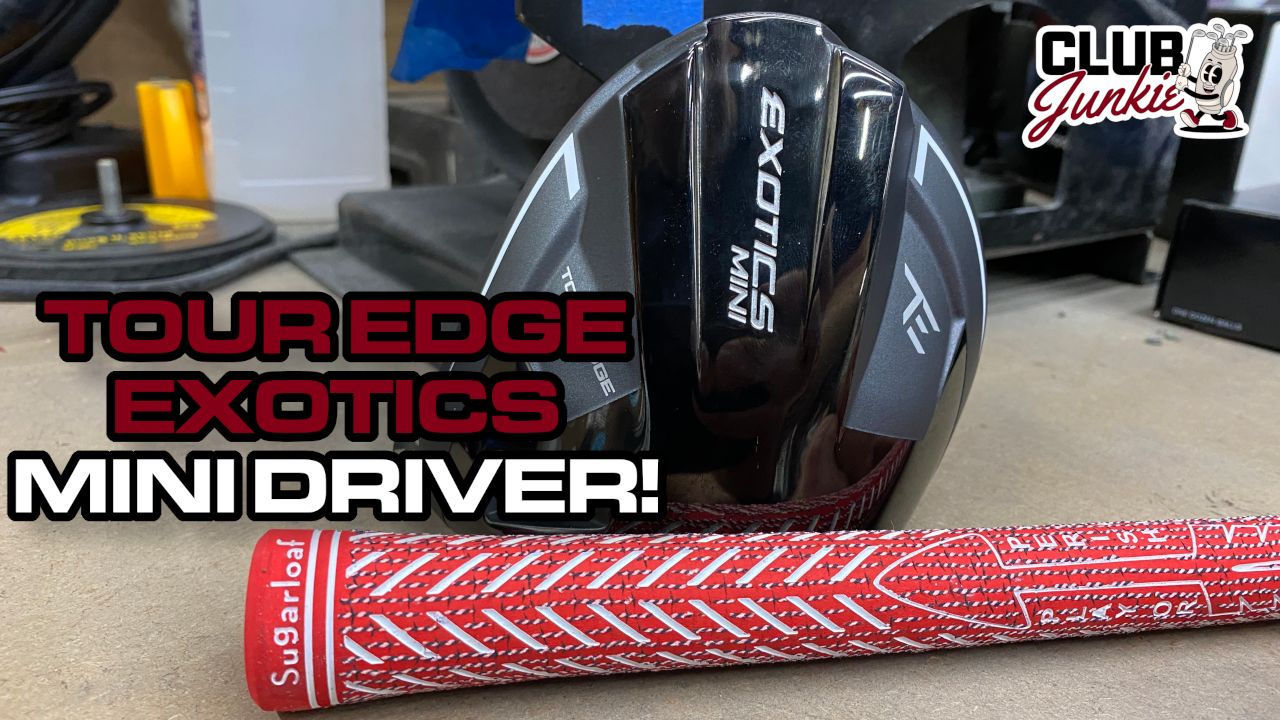
On this episode of Club Junkie, I put the new Tour Edge Exotics Mini Driver to the test and break down the performance, forgiveness, distance, and where it fits compared to a traditional driver or strong fairway wood. If you have been curious about adding a mini driver to the bag, this one is worth a look.
I also dive into the new TaylorMade Spider ZT Max putter that was recently spotted and discuss the growing zero torque putter trend. Plus, there is a closer look at the new Project X Titan Yellow shaft showing up on the PGA Tour and what makes it different from other profiles currently out there.

Justin Rose WITB 2026 (April): Full WITB breakdown with new McLaren irons

What’s the story behind Webb Simpson’s custom-stamped irons?

Cadillac Championship Tour Report: Spieth’s sizable changes, McLaren Golf launches, and more

Memorial Tournament Tour Report: Rory McIlroy, Cameron Young switch up drivers, and more

Russell Henley’s winning WITB: 2026 Charles Schwab Challenge

Kristoffer Reitan’s winning WITB: 2026 Truist Championship

Aaron Rai’s winning WITB: 2026 PGA Championship

Cameron Young’s winning WITB: 2026 Cadillac Championship

J.T. Poston’s winning WITB: 2026 Memorial Tournament

Best irons 2026: Best irons overall, most forgiving irons, and more


Hannah Green WITB 2026 (June)
Driver: Titleist GTS3 (10 degrees, D4 SureFit setting) Shaft: Mitsubishi Chemical Diamana RB 53 S 3-wood: Titleist GT3 (15 degrees,...


Asterisk Talley WITB 2026 (June)
Driver: TaylorMade Qi4D (9 degrees) Shaft: Fujikura Ventus Blue 6 S 3-wood: TaylorMade Qi4D (16.5 degrees) Shaft: Fujikura Ventus Blue...


Brianna Do WITB 2026 (June)
Driver: Callaway Quantum Triple Diamond (9 degrees) Shaft: KBS PGW 3-wood: Callaway Elyte Titanium (15 degrees) Shaft: KBS PGW 5-wood:...


Athena Singh WITB 2026 (June)
Driver: TaylorMade Qi4D (10.5 Degrees) Shaft: Fujikura Ventus Blue 6 S 3-wood: TaylorMade Qi10 Max (16 Degrees) Shaft: Fujikura Ventus Red 6...
-
 Equipment5 days ago
Memorial Tournament Tour Report: Rory McIlroy, Cameron Young switch up drivers, and more
-
 News1 week ago
Russell Henley’s winning WITB: 2026 Charles Schwab Challenge
-
 Whats in the Bag3 days ago
J.T. Poston’s winning WITB: 2026 Memorial Tournament
-
 Equipment2 days ago
Best irons 2026: Best irons overall, most forgiving irons, and more
-

 Equipment1 week ago
Details on Jason Day’s latest prototype Avoda iron setup
-

 Equipment3 weeks ago
CJ Cup Byron Nelson Tour Report: Koepka and Kim’s newest putters finally get hot
-

 News2 weeks ago
Charles Schwab Challenge Tour Report: MacIntyre, Åberg and Spaun all switch putters, TaylorMade launches new Spider
-

 Equipment2 weeks ago
Details on J.J. Spaun’s surprise putter switch


Pingback: Fix your golf back pain – Step 4: Building global strength for prevention of future injury – GolfWRX
Keenan Van Zile
Apr 26, 2021 at 12:42 am
look – back issues go away with activating the paraspinal muscles…most importantly the multifidus.. If you dont do that all the rest of the exercises are pointless..Muscles that support the spine if not activated the spine will always be unstable, inflexible when swinging a golf club.
Nack Jicklaus
Apr 24, 2021 at 10:19 am
I thought the guy in the first photo at the top of the page was a mannequin.