
Opinion & Analysis
Buying new irons? This is the most important fitting parameter

When golfers head into a club fitting, whether it be their first ever experience or part of a yearly tuneup, there is always one common goal—to play better golf and shoot lower scores.
But the question that often comes up is, “How do I shoot lower scores?” and “What should I be looking for in a club fitting?”
We’re here to help.

The process
Every fitting should always start with an interview, where the fitter will ask about your game, both strengths and weaknesses—be honest with yourself and the fitter! If you have a trouble club or yardage that your struggle with, speak up. This is your opportunity to work with someone to help you fix any issues with your equipment.
A great fitter will analyze your current game and clubs and will start providing solutions to potential problems you see on the course—maybe it’s a shot shape you are trying to eliminate, or in some cases create a tighter dispersion with your current clubs.
For a driver fit, distance is almost always the main objective but when it comes to irons, total distance should not be the main goal—it should be proximity to target with consistent distances. One of the best ways to reduce your proximity to your target is by hitting it higher and stopping it faster. This is why descent angle is one of the most important parameters when getting fit for irons.
Descent angle
Descent angle is also known as land angle. This is the angle at which the golf ball makes contact with the ground, and the steeper it is the quick the ball will stop.
Many golfers struggle to create enough speed to increase launch and spin and the average for many players heading into a fit for the first time can be around 40 degrees while on the PGA Tour the average in 50 degrees with a 6-iron—on the LPGA Tour, it’s 46 degrees—that’s a big difference in stopping power.
Check out the video below featuring Titleist Master Fitter Glenn Mahler to see how, in a real-world scenario, land angle can help you hit it closer and improve your scores.




This past Monday, I played in the U.S. Amateur local qualifier at Rock Creek Country Club in Portland, Oregon. A full tee sheet from 7:30 a.m. to 1:55 p.m., the top 11 scores would make it to the U.S. Amateur final qualifying.
I teed off at 10:48 a.m.. With the 7:30 am tee time, you can get a feel for the leaders’ pace, and they were off and running on the challenging setup at Rock Creek.
View this post on Instagram
Getting to the highlight of the round on the par five 17th, a drive up the left side and 212 yards left to the front hole location. I took out a 5-iron with plans of middle of the green. The ball ended up 8 feet left of the hole, pin high. A slight downhill putt dropped in for an eagle 3 on the 17th. With the cut line looking to be anywhere from -2 to even par. This was the boost I had been waiting for all day.
With making par from the trees on 18, it was time to wait for a potential playoff with a posted score of one under par 71.
Three hours later, it was playoff time. 8 players for 6 spots. I made par on the playoff hole, which was good enough to advance to the U.S. Amateur final qualifying in July. USGA qualifiers sure deliver on all of the emotions in golf!
Club Junkie
Building my 2026 gamer WITB: Ranking the contenders and new putter projects – Club Junkie Podcast

The annual What’s In The Bag build is underway, and on this episode of Club Junkie, Brian breaks down the clubs currently leading the race for a spot in his 2026 gamer setup. From drivers and fairway woods to irons, wedges, and shafts, he ranks the equipment that’s performing best and explains what’s separating the front runners from the rest of the field.
Brian also heads into the workshop to discuss several putter projects currently on the bench. From head options and shaft choices to build ideas and testing plans, he shares what he’s working on and which putters could become serious contenders for the bag this season.
If you’re a gear junkie who loves equipment testing, club building, and the never-ending pursuit of the perfect setup, this episode is for you.
Follow Club Junkie:
Instagram: @clubjunkiepod
TikTok: @clubjunkiepod
Threads: @clubjunkiepod
X: @ClubJunkiePod
Club Junkie
Tour Edge Exotics mini driver review + TaylorMade Spider ZT Max first look – Club Junkie

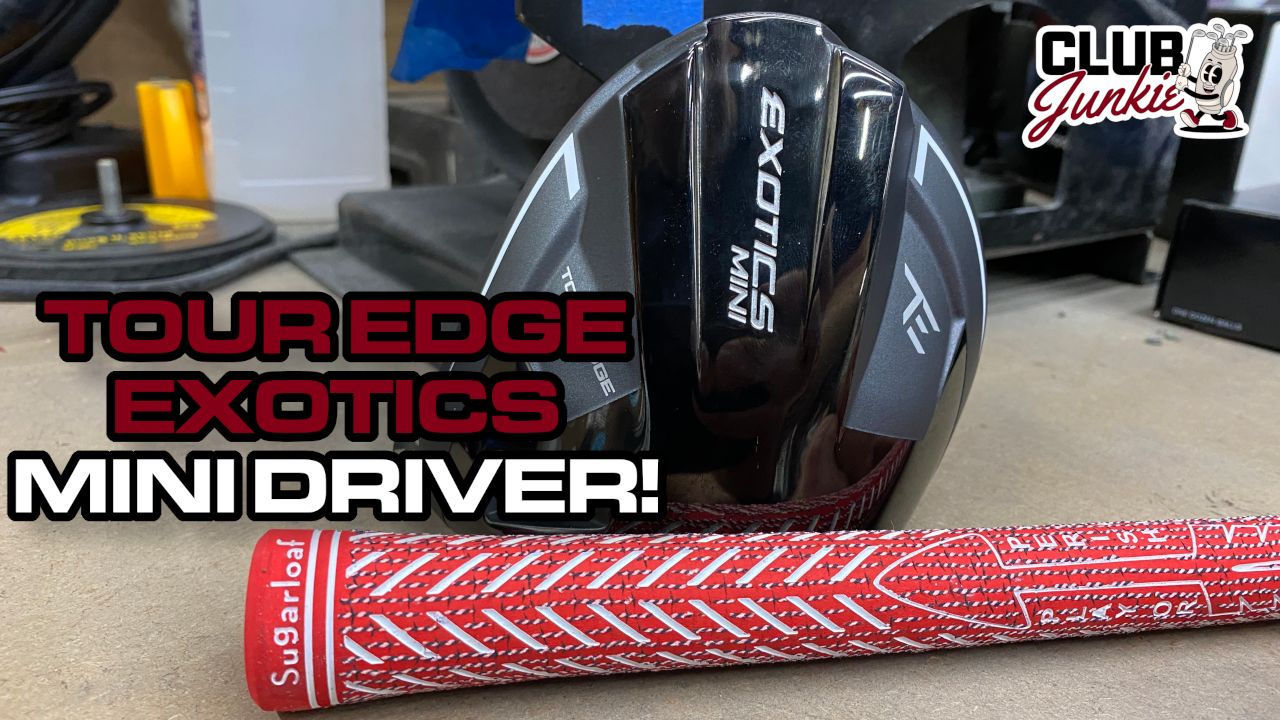
On this episode of Club Junkie, I put the new Tour Edge Exotics Mini Driver to the test and break down the performance, forgiveness, distance, and where it fits compared to a traditional driver or strong fairway wood. If you have been curious about adding a mini driver to the bag, this one is worth a look.
I also dive into the new TaylorMade Spider ZT Max putter that was recently spotted and discuss the growing zero torque putter trend. Plus, there is a closer look at the new Project X Titan Yellow shaft showing up on the PGA Tour and what makes it different from other profiles currently out there.

Justin Rose WITB 2026 (April): Full WITB breakdown with new McLaren irons

What’s the story behind Webb Simpson’s custom-stamped irons?

Memorial Tournament Tour Report: Rory McIlroy, Cameron Young switch up drivers, and more

Cadillac Championship Tour Report: Spieth’s sizable changes, McLaren Golf launches, and more

Russell Henley’s winning WITB: 2026 Charles Schwab Challenge

Kristoffer Reitan’s winning WITB: 2026 Truist Championship

Aaron Rai’s winning WITB: 2026 PGA Championship

J.T. Poston’s winning WITB: 2026 Memorial Tournament

Best irons 2026: Best irons overall, most forgiving irons, and more

Cameron Young’s winning WITB: 2026 Cadillac Championship


Bud Cauley WITB 2026 (June)
Bud Cauley had >14 clubs in his bag when photographed prior to the Memorial Tournament. Driver: Titleist GTS2 (8 degrees) Shaft: Fujikura...


Hannah Green WITB 2026 (June)
Driver: Titleist GTS3 (10 degrees, D4 SureFit setting) Shaft: Mitsubishi Chemical Diamana RB 53 S 3-wood: Titleist GT3 (15 degrees,...


Asterisk Talley WITB 2026 (June)
Driver: TaylorMade Qi4D (9 degrees) Shaft: Fujikura Ventus Blue 6 S 3-wood: TaylorMade Qi4D (16.5 degrees) Shaft: Fujikura Ventus Blue...
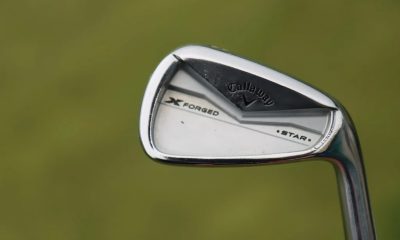

Brianna Do WITB 2026 (June)
Driver: Callaway Quantum Triple Diamond (9 degrees) Shaft: KBS PGW 3-wood: Callaway Elyte Titanium (15 degrees) Shaft: KBS PGW 5-wood:...
-
 Equipment6 days ago
Memorial Tournament Tour Report: Rory McIlroy, Cameron Young switch up drivers, and more
-
 News1 week ago
Russell Henley’s winning WITB: 2026 Charles Schwab Challenge
-
 Whats in the Bag3 days ago
J.T. Poston’s winning WITB: 2026 Memorial Tournament
-
 Equipment3 days ago
Best irons 2026: Best irons overall, most forgiving irons, and more
-
 Equipment1 week ago
Details on Jason Day’s latest prototype Avoda iron setup
-
 Equipment3 weeks ago
CJ Cup Byron Nelson Tour Report: Koepka and Kim’s newest putters finally get hot
-

 News2 weeks ago
Charles Schwab Challenge Tour Report: MacIntyre, Åberg and Spaun all switch putters, TaylorMade launches new Spider
-
 Equipment2 weeks ago
Details on J.J. Spaun’s surprise putter switch


Tom K
Aug 30, 2020 at 10:45 pm
I paid $150 fro a driver fitting at Club Champion and told the fitter I wanted a shft profile similar to the YS6 that I have on my 3 wood. I just kill theat 3 wood. He puts me into a $300 Aldila and M1 head and ssows me great numbers. That club never worked fro me. I talked to the mfr. of my 3 wood shaft and he put me on yo their new NanoReloaded. The new vesion of the YS6. Biught a Ping 400LS for hte head and smoke that driver. I have very little confidence on what some 25 handicapper tells me I should hit. Demo as many shafts as you can and find a clubhead you like. Same for irons.
Bagadonitz
Jul 17, 2020 at 12:13 pm
Golf
Robert Cangey
Jun 30, 2020 at 7:15 pm
Lots of game improvement irons have really strong lofts. I’ve found that the trouble with the strong lofts don’t always show themselves until around the 6 iron. Problem is a lot of fittings only use a 7 iron. I’d say realize that a slower swing speed needs more loft/thicker sole/tungsten to help get the ball in the air. I’d try to hit the 5 and 6 iron to see decent angle before buying if possible. in general, the thicker the sole with bounce is more forgiving.
Parker
Jun 19, 2020 at 12:34 pm
Great article thank you.
I’ve been on the search for the highest ball flight possible with all clubs except driver for years. Refer to it as a playable trajectory. Also been working swing mechanics too.
One take away is “softer tips” do not always equate to better results which leads me to the question of during this head comparison, were the same shafts/flex used in the mb through the T200?
Another question that I imagine that the answer is likely swing mechanics; I find it easier to get the club on the back of the ball for crisper contact than with a Mb instead of a head profile size of the t200. I would play a full set of hybrids but I don’t think my ball striking would improve at all.
Imafitter
Jun 17, 2020 at 8:23 pm
LOL! Glenn fit me right there at TPI in Oceanside for a Titleist driver and fairway wood two years ago. Great guy and full of knowledge.
David
Jun 17, 2020 at 1:33 pm
Just fitted for new mp20 hmb. As you stated the fitter asked about my normal misses… a bit of a heal strike, going weak to the right.
Tried 6 different shafts. One clearly resulted in best smash factor, best ball speed, about avg spin to the others, about avg launch, greatest height, longest distance, smallest variation in distance, about average left/right dispersion but by far most centered to target.
It was the second best descent of 45 degrees on a 7 iron. One other was 46 but was a very spinny, must shorter carry.
The thing that really stood out on my fitting was i could center the strikes much better with that one shaft in particular. Noticeably better.
So i guess i would agree descent angle is one important metric and probably indicates what you hit best. Likely being what you hit with the best strike, ball speed and spin to get the optimal height and carry. Which maybe not to surprisingly is the result of being able to hit the sweet spot.
In my case I was fitted with the shaft that demonstrated my ability to consistently center the strike.
Reid
Jun 17, 2020 at 10:01 am
I would argue it’s lie angle. If that is incorrect, nothing else matters.
J
Jun 19, 2020 at 9:36 am
Tons of players (including tour players) play “incorrect” lie angles. As long as you’re within about 2*, ball-flight trumps “proper” lie angle. If you have a player who’s miss is left, you wouldn’t bend him more upright as long as you’re relatively close, same goes for a player who misses right, but “should” have flatter irons.
gunmetal
Jun 29, 2020 at 11:40 am
This is true until the scoring irons/wedges come into play. The higher the loft the more impact a bad lie angle can have.