
Opinion & Analysis
The Wedge Guy: A bit more about “low hands”


Last week, I wrote about keys to hitting better short iron and wedge shots and referenced Ben Hogan and Ken Venturi’s comments about his “low hands” making him an excellent “pitcher” of the ball. While that was but one element of the post I wrote, it seems that it generated more interest and response, so I thought I would elaborate on that a bit more.
Hopefully, most of you have had a chance to spend time with the wonderful coffee-table book, “The Hogan Mystique.” This beautiful work features dozens of black-and-white photographs taken by Jules Alexander at the 1959 U.S. Open. It includes several fine essays by the likes of Ben Crenshaw and Dan Jenkins, but to me the “secret” of the book is Ken Venturi’s insightful analysis of Mr. Hogan’s swing and approach to the game. I assure you that spending time studying these photos and Venturi’s commentary is a great learning experience.
One that keeps me coming back time and again is a shot of Mr. Hogan hitting a soft little pitch from the rough, and Venturi’s simple comment,
“Hogan, like most low hands players, was an excellent pitcher of the ball.”
In the photo, Hogan is coming into impact and his hands are quite a bit lower than they would have been in a full swing. He was noted as an extraordinary wedge player, so much so that his opponents nicknamed his wedge “the equalizer,” a name which made its way onto Ben Hogan Company pitching wedges when that company began making golf clubs in 1954.
What Venturi was referring to can be observed as you witness PGA Tour players execute all kinds of magical shots around the greens. As you watch these players around the greens, you will see them flex their knees a bit more, and allow their arms to hang naturally, so that they can get their hands closer to the ground at address. You might also not know that the majority of tour players have their wedges’ lie angles a degree or two flatter than their irons to help promote this set-up position.
But what is most revealing is how they make sure their hands “cover” that position through impact, so that the distinct angle between the arms and shaft is maintained to and through impact. The only way to do that is to engage the body core and rotate through impact, as illustrated very nicely by the featured photo of Phil Mickelson.
In contrast, I see the majority of amateur players set up to chips and pitch shots much more upright and either tend to reach for the ball a bit with their arms extended away from the body, or crowd the ball so that their arms are actually angled back toward their body, rather than hanging naturally. Either one prevents the proper interaction of the wedge’s sole to the turf and the ability to control ball flight and distance, or spin. But in my observation, reaching a bit is much better than crowding the ball.
Of course, this is but one aspect of developing sound chipping and pitching technique, but I think it is one of the most important keys. If you want to get better around the greens, I recommend you pay attention to this technique when you watch golf on TV…then get a club and practice it.









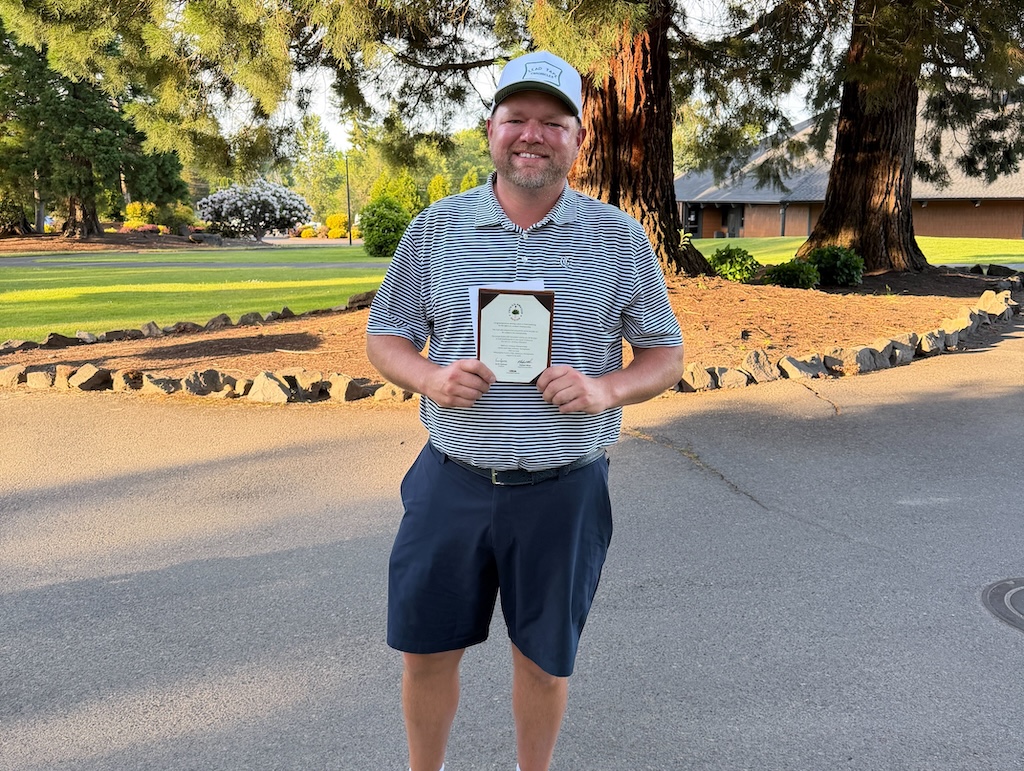
This past Monday, I played in the U.S. Amateur local qualifier at Rock Creek Country Club in Portland, Oregon. A full tee sheet from 7:30 a.m. to 1:55 p.m., the top 11 scores would make it to the U.S. Amateur final qualifying.
I teed off at 10:48 a.m.. With the 7:30 am tee time, you can get a feel for the leaders’ pace, and they were off and running on the challenging setup at Rock Creek.
View this post on Instagram
Getting to the highlight of the round on the par five 17th, a drive up the left side and 212 yards left to the front hole location. I took out a 5-iron with plans of middle of the green. The ball ended up 8 feet left of the hole, pin high. A slight downhill putt dropped in for an eagle 3 on the 17th. With the cut line looking to be anywhere from -2 to even par. This was the boost I had been waiting for all day.
With making par from the trees on 18, it was time to wait for a potential playoff with a posted score of one under par 71.
Three hours later, it was playoff time. 8 players for 6 spots. I made par on the playoff hole, which was good enough to advance to the U.S. Amateur final qualifying in July. USGA qualifiers sure deliver on all of the emotions in golf!
Club Junkie
Building my 2026 gamer WITB: Ranking the contenders and new putter projects – Club Junkie Podcast

The annual What’s In The Bag build is underway, and on this episode of Club Junkie, Brian breaks down the clubs currently leading the race for a spot in his 2026 gamer setup. From drivers and fairway woods to irons, wedges, and shafts, he ranks the equipment that’s performing best and explains what’s separating the front runners from the rest of the field.
Brian also heads into the workshop to discuss several putter projects currently on the bench. From head options and shaft choices to build ideas and testing plans, he shares what he’s working on and which putters could become serious contenders for the bag this season.
If you’re a gear junkie who loves equipment testing, club building, and the never-ending pursuit of the perfect setup, this episode is for you.
Follow Club Junkie:
Instagram: @clubjunkiepod
TikTok: @clubjunkiepod
Threads: @clubjunkiepod
X: @ClubJunkiePod
Club Junkie
Tour Edge Exotics mini driver review + TaylorMade Spider ZT Max first look – Club Junkie

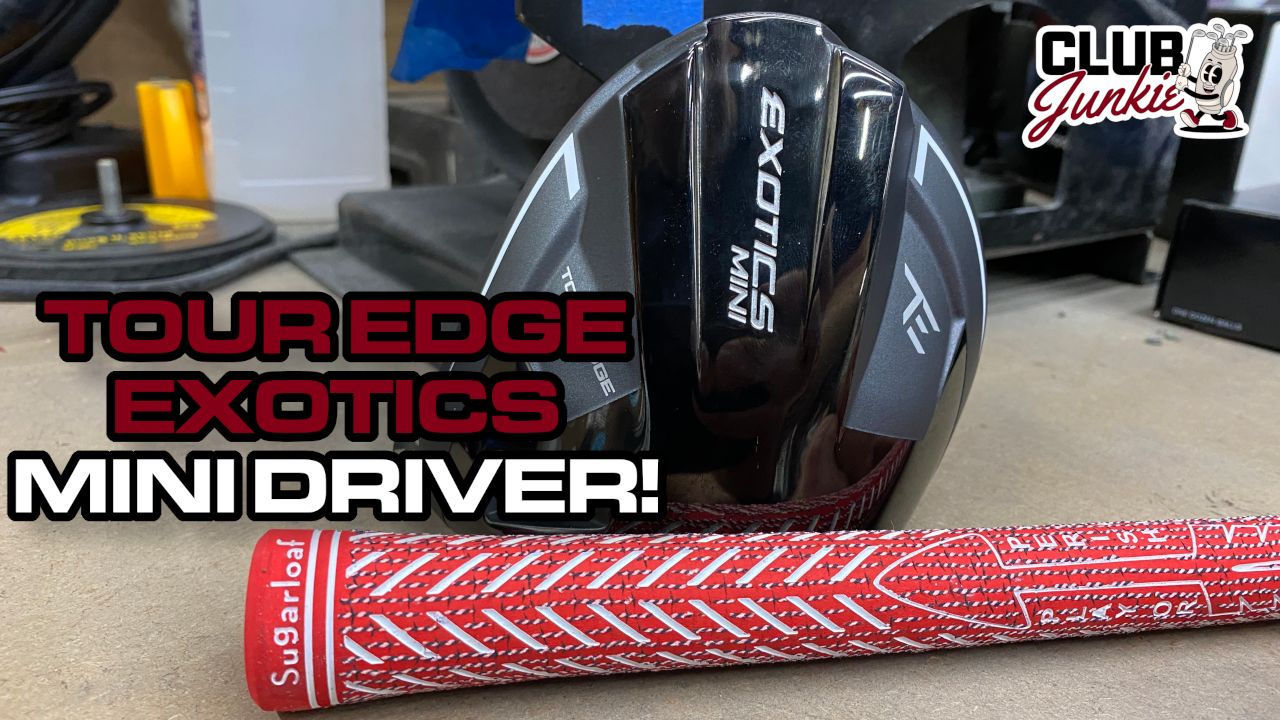
On this episode of Club Junkie, I put the new Tour Edge Exotics Mini Driver to the test and break down the performance, forgiveness, distance, and where it fits compared to a traditional driver or strong fairway wood. If you have been curious about adding a mini driver to the bag, this one is worth a look.
I also dive into the new TaylorMade Spider ZT Max putter that was recently spotted and discuss the growing zero torque putter trend. Plus, there is a closer look at the new Project X Titan Yellow shaft showing up on the PGA Tour and what makes it different from other profiles currently out there.

Justin Rose WITB 2026 (April): Full WITB breakdown with new McLaren irons

What’s the story behind Webb Simpson’s custom-stamped irons?

Memorial Tournament Tour Report: Rory McIlroy, Cameron Young switch up drivers, and more

Cadillac Championship Tour Report: Spieth’s sizable changes, McLaren Golf launches, and more

Russell Henley’s winning WITB: 2026 Charles Schwab Challenge

Kristoffer Reitan’s winning WITB: 2026 Truist Championship

J.T. Poston’s winning WITB: 2026 Memorial Tournament

Aaron Rai’s winning WITB: 2026 PGA Championship

Best irons 2026: Best irons overall, most forgiving irons, and more

Cameron Young’s winning WITB: 2026 Cadillac Championship


Bud Cauley WITB 2026 (June)
Bud Cauley had >14 clubs in his bag when photographed prior to the Memorial Tournament. Driver: Titleist GTS2 (8 degrees) Shaft: Fujikura...


Hannah Green WITB 2026 (June)
Driver: Titleist GTS3 (10 degrees, D4 SureFit setting) Shaft: Mitsubishi Chemical Diamana RB 53 S 3-wood: Titleist GT3 (15 degrees,...


Asterisk Talley WITB 2026 (June)
Driver: TaylorMade Qi4D (9 degrees) Shaft: Fujikura Ventus Blue 6 S 3-wood: TaylorMade Qi4D (16.5 degrees) Shaft: Fujikura Ventus Blue...


Brianna Do WITB 2026 (June)
Driver: Callaway Quantum Triple Diamond (9 degrees) Shaft: KBS PGW 3-wood: Callaway Elyte Titanium (15 degrees) Shaft: KBS PGW 5-wood:...
-
 Equipment6 days ago
Memorial Tournament Tour Report: Rory McIlroy, Cameron Young switch up drivers, and more
-
 News1 week ago
Russell Henley’s winning WITB: 2026 Charles Schwab Challenge
-
 Whats in the Bag3 days ago
J.T. Poston’s winning WITB: 2026 Memorial Tournament
-
 Equipment3 days ago
Best irons 2026: Best irons overall, most forgiving irons, and more
-

 Equipment1 week ago
Details on Jason Day’s latest prototype Avoda iron setup
-
 Equipment3 weeks ago
CJ Cup Byron Nelson Tour Report: Koepka and Kim’s newest putters finally get hot
-

 News2 weeks ago
Charles Schwab Challenge Tour Report: MacIntyre, Åberg and Spaun all switch putters, TaylorMade launches new Spider
-
 Equipment2 weeks ago
Details on J.J. Spaun’s surprise putter switch


15th Club
Apr 29, 2020 at 12:19 pm
Nice article, Terry!
Of my 100+ golf books, “The Hogan Mystique” is one of my personal favorites and for exactly the reasons you suggest.
I like your instruction here, and in fact my Vokeys are bent a couple of degrees flat because all of this feels so right to me.
Steve
Apr 29, 2020 at 9:45 am
Interesting read from Terry — although a bit confusing. Raymond Floyd, among other short game wizards, advocated addressing the ball by holding the club so that it was nearly vertical at address, feet close together, and a chipping motion that was similar to putting. Hogan appears to be doing just the opposite, but I need to read this more carefully. Just another example of differing opinions on technique that both enrich our knowledge — and confuse it at the same time.
Suncoast 9
Apr 29, 2020 at 10:59 am
The Ray Floyd technique you describe is for a low, running chip shot. The technique Terry describes is for a high soft-landing pitch shot.
billyjack
Apr 28, 2020 at 3:05 pm
Low hands and high shaft.