
Opinion & Analysis
The Wedge Guy: Hitting better wedge and short iron shots


The past two weeks, I have written about “power leaks” with a focus on the long game. So, this week, I’m getting back to helping you improve your performance inside prime scoring range, which I consider to be 8-iron range and in. If you study PGA Tour statistics, this is where the vast majority of birdies are made, so it should also be your opportunity to put lower numbers on the card.
As I observe golfers of all skill levels, among the shots that I think give golfers the most difficulty are the full-swings with the wedges and short irons. The most common problem I see are trajectories that are way too high, leading to distance control that…well, is not controlled.
The key to consistent distance control with the higher-lofted short-range clubs is to control the trajectory of the shot, which in turn controls the distance the ball will travel in the air. If your short iron and wedge shots are high sometimes and lower sometimes, then your carry distance is most likely to also be all over the place.
The other part of the equation is that golfers haven’t spent the time necessary to learn how to properly swing the short, high-lofted clubs to effect those “tour-like” trajectories and pinpoint distance control. But you can learn to hit better full swing shots with your wedges and short irons if you’ll just follow a few basic thoughts.
- Don’t try to hit them as hard. When you have a long club in your hand, you’re thinking distance, but when you have a club over 40 degrees of loft, your singular thought should be control. And you’ll get better control if you throttle back about 10-15 percent from what you think full swing speed really is. That will bring your trajectories down and make your carry distance more consistent. It really doesn’t matter if you hit that pitching wedge 115 or 135–can you do it every time?
- Get your hands lower. In the coffee table book, “The Hogan Mystique,” Ken Venturi offers commentary on a number of photos of Ben Hogan. One that has always stuck with me is a shot of Hogan hitting a wedge shot into a green, and Venturi commented that “Hogan was an excellent ‘pitcher’ of the golf ball. Almost all good low hands players are. In his full swing, Hogan didn’t have the high looping hands of a Jones, his hands were much lower at the top of his swing.” If you will think of getting your hands and the club more around your body, rather than up high at the top of the backswing, you will find your trajectories will come down and your distance control get much better.
- Soften your right hand. In our putting, we keep the left hand dominant, and the right hand is softer on the putter for touch. At the opposite end of the spectrum, with a driver we can hit hard with our right, as long as we also hit equally hard with our left side. As you get into the wedges and short irons, think of softening the right hand so that the left side can lead the club all the way through impact. This helps prevent the clubhead from passing the hands before impact, which adds loft to the club and causes a higher ball flight.
So, there are three keys to hitting better shots with your scoring clubs. I’d like to hear what you guys have to say, and how this works out for you if you’ll give these tips a try.




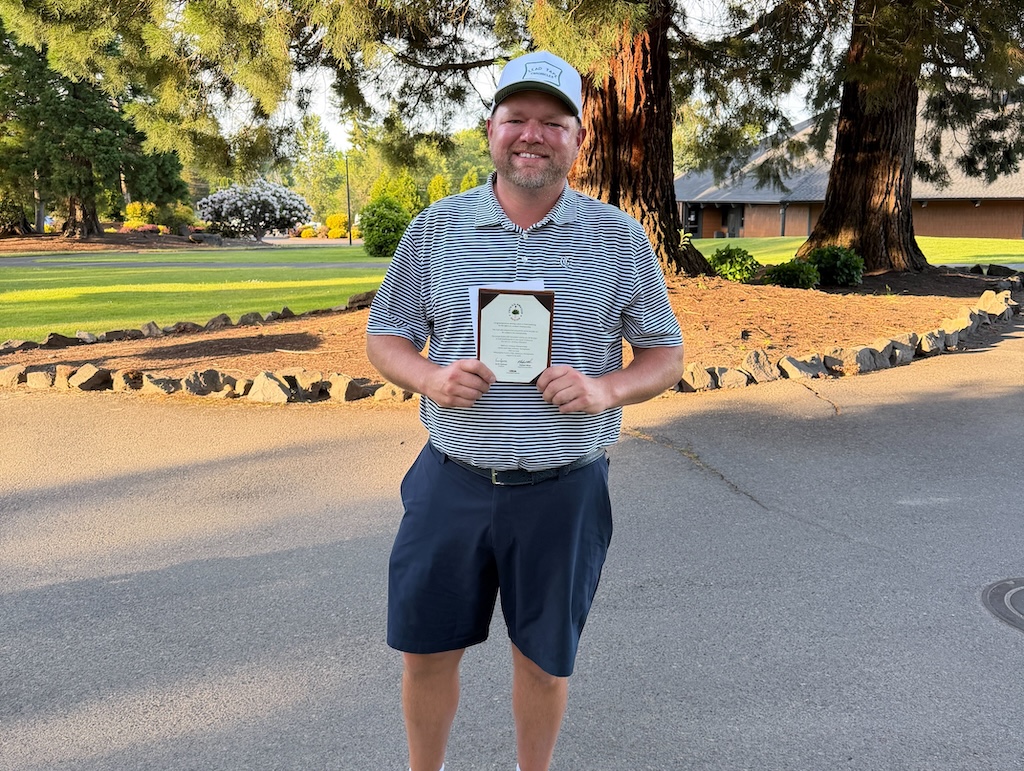
This past Monday, I played in the U.S. Amateur local qualifier at Rock Creek Country Club in Portland, Oregon. A full tee sheet from 7:30 a.m. to 1:55 p.m., the top 11 scores would make it to the U.S. Amateur final qualifying.
I teed off at 10:48 a.m.. With the 7:30 am tee time, you can get a feel for the leaders’ pace, and they were off and running on the challenging setup at Rock Creek.
View this post on Instagram
Getting to the highlight of the round on the par five 17th, a drive up the left side and 212 yards left to the front hole location. I took out a 5-iron with plans of middle of the green. The ball ended up 8 feet left of the hole, pin high. A slight downhill putt dropped in for an eagle 3 on the 17th. With the cut line looking to be anywhere from -2 to even par. This was the boost I had been waiting for all day.
With making par from the trees on 18, it was time to wait for a potential playoff with a posted score of one under par 71.
Three hours later, it was playoff time. 8 players for 6 spots. I made par on the playoff hole, which was good enough to advance to the U.S. Amateur final qualifying in July. USGA qualifiers sure deliver on all of the emotions in golf!
Club Junkie
Building my 2026 gamer WITB: Ranking the contenders and new putter projects – Club Junkie Podcast

The annual What’s In The Bag build is underway, and on this episode of Club Junkie, Brian breaks down the clubs currently leading the race for a spot in his 2026 gamer setup. From drivers and fairway woods to irons, wedges, and shafts, he ranks the equipment that’s performing best and explains what’s separating the front runners from the rest of the field.
Brian also heads into the workshop to discuss several putter projects currently on the bench. From head options and shaft choices to build ideas and testing plans, he shares what he’s working on and which putters could become serious contenders for the bag this season.
If you’re a gear junkie who loves equipment testing, club building, and the never-ending pursuit of the perfect setup, this episode is for you.
Follow Club Junkie:
Instagram: @clubjunkiepod
TikTok: @clubjunkiepod
Threads: @clubjunkiepod
X: @ClubJunkiePod
Club Junkie
Tour Edge Exotics mini driver review + TaylorMade Spider ZT Max first look – Club Junkie

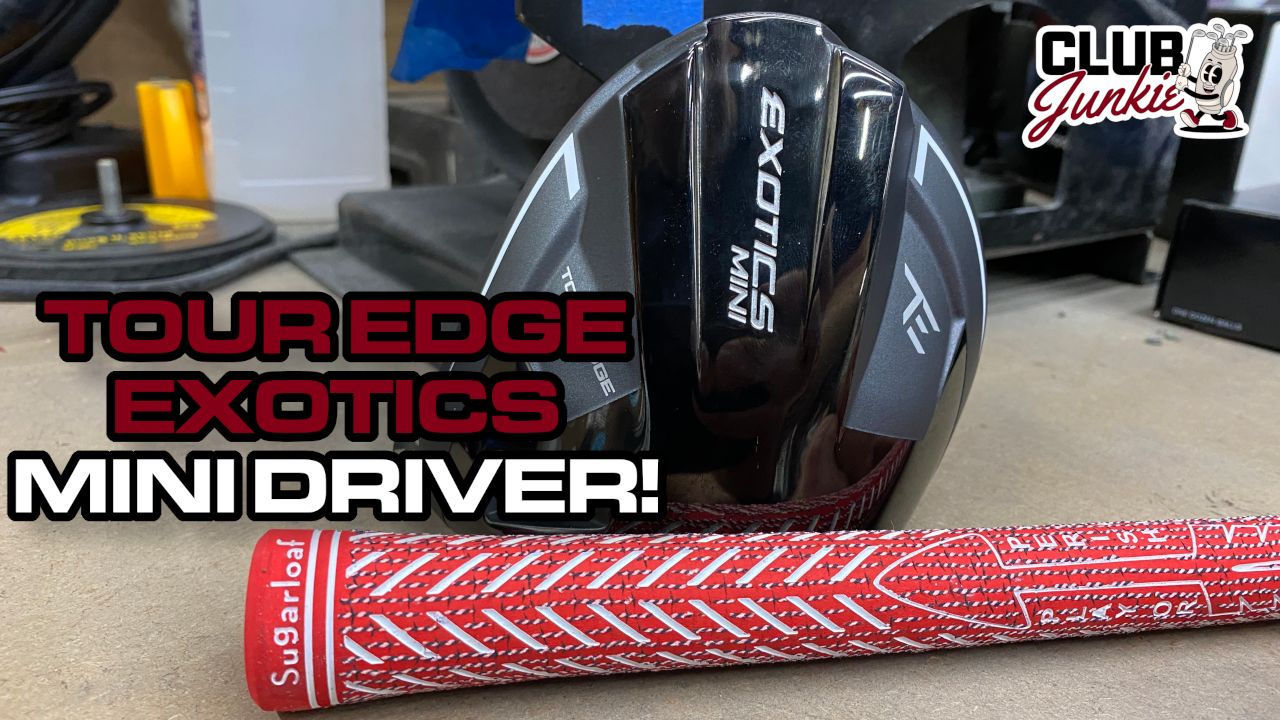
On this episode of Club Junkie, I put the new Tour Edge Exotics Mini Driver to the test and break down the performance, forgiveness, distance, and where it fits compared to a traditional driver or strong fairway wood. If you have been curious about adding a mini driver to the bag, this one is worth a look.
I also dive into the new TaylorMade Spider ZT Max putter that was recently spotted and discuss the growing zero torque putter trend. Plus, there is a closer look at the new Project X Titan Yellow shaft showing up on the PGA Tour and what makes it different from other profiles currently out there.

Justin Rose WITB 2026 (April): Full WITB breakdown with new McLaren irons

What’s the story behind Webb Simpson’s custom-stamped irons?

Memorial Tournament Tour Report: Rory McIlroy, Cameron Young switch up drivers, and more

Cadillac Championship Tour Report: Spieth’s sizable changes, McLaren Golf launches, and more

Russell Henley’s winning WITB: 2026 Charles Schwab Challenge

Kristoffer Reitan’s winning WITB: 2026 Truist Championship

Best irons 2026: Best irons overall, most forgiving irons, and more

J.T. Poston’s winning WITB: 2026 Memorial Tournament

Aaron Rai’s winning WITB: 2026 PGA Championship

Cameron Young’s winning WITB: 2026 Cadillac Championship


Ryan Palmer WITB 2026 (June)
Driver: Callaway Quantum Triple Diamond (9 degrees) Shaft: Project X HZRDUS Smoke Blue RDX 60 TX 3-wood: TaylorMade Qi10 (15 degrees) Shaft:...


Bud Cauley WITB 2026 (June)
Bud Cauley had >14 clubs in his bag when photographed prior to the Memorial Tournament. Driver: Titleist GTS2 (8 degrees) Shaft: Fujikura...


Hannah Green WITB 2026 (June)
Driver: Titleist GTS3 (10 degrees, D4 SureFit setting) Shaft: Mitsubishi Chemical Diamana RB 53 S 3-wood: Titleist GT3 (15 degrees,...


Asterisk Talley WITB 2026 (June)
Driver: TaylorMade Qi4D (9 degrees) Shaft: Fujikura Ventus Blue 6 S 3-wood: TaylorMade Qi4D (16.5 degrees) Shaft: Fujikura Ventus Blue...
-
 Equipment6 days ago
Memorial Tournament Tour Report: Rory McIlroy, Cameron Young switch up drivers, and more
-
 News2 weeks ago
Russell Henley’s winning WITB: 2026 Charles Schwab Challenge
-
 Equipment3 days ago
Best irons 2026: Best irons overall, most forgiving irons, and more
-
 Whats in the Bag4 days ago
J.T. Poston’s winning WITB: 2026 Memorial Tournament
-

 Equipment1 week ago
Details on Jason Day’s latest prototype Avoda iron setup
-

 Equipment3 weeks ago
CJ Cup Byron Nelson Tour Report: Koepka and Kim’s newest putters finally get hot
-

 News2 weeks ago
Charles Schwab Challenge Tour Report: MacIntyre, Åberg and Spaun all switch putters, TaylorMade launches new Spider
-

 Equipment2 weeks ago
Details on J.J. Spaun’s surprise putter switch


ChipNRun
Apr 22, 2020 at 5:11 pm
Point 3. Softer right hand is interesting. Especially on partial wedges, I need to pull through with the left hand to make sure I get desired distance. Otherwise, I can flip slightly and come up short.
Steffen: I see your concerns on the 70% swing speed. I’ve tried that, and it doesn’t work for me either. Rather, I vary the length of your backswing. I would say my wedge swing is more of a tempo swing than say pressing a driver, but I don’t consciously try to slow down the swing.
Other advice says deceleration (slowing down once in motion) is hard for many to control.
rick
Apr 22, 2020 at 1:10 pm
I’m the poster child for the 135 yard wedge–“yeah I can hit it 135 yards!” that your article targets. So yesterday from 100 yards where I would ordinarily try to smash my 57 degree wedge that distance I took out a GW (ordinarily 115) and swung about 80%. Bingo! I’m sold on this, no more trying to hit these wedges at full velocity. Thank you.
One question lingers for me, the low hands idea. Yes, I do understand it’s about the height of the hands on the backswing and you advise turning around your body more to keep the hands lower at the top. But that encourages quite an inside takeaway don’t you think? How to overcome that?
ChipNRun
Apr 22, 2020 at 5:25 pm
Rick noted: “One question lingers for me, the low hands idea…”
This shakes out best as a general swing observation, not just for wedges. Too upright a swing can lead to high trajectories. I once had a Nicklaus-style high reach swing, but couldn’t handle it physically once I got near 50 years old.
A golf pro – along with tips from Hogan’s Five Lessons – helped me flatten my swing somewhat. A few years later, I was working with another pro, and asked if my swing was flat enough. He said not to worry, my resultant swing was very balanced – neither flat nor upright.
Also, I question the idea that we can reliably “switch to flat” just for 8i and wedge shots.
Ray Rise
Apr 22, 2020 at 9:59 am
Terry Koehler is spot-on here – if Hogan was a fine controller of spin loft and subtle compression on shorter clubs then another Texan named Trevino was simply the best. His ‘burning’ wedge was for him (and can be others) brilliantly executed.
Rick
Apr 21, 2020 at 2:51 pm
Great advice!!!! But I lower my hands to hit flop shots (5 hcp) so I don’t quite get it about lower hands = lower flight? Pls re-explain
AZ
Apr 21, 2020 at 9:30 pm
My guess is you’re talking about lowering the hands at address? He’s talking about lowering his hands at the top of the backswing.
rick
Apr 21, 2020 at 9:50 pm
Doh!
Steffen menges
Apr 21, 2020 at 12:09 pm
Many thanks in advance for the informative explanations. Point 1 works quite well for me so far (hcp16) if I have no obstacle in front of the short flag or a false front. Then my mind goes to power up and the result is mostly thinly hit balls running over the green. One or two more club lengths don’t help here because I can’t hit shots with 70% swing speed ????
Greetings from germany
Steffen