
Opinion & Analysis
The Wedge Guy: Power Leak No. 2 – The first move down


Thank you all for the positive “scoring” of last week’s article on Power Leaks. I hope you are getting a chance to get out and try those ideas about improving your hold on the golf club to tap your optimum clubhead speed.
Continuing this topic of power leaks, probably the second most common leak that I see is a very inefficient first move from the top of the swing. A great majority of recreational golfers of mid-to-high handicaps begin the downswing with a move of the club with their hands—more typically, their right hand (for right-handed players). This causes the body turn to follow the attempt to move the club with the hands.
The problem is that this is exactly backwards.
What counts most in generating maximum clubhead speed through impact is a progressive application of power from the top of the swing through the ball. The club starts from an essential stop, then must accelerate to achieve maximum clubhead velocity just past the point of impact. There is really only one way to achieve this efficiency.
At the top of the backswing, you should have coiled your body with a sequential backwards extension of your arms …which turns your shoulders, which turns your hips and shifts some of your weight to the inside of your right/back foot. It makes sense that there has to be some kind of slight pause at the end of your backswing so that you can reverse this entire action.
I was taught early on and have continued to believe that the first move from the end of the backswing should be a slight lateral slide of your hips to get your body core stacked “over your left foot.” This move will cause your hands and the club to drop slightly inside, so that your upper right arm is close to your side.
From this position, with the knees remaining flexed, you can leverage the immense power that is stored in body core by rotating hips and shoulders as fast as you can with your mass is centered over your left foot. The arms and hands, and therefore the club are pulled down and through the impact zone.
I use the analogy that the golf swing is a pulling motion because you have–in effect–a chain with several links. And you cannot push a chain! The club is a fixed link, as are the forearm, upper arm, and chest. The connections–wrist, elbow, and shoulder joint—all are variable. If you push the middle of this chain with your right hand or your arms, the strength of the chain is compromised. So, if you pull this chain through impact, from your torso, the other links have to follow the first more consistently.
Does that make sense?
If you want to add power to your golf swing quickly and easily, get that grip right, then focus on holding on lightly, primarily with the last three fingers of the left hand, and pull the club through impact. Thinking that way will encourage your body to lead that entire action and you will generate more clubhead speed with less effort than you ever believed imaginable.
To get the feel of this, try it out on half wedge shots. Get your pitching or gap wedge and make half swings, feeling the end of the backswing. Start down by shifting your weight to your left/lead side and turning your body core through. Let the body lead the arms and the arms lead the hands. Hold on lightly and just let it happen. You’ll feel the sensation of effortless power that might get the light bulb to go on.




This past Monday, I played in the U.S. Amateur local qualifier at Rock Creek Country Club in Portland, Oregon. A full tee sheet from 7:30 a.m. to 1:55 p.m., the top 11 scores would make it to the U.S. Amateur final qualifying.
I teed off at 10:48 a.m.. With the 7:30 am tee time, you can get a feel for the leaders’ pace, and they were off and running on the challenging setup at Rock Creek.
View this post on Instagram
Getting to the highlight of the round on the par five 17th, a drive up the left side and 212 yards left to the front hole location. I took out a 5-iron with plans of middle of the green. The ball ended up 8 feet left of the hole, pin high. A slight downhill putt dropped in for an eagle 3 on the 17th. With the cut line looking to be anywhere from -2 to even par. This was the boost I had been waiting for all day.
With making par from the trees on 18, it was time to wait for a potential playoff with a posted score of one under par 71.
Three hours later, it was playoff time. 8 players for 6 spots. I made par on the playoff hole, which was good enough to advance to the U.S. Amateur final qualifying in July. USGA qualifiers sure deliver on all of the emotions in golf!
Club Junkie
Building my 2026 gamer WITB: Ranking the contenders and new putter projects – Club Junkie Podcast

The annual What’s In The Bag build is underway, and on this episode of Club Junkie, Brian breaks down the clubs currently leading the race for a spot in his 2026 gamer setup. From drivers and fairway woods to irons, wedges, and shafts, he ranks the equipment that’s performing best and explains what’s separating the front runners from the rest of the field.
Brian also heads into the workshop to discuss several putter projects currently on the bench. From head options and shaft choices to build ideas and testing plans, he shares what he’s working on and which putters could become serious contenders for the bag this season.
If you’re a gear junkie who loves equipment testing, club building, and the never-ending pursuit of the perfect setup, this episode is for you.
Follow Club Junkie:
Instagram: @clubjunkiepod
TikTok: @clubjunkiepod
Threads: @clubjunkiepod
X: @ClubJunkiePod
Club Junkie
Tour Edge Exotics mini driver review + TaylorMade Spider ZT Max first look – Club Junkie

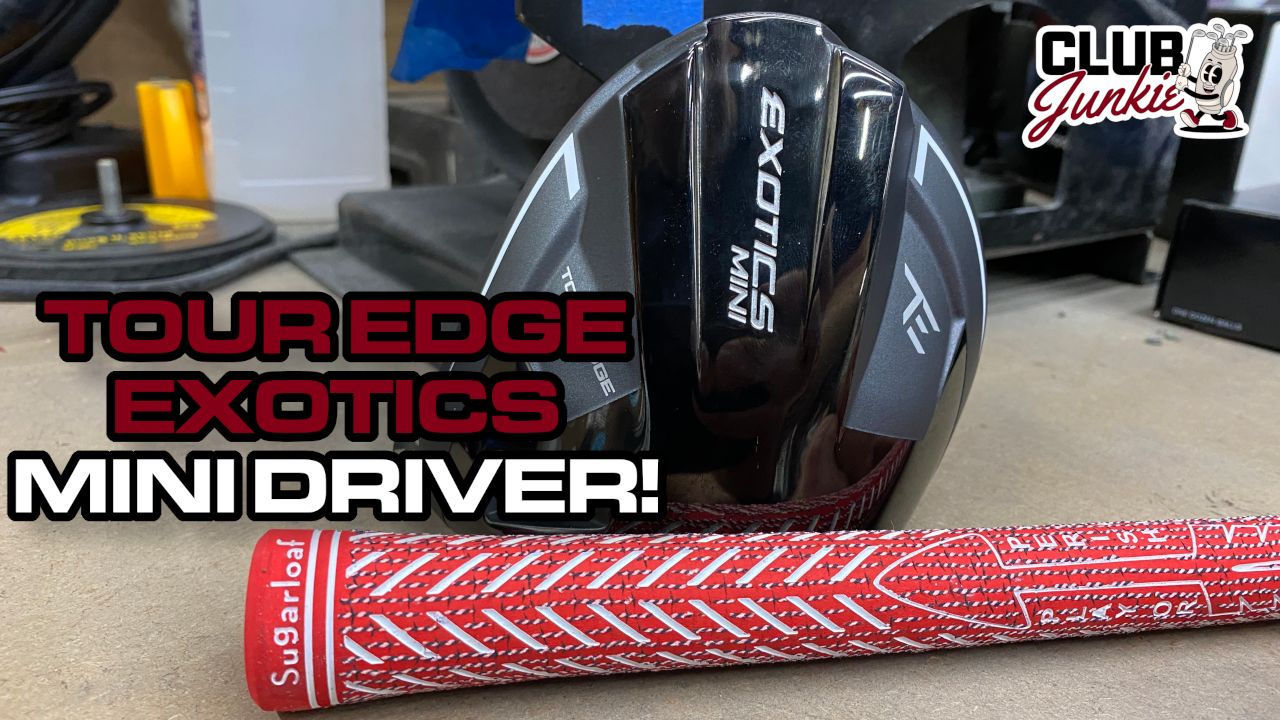
On this episode of Club Junkie, I put the new Tour Edge Exotics Mini Driver to the test and break down the performance, forgiveness, distance, and where it fits compared to a traditional driver or strong fairway wood. If you have been curious about adding a mini driver to the bag, this one is worth a look.
I also dive into the new TaylorMade Spider ZT Max putter that was recently spotted and discuss the growing zero torque putter trend. Plus, there is a closer look at the new Project X Titan Yellow shaft showing up on the PGA Tour and what makes it different from other profiles currently out there.

Justin Rose WITB 2026 (April): Full WITB breakdown with new McLaren irons

What’s the story behind Webb Simpson’s custom-stamped irons?

Memorial Tournament Tour Report: Rory McIlroy, Cameron Young switch up drivers, and more

Cadillac Championship Tour Report: Spieth’s sizable changes, McLaren Golf launches, and more

Russell Henley’s winning WITB: 2026 Charles Schwab Challenge

Kristoffer Reitan’s winning WITB: 2026 Truist Championship

Aaron Rai’s winning WITB: 2026 PGA Championship

J.T. Poston’s winning WITB: 2026 Memorial Tournament

Cameron Young’s winning WITB: 2026 Cadillac Championship

Best irons 2026: Best irons overall, most forgiving irons, and more


Bud Cauley WITB 2026 (June)
Bud Cauley had >14 clubs in his bag when photographed prior to the Memorial Tournament. Driver: Titleist GTS2 (8 degrees) Shaft: Fujikura...


Hannah Green WITB 2026 (June)
Driver: Titleist GTS3 (10 degrees, D4 SureFit setting) Shaft: Mitsubishi Chemical Diamana RB 53 S 3-wood: Titleist GT3 (15 degrees,...


Asterisk Talley WITB 2026 (June)
Driver: TaylorMade Qi4D (9 degrees) Shaft: Fujikura Ventus Blue 6 S 3-wood: TaylorMade Qi4D (16.5 degrees) Shaft: Fujikura Ventus Blue...


Brianna Do WITB 2026 (June)
Driver: Callaway Quantum Triple Diamond (9 degrees) Shaft: KBS PGW 3-wood: Callaway Elyte Titanium (15 degrees) Shaft: KBS PGW 5-wood:...
-
 Equipment6 days ago
Memorial Tournament Tour Report: Rory McIlroy, Cameron Young switch up drivers, and more
-
 News1 week ago
Russell Henley’s winning WITB: 2026 Charles Schwab Challenge
-
 Whats in the Bag3 days ago
J.T. Poston’s winning WITB: 2026 Memorial Tournament
-
 Equipment3 days ago
Best irons 2026: Best irons overall, most forgiving irons, and more
-

 Equipment1 week ago
Details on Jason Day’s latest prototype Avoda iron setup
-
 Equipment3 weeks ago
CJ Cup Byron Nelson Tour Report: Koepka and Kim’s newest putters finally get hot
-

 News2 weeks ago
Charles Schwab Challenge Tour Report: MacIntyre, Åberg and Spaun all switch putters, TaylorMade launches new Spider
-
 Equipment2 weeks ago
Details on J.J. Spaun’s surprise putter switch


pinestreetgolf
Apr 16, 2020 at 11:29 am
Matt Kuchar, Sam Snead and Lee Westwood called. They said you can generate speed by pushing with the right just as easily as pulling with the left. It just requires an inside release (like a tennis forehand) instead of an outside release (like a batter in baseball).
ChipNRun
Apr 14, 2020 at 11:36 pm
Granted, move at top is important. But, what works best can vary from golfer to golfer.
For senior golfers battling structural ailments, the key thing is a move that gets everything in sync. Someone with a bad hip may need a different release move than someone with shoulder trouble. A good instructor can help a golfer find his or her best trigger for the downswing.
drkviol801
Apr 14, 2020 at 6:09 pm
Wedge Guy knows how to start up a business, but golf….
G
Apr 14, 2020 at 5:00 pm
I’d like to disagree with this being the most powerful way to generate speed. The model you describe is missing several speed sources such as an internal to external trail arm sequence in transition, stretch shortening cycle of lead arm adduction then lead wrist cycle. Thorasic extension of the spine to the top you don’t need early lateral shift of pelvis in transition and can utilize horizontal push closer to impact(more speed). I’d love to write my version of how to generate speed as there are lots more to discuss.